Beit Furik, Beit Iba, Huwwara, Za’tara (Tapuah), Sat 19.7.08, Morning
Translation: Suzanne O.
6:30 a.m.
Once again we leave a sleepy, self-satisfied town to go to the ‘Dark Mountains' of the never ending occupation. And once again we ask ourselves: what for? We aren't going to change anything in this dreadful reality. But the need to go there and report is stronger than we are – we cannot stop otherwise who will expose the awful ‘routine nothing' that we saw today.
We drove to Kalandia to pick up our guest. The car park is almost empty and from the crossing it appears that everyone is still asleep. There is no traffic at Leil/Jab'a either but the road is in bad condition and jolts the car appallingly.
Za'atra
We did not stop because it was deserted. Three cars were in the queue from north to south and from west to east there wasn't even one car. There were no people in the queue for transport to the south either. We decided to continue on to Beit Iba.
Beit Iba
None of us had been to Beit Iba for quite some time and we saw a new ‘texture of life'. There was no activity at the quarry today so the atmosphere was almost clear of dust. The queues at the entrance to and exit from Nablus were very short. It took young people about 10 minutes to cross and less for older ones. Everything appears stable, the roadblock is even reasonably clean, as opposed to the past, and the road is laid – so do we feel defeated? The occupation has become permanent, changed ‘clothes' and just got worse and worse. Everything is ordered and well arranged and gives the impression that it means to stay there forever. We recall other Saturdays when we were here years ago – hundreds of people, loads of peddlers and the sensation that the Palestinians were not accommodating towards the occupation. Now – depressing horror.
Beit Furiq
The car park is empty, no taxis waiting and no queue. A few men sit under the ‘cafe' awning, drinking coffee and telling jokes. It is the fig season and we hoped we were not the only ones to buy a few kilos today. The roadblock is almost empty and the crossing in all directions is fast. The roadblock commander came over to talk to us. He asked how we are and we asked how he is. He complained that he has been on this shift for 24 hours and he is tired. We asked about the opening times of the roadblock (of course we already knew the answer) and what happens at night. For his part he explained that there is no problem, he allows expectant mothers and sick people to cross "if they are not lying". We prick up our ears – "Yes", explains the medical specialist, "there was a woman here who did this (now demonstrating) and I immediately realised that she was play acting and not pregnant at all. I examined her and she had a cushion on her stomach so, obviously, I didn't let her cross". "Are you a gynaecologist too?" we asked, and in reply received a look that told us that we really have no idea about what goes on. To bear out the ethics of the roadblock he told us that there is even a Humanitarian Centre. A room for those who do not feel well. Once again we pricked up our ears and asked if we could see the room. "No, because it is full of military gear, and anyway the soldiers sleep there at night". "Really", we said "Doesn't it sound strange that this Humanitarian room is out of commission?" We asked/pressed to see the room but "I am the roadblock commander" and therefore he decides and we were not able to see the ‘wonderful' room.
We could only see the shepherds, in the vicinity of the village, from a great distance- has the IDF finally managed to torment them to the point where they have been moved away from the areas where there is still some pasture.
Huwwara
Another almost empty roadblock – relatively, of course. The crossing is quick, at the end of it they get dressed, and each one goes on his way. The waspish dog handler is very tired and she and her dog prefer to sit in the shade and rest their eyes. This fact expedites the crossing for cars. Everything appears to be calm – this occupation cannot be photographed. A stranger would not be able to understand it – an expression which we have learned through years of bitter experience at the roadblocks.
As we arrived we met a Palestinian, holding some kind of paper, talking to the soldier inspecting the cars entering Nablus. We went over to help and to free the soldier, who was totally unable to understand him, to get back to his job. It turned out to be a merchant we is prevented from entering Israel. In his hand was a letter which he thought came from the civilian administration, but in fact was a very weak plea written for him by a lawyer in Nablus. To our delight we had an Arabic speaker with us and we tried to explain the problem to the man. In the end we gave him Sylvia's telephone number. Who knows how much this desperate man paid the lawyer who did nothing for him – who possibly even did some harm. In other circumstances we would have contacted the Law Association to complain about the lawyer – but in the occupied territories?! And have we already said that the occupation corrupts?!
Before we left a Palestinian, dressed in his best clothes, came over to us speaking fluent Hebrew. He was wounded 12 years ago in a work accident in Hadera and since then has been fighting a losing battle with the National Insurance and the insurance company. After listening to what he had to say we realised that the case is too big for us and directed him to the lawyer Tamir Blank in the hope that he will be able to help him through appeal he wants to make.
12:45 p.m.
We returned to Jerusalem.
Beit Furik checkpoint
See all reports for this place-
One of the three internal checkpoints that closed on the city of Nablus - Beit Furik to the east, Hawara to the south, Beit Iba to the west. The checkpoint is located at the junction of Roads 557 (an apartheid road that was forbidden for Palestinians), leading to the Itamar and Alon Morea settlements and Road 5487. The checkpoint was established in 2001 for pedestrians and vehicles; The opening hours were short and the transition was slow and very problematic.Allegedly, the checkpoint is intended to monitor the movement to and from Nablus of the residents of Beit Furik and Beit Dajan, being the only opening outside their villages. Since May 2009 the checkpoint is open 24 hours a day, the military presence is limited, vehicles can pass through it without inspections, except for random inspections. (Updated April 2010)
-
Beit Iba
See all reports for this place-
A perimeter checkpoint west of the city of Nablus. Operated from 2001 to 2009 as one of the four permanent checkpoints closing on Nablus: Beit Furik and Awarta to the east and Hawara to the south. A pedestrian-only checkpoint, where MachsomWatch volunteers were present daily for several hours in the morning and afternoon to document the thousands of Palestinians waiting for hours in long queues with no shelter in the heat or rain, to leave the district city for anywhere else in the West Bank. From March 2009, as part of the easing of the Palestinian movement in the West Bank, it was abolished, without a trace, and without any adverse change in the security situation.
 Jun-4-2014Beit-Iba checkpoint 22.04.04
-
Huwwara
See all reports for this place-
The Huwwara checkpoint is an internal checkpoint south of the city of Nablus, at the intersection of Roads 60 and 5077 (between the settlements of Bracha and Itamar). This checkpoint was one of the four permanent checkpoints that closed on Nablus (Beit Furik and Awarta checkpoints to the east and the Beit Iba checkpoint to the west). It was a pedestrian-only barrier. As MachsomWatch volunteers, we watched therre since 2001 two shifts a day - morning and noon, the thousands of Palestinians leaving Nablus and waiting for hours in queues to reach anywhere else in the West Bank, from the other side of the checkpoint the destination could only be reached by public transport. In early June 2009, as part of the easing of Palestinian traffic in the West Bank, the checkpoint was opened to vehicular traffic. The passage was free, with occasional military presence in the guard tower. Also, there were vehicle inspections from time to time. Since the massacre on 7.10.2023, the checkpoint has been closed to Palestinians.
On February 26, 2023, about 400 settlers attacked the town's residents for 5 hours and set fire to property, such as houses and cars. Disturbances occurred in response to a shooting of two Jewish residents of Har Bracha by a Palestinian Terrorist. The soldiers stationed in the town did not prevent the arson and rescued Palestinian families from their homes only after they were set on fire. No one was punished and Finance Minister Smotrich stated that "the State of Israel should wipe out Hawara." Left and center organizations organized solidarity demonstrations and support actions for the residents of Hawara.Hawara continued to be in the headlines in all the months that followed: more pogroms by the settlers, attacks by Palestinians and a massive presence of the army in the town. It amounted to a de facto curfew of commerce and life in the center of the city. On October 5, 2023, MK Zvi established a Sukkah in the center of Hawara and hundreds of settlers backed the army blocked the main road and held prayers in the heart of the town all night and the next day. On Saturday, October 7, 23 The "Swords of Iron" war began with an attack by Hamas on settlements surrounding Gaza in the face of a poor presence of the IDF. Much criticism has been made of the withdrawal of military forces from the area surrounding Gaza and their placement in the West Bank, and in the Hawara and Samaria region in particular, as a shield for the settlers who were taking over and rioting.
On November 12, 2023, the first section of the Hawara bypass road intended for Israeli traffic only was opened. In this way, the settlers can bypass the road that goes through the center of Hawara, which is the main artery for traffic from the Nablus area to Ramallah and the south of the West Bank. For the construction of the road, the Civil Administration expropriated 406 dunams of private land belonging to Palestinians from the nearby villages. The settlers are not satisfied with this at the moment, and demand to also travel through Hawara itself in order to demonstrate presence and control.(updated November 2023)
.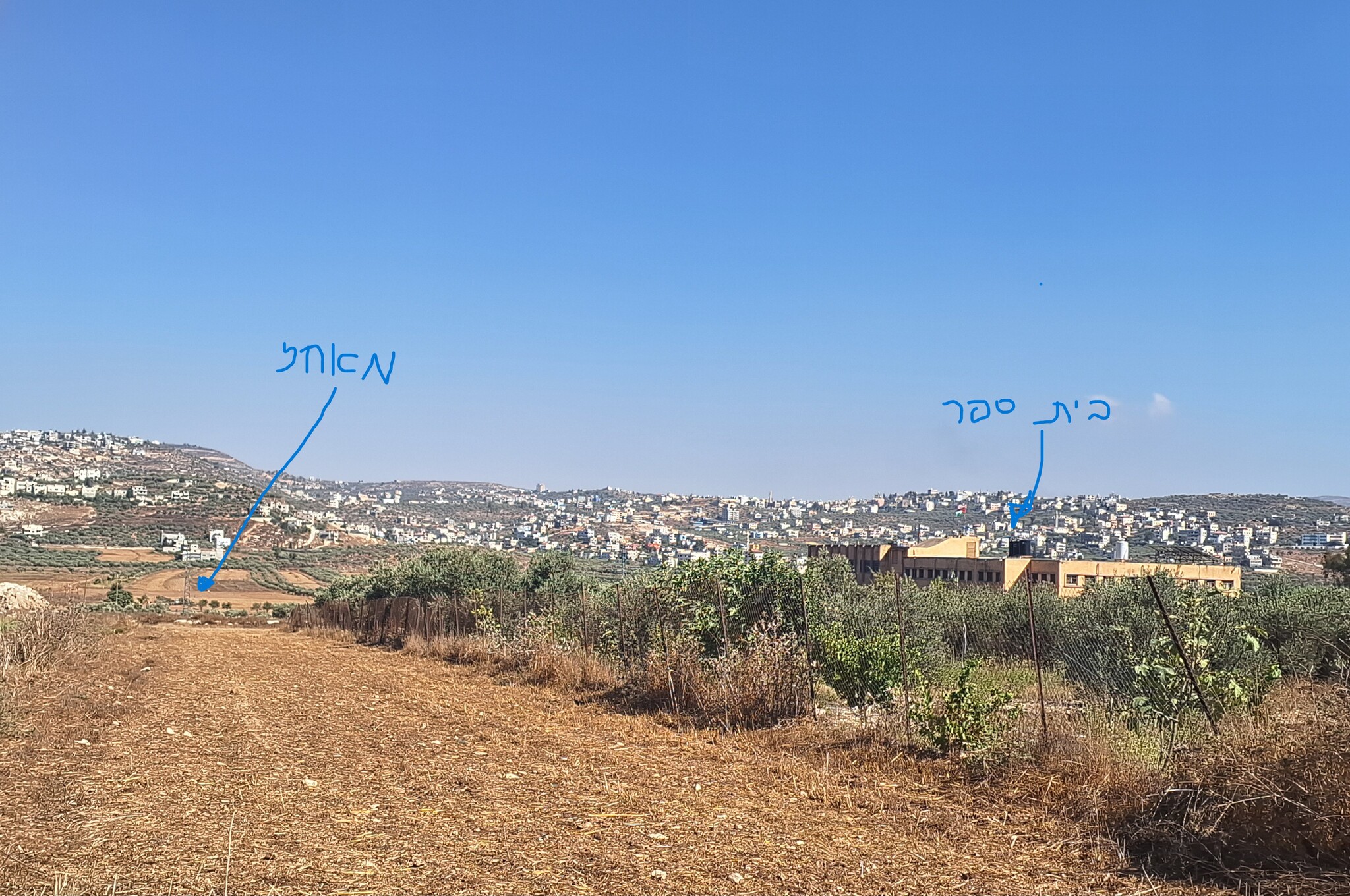 Ronit Dahan-RamatiAug-24-2026Huwara: The school on the outskirts of town and an outpost hidden among the trees
-
Za'tara (Tapuah)
See all reports for this place-
Za'tara (Tapuah) Za'tara is an internal checkpoint in the heart of the West Bank, at the intersection of Road 60 and Road 505 (Trans-Samaria), east of the Tapuah settlement. This checkpoint is the "border" marked by the IDF between the north and south of the West Bank, in accordance with the policy of separation between the two parts of the West Bank that has been in place since December 2005. At the Za'tara checkpoint, there are separate routes for Israelis and Palestinians. In the route for Israelis, there are no inspections and the route for Palestinians inspects. The queue lengthens and shortens suits. The checkpoint is open 24 hours a day. The checkpoint is partially staffed and the people who pass through it are checked at random.
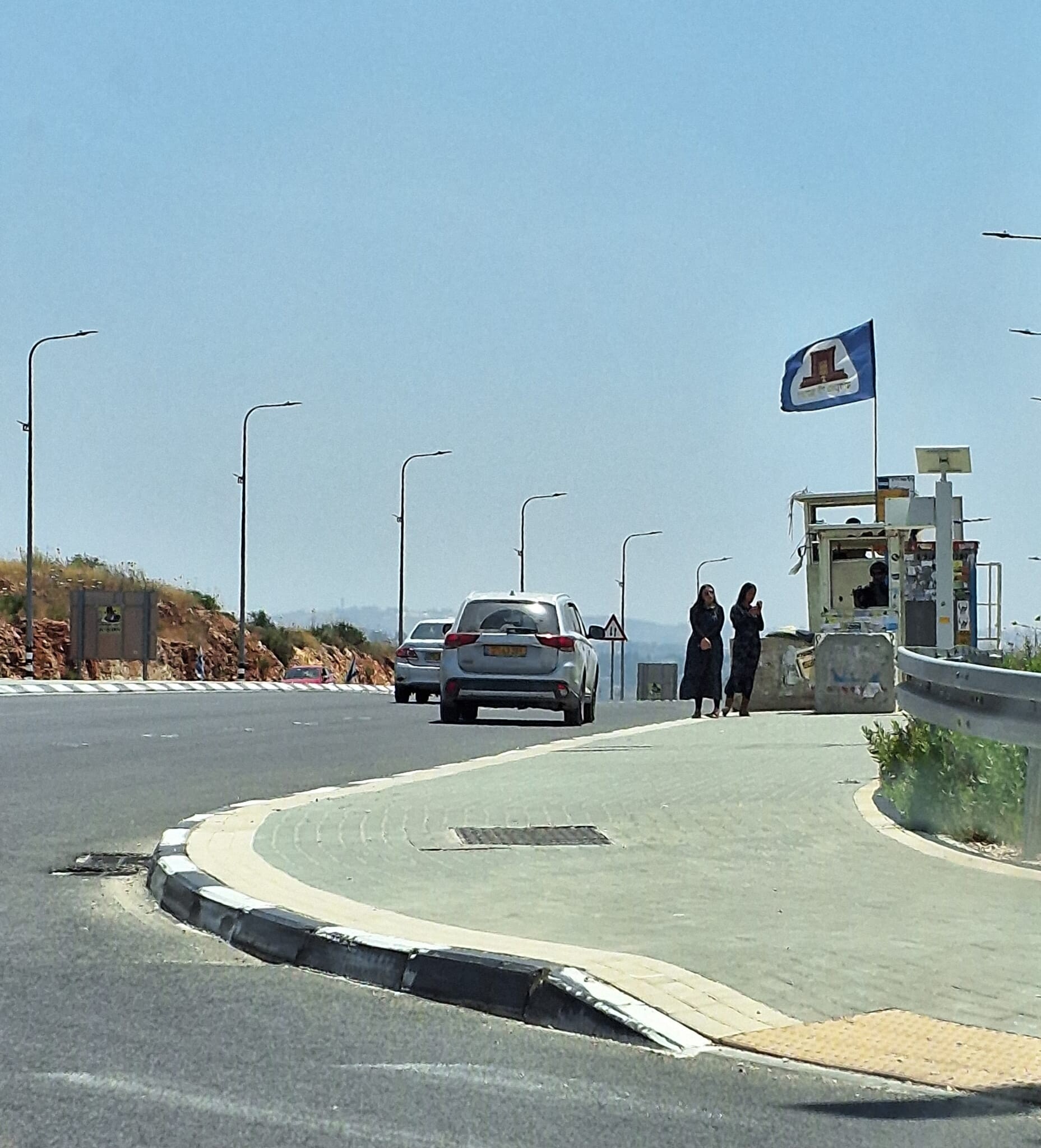 Ronit Dahan-RamatiJun-9-2026Za'atara (Tapuach Junction). The Temple Flag Above a Station
-