
‘Awarta, Beit Furik, Huwwara, Za’tara (Tapuah), Mon 3.11.08, Morning
Summary:
Beth Furik, almost no checking
Shepherd retained – in the field – for questioning.
Visit of "the Committee of Foreign Affairs and Security"at Huwwara.
Screaming session of "Blue and White"women.
7.15 Marda: open at both gates.
Zeita: "permanently" closed: not by the metal barrier-gate that was placed a few years ago and could be opened or closed, but with the well known big concrete blocks.
7.20 Za'tara (Tapu'ah): about 20 cars coming from Nablus. Two checking-lanes are working.
7.35 Beit Furik:
Only two soldiers, – outside the booth -, hardly looking at the ID's of the pedestrians entering and leaving Nablus, Also cars, entering, pass – after passengers leave the car for a check at the pedestrian-lane – and a quick look at the driver's ID. No traffic coming from Nablus.
7.45 We see an army-jeep racing about half a km. eastwards through the fields towards a shepherd. With our binoculars we can see them gesturing. After a few minutes the jeep comes racing back and eventually comes after us, while we were on our way walking on the "Madison Road" towards them.
A friendly and really polite soldier explains us:
"We received Secret-Service-info, specifically about shepherds spying in this area. They know they should not pass the earthen ramp and wall. We are waiting for the DCO because we cannot speak with him and he does not understand us."
In the mean time the shepherd walks direction checkpoint and waits with his flock at about 300m from there.
We wonder what there is "to spy on" in this completely empty area except the racing settlers (almost running us over!) on their way to Alon Moreh. The DCO takes too long for us to arrive, and, hoping he will not be arrested we leave.
8.15 Awarta, where there are about 10 cars waiting to be checked. A truck from a mayor-candidate from Tira (according to the info from our chauffeur) unloads "back-to-back" used office materials and furniture on a truck from Nablus.
8.20 Huwwara.
X-ray-truck active and so is the girl-soldier-trainer with her dog, checking several cars coming from Nablus. Looking through binoculars – a great help, now that we have to stand só far from the "proceedings"- one can see that even those, being friendly with dogs, would háte to have a dog going over their car the way it does!!
Several cars trying to enter Nablus are not allowed as they do not have a "permit" for the car. Even a peace-worker from the "Portland Trust",- a British NGO working for peace via economic development-, who is usually allowed to enter without any restrictions of a permit , is not let through*.
Pedestrian-checking: only one lane is open for men under 45. The so called "humanitarian" lane is open for women, children and men over 45; sometimes a younger man may pass after his ID no. is checked.
8.50- 9.30: between 15 min. till half an hour waiting for men under 45.
The humanitarian lane does not really help for couples as the women have to wait for their partners or mothers for their sons etc.
9.30 Second lane is opened, and soon there are only a few men waiting.
The DCO representative, A., here is a polite, reasonable and helpful guy; e.g.: a young man, looking really worried tells us that he cannot find his 14 year old nephew. He was probably left behind while they were standing in two different lines. He is let through after a short check and promised he can return without standing in line again. (the obvious reasonable and human approach to us, but rather amazing at the checkpost)
10.00 A group of visiting officers arrives and wanders over the whole area of the checkpoint and through the magnometers that do not stop hooting, creating even more stress and unrest than usual. Their arrival is just the first sign of more to happen, when at:
10.40 – another group of even "higher" officers (quite some "falafels"!) arrive. All this, as it appears, are preparations to be well informed of the situation and able to answer questions to the "Committee of Foreign and Security Affairs" (what has Foreign Affairs to do with Security?? Is it just to be able to do better PR to the outside world??) of the Knesset, which arrives a few minutes later.
10.45 – Only one person of this group walks independently around, really looking, while the others only listen to the briefing by one of the newly arrived officers. When we approached and listened, we realized that there was not much for us to say (apart from one sentence pointing out the absurd situation e.g. that cars that are not allowed to enter Nablus can drive to the North and enter Nablus without being checked at all): we really do not speak "the same language": no humanitarian aspect is playing any role, just "security"!
Just before the departure of this committee, after about twenty minutes, suddenly three "ladies" (?) of "Blue and White" arrive (who informed them??), probably not making a very good impression by their hysterical accusations pointing at us: "they call the soldiers Nazi's and endanger their lives!!" and a lot more to be ignored rubbish.
We leave together with the Knesset-bus, avoiding the provocations of the Blue White women, who approach the soldiers (passing the notorious "white line"!)and present them with little flags of some kind.
Our usual complaints:
– unbearable to see the either old or sick or invalid people, parents carrying babies, people carrying loads, having to do a distance of about 500 meters on foot through the checkpost as only very few cars and taxies are able to get permits to enter or leave Nablus.
– the narrow turnstiles that are almost impossible to pass for people with somewhat larger baggage.
– the lack of a suitable place where to reassemble belongings and reorganize belts etc after the check through the magnometer
– the rediculous zig-zag route pedestrians, with their luggage, have follow to reach the X-ray machine. (tourists, not familiar with the situation, were wandering to and fro until they found their way back to the spot where they could repossess their passports)
– the arbitrariness of decisions: (see: *peace-worker ); only " by the grace of God" was a lady allowed to pass, taking some kind of innocent looking, little motor with her (what happens if the soldier has a bad mood, does not want to take "responsibility", is scared, as they all probably are??)
– the cruelty and unlawful aspects of the occupation: a Palestinian, who had an accident during his work in Israel, not only has difficulty standing hours at the checkpoints, but does not see a cent from the Bituach Leumi he should be receiving.
We wonder:
>What is being prepared at the checkpoint? A tractor/ bulldozer is now leveling an area even higher up, after the road West of the vehicle lanes is widened and flattened.
>Who is operating and receives the benefits of the quarry west of the checkpoint?
Big lorries filled to the rim are driving there on and off.
.
'Awarta
See all reports for this place-
Awarta, an internal checkpoint in the heart of the West Bank, is located east of the Hawara checkpoint, at the junction of Roads 555 (which was forbidden for Palestinian traffic in this area) and the entrance road to Nablus. It was one of the four checkpoints that surrounded Nablus until 2009. We used to watch it at Huwwara shifts because it was the only one where goods could be transferred to and from Nablus, using the back-to-back method. It was operated by the army, from 06:00 to 20:00. Until 2009.
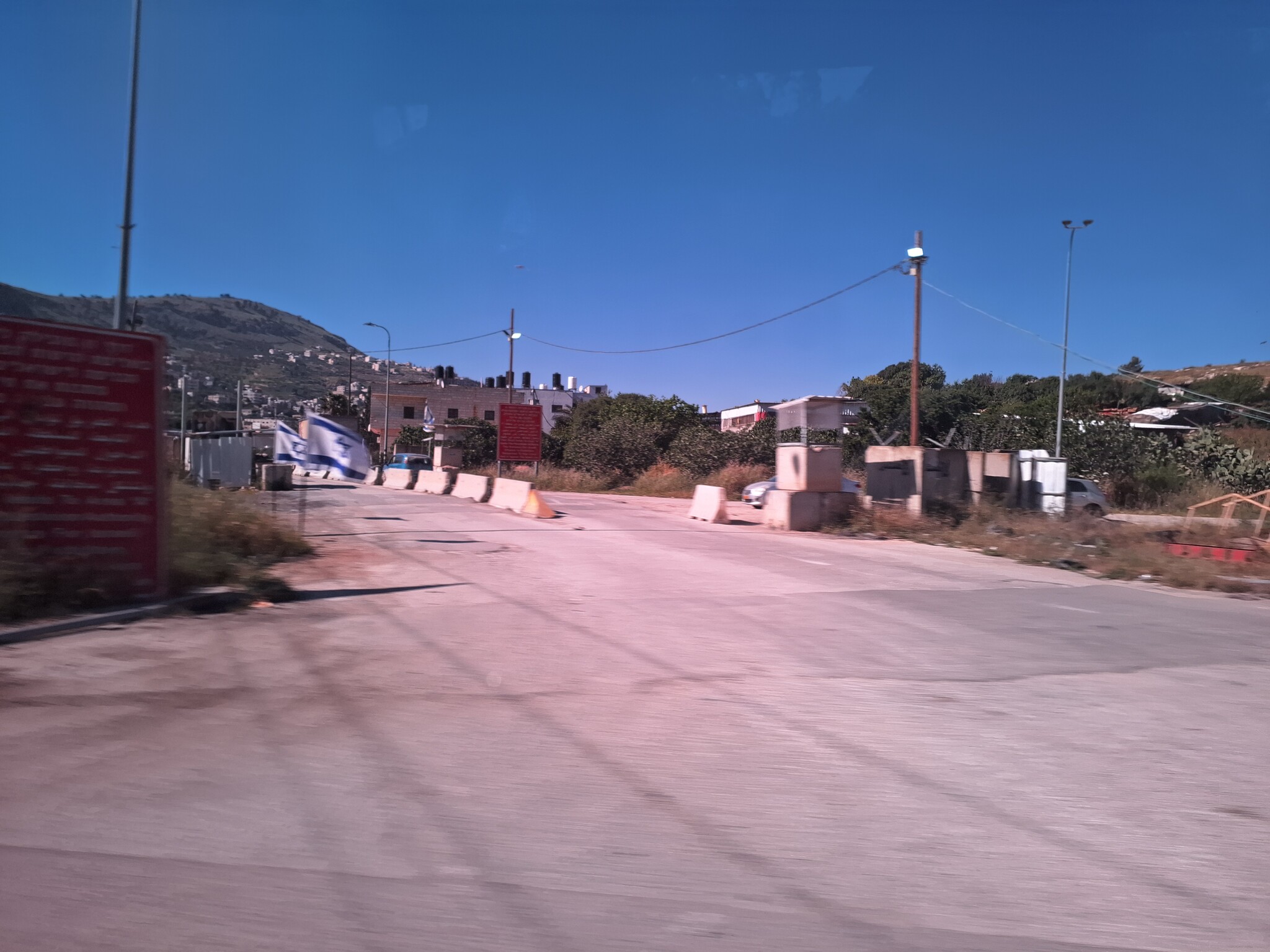 Ronit Dahan-RamatiApr-23-2026Awarta Checkpoint is empty
-
Beit Furik checkpoint
See all reports for this place-
One of the three internal checkpoints that closed on the city of Nablus - Beit Furik to the east, Hawara to the south, Beit Iba to the west. The checkpoint is located at the junction of Roads 557 (an apartheid road that was forbidden for Palestinians), leading to the Itamar and Alon Morea settlements and Road 5487. The checkpoint was established in 2001 for pedestrians and vehicles; The opening hours were short and the transition was slow and very problematic.Allegedly, the checkpoint is intended to monitor the movement to and from Nablus of the residents of Beit Furik and Beit Dajan, being the only opening outside their villages. Since May 2009 the checkpoint is open 24 hours a day, the military presence is limited, vehicles can pass through it without inspections, except for random inspections. (Updated April 2010)
-
Huwwara
See all reports for this place-
The Huwwara checkpoint is an internal checkpoint south of the city of Nablus, at the intersection of Roads 60 and 5077 (between the settlements of Bracha and Itamar). This checkpoint was one of the four permanent checkpoints that closed on Nablus (Beit Furik and Awarta checkpoints to the east and the Beit Iba checkpoint to the west). It was a pedestrian-only barrier. As MachsomWatch volunteers, we watched therre since 2001 two shifts a day - morning and noon, the thousands of Palestinians leaving Nablus and waiting for hours in queues to reach anywhere else in the West Bank, from the other side of the checkpoint the destination could only be reached by public transport. In early June 2009, as part of the easing of Palestinian traffic in the West Bank, the checkpoint was opened to vehicular traffic. The passage was free, with occasional military presence in the guard tower. Also, there were vehicle inspections from time to time. Since the massacre on 7.10.2023, the checkpoint has been closed to Palestinians.
On February 26, 2023, about 400 settlers attacked the town's residents for 5 hours and set fire to property, such as houses and cars. Disturbances occurred in response to a shooting of two Jewish residents of Har Bracha by a Palestinian Terrorist. The soldiers stationed in the town did not prevent the arson and rescued Palestinian families from their homes only after they were set on fire. No one was punished and Finance Minister Smotrich stated that "the State of Israel should wipe out Hawara." Left and center organizations organized solidarity demonstrations and support actions for the residents of Hawara.Hawara continued to be in the headlines in all the months that followed: more pogroms by the settlers, attacks by Palestinians and a massive presence of the army in the town. It amounted to a de facto curfew of commerce and life in the center of the city. On October 5, 2023, MK Zvi established a Sukkah in the center of Hawara and hundreds of settlers backed the army blocked the main road and held prayers in the heart of the town all night and the next day. On Saturday, October 7, 23 The "Swords of Iron" war began with an attack by Hamas on settlements surrounding Gaza in the face of a poor presence of the IDF. Much criticism has been made of the withdrawal of military forces from the area surrounding Gaza and their placement in the West Bank, and in the Hawara and Samaria region in particular, as a shield for the settlers who were taking over and rioting.
On November 12, 2023, the first section of the Hawara bypass road intended for Israeli traffic only was opened. In this way, the settlers can bypass the road that goes through the center of Hawara, which is the main artery for traffic from the Nablus area to Ramallah and the south of the West Bank. For the construction of the road, the Civil Administration expropriated 406 dunams of private land belonging to Palestinians from the nearby villages. The settlers are not satisfied with this at the moment, and demand to also travel through Hawara itself in order to demonstrate presence and control.(updated November 2023)
. Shoshi AnbarMay-18-2025Huwara: The old houses in Area C
-
Za'tara (Tapuah)
See all reports for this place-
Za'tara (Tapuah) Za'tara is an internal checkpoint in the heart of the West Bank, at the intersection of Road 60 and Road 505 (Trans-Samaria), east of the Tapuah settlement. This checkpoint is the "border" marked by the IDF between the north and south of the West Bank, in accordance with the policy of separation between the two parts of the West Bank that has been in place since December 2005. At the Za'tara checkpoint, there are separate routes for Israelis and Palestinians. In the route for Israelis, there are no inspections and the route for Palestinians inspects. The queue lengthens and shortens suits. The checkpoint is open 24 hours a day. The checkpoint is partially staffed and the people who pass through it are checked at random.
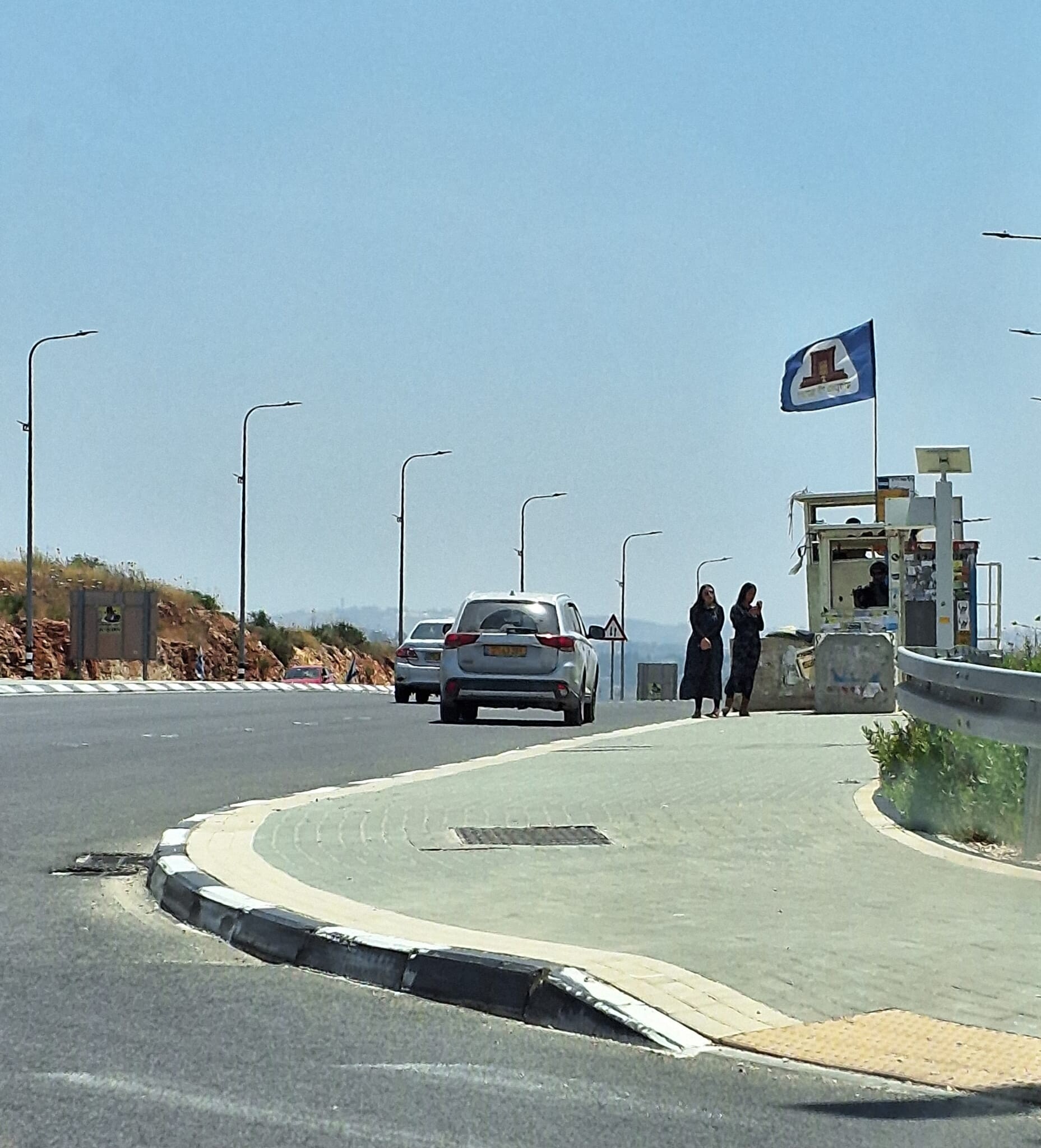 Ronit Dahan-RamatiJun-9-2026Za'atara (Tapuach Junction). The Temple Flag Above a Station
-