
Mufaqara - Settler Amichai Shiloh forbids residents from grazing on their land
Traveling along Highway 60, checking checkpoints and stopping at Nabil’s grocery store to buy groceries.
Samu’ – open
Dahariya – closed
Abda South – closed
Abda North – as in last week’s report, a military bulldozer is at work, piling up piles of dirt to reinforce the barrier to the village, in addition to a yellow checkpoint. On the side, a military jeep and a pickup truck with 4 armed soldiers next to them.

When we passed by the village of Abu al-Irqan, located opposite the Othniel settlement, we noticed several cars going up the hill to reach the village and they were all stopped, their occupants had to get out of the vehicles and continue on foot. It turned out that the road had been blocked without their knowing about it.
This is what daily life looks like for Palestinians in the occupied territories.
Nothing unexpected.
We continued towards the Zif junction, to the grocery store. The entrance to Yatta is open, without military supervision.
We are traveling to meet Nasser Adra from A-Tuwani, with whom we had arranged to travel to Khalet al-Daba’. This village has been suffering for years from invasions, displacements, burning, house demolitions, physical violence against the villagers, even 86-year-olds and 4-year-old children. Let me remind you that these are Jewish terrorists from outposts and settlements around Khalet al-Daba’.
Muhammad and I have tried to get there twice since the last pogrom and the attempts were unsuccessful. The army, police and settlers do not leave the Palestinians in peace. The goal is unequivocal to discourage, abuse and expel.
We arranged with Nasser from A-Tuwani and Jaber from Khalet al-Daba’ that we would come and pick up Nasser from his house, drive towards Khalet al-Daba’, and, depending on the situation, we would decide whether to continue there or stop at Qassem Hamamdeh in Mufaqara at his home. They live on the edge of Mufaqara, on the road to Khalet al-Daba’, and he receives regular information about what is happening there.
The last time, on June 1, we were forced to stop at his home and we could see a settler van loaded with mattresses and items stolen from the residents of Khalet al-Daba’. The same is true this time. Information has arrived that the army comes there from time to time and the risk of getting there is great. There is a chance that even if we do enter, we will not be able to leave, either because of harassment by the police or the settlers. We let Jaber Dababsa know that we had left food, clothing and games with Qassem, with no choice.


Qassem hosts us in his shig (a gathering and dining place) and some of his grandchildren, very sweet, are sitting with us. The children study in kindergartens and schools until Wednesday and the rest of the days at home. The explanation for this is the difficult financial situation of the Palestinian Authority. There is no budget for paying salaries.
The children are at home with no extra-curricular activities or zoom as Israeli children had in the Corona period or any other.
Qassem shows us a large area of land between Amichai Shilo’s farm (called Droma) and Yosef’s farm, located opposite Khalet al-Daba’. He says that Amichai came to this area several times with his flock and the sheep ate almost all the trees he planted 14 years ago. He is also forbidden to graze his flock and, as in all villages, is forced to buy food in bags and the payment is extremely onerous.

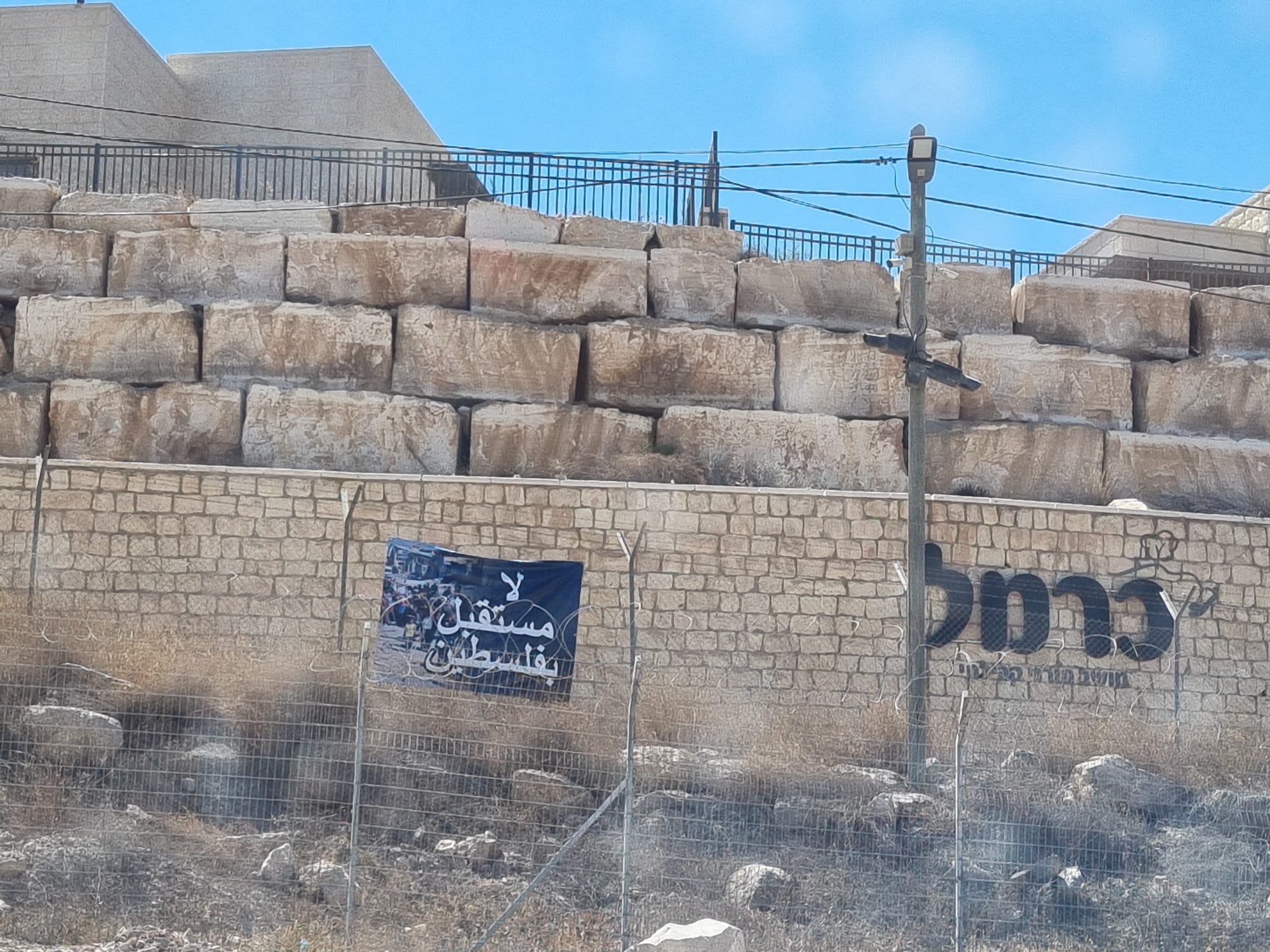
At the entrance to A-Tuwani, a grocery store was opened with the help of the council that will serve the residents of A-Tuwani and all the surrounding villages, which will make it much easier and save a trip to Yatta.
Remember that a few days ago a yellow checkpoint was also placed at the entrance to A-Tuwani and there is no certainty about either entry or exit.
The day after our visit, we asked if what we had left with Qassem had been delivered, and indeed it had been done, and they thanked us very much.
#ThisIsTheOccupation
Location Description
A-Tuwani
See all reports for this place-
A-Tuwani
The locals came to a-Tuwani during the 20th century from the village of Yatta. They settled in abandoned ruins, utilizing the arable land, pastures for grazing sheep and the abundance of natural caves for habitation. The residents who settled in the caves came from families who could not purchase land for houses in the mother villages, as well as shepherds who did not have enough land to graze. They were joined by clan members who quarreled with other families in the mother locality.
Some of the residents today live in concrete buildings built above the caves. In the area of the village are several water cisterns and an ancient water well called 'Ein a-Tuwani. Local residents are forced to buy water in containers and transport them through many road blocks to the village. With the help of international organizations, an electrical system was installed in the village. In the late 90s of the 20tTh century, an elementary school was established in the serving several small villages in the area.
In 2004, MachsomWatch began visiting and reporting from the Khirbet Tuwani cave village, which suffers badly from the settlers of nearby outposts, and especially from the extremist Ma'on outpost. . The settlers contaminate cisterns, poison the flocks and uproot trees.Particularly notable is the harassment of children from the surrounding villages on their way to school in a-Tuwani, so much so that military escort of children is required to separate them from the attackers (this was arranged following an initiative of the organization's members). In the past year, the escort has been without the vital presence of overseas volunteers.
Near a-Tuwani there are several families who have returned to the caves due to the incessant demolitions of the civil administration (as there is a total construction ban in all of area C). Destroyed are not only residential and agricultural buildings, but also water pipes, machinery. Even water cisterns are clogged up. a-Tuwani residents have created an association for non-violent demolition protests, but in the past year the army’s harsh harassment and settler violence have intensified and escalated. The incident of the small generator confiscation, which left a young man paralyzed, is one of many examples - any legitimate protection of property rights leads to violence and even shootings by the army and the civil administration.
Updated April 2022
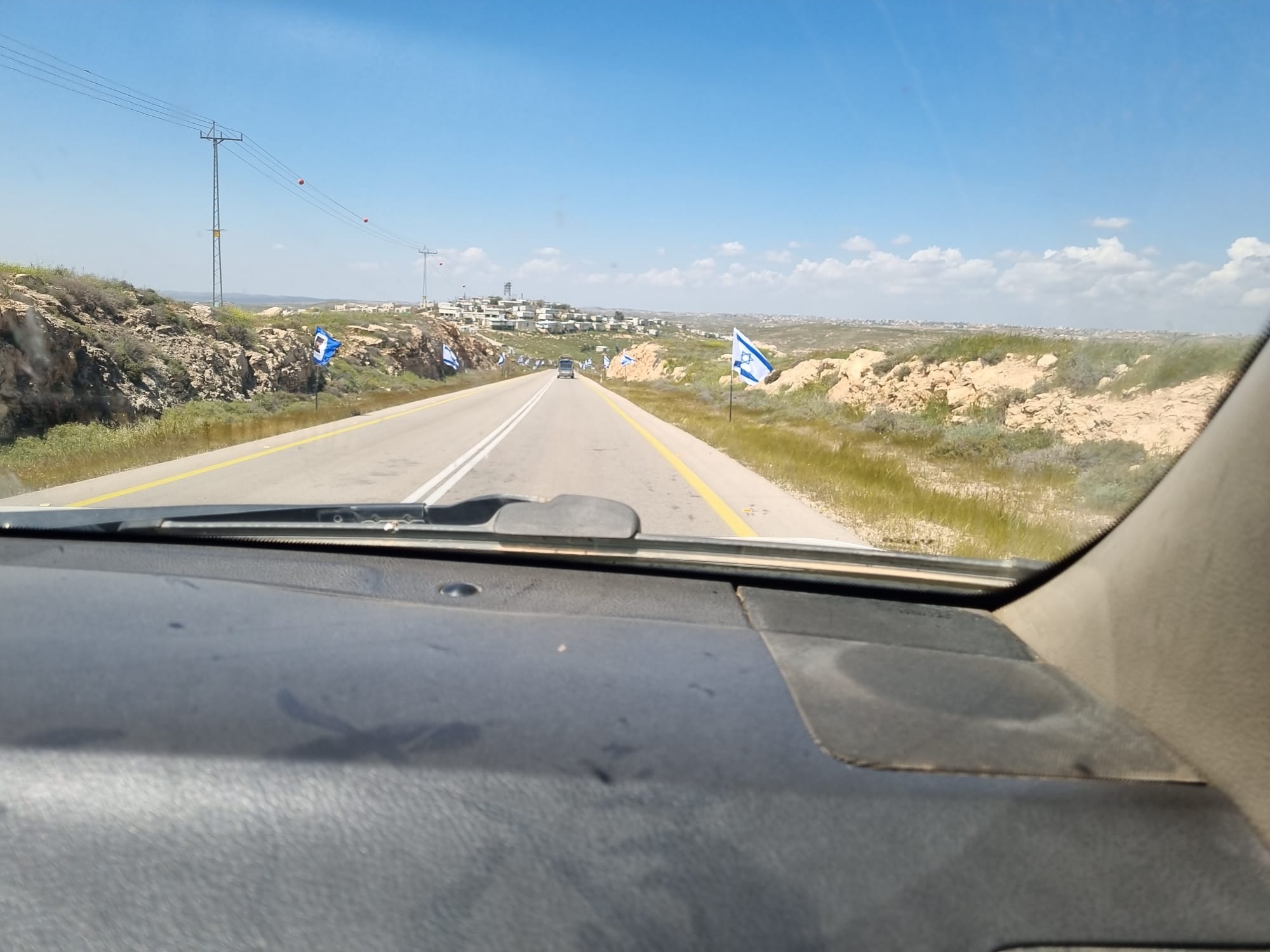 Smadar BeckerApr-10-2026New Israeli flags placed for miles on Highway 317 to prove who is sovereign
-
Masafer Yatta*
See all reports for this placeSouth Hebron Hills
See all reports for this place-
South Hebron Hills
South Hebron Hills is a large area in the West Bank's southern part.
Yatta is a major city in this area: right in the border zone between the fertile region of Hebron and its surroundings and the desert of the Hebron Hills. Yatta has about 64,000 inhabitants.
The surrounding villages are called Masafer Yatta (Yatta's daughter villages). Their inhabitants subsist on livestock and agriculture. Agriculture is possible only in small plots, especially near streams. Most of the area consists of rocky terraces.Since the beginning of the 1980s, many settlements have been established on the agricultural land cultivated by the Palestinians in the South Hebron Hills region: Carmel, Maon, Susia, Masadot Yehuda, Othniel, and more. Since the settlements were established and Palestinians cultivation areas have been reduced; the residents of the South Hebron Hills have been suffering from harassment by the settlers. Attempts to evict and demolish houses have continued, along with withholding water and electricity. The military and police usually refrain from intervening in violent incidents between settlers and Palestinians do not enforce the law when it comes to the investigation of extensive violent Jewish settlers. The harassment in the South Hebron Hills includes attacking and attempting to burn residential tents, harassing dogs, harming herds, and preventing access to pastures.
There are several checkpoints in the South Hebron Hills, on Routes 317 and 60. In most of them, no military presence is apparent, but rather an array of pillboxes monitor the villages. Roadblocks are frequently set up according to the settlers and the army's needs. These are located at the Zif Junction, the Dura-al Fawwar crossing, and the Sheep Junction at the southern entrance to Hebron.
Updated April 2022
Smadar BeckerApr-10-2026New Israeli flags placed for miles on Highway 317 to prove who is sovereign
-
Zif Junction
See all reports for this place-
Zif Junction located on the crossroads that directs towards Road 356 to Yata. Yata is the district city of the southern Hebron Mountains. Usually, this junction is open to traffic. The nearby pillbox is unmanned. But the army and police are present occasionally, sometimes setting up a checkpoint and sometimes detaining residents from the big city. Often, the Israeli policemen inspect vehicles and distribute driving reports to Palestinian vehicles. s
-