Duma: Settler harass the Bedouin community
Observers: Fathiya Akfa (reporting), Ronit Dahan-Ramati (reporting and photography) Trans. Judith Green
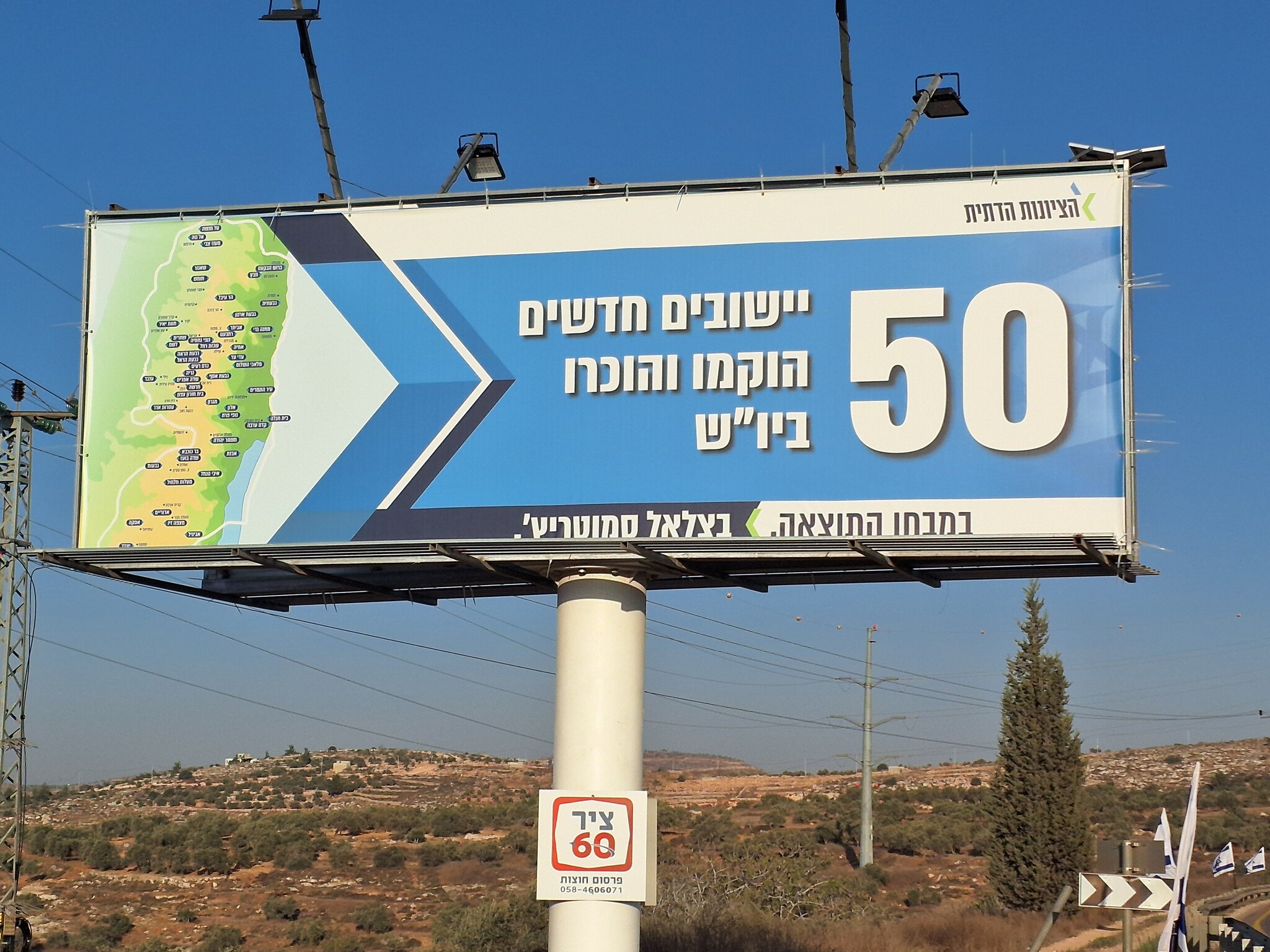
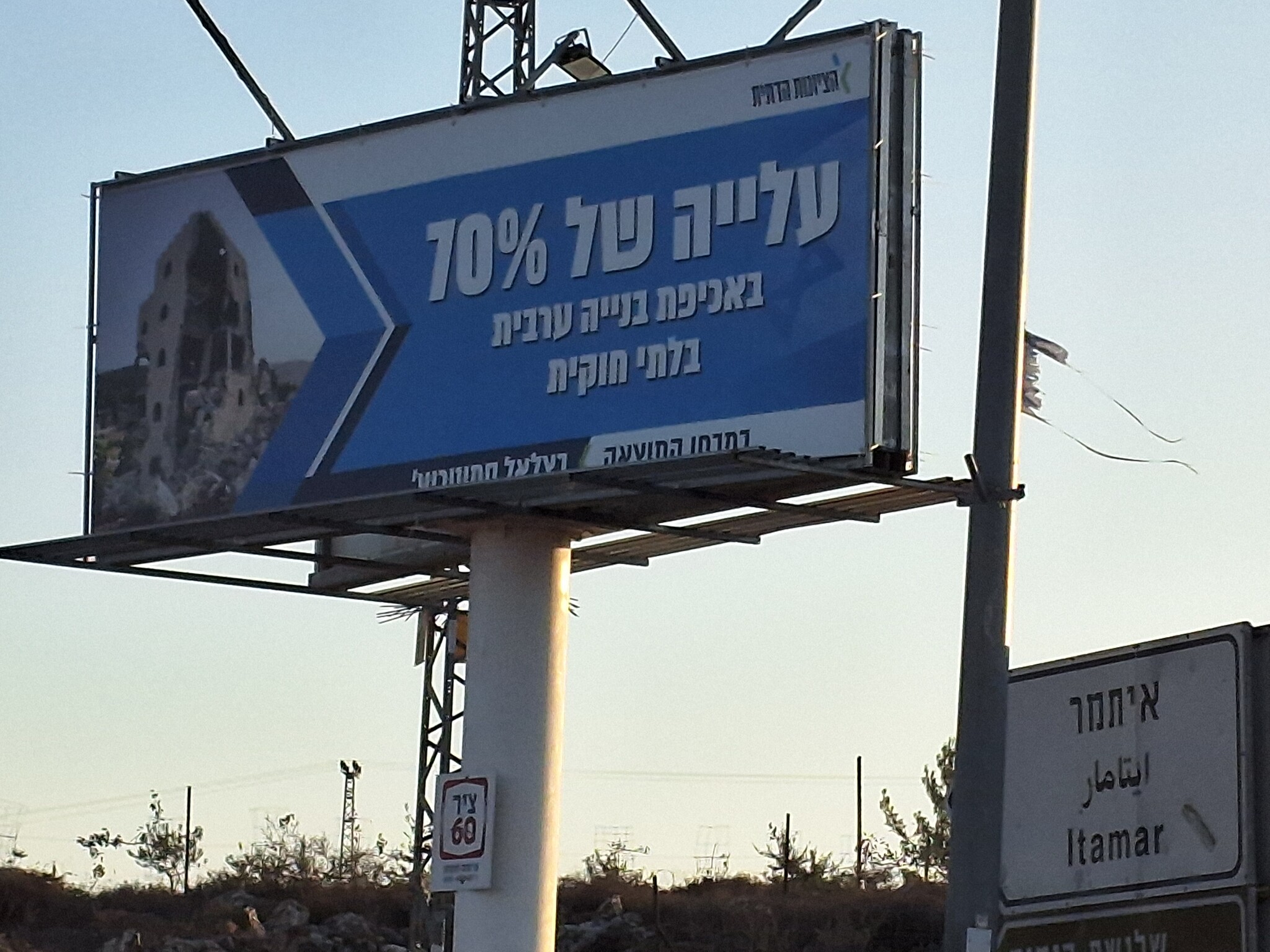
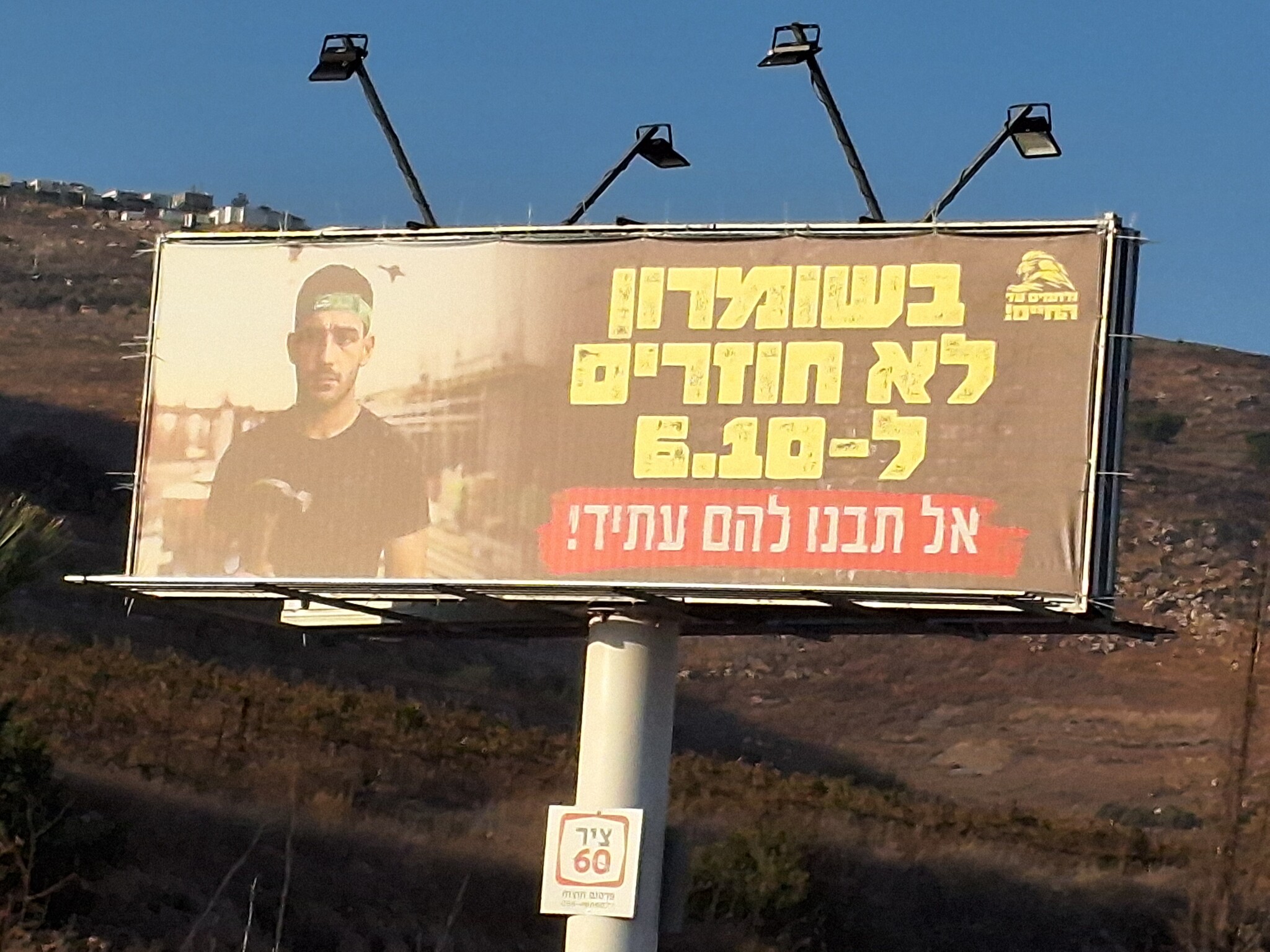
On the roads where we were traveling, one could still see the sign which we reported previously, saying “In Shomron, we are not returning to Oct. 6, don’t build them a future!”. This time, we also photographed it. In addition to that, there were signs from the Religious Zionist party and Bezalel Smotrich announcing proudly the number of new settlements that had been erected, the number of housing units that had been permitted and also that they were demolishing houses belonging to Arabs… does this mean that elections are approaching?
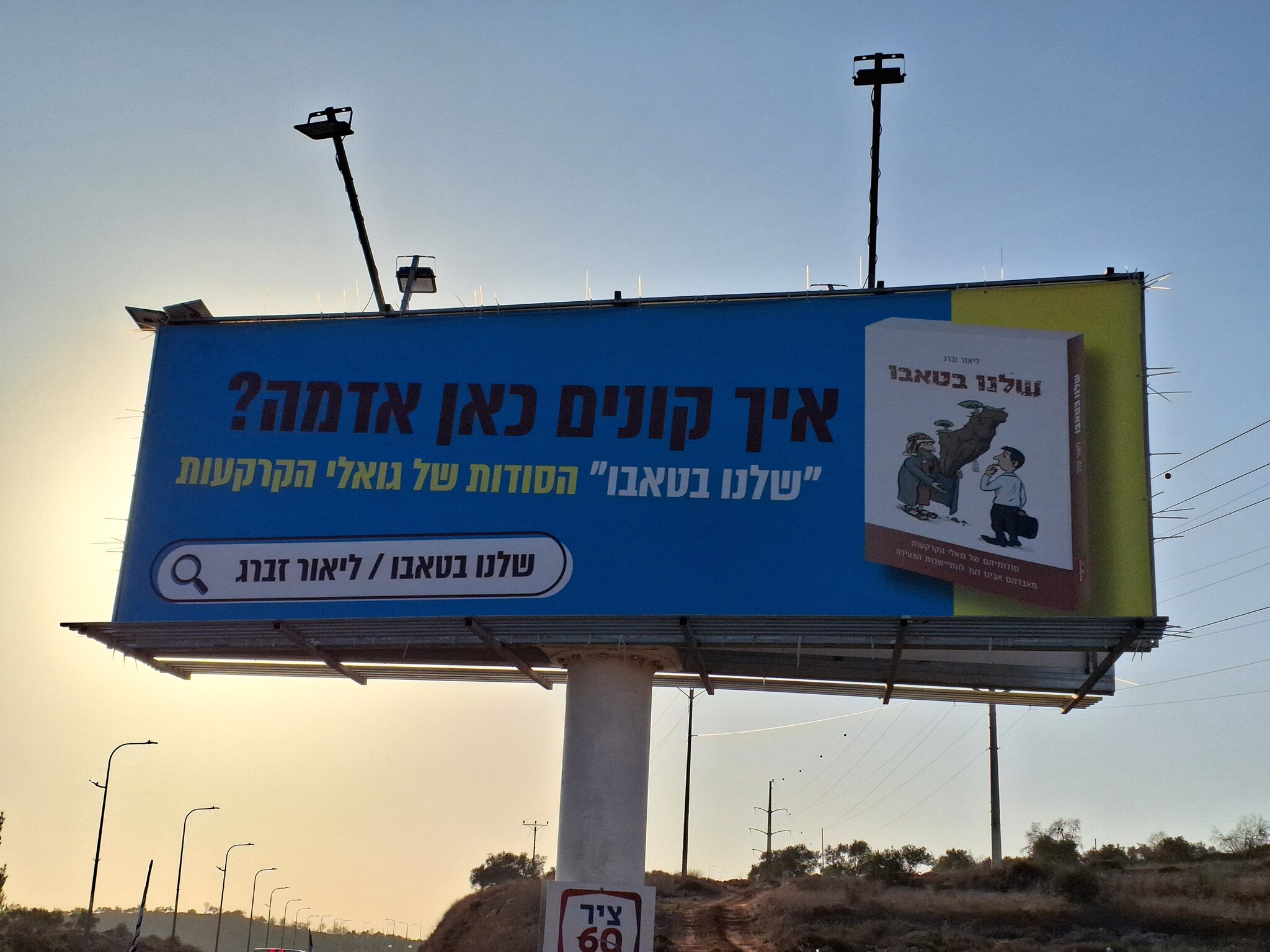
We met up with such signs a number of times. And also someone’s signs advertising the book written about the acquisition of land or housing units within the West Bank.
As Fathiya wrote, the main business of our shift was a visit to the municipality of Duma, where we met a woman who had just been in the village of Majdal in order to help with the olive harvest. She said that on Thursday the residents of ‘Aqraba, Majdal and Qusra got permits to harvest their olives. Women from Duma went to help them at the harvest, but settlers accompanied by soldiers arrived in the area and expelled them. On the same Thursday, at 13:00, settlers were riding around in their tractors on the roads of the village and saw 4 women walking down the road; they forced them, with threats, to go home and rode after them. One of the volunteers saw them and helped the women get home.
At the Municipality of Duma, we also met Anat, who arrived after a few days and nights of presence to assist the Bedouin communities who lived east of Duma, after they had been expelled from their locations in the Jordan Valley. Two representatives of the community accompanied Anat who came to talk about their difficult situation, since they have no work or salary and they suffer terribly from the harassment of the settlers. They came to ask for help.
Fathiya reported on the meeting: The representatives of the Bedouin community came to complain at the Council about how the settlers blew up their water pipes and the electric cables. They related that they went to the police of Sha’ar Benyamin to complain and had to wait several hours outside in the burning sun. They presented their complaint, but there was no response. They said that they do not go out to work and stay in the house in order to protect their women and children from the settlers who can come and harm them. When they don’t go out to work and they have no income the shop owners do them favors and help them. The Council does not help them to repair the damages, on the excuse that the settlers will only return and wreck everything. They also complained that the clinic is open only one day a week. They are forced to go a long distance by foot to get to a clinic and, if the volunteers don’t go with them, the settlers force them to go back.
In Duma there is a neighborhood of houses that were built 15 years ago and they are in Area C. All of them received demolition orders 15 years ago, but only now did the Administration send them demolition notices. One of the houses was demolished a week ago. The Civil Administration, accompanied by soldiers and settlers, arrived in Duma with tractors and trucks in order to carry out and demolition and they didn’t come on the main road to Duma but rather entered by way of one of the narrow allies and couldn’t turn around, so they struck the walls of one of the houses and also struck an electric pole.
Anat emphasized before the representatives of the Municipality of Duma that it is important that they assist the miserable Bedouin communities, since they are presently the shield for Duma. If they are forced to evacuate because of the pressures of the settlers, the next goal of the Jewish terrorists will be Duma itself (which has already suffered, as we remember, from Jewish terror which brought about the murder of the parents from the Dawabshe family and their baby, Ali, as well as serious burns on their son, Ahmed). The people of Duma, on their part, made clear that they are in serious financial straits.
We were happy to hear that the report which Fathiya received, that the blockage of the entrance to Beta was removed. The yellow gates are open. Also the other places where we often photograph traffic jams, like the Huwarra checkpoint (on the way that leads from Awarta to Nablus) and the checkpoint at Beit Furiq (on the way from Nablus), it seems the checkpoints are not manned and there are therefore no traffic jams. Near the road coming from Awarta, they set up shooting range. We saw the dirt batteries all around. On our way back, the checkpoint at Sara (which comes from Nablus to route 60) was not manned and the traffic flowed. So we, when we wanted to turn westward to route 55, had to wait and give precedence to those coming from Sara. On the contrary, near the Tapuach junction, there was a blockage (yellow gate closed) on the road leading to Yatma.
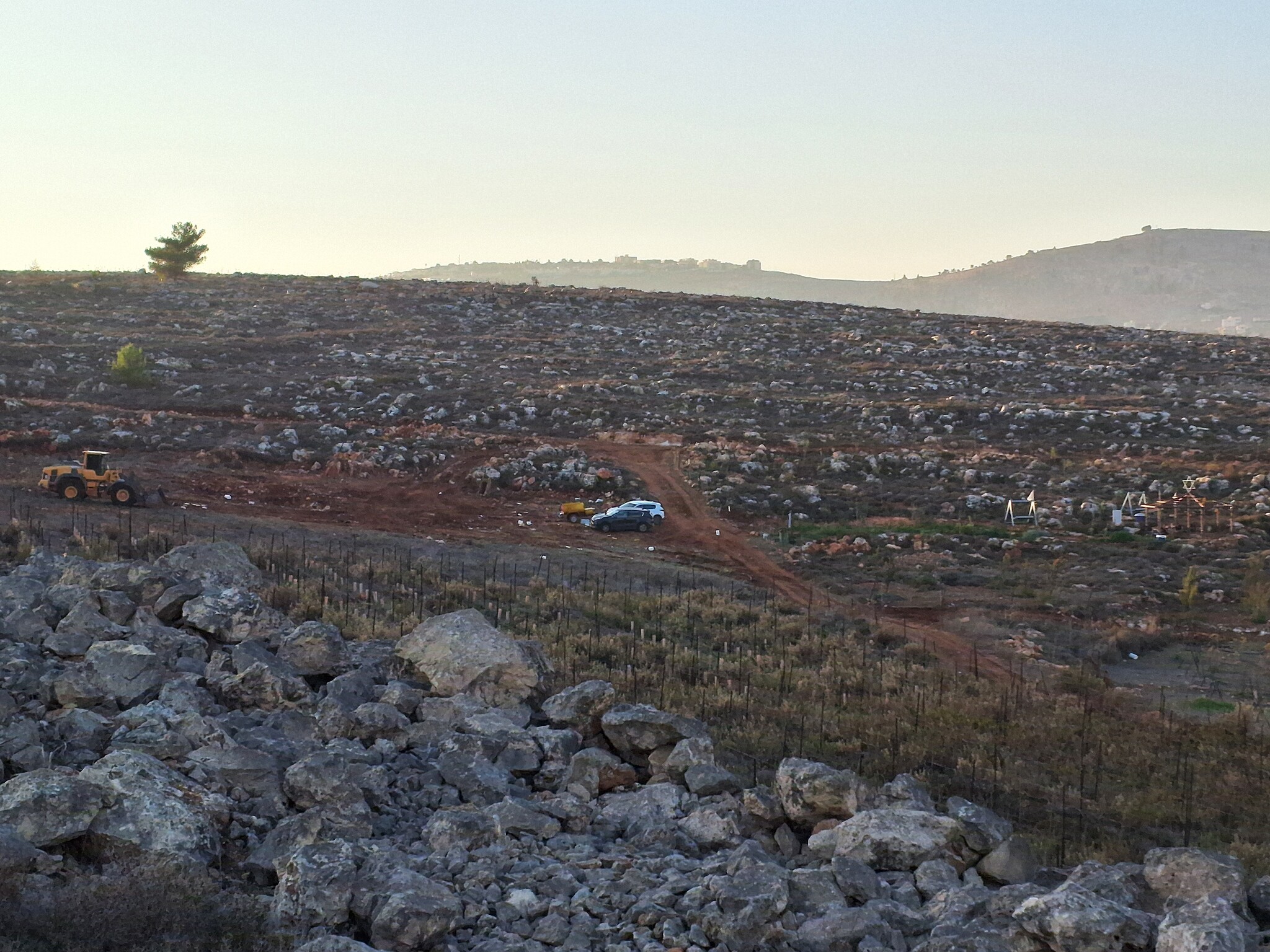
Next to the turnoff to Itamar from route 555, we saw that, on the northern side of the road, there are all sorts of work projects going on. Also on the descent next to the road and also at least two excavators that were working on the next hill. The settlements continue to expand…
Next to the bus station on the road, there is a monument in memory of Matan Zagron. The memory site teaches that on 27.10.2002 he and 2 additional soldiers fought with a terrorist who arrived with an explosive belt at the gas station next to Ariel. The bomb that the terrorist was wearing exploded and Matan and the other 2 soldiers who tried to overcome him were all killed. He was a graduate of the Itamar yeshiva and is buried in Itamar.