
Northern Jordan Valley: Continued distribution of fans
Once again we loaded fans up to the ceiling of the car and went out on the hottest day of the year to the Jordan Valley.
We started in Humsa, to the same community that we brought two fans to last week, but it has four families, so we brought two more. The children of the community ran to us when they saw the car in the distance, and when we arrived, they opened the car doors and we had to fight them so that they wouldn’t snatch everything in the car. Finally we quickly got back to the car and drove away. Visits to this community have become very unpleasant and the truth is, we avoid this community as much as possible.
A second stop at A. and R. in Khallet Makhoul, a visit that brought back our smiles. It’s such a pleasant family. Every visit to them and every conversation with them and their children is a break of pure pleasure. Last week we brought a fan to each of the Makhol families, and today we brought them another fan for A-S, the father of R. from al-Hadidiya.
We went to Ein al-Hilwe to get four fans – one for each of the four families who stayed there. (Four families left/fled the hilltop criminals). We started at P.’s, where we met one of the activists who had been there since last night to protect the families; We also met there Buma Inbar, who brought food to the families. The families who stayed came to a real hunger because they can’t graze anywhere. Buma tried to make peace between the families (all brothers) who were at odds with each other, without being able to speak to them in Arabic. The attempt failed, of course. Buma and P. tried to interest us in the details of the conflict, but we refused to get into it. It wasn’t our business.
F.’s daughter is frighteningly thin, and the worried parents showed us tests that indicate acute anemia. She claims that she can’t eat except for a pinch. She is given iron pills and ENSURE to strengthen her. In our unprofessional opinion, the girl is depressed. Maybe because of the situation or maybe as a result of the constant anxiety about the settlers who often invade their home.
We gave the activist we met at F.’s a fan for A. from al-Farisiya (in the evening her husband texted us a heartfelt thank you for that) and two more for the activists who stay there for the night in defense of the Palestinians. We brought two more fans to ‘A., P.’s brother, who lives across the road, but his sons, who had left the valley because the army had destroyed their homes and pens, and because of the settlers’ misdeeds, ran to us and kidnapped them. We hope that they will give one to their father.
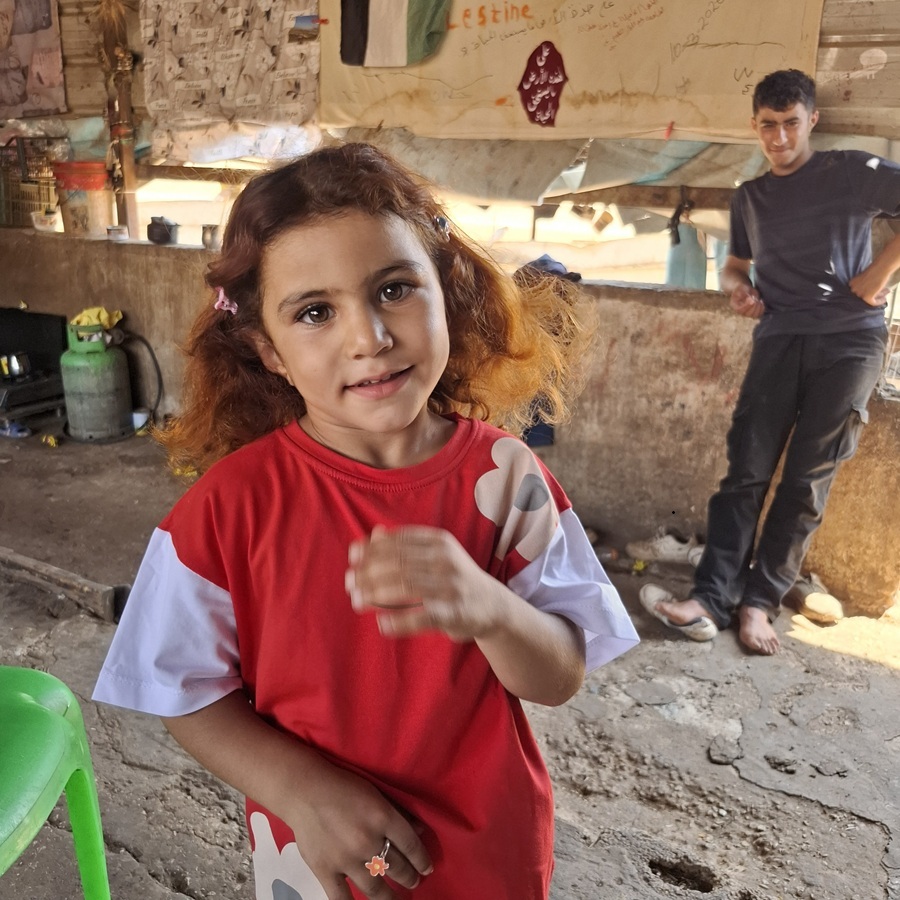
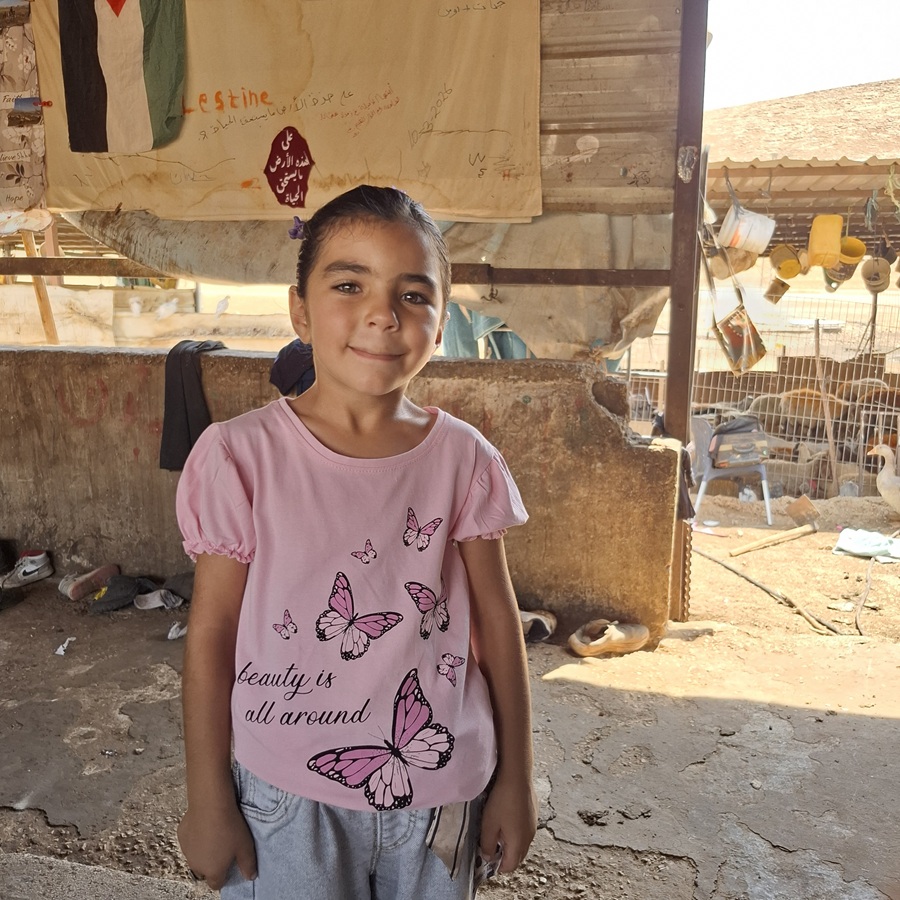
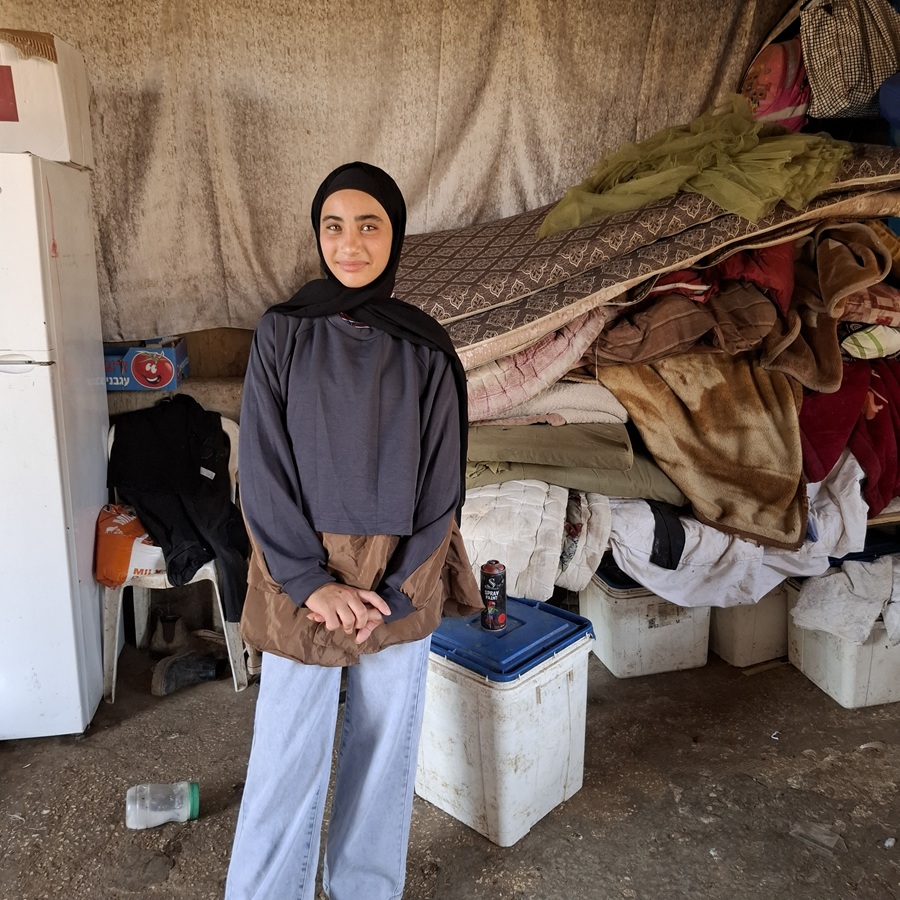
We received a request from Y.’s daughter from Makhul to drive his young daughters (J., aged 5, and J., aged 4) to Ein al-Beida, about 20 km away, for a fun day organized by a German organization. The little girls had combed their hair, put on their festive clothes and new shoes specially taken out of the box. What excitement there was in the humble tin shack! And then, as we were standing at the doorstep, a phone call came announcing that the event was canceled. You should have seen the tears in the eyes of the young girls and their sister, who had also dressed up to accompany them. It broke our hearts.
I said, “Who wants to go buy ice cream?” and they jumped for joy. Another brother, 12 years old, asked to join and spent the entire drive searching my phone for happy music to accompany our little trip. We bought ice creams for the whole family (13 people), two cans of drinks, and two water guns for the little girls, for a total of 26 NIS (!). When the shopkeeper told us the amount, our jaws dropped in astonishment. In Israel, that wouldn’t even buy you two ice creams! We decided to end the day with the smile that was brought back to Y.’s daughters’ faces.
Location Description
'Ein al-Hilwe
See all reports for this place-
Ein al-Hilwe is a natural spring and a Palestinian grazing area in the Jordan Valley that was used by the Palestinian shepherd communities for watering their flocks and for daily use. As of 2021, settlers from the Maskyot settlement took control of the spring: they fenced it off, built a wading pool and a mikveh, and installed flags and recreational facilities.
Palestinians are effectively denied access to the spring, and are forced to make do with running water in a remote wadi or, when the road is blocked, buy water from vendors at high prices.
The spring is located in the heart of an area where illegal outposts are being established, as part of a broader trend of pushing Palestinian communities away by denying them access to essential resources. Neighboring communities such as Umm Jamal and Khirbet Samra have already left due to the pressure.
Over the years, MachsomWatch members have reported arrests on false claims by settlers, harassment and violence, including damage to herds, intrusion into homes, and the intimidation of children. MachsomWatch volunteers participate in a protective presence in areas around the spring to prevent harassment of shepherds due to the presence of settlers.
-
Humsah
See all reports for this place-
Humsah
A shepherd community in the Jordan Valley. It is located in a remote place in Area C. There are no convenient ways to reach it. Its inhabitants make a living from their flocks. Like other shepherd communities, they live without basic infrastructure. This shepherd community is exposed to settler harassment and demolition of property by the military through civil administration orders.
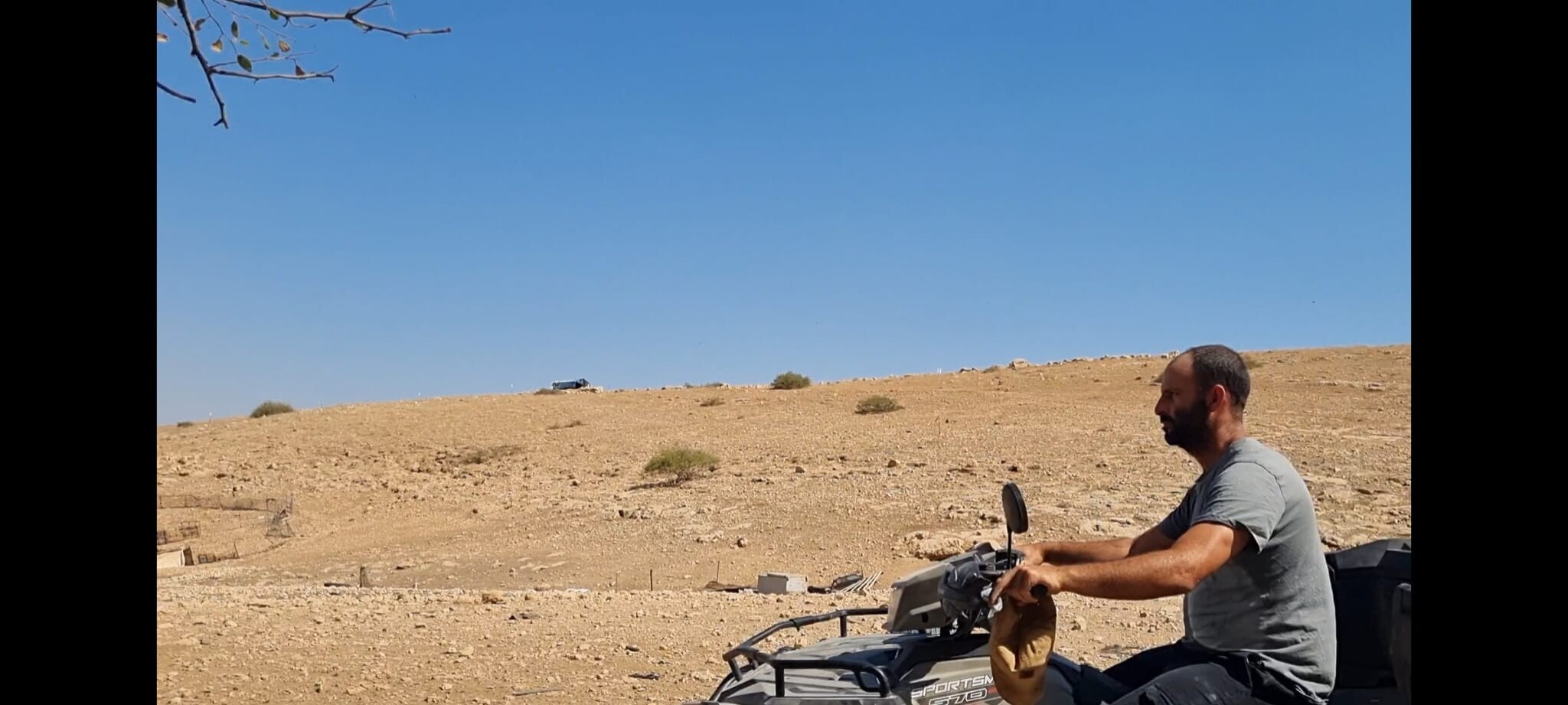 Rachel AfekJul-22-2026Samra. Uri from the outpost on a daily visit
-
Jordan Valley
See all reports for this place-
Jordan Valley The Jordan Valley is the eastern strip of the West Bank. Its area consists of almost a third of the West Bank area. About 10,000 settlers live there, about 65,000 Palestinian residents in the villages and towns. In addition, about 15,000 are scattered in small shepherd communities. These communities are living in severe distress because of two types of harassment: the military declaring some of their living areas, as fire zones, evicting them for long hours from their residence to the scorching heat of the summer and the bitter cold of the winter. The other type is abuse by rioters who cling to the grazing areas of the shepherd communities, and the declared fire areas (without being deported). The many groundwaters in the Jordan Valley belong to Mekorot and are not available to Palestinians living in the Jordan Valley. The Palestinians bring water to their needs in high-cost followers.Rachel AfekJul-22-2026Samra. Uri from the outpost on a daily visit
-
Khalet Makhul
See all reports for this place-
Khalet Makhul
A small settlement of a shepherd community located on the way to the settlement of Hemdat. Two nearby outposts make life miserable for the Palestinians, who make a living from grazing, and the army backs the settlers. As a result, the possible grazing areas are getting smaller.
The local children attend school in the settlement of Ein Al-Beida. Long lines of 3 hours sometimes stretch out at the Hamra and Tayasir checkpoints leading to the town of Tubas, making it difficult to get water, supplies, and sell the cheese, milk, and meat that the residents produce for their living.
Following a deadly attack at the Tayasir checkpoint in February 2025, the checkpoint was closed completely for the time being.
(Updated March 2025)
-