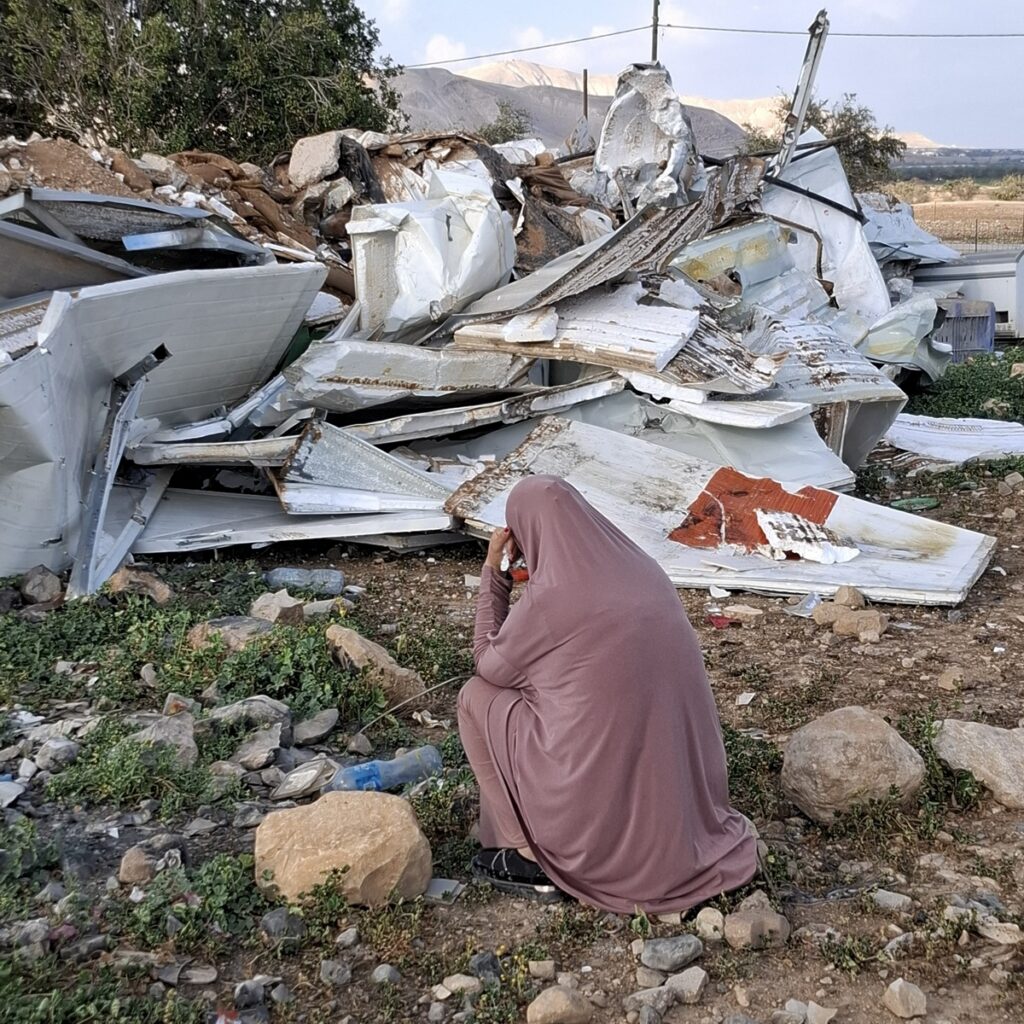
Qawawis - The settlers come with the ATVs (at all hours of the day), cursing, shouting and making noise
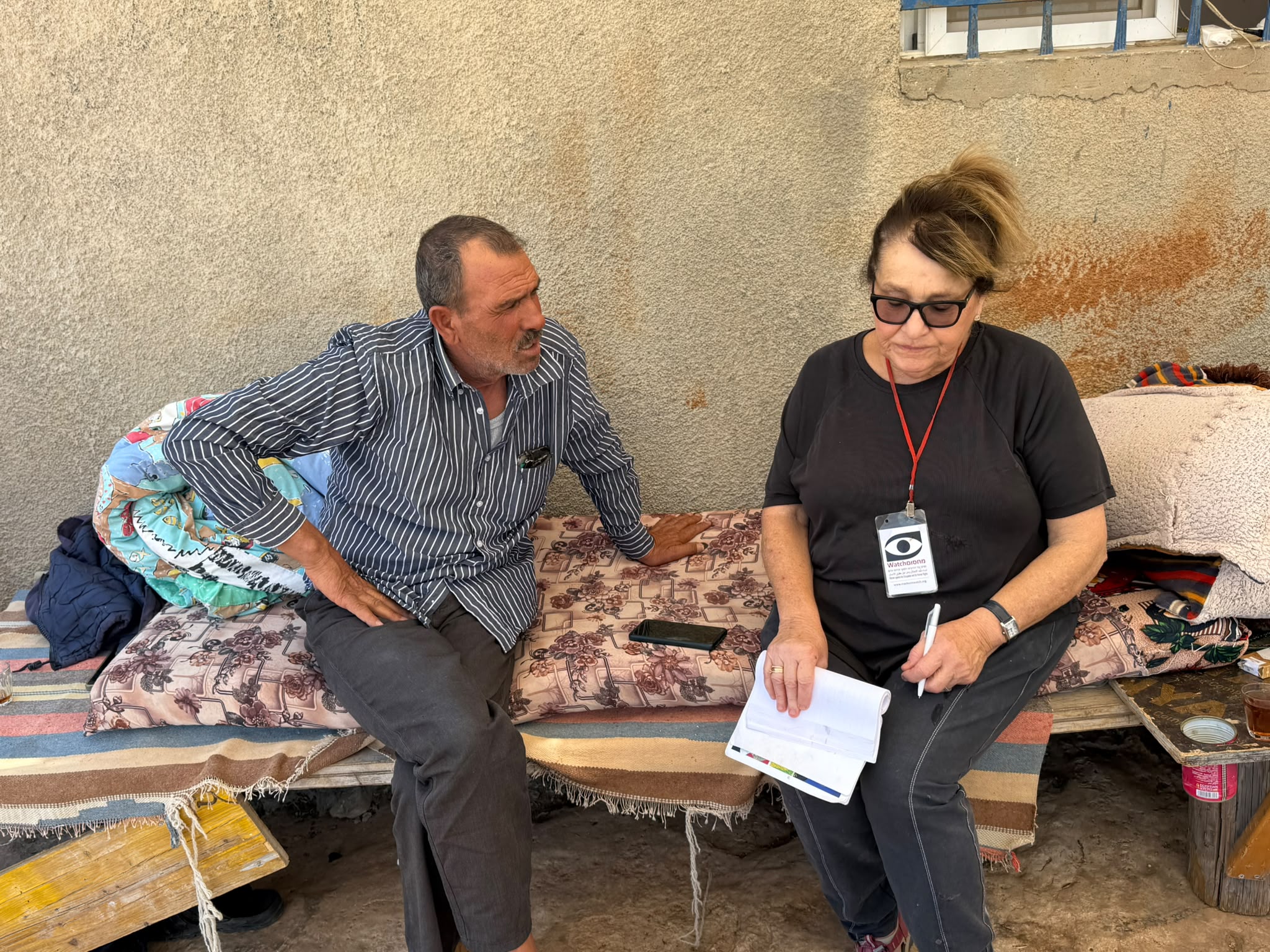
Michal Tsadik and Muhammad Dabsan
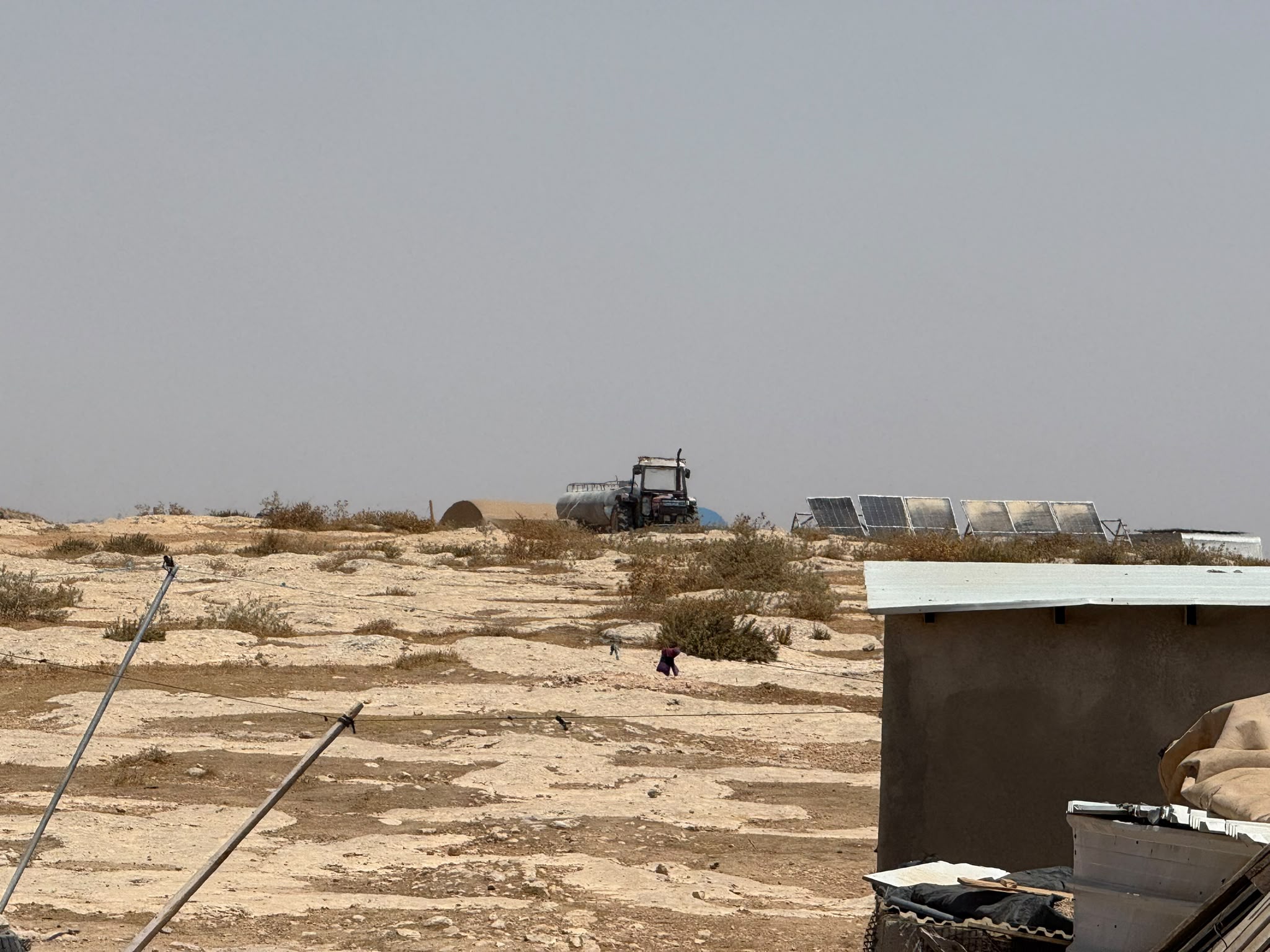
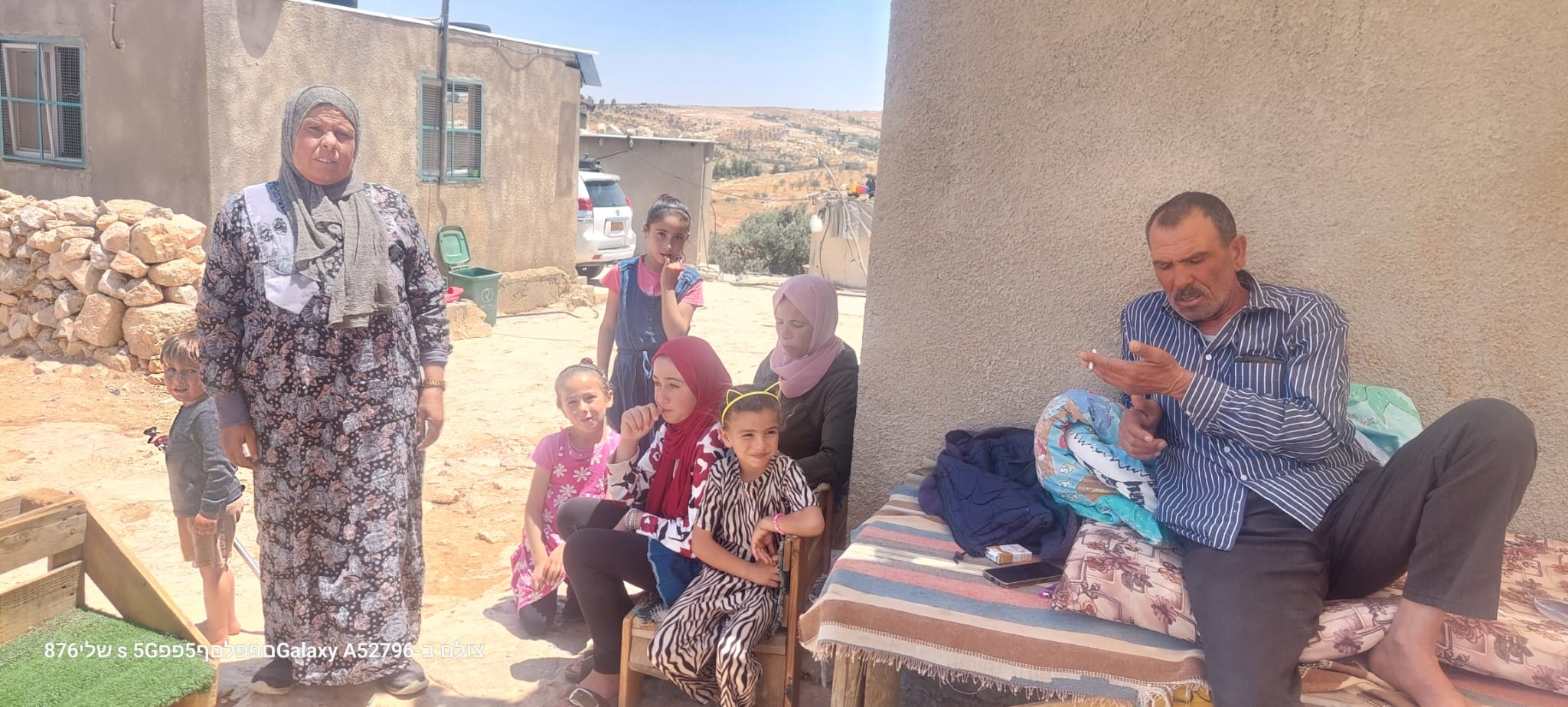
Qawawis is a place in the middle of nowhere. We have been there several times recently. Opposite the turnoff to Susiya, we turn right onto a barely passable road leading to the Mitzpe Yair settlement. T.-Y. and his family live in Qawawis. We were happy to see young volunteers there, from Israel and from abroad. Their presence is definitely protective and provides a somewhat greater sense of security.
N. tells us again that he has moved most of his family to nearby Carmil, because it is safer there, even though the IDF enters everywhere. But at least the settlers do not enter there. Here there are 16 people – he and his two wives, his son and his family, and several of his grandchildren.
S. and his son tell us that ever since the settlement near them began to grow, 70 days ago, on 25 May, they have not been sleeping at night. They are constantly keeping watch against the settlers, who come on ATVs (at all hours of the day and night), curse, shout and make noise. “Go to Saudi Arabia, this is not yours,” they shout, along with other curses that he does not want to repeat. Last night they came about ten times.
While we are talking, two settlers on ATVs race into the area one after the other, and a few minutes later a settler arrives riding a mule.
On Thursday, a truck arrived carrying panels for an caravan. They immediately called the Civil Administration, and both the army and the police arrived. This time they confiscated what the settlers had brought, and apparently things ended “well,” but who knows what will happen next.
Last Saturday, 25 July, five members of their family came from Carmel to stay with them at night so that they would not be alone. The settlers called the police and army, who arrived and arrested the family members, claiming that they had come to cause trouble. They took them all to the base in Susya and held them for 17 hours, with their hands bound and blindfolded, without water or food, and with loud music playing all night. They were not interrogated because there was nothing to investigate, and after 17 hours they dumped them, still handcuffed, near A-Tuwani, with their phones still in their pockets. They walked 1.5 kilometers until people saw them. One of the brothers was taken to Kiryat Arba because the settler claimed that he had assaulted him. The brother told the police to check the cameras and see that he had not hit him. He was interrogated for an hour and a half for no reason and was eventually required to pay 500 shekels to be released. Fortunately, he had money. He paid and was sent home.
T. says that ever since the settlement was established nearby, he is afraid to go to Carmil to run errands and shop. If he does go out to take care of something, he goes on a donkey rather than by car. It is safer that way. At night they take turns: one sleeps while the other stays awake. They live in constant fear.
We brought a large amount of food, some of it donated by the owner of a vegetable shop in Laqiya, clothes for all ages, and some money. It turns out that prices in Yatta are the lowest, and they can buy more supplies for the same amount of money.
Location Description
South Hebron Hills
See all reports for this place-
South Hebron Hills
South Hebron Hills is a large area in the West Bank's southern part.
Yatta is a major city in this area: right in the border zone between the fertile region of Hebron and its surroundings and the desert of the Hebron Hills. Yatta has about 64,000 inhabitants.
The surrounding villages are called Masafer Yatta (Yatta's daughter villages). Their inhabitants subsist on livestock and agriculture. Agriculture is possible only in small plots, especially near streams. Most of the area consists of rocky terraces.Since the beginning of the 1980s, many settlements have been established on the agricultural land cultivated by the Palestinians in the South Hebron Hills region: Carmel, Maon, Susia, Masadot Yehuda, Othniel, and more. Since the settlements were established and Palestinians cultivation areas have been reduced; the residents of the South Hebron Hills have been suffering from harassment by the settlers. Attempts to evict and demolish houses have continued, along with withholding water and electricity. The military and police usually refrain from intervening in violent incidents between settlers and Palestinians do not enforce the law when it comes to the investigation of extensive violent Jewish settlers. The harassment in the South Hebron Hills includes attacking and attempting to burn residential tents, harassing dogs, harming herds, and preventing access to pastures.
There are several checkpoints in the South Hebron Hills, on Routes 317 and 60. In most of them, no military presence is apparent, but rather an array of pillboxes monitor the villages. Roadblocks are frequently set up according to the settlers and the army's needs. These are located at the Zif Junction, the Dura-al Fawwar crossing, and the Sheep Junction at the southern entrance to Hebron.
Updated April 2022
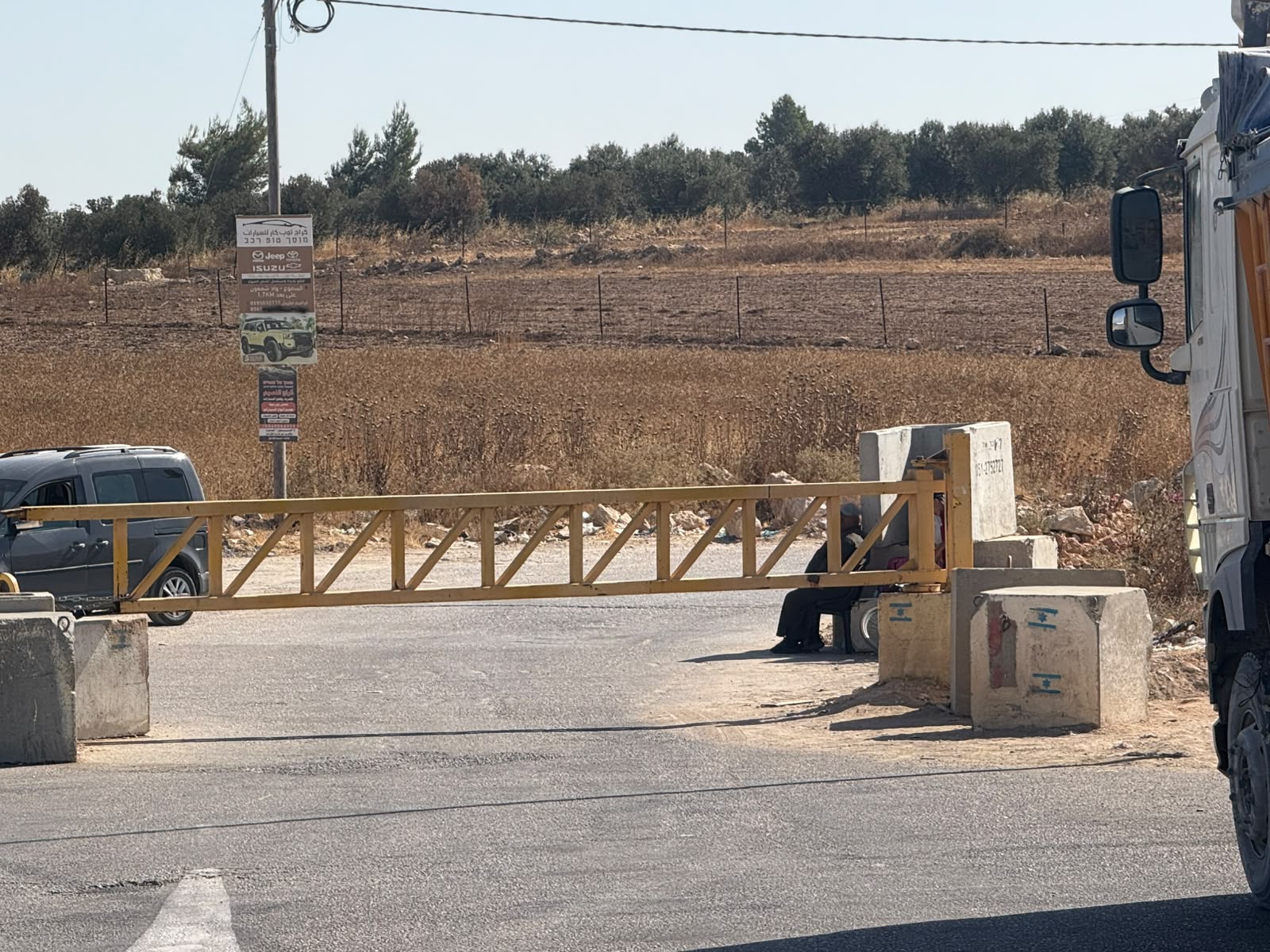 Muhammad D.Aug-5-2026Samu' barrier
-