
Hebron, South Hebron Hills, Tue 3.8.10, Morning
Southern Hebron Hills, Hebron
Translator: Charles K.
- Hebron – the usual routine
- The Jabber family – the abuse continues
- Regulations governing the lives of residents in the valley have become stricter.
Meitar crossing
By 08:00 all the laborers have gone through, and only relatives of prisoners wait under the canopy. Four buses wait for them.
On Route 60 there are many heavy trucks traveling in both directions. The army's presence isn't felt today, nor are civilians seen on the roads.
Hebron
On the hills to the right of the road at the entrance to Kiryat Arba, the "Mitzpeh Avichai" outpost appears to be growing and developing: another yellow pre-fab, and still another.
We wonder whether the settlements summer camp is still going on?!
The city gradually awakens. Almost no pedestrians. The settlers hurry by in their cars, as usual. Naha"l soldiers are stationed at all the checkpoints but aren't detaining anyone. Nor do Border Police soldiers at Curve 160 and the Cave of the Patriarchs checkpoint harass anyone at this hour. The impression is that "everything's ok."
The Jabber family
M., our driver, tells us he heard that one of the family's youths was arrested yesterday. We decided to visit them again.
The last remaining field of squash is still green and full of produce (I bought a crate).
Yasser and Yusri, Atta's brothers, greet us happily. It's important to them to see that someone cares about them. They say that yesterday (Monday), Civil Administration staff came again to destroy, dismantle and remove the irrigation lines. They showed up at 06:30 in the morning to their cousin's field; he lives on the other side of Route 60.
He went out when all the other family members were still asleep, preferring not to wake them. He asked them to remove everything quietly, not to wake anyone, nor frighten the children who were still traumatized by the events of recent weeks. "Shut up and get outta' here," our "stalwart lads" yelled at him. Since the silence had been broken, everyone began to get up; the children came out of the house and threw rocks.
Wadiya Badran Jabber, aged 16, jumped in fright from his bed and ran to see what was happening. Because he dared to run toward them, he was arrested by the soldiers on guard duty who beat him until he bled and took him away. His uncle, who tried to protest the arrest, was also taken. While they were being dragged to the jeep, the uncle's 3 year old son ran after him crying bitterlyu, "Baba, baba…"
A brave soldier from the Israel Defense Forces grabbed the child and tossed him aside as if he were "a bag of garbage," so he wouldn't get in the way. A man trying to work his land is on his way to jail, his baby's sobs echoing in his ears.
Wadiya called his father in the evening from the Etzion DCO. He said that from Wednesday he'll be at the Ofer base, where he'll be tried. In addition to all those troubles, the family members report that the army shows up at different times for surprise visits to see whether they're still irrigating. It could be late at night, in the afternoon or early in the morning.
Their freedom of movement, and that of their neighbors, has also suddenly become more restricted in recent days. They usually entered and left Hebron on foot through an opening that had been left at the southern entrance to Kiryat Arba. Entry to vehicles there has been blocked for some time by a yellow gate. Now the path has been blocked with heavy boulders. On Monday night, their neighbor tried to return home. Kiryat Arba security guards refused to allow him through. "Go around," they said. "Around" means to walk one hour towards Beni Na'im, instead of ten minutes this way.
"Why? What for?"
"Because." That's the answer
His appeals and pleas didn't help.
"It's nine at night," he said.
"Just this one time. From tomorrow I won't come through here any more."
The police and the army personnel who arrived also couldn't let the farmer return to his home adjacent to the gate. He was forced to make an hour-long trip on foot.
Now they're even forbidden to ride a donkey. That's also a dangerous vehicle. And the settlers are those who decide.
We can definitely see how the lives of all the farmers living in the valley next to Kiryat Arba are being increasingly restricted, in order to control them and take over their lands.
Hebron
See all reports for this place-
According to Wye Plantation Accords (1997), Hebron is divided in two: H1 is under Palestinian Authority control, H2 is under Israeli control. In Hebron there are 170,000 Palestinian citizens, 60,000 of them in H2. Between the two areas are permanent checkpoints, manned at all hours, preventing Palestinian movement between them and controlling passage of permit holders such as teachers and schoolchildren. Some 800 Jews live in Avraham Avinu Quarter and Tel Rumeida, on Givat HaAvot and in the wholesale market.
Checkpoints observed in H2:
- Bet Hameriva CP- manned with a pillbox
- Kapisha quarter CP (the northern side of Zion axis) - manned with a pillbox
- The 160 turn CP (the southern side of Zion axis) - manned with a pillbox
- Avraham Avinu quarter - watch station
- The pharmacy CP - checking inside a caravan with a magnometer
- Tarpat (1929) CP - checking inside a caravan with a magnometer
- Tel Rumeida CP - guarding station
- Beit Hadassah CP - guarding station
Three checkpoints around the Tomb of the Patriarchs
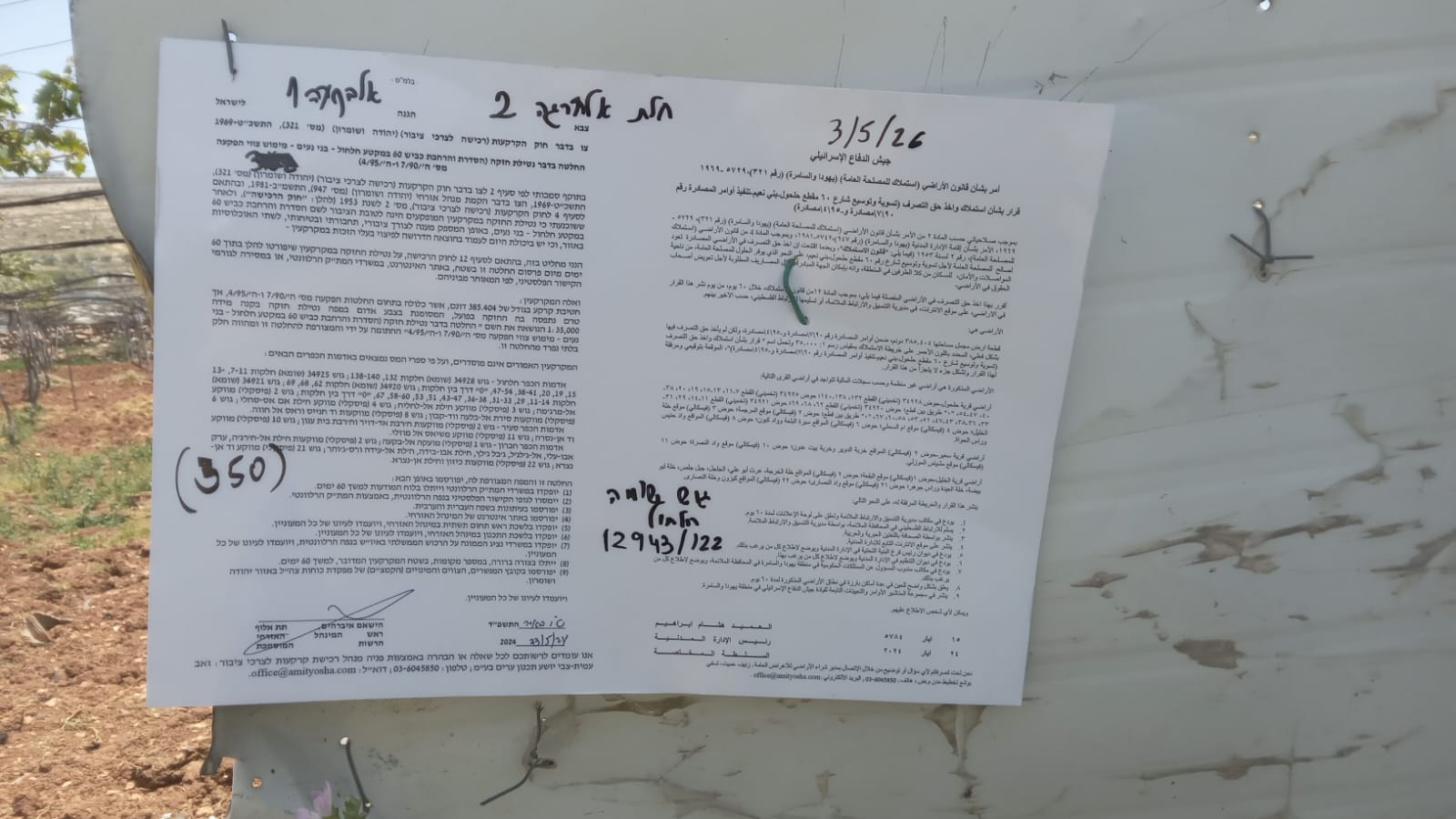 Muhammad D.May-13-2026Hebron - Request for compensation for land expropriation
-
South Hebron Hills
See all reports for this place-
South Hebron Hills
South Hebron Hills is a large area in the West Bank's southern part.
Yatta is a major city in this area: right in the border zone between the fertile region of Hebron and its surroundings and the desert of the Hebron Hills. Yatta has about 64,000 inhabitants.
The surrounding villages are called Masafer Yatta (Yatta's daughter villages). Their inhabitants subsist on livestock and agriculture. Agriculture is possible only in small plots, especially near streams. Most of the area consists of rocky terraces.Since the beginning of the 1980s, many settlements have been established on the agricultural land cultivated by the Palestinians in the South Hebron Hills region: Carmel, Maon, Susia, Masadot Yehuda, Othniel, and more. Since the settlements were established and Palestinians cultivation areas have been reduced; the residents of the South Hebron Hills have been suffering from harassment by the settlers. Attempts to evict and demolish houses have continued, along with withholding water and electricity. The military and police usually refrain from intervening in violent incidents between settlers and Palestinians do not enforce the law when it comes to the investigation of extensive violent Jewish settlers. The harassment in the South Hebron Hills includes attacking and attempting to burn residential tents, harassing dogs, harming herds, and preventing access to pastures.
There are several checkpoints in the South Hebron Hills, on Routes 317 and 60. In most of them, no military presence is apparent, but rather an array of pillboxes monitor the villages. Roadblocks are frequently set up according to the settlers and the army's needs. These are located at the Zif Junction, the Dura-al Fawwar crossing, and the Sheep Junction at the southern entrance to Hebron.
Updated April 2022
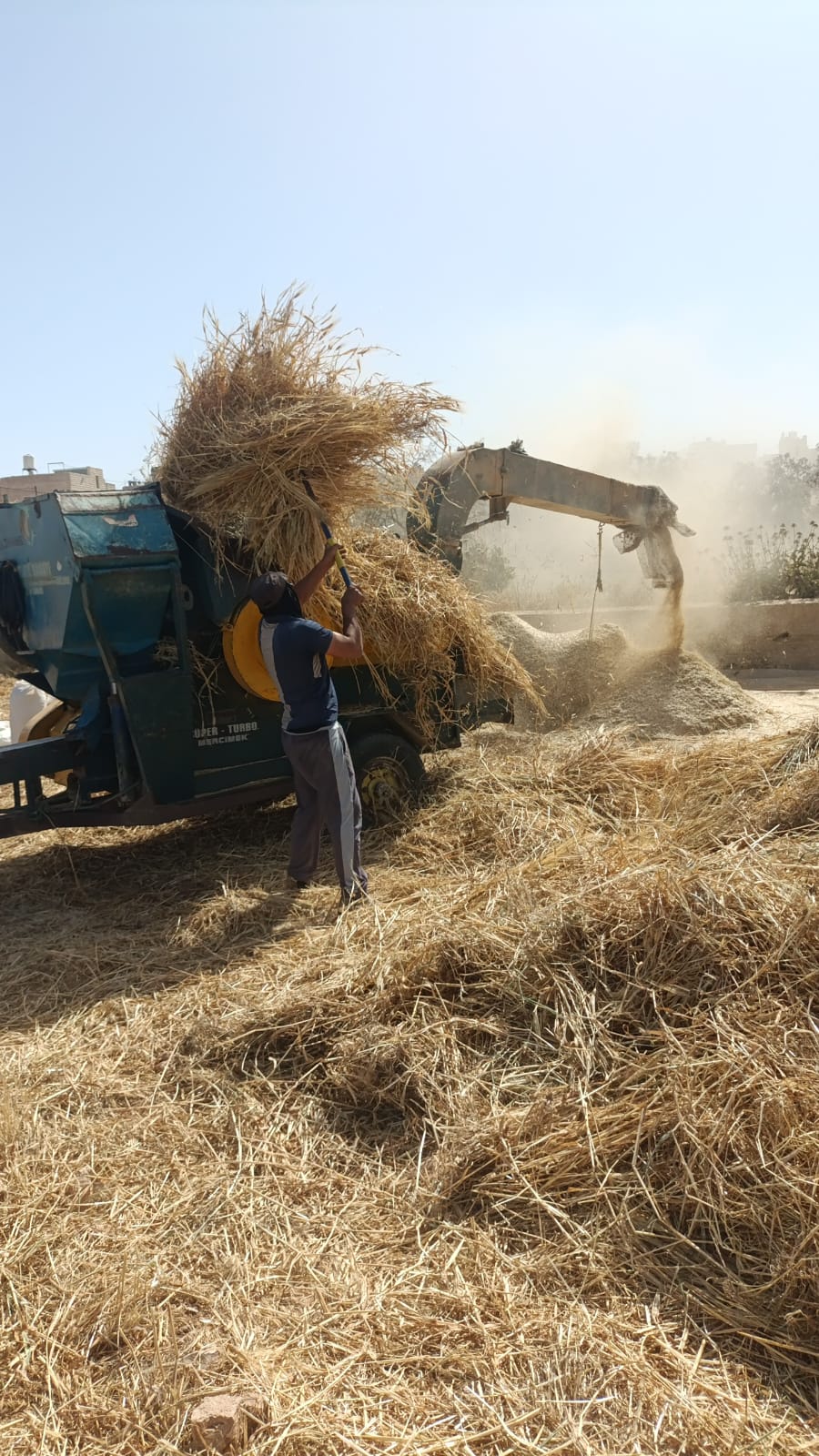 Michal TsadikMay-20-2026The noisy machine that disturbs the IDF
-