
Jaba (Lil), Qalandiya, Sun 30.10.11, Afternoon
Translation: Ruth Fleishman
Qalandiya checkpoint:
Seven year old Haled,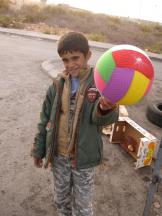 layered with winter clothes, was trying to pitch a sale, "you can play with the ball at the beach", explained Fadi.
– Haled's family transferred from Hebron to the town of Ar-Ram, what could he possibly know about the beach?
– Fadi's parents were exiled from Beit She'an in 1948, his home is in Jenin but he has to rent an apartment in Qalandiya refugee camp so as to provide for his family by selling fruit from his mobile cart, what could he possibly know about the beach?
– What could the thousands of Palestinians that pass them by possibly know about the beach?
"Bas Khadra"(= green only) said the soldier sitting in the bullet proofed post to a young Palestinian woman who handed her ID to him.
The women understood, she left the inspection area, headed towards a different lane and stood at the end of a crowded line.
In the language of the checkpoint, which is understood by the occupiers and those who are occupied, the meaning of the order is: "from this moment on the regulations have changed, only residents of Palestine are inspected here, and you, who have the ID of a resident of Jerusalem, must go to another inspection post ".
".
Jaba checkpoint:
An escalation in the service provided to settlers by the checkpoints
So far, ever since checkpoint came into existence, the explanation given as to the existence of the checkpoint was the need to prevent Israelis, Jewish ones in this case, from reaching Qalandiya which is considered to be a place where their lives might be endangered. For that reason the soldiers at the checkpoint stop the vehicles heading in that direction and require as to the national identity of the driver.
During the past weeks there has been an increase in the amount of complaints made by cab drivers, regarding the imposition of this checkpoint on Palestinians driving in the opposite direction which leads to road 60.
The checkpoint commander with whom we conversed confirmed the facts and told us that every morning between 6:00 and 7:30 the police block the lanes leading from Qalandiya and thoroughly inspect the state of the vehicles and the drivers' licenses. As a result long lines of Palestinian vehicles that stretch on are formed and the traffic heading to road 60 is but a drizzle and the amount of (Palestinian) vehicles on road 60 decreases substantially during rush hours and even the pressure on Hizme checkpoint isn't as it once was.
The main beneficiaries of this are the settlers driving to Jerusalem in the morning as well as the state's treasury which is enriched by the plentiful amount of tickets given- according to the testimony of the Palestinian cab drivers and the checkpoint commander.
Those who suffer the most from this are of course the Palestinians hurrying to their jobs, but who takes them under consideration?
Jaba' (Lil)
See all reports for this place-
Jaba' (Lil) In fact, the Jaba checkpoint is east of the Qalandiya checkpoint. Its declared purpose is the prevention of Israeli citizens from entering Area A. A road checkpoint for vehicles, located on Road 65, borders the southern fence of Kfar Jaba, about three kilometers east of the Qalandiya checkpoint, on the road leading to the settlement of Adam on Road 60. Archaeological excavations within the village found the remains of a cloth house from the First Temple period. The events that led to the construction of the checkpoint are precisely here: on the day of the abduction of Gilad Shalit and before the outbreak of the Second Lebanon War, a 17-year-old man from one of the settlements was abducted by a Palestinian cell. His body was found several days later at the entrances to Ramallah. A military investigation revealed that his abductors had taken him along this route. The checkpoint was set up to prevent future kidnappings and to warn settlers from traveling to Ramallah and entering Area A (which is forbidden for Israelis). The checkpoint that operates around the clock. Usually only vehicles traveling in the direction of Ramallah are inspected. (November 2016): Every morning, when the settlers en masse travel to Jerusalem on Route 60 and every afternoon they return from Jerusalem on Route 60, the army initiates a traffic jam at the entrance to the Jaba checkpoint and stops the movement of Palestinians traveling toward Route 60. (February 2020): In the last two years the checkpoint has not always been manned. Sometimes the soldiers come and just stand, sometimes they come and stop and check those who enter the village, sometimes they patrol the alleys of the village, sometimes they fire stun grenades and gas and sometimes they invade houses and stop young people, say those passing through the Hazma checkpoint. (Updated February 2020)
-
Qalandiya Checkpoint / Atarot Pass (Jerusalem)
See all reports for this place-
Click here to watch a video from Qalandiya checkpoint up to mid 2019 Three kilometers south of Ramallah, in the heart of Palestinian population. Integrates into "Jerusalem Envelope" as part of Wall that separates between northern suburbs that were annexed to Jerusalem in 1967: Kafr Aqab, Semiramis and Qalandiya, and the villages of Ar-Ram and Bir Nabala, also north of Jerusalem, and the city itself. Some residents of Kafr Aqab, Semiramis and Qalandiya have Jerusalem ID cards. A terminal operated by Israel Police has functioned since early 2006. As of August 2006, northbound pedestrians are not checked. Southbound Palestinians must carry Jerusalem IDs; holders of Palestinian Authority IDs cannot pass without special permits. Vehicular traffic from Ramallah to other West Bank areas runs to the north of Qalandiya. In February 2019, the new facility of the checkpoint was inaugurated aiming to make it like a "border crossing". The bars and barbed wire fences were replaced with walls of perforated metal panels. The check is now performed at multiple stations for face recognition and the transfer of an e-card. The rate of passage has improved and its density has generally decreased, but lack of manpower and malfunctions cause periods of stress. The development and paving of the roads has not yet been completed, the traffic of cars and pedestrians is dangerous, and t the entire vicinity of the checkpoint is filthy. In 2020 a huge pedestrian bridge was built over the vehicle crossing with severe mobility restrictions (steep stairs, long and winding route). The pedestrian access from public transport to the checkpoint from the north (Ramallah direction) is unclear, and there have been cases of people, especially people with disabilities, who accidentally reached the vehicle crossing and were shot by the soldiers at the checkpoint. In the summer of 2021, work began on a new, sunken entrance road from Qalandiya that will lead directly to Road 443 towards Jerusalem and Tel Aviv. At the same time, the runways of the old Atarot airport were demolished and infrastructure was prepared for a large bus terminal. (updated October 2021)
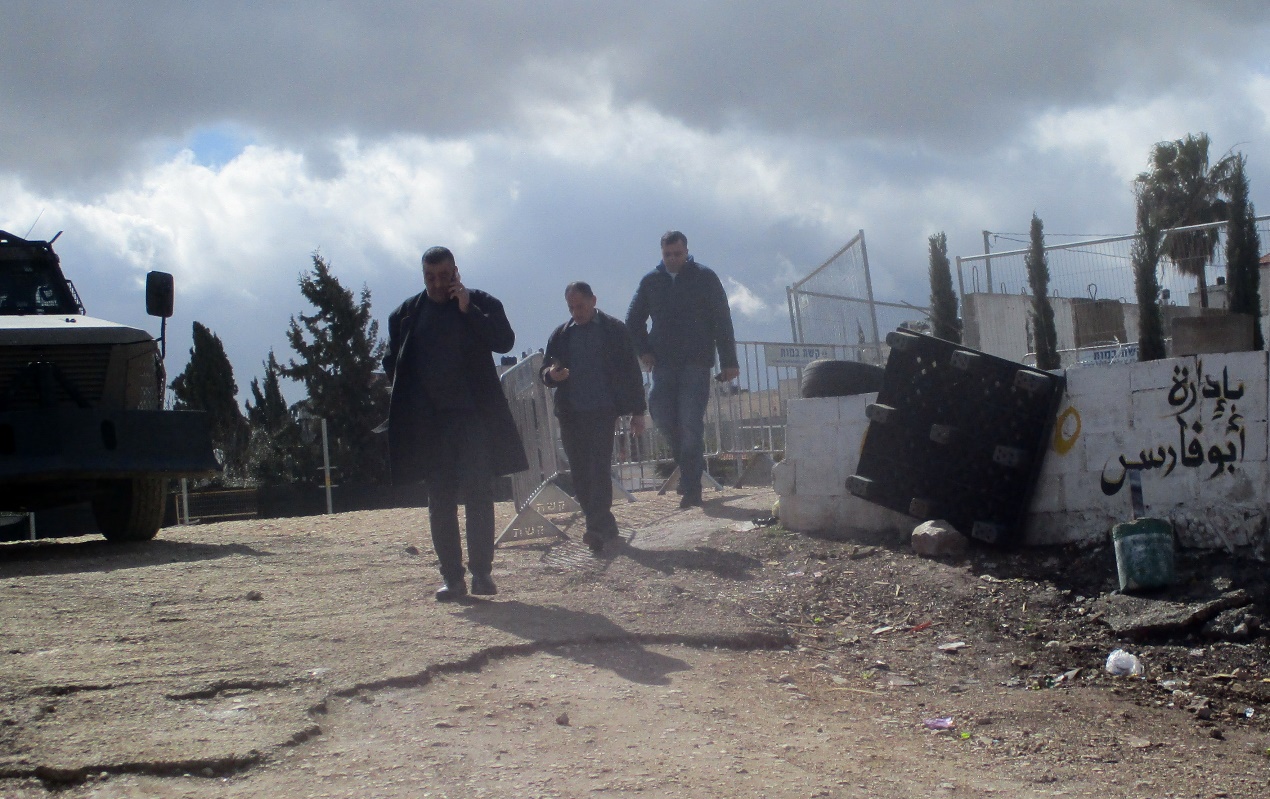 Tamar FleishmanFeb-27-2026Qalandiya: On the way to prayer
-