
Hamra (Beqaot), Ma’ale Efrayim, Tayasir, Za’tara (Tapuah), Tue 10.1.12, Morning
Translator: Charles K.
We pass through the area of the Za’tara checkpoint before 3 AM. It’s completely deserted, no soldiers in position, just a light in the guard tower.
We go through the Ma’aleh Efraim checkpoint before 3:30 AM. It’s also empty.
We pass by the Hamra checkpoint at about 3:45 AM. No cars, no people; soldiers at the checkpoint.
4:05-5:45 Tayasir checkpoint
No people or cars at the checkpoint before 4:15. Soldiers are at the vehicle checkpoint and the location where documents are checked up the hill above the road. They didn’t object to our standing very close to each of those places.
The first car appears at 4:15 AM, then a minibus, then additional cars gradually arrive between 4:30-4:45, transporting laborers to their jobs at various locations, from Ro’i and Na’ama to Beit Ha’arava.
The inspection proceeds very slowly, 3-5 minutes per person, even though they’re only checking documents and the soldier in the booth has continual access to a computer. The minibus driver waited from 4:20 to 5:40 for his passengers, and during this hour nine cars waited for their passengers. People who have to begin work at Beit Ha’arava at 6 AM, for example, won’t get there on time.
We asked the shift commander why things are so slow, but he didn’t provide any explanation. We telephoned the army’s “humanitarian office” who said there had been an infiltration attempt during the night so the roads are jammed. An answer which is completely irrelevant to the situation at this checkpoint.
People told us that at this time of year, particularly during the coming month, there’s not much work, and most of it is in tomatoes. The pay is still poor and the employers still avoid their legal obligations to their workers. The people say that heads of families who have no supplementary source of food such as goats, chickens or a vegetable plot will have great difficulty surviving on that income, which also depends somewhat on the season. Everyone – laborers and drivers – complained about how slow the Tayasir crossing was, both early in the morning and when they return in the afternoon. Some said that it’s worse when religious soldiers are stationed there.
6:10-6:50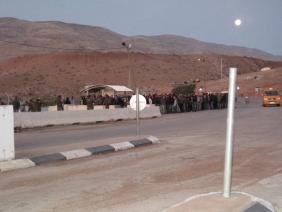 Hamra checkpoint
There are usually very few people here at this hour. Today it was filled with people and cars. 38 vehicles waited for their passengers. Some 200-250 people waited on a very long line behind the checkpoint buildings, many of whom had been there since 4:30 AM. There were always 7-8 people in the building where detainees are held, waiting a long time for their names to be called and replaced by others. Some went on to their jobs; others were turned back. During the time we were there we counted 11 people who weren’t allowed through the checkpoint and went back. Two of the detainees were there during our entire stay.
The line only started to get shorter quickly as 7 AM approached, people coming through in groups of three and four, much more rapidly. Most of the vehicles had left by 7 with their passengers.
Teachers, most of whom work i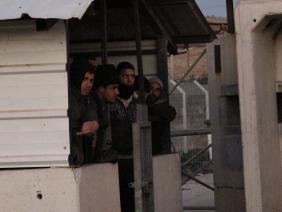 n Jericho, the Jiftlik and the school not far from the checkpoint, arrived slightly before 7. They told us they cross quickly so as not to be late for school. They, as well as others at both checkpoints, told us that the pupils cross at about 7:30. They’re never allowed to remain on the school buses. Even though they don’t have ID cards they must get off, go through the metal detector and walk a considerable distance (exposed to the winds at the Tayasir checkpoint) to the bus which is already waiting on the other side.
We told the humanitarian office about the long lines as well as about the two detainees who hadn’t been released.
The soldiers here also didn’t object to our standing near the checkpoint itself all the time we were there. They didn’t have a clear answer to the question of why everything is so terribly slow. The checkpoint commander didn’t either. At about 6:45 we saw three men wearing coveralls, not Palestinians, going through the checkpoint in the opposite direction. Who they were, what they were doing, did they have any connection to the fact that crossing was slow this morning – we can only guess.
A military vehicle was positioned in the area where cars waited. Its soldiers detained two youths for a short time; they apparently hadn’t crossed through the checkpoint itself. Two of the soldiers, faces almost completely hidden, weapons drawn, continued to stand next to the vehicle even after the youths had been sent back.
It was very cold the whole time.
The Ma’aleh Efraim checkpoint was empty when we crossed on our way back.
Hamra (Beqaot)
See all reports for this place-
One of the Jordan Rift Valley checkpoints that prevent direct transit between the West Bank and the Jordan Valley, in addition to Tayasir Checkpoint. Located next to Hamra settlement, on Route 57 and the Allon Road.
Read about the peple of the Jordan Valley and the quiet transfer happening there.
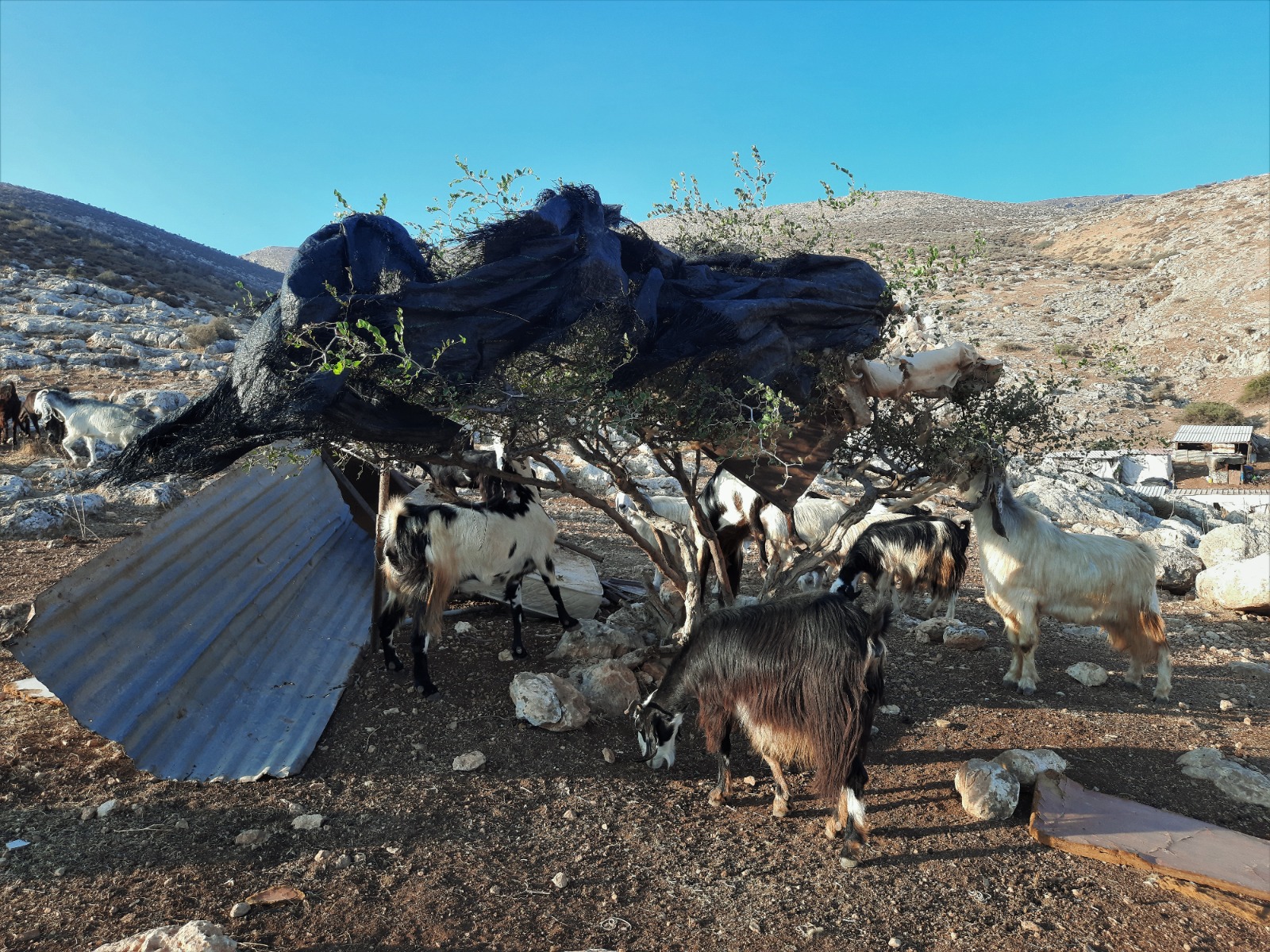 Shahar ShilohNov-3-2021Ein Shibli: grazing begins close to home
-
Ma'ale Efrayim
See all reports for this place-
Ma'ale Efrayim On the road connecting Route 90 (the Jordan Valley road) to the Allon Road.
-
Tayasir CP
See all reports for this place-
Located on road 5799, It is one of the checkpoints control the passage between the northern West Bank and the Jordan Valley. For a long time, it stood empty and open, with only a sign next to it warning against entering Area A. It was adjacent to an old military camp - now everything is neglected. How much money was invested here, and how much brainwashing was done to the soldiers of Netzah Yehuda and Kfir.
Today, it is very difficult to pass there. Many delays. Often, teachers from Tubas are not allowed to pass into the Valley to villages like Ein al-Bida where the local schools are located, and there are no classes. There are additional days when the checkpoint is closed. In general, there is a wait there of about two to four hours to go towards the Valley and also to return. Many times the Palestinians are forced to use the Hamra checkpoint, which also leads into Tubas and the West Bank, but there is also a huge queue there and a long wait.
Following a deadly attack on soldiers at the nearby base in February 2025, the checkpoint was completely closed for the time being. (Updated March 2025)
-
Za'tara (Tapuah)
See all reports for this place-
Za'tara (Tapuah) Za'tara is an internal checkpoint in the heart of the West Bank, at the intersection of Road 60 and Road 505 (Trans-Samaria), east of the Tapuah settlement. This checkpoint is the "border" marked by the IDF between the north and south of the West Bank, in accordance with the policy of separation between the two parts of the West Bank that has been in place since December 2005. At the Za'tara checkpoint, there are separate routes for Israelis and Palestinians. In the route for Israelis, there are no inspections and the route for Palestinians inspects. The queue lengthens and shortens suits. The checkpoint is open 24 hours a day. The checkpoint is partially staffed and the people who pass through it are checked at random.
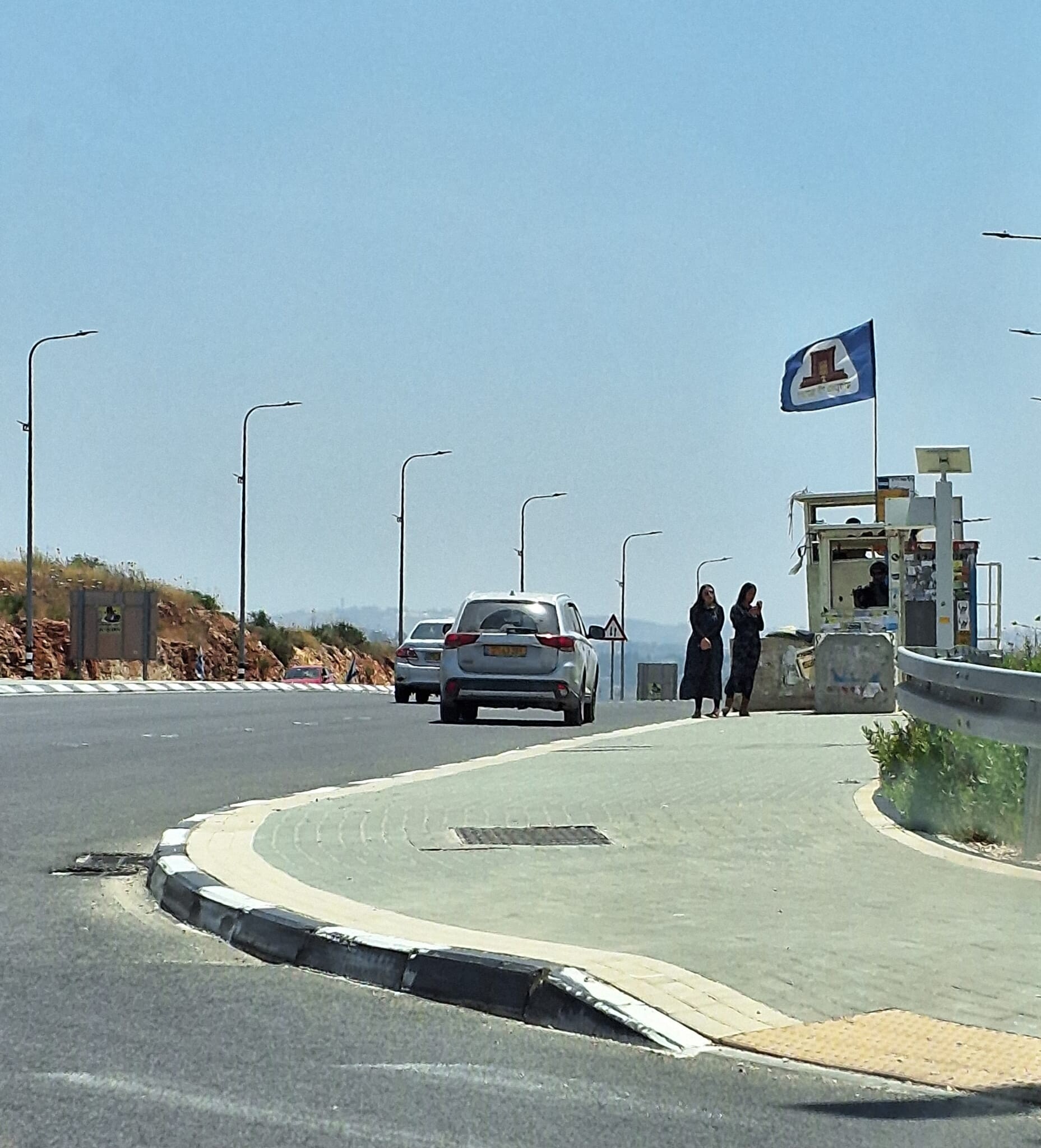 Ronit Dahan-RamatiJun-9-2026Za'atara (Tapuach Junction). The Temple Flag Above a Station
-