
'Azzun 'Atma, Habla, Huwwara, Shomron Crossing, Za'tara (Tapuah)
Agricultural Gate Habla – the Juncture Region. On road no. 55, a few hundred meters from the “green line” one turns to the right (southwards) on a dirtroad which leads to the Habla CP, where Palestinians from Habla and Qalqilya, whose lands are situated in the juncture region, or who work at plant nurseries on the two sides of the road, pass. As the gate which is open three times a day is “agricultural” the Palestinians, who are being checked on their way back to their homes, are not allowed to take with them anything which is not agricultural products’ even a plastic bag with a few used clothes remains cast away near the gate.
12:5
A military Hummer and its crew arrive. The gate is opened on time. Two people are waiting in the shed.
One of them tells us that this morning the queue was very long and the girl soldier at the checking post worked very slowly. A military policeman collected all the papers of those who were on the spot and told all the others that they couldn’t pass. His 16 year old son received his ID card 5 days ago and works at a plant nursery. A few days ago he found a pair of shoes. At the CP he was stopped on the allegation that he had stolen the shoes of a soldier and he had to wait for the policeman to arrive. The young man didn’t know at all that those were military shoes…The father of seven says: “When you are good I am Ahla (very good). When you are bad, I am worse. I have to work in order to bring food home. I will do everything to pass through the gate and reach work”/ He also tells us that although he passes there every day and everybody know him, they didn’t enable him to pass a small paraffin stove which he found, and he was forced to throw it away.
13:10
A tractor arrives, its owner parks and enters the checking post. Five minutes later he passes on in the direction of the village.
13:20
The first of those leaving the village passes. After him there is a van carrying palm trees, two women accompanies with five children. A cart driven by a horse and loaded with empty cardboard boxes for the packaging of agricultural products arrives. They are forced to wait as there is a problem with the computer (A photo is attached)
13:40
We leave the gate with a hitchhiker who wishes to get to Qalqilya.
At the Eliyahu CP (109) we stop at the parking lot and our hitchhiker goes in the direction of the checking post. We pass the CP and wait for him to the right of the Yellow line, but the man doesn’t return to the car. A security man approaches us and informs us that stopping is prohibited. We continue without the hitchhiker.
At the CP on the Samaria side there are two big new yellow arms on both sides of the road (a photo is attached) . We continues on road no. 55 eastwards.
14:20 A military hummer is opposite the entrance to Jit (a photo is attached) near the road which once led to the village of Kadoum and now reaches the entrance gate to Kedumim. We continue on road no. 55.
14:35
Jit intersection: We turn right – southwards) on road no. 60. At the turning there are two military vehicles. To the left and right of the road there are the villages Madma (???) and Bourin to which there is no access from the road. We turn right at the intersection, with road no. 60.
15:00
The village of Huwwara – lunch break. We remove badges and flags and drive to the Tapuah intersection.
Tapuah Interesection – one of the central intersections in Samaria. The intersection connects road no. 60 to road 505. It is quiet here. There are no soldiers at the posts, no checks and the traffic flows in all directions. A soldier who watches on the tower replies to out query that today no vehicle checks are performed.
On road no. 505 which leads to the valley of Jordan, military policemen stop a Palestinian lorry and check the driver’s papers. We pass them and turn right in the direction of Yatma (?) on road no. 4777.
We reach the outskirts of the town of Qablan, (district of Nablus).
We stop next to an open shop and begin a conversation with a few Palestinians who sit by the side of the building. Two of them talk Hebrew and tell us that a year ago settlers from Tapuah arrived at night, burned a few cars and wrote something on the walls. Every two three nights the army arrives for a routine round, but all in all it is quite quiet. Both are waiting for work permits in Israel. Every few months they get a permit for a week to look for work in Israel, in building sites or restaurants, but it is difficult for them to find permanent work with a landlord who expects them to get an permit for a longer period (??
The most pressing issue is the water shortage. They show us that there is no water in the taps and explain that only once every few days there is water for a few hours in the pipe system. They get an amount of water which is much smaller than the necessary amount for their existence. This is why they can grow only olive trees on their plots around the village. Whoever has money buys water bottles and the rest fill containers and bottles during the few hours of water supply. This has gone on for ten years already.
We decide to try and meet the major and continue driving into the town on the way to Baladiye(??) The town hall is closed but one of the inhabitants calls the major’s house and he asks us to wait for him. He does indeed arrive ten minutes later.
The major – Youssuf Abdul Rahman (talks English) tells us that there are 8000 inhabitants in the town. Most of the inhabitants work in the town itself in commerce and services.
There are about 200 holders of work permits in Israel, but he doesn’t deal with the matter. He takes care, in cooperation with the Palestinian Authority, of the many who don’t work and need medical insurance from the National Insurance.
The main crops: Olive trees. In the yards of the houses apricot and fig trees were planted, and those are irrigated by the rain alone.
He tells us that the town gets water from Mekorot, but the quantity is smaller than the required minimum. They get 13.250 cubic meters and need at least 18.000/ The Palestinian Authority approached Mekorot with the request to increase the quantity but was denied it. In the settlements the amount of water per head is three times the amount that Qablan gets. The town is built on hills and the high places usually don’t get water if there isn’t enough pressure. He is forced to distribute the water by regions, so that each time another quarter gets water, and this for only a few hours.
16:30
Back to the Tapuah intersection. Now it is calm here. No stopping of vehicles.
At the Marda intersection there are many vehicles waiting for the Palestinians who return from work.
At the entrance to Ariel there is a military police vehicle, a yellow cab and an Israeli vehicle. We didn’t return to check what the matter was.
16:50
Samaria Pass. There are long queues of vehicles on all the lanes, but the traffic flows. We drove on the right lane of the Palestinians, in order to see with our own eyes what happens, but there were no vehicles or people in the area. A security person notices my camera and shows me with his hand that photographing is forbidden.
17:10
Azoun Atma. At the CP there is no queue. Whoever arrives immediately enters the checking post. A Palestinian arrives with a nylon bag with electricity wires. The military policewoman doesn’t allow him to pass with his possession (to his home inside the Palestinian area, after working at the juncture region or at the settlements, with an authorization). He asks her “What must I do with this?” and she answers “throw it away”. The man turns back and disappears. I photograph the man and a soldier quickly bursts forth and asks me who I am. I answer “an Israeli citizen who cares” and he – “you have no right to stand here and you mustn’t take photos!” I show him that I stand behind the CP and he threatens to call a policeman who would send me away.
We leave and continue driving to Tel Avi
'Azzun 'Atma
See all reports for this place-
'Azzun 'Atma
A Palestinian village of about 1,800 residents. The settlement of Sha'arei Tikva was established on its land adjacent to it, and the settlement of Oranit was established on its agricultural lands. By 2013, the separation fence had passed through the village and a checkpoint staffed by the army allowed the residents to cross from side to side. After building a massive wall surrounding the village and some of its agricultural lands, the residents went daily for five years to their lands that remained in the Seam Zone through the Oranit agricultural checkpoint (4). Since 2018 it has only opened during the olive harvest and the farmers have to pass daily at the Beit Amin / Abu Salman checkpoint (1447), about 3 kilometers north.From a report from March 24, 2021: "The farmers from Beit Amin and Azon Atma are happy that since February 21 the Oranit checkpoint .is going to be open 3 times a day, The farmers are really developing the place."
Report from July 14, 2024: "Ornit checkpoint is closed . The Beit Amin/Abu Salman agricultural checkpoint is closed (there is no contact with the military to check if it opens rarely), the Ezbat Jaloud checkpoint was opened once a day before the war.
Updated for July 2024
 Apr-11-2019Azoun: The main entrance to village blocked now for several weeks
-
Habla
See all reports for this place-
Habla CP (1393)
The Habla checkpoint (1393) was established on the lands of the residents of Qalqilya, on the short road that
connected it for centuries to the nearby town of Habla. The separation barrier intersects this road twice and cut off the residents of Qalqilya from their lands in the seam zone.(between the fence and the green line).
There is a passage under Road 55 that connects Qalqilya to the sabotage This agricultural barrier is used by the farmers and nursery owners established along Road 55 from the Green Line and on both sides of the kurkar road leading to the checkpoint.
This agricultural checkpoint serves the residents of Arab a-Ramadin al-Janoubi (detached from the West Bank), who pass through it to the West Bank and back to their homes. The opening hours (3 times a day) of this agricultural checkpoint are longer than usual, about an hour (recently shortened to 45 minutes), and are coordinated with the transportation hours of a-Ramadin children studying in the occupied in the West Bank.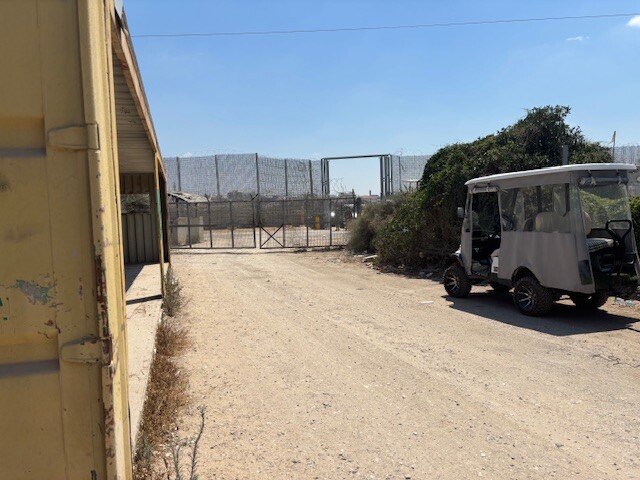 Nina SebaAug-18-2025Habla: The gate is in the process of closing
-
Huwwara
See all reports for this place-
The Huwwara checkpoint is an internal checkpoint south of the city of Nablus, at the intersection of Roads 60 and 5077 (between the settlements of Bracha and Itamar). This checkpoint was one of the four permanent checkpoints that closed on Nablus (Beit Furik and Awarta checkpoints to the east and the Beit Iba checkpoint to the west). It was a pedestrian-only barrier. As MachsomWatch volunteers, we watched therre since 2001 two shifts a day - morning and noon, the thousands of Palestinians leaving Nablus and waiting for hours in queues to reach anywhere else in the West Bank, from the other side of the checkpoint the destination could only be reached by public transport. In early June 2009, as part of the easing of Palestinian traffic in the West Bank, the checkpoint was opened to vehicular traffic. The passage was free, with occasional military presence in the guard tower. Also, there were vehicle inspections from time to time. Since the massacre on 7.10.2023, the checkpoint has been closed to Palestinians.
On February 26, 2023, about 400 settlers attacked the town's residents for 5 hours and set fire to property, such as houses and cars. Disturbances occurred in response to a shooting of two Jewish residents of Har Bracha by a Palestinian Terrorist. The soldiers stationed in the town did not prevent the arson and rescued Palestinian families from their homes only after they were set on fire. No one was punished and Finance Minister Smotrich stated that "the State of Israel should wipe out Hawara." Left and center organizations organized solidarity demonstrations and support actions for the residents of Hawara.Hawara continued to be in the headlines in all the months that followed: more pogroms by the settlers, attacks by Palestinians and a massive presence of the army in the town. It amounted to a de facto curfew of commerce and life in the center of the city. On October 5, 2023, MK Zvi established a Sukkah in the center of Hawara and hundreds of settlers backed the army blocked the main road and held prayers in the heart of the town all night and the next day. On Saturday, October 7, 23 The "Swords of Iron" war began with an attack by Hamas on settlements surrounding Gaza in the face of a poor presence of the IDF. Much criticism has been made of the withdrawal of military forces from the area surrounding Gaza and their placement in the West Bank, and in the Hawara and Samaria region in particular, as a shield for the settlers who were taking over and rioting.
On November 12, 2023, the first section of the Hawara bypass road intended for Israeli traffic only was opened. In this way, the settlers can bypass the road that goes through the center of Hawara, which is the main artery for traffic from the Nablus area to Ramallah and the south of the West Bank. For the construction of the road, the Civil Administration expropriated 406 dunams of private land belonging to Palestinians from the nearby villages. The settlers are not satisfied with this at the moment, and demand to also travel through Hawara itself in order to demonstrate presence and control.(updated November 2023)
. Shoshi AnbarMay-18-2025Huwara: The old houses in Area C
-
Qabalan
See all reports for this place-
Qabalan is a small Palestinian town (Nablus governorate) Area B.
According to the mair, the population consists of 8000 inhabitants (2012).
Water: The inhabitants suffer from a severe water shortage at least since 2002. The minimum quota according to international standards is 100 liters per capita per day - the supply is not close to this amount.
The inhabitans make a living from orchards: Olives and some fruit trees, Also. permit holders can work in Israel after passing through the Eyal checkpoint.Not far from the agricultural areas of the Qabalan inhabitans, situated the settlements: Tapuach and Rehelim.
-
Shomron Crossing
See all reports for this place-
Shomron Crossing The Shomron checkpoint for vehicles. is located east of Rosh HaAyin and Kafr Qassem, on Road 5 (Trans-Samaria) leading to Ariel and the Za'atara junction. It is intended for blue ID cardholders, foreign guests or diplomats, and international organizations only. In 2009 the management was entrusted to a civil security company.
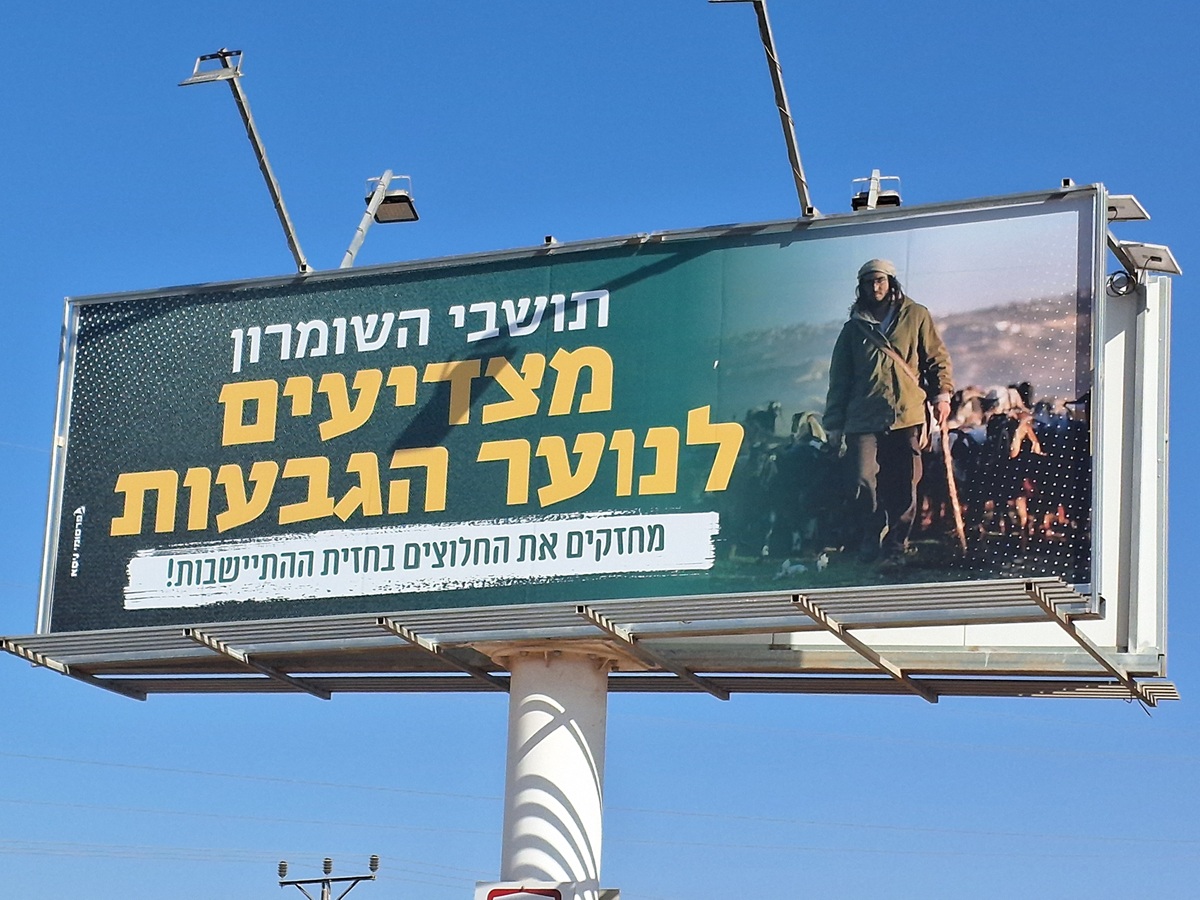 Ronit Dahan-RamatiAug-21-2025Highway 505: Salute to the Hilltop Youth
-
Za'tara (Tapuah)
See all reports for this place-
Za'tara (Tapuah) Za'tara is an internal checkpoint in the heart of the West Bank, at the intersection of Road 60 and Road 505 (Trans-Samaria), east of the Tapuah settlement. This checkpoint is the "border" marked by the IDF between the north and south of the West Bank, in accordance with the policy of separation between the two parts of the West Bank that has been in place since December 2005. At the Za'tara checkpoint, there are separate routes for Israelis and Palestinians. In the route for Israelis, there are no inspections and the route for Palestinians inspects. The queue lengthens and shortens suits. The checkpoint is open 24 hours a day. The checkpoint is partially staffed and the people who pass through it are checked at random.
 Shoshi AnbarSep-27-2023Za'atra (Tapuah Intersection). Signs
-