
Beit Furik, Huwwara, Kifl Harith, Za’tara (Tapuah)
Jurish, Usrin, Za’tara junction, Huwwara, Beit Furiq
10:30 Jurish. We didn’t go on our shift last week because friends in the villages told us not to come. We arranged this week’s visit with A., the women’s club coordinator, who was very happy the activity was continuing.
But, when we arrived, only four young girls were present, who were as enthusiastic as usual to learn English and have yoga lessons.
Three women arrived later, the coordinator and two of the women who are most active in the club. We talked about what was happening in Gaza, and of course told them how sorry we were, and how we sympathize with them. It was a very frank discussion. They described the horrors they’d seen on their television stations. When we told them Israeli TV mostly shows the destruction, not the terrible injuries, one said: “Hearing is no substitute for seeing…” We agreed, of course.
We spoke mostly in English; Nadim helped translate from Hebrew to Arabic and vice-versa.
A., the coordinator, couldn’t explain (or perhaps didn’t want to?) why so few women came today. Perhaps it’s because of the war and the catastrophe in Gaza they feel so strongly about, and perhaps also because the older women stopped coming during Ramadan. She suggested rescheduling the meetings in the afternoon, which would be better for the women and for the girls coming home from school, who don’t want to forgo their meetings with us. The school year in Palestine begins this coming Sunday.
We started today at 10:45, and continued until 12:45, dividing the time between an English lesson with Shosh and yoga with Sarah and Nina.
Bella had informed the pupils she was going on vacation, and that Shosh would substitute for her. They welcomed Shosh warmly.
Shosh reports:
“Four high school girls participated in today’s class, as well as Maryam, who’s five. It quickly became apparent Sirin’s English is good enough for the baccalaureate exam while the others’ have only a basic knowledge. But the lesson went well anyway. We introduced ourselves and discussed events of the day. The girls talked about how angry they felt because of the war. The atmosphere was good; we all spoke frankly.
We read one of Aesop’s fables, “The Fox and the Grapes,” rewritten in basic English. We learned new words and conjugated the present tense of the story’s verbs. We concluded by discussing its moral. The girls were asked to write a short tale of their own at home.”
The yoga class was again enjoyable and successful. The pupils left smiling, as usual. This time Nina joined Sarah and helped the pupils follow instructions, which was very helpful.
Our circuit
10:50 While the activity in the club was underway, we made our circuit with Nadim.
The road to Jurish, as well as the bypass road, had been blocked with boulders by the army some time ago. This time we saw two ditches had been dug, and earthen beams erected, to insure the closure is hermetic! The army also prevents the construction of an alternate road the residents had intended to open a few hundred meters to the east. Construction material scattered along the planned route is evidence of the villagers’ willingness to invest resources to open a direct route from the main road down to the Jordan Valley, instead of the road through Kisra.
We saw about ten new dwelling units in the Midgalim settlement adjacent to Jurish, on the hillside, still without windows. They overlook the road and the lovely landscape down the hill.
At Za’tara, on the way to Ramallah, a taxi has been pulled to the side for inspection of the vehicle and the passengers.
On the way to Huwwara, as well as in the entire area, there are two soldiers at each hitchhiking station, to guard any settler arriving to get a ride. (It’s interesting that there have been budget cuts for security coordinators and their vehicles in the localities surrounding Gaza, but there’s no manpower shortage when it comes to protecting settlers in the Jordan Valley).
An army jeep is parked at the entrance to Beita. There are three army jeeps at the exit from Huwwara toward Nablus, an Israeli flag flying above them. One of the residents we spoke to said there are many jeeps driving around Huwwara today, looking for wanted men, or to “supervise” the two families whose sons were killed in last week’s demonstrations.
On the way to Beit Furiq we saw, from a distance, construction of a new public building in Itamar. Perhaps the yeshiva is expanding? A soldier is on guard in the pillbox at Beit Furiq. There aren’t any signs of the demonstration held there last week.
12:15 On our way back to Jurish we drove through Usrin village, next to ‘Aqraba. It’s a small village, part of a joint regional council with the villages of Beita and Za’tara. At one of the curves of the road overlooking the main highway we saw residues from burning tires on the road, signs of recent demonstrations.
We stopped to talk to an owner of one of the shops in the village center. He said that three weeks ago settlers came along the road below the village (he didn’t know where they were from), caught the son of the chairman of the municipal council, broke his leg and left him there. We’ll return to the village the first chance we get to learn more about it.
13:00 We left for home. At the junction of Highway 5 and the road to Kifl Hars the iron gate, that’s usually open, is being repaired.
Beit Furik checkpoint
See all reports for this place-
One of the three internal checkpoints that closed on the city of Nablus - Beit Furik to the east, Hawara to the south, Beit Iba to the west. The checkpoint is located at the junction of Roads 557 (an apartheid road that was forbidden for Palestinians), leading to the Itamar and Alon Morea settlements and Road 5487. The checkpoint was established in 2001 for pedestrians and vehicles; The opening hours were short and the transition was slow and very problematic.Allegedly, the checkpoint is intended to monitor the movement to and from Nablus of the residents of Beit Furik and Beit Dajan, being the only opening outside their villages. Since May 2009 the checkpoint is open 24 hours a day, the military presence is limited, vehicles can pass through it without inspections, except for random inspections. (Updated April 2010)
-
Huwwara
See all reports for this place-
The Huwwara checkpoint is an internal checkpoint south of the city of Nablus, at the intersection of Roads 60 and 5077 (between the settlements of Bracha and Itamar). This checkpoint was one of the four permanent checkpoints that closed on Nablus (Beit Furik and Awarta checkpoints to the east and the Beit Iba checkpoint to the west). It was a pedestrian-only barrier. As MachsomWatch volunteers, we watched therre since 2001 two shifts a day - morning and noon, the thousands of Palestinians leaving Nablus and waiting for hours in queues to reach anywhere else in the West Bank, from the other side of the checkpoint the destination could only be reached by public transport. In early June 2009, as part of the easing of Palestinian traffic in the West Bank, the checkpoint was opened to vehicular traffic. The passage was free, with occasional military presence in the guard tower. Also, there were vehicle inspections from time to time. Since the massacre on 7.10.2023, the checkpoint has been closed to Palestinians.
On February 26, 2023, about 400 settlers attacked the town's residents for 5 hours and set fire to property, such as houses and cars. Disturbances occurred in response to a shooting of two Jewish residents of Har Bracha by a Palestinian Terrorist. The soldiers stationed in the town did not prevent the arson and rescued Palestinian families from their homes only after they were set on fire. No one was punished and Finance Minister Smotrich stated that "the State of Israel should wipe out Hawara." Left and center organizations organized solidarity demonstrations and support actions for the residents of Hawara.Hawara continued to be in the headlines in all the months that followed: more pogroms by the settlers, attacks by Palestinians and a massive presence of the army in the town. It amounted to a de facto curfew of commerce and life in the center of the city. On October 5, 2023, MK Zvi established a Sukkah in the center of Hawara and hundreds of settlers backed the army blocked the main road and held prayers in the heart of the town all night and the next day. On Saturday, October 7, 23 The "Swords of Iron" war began with an attack by Hamas on settlements surrounding Gaza in the face of a poor presence of the IDF. Much criticism has been made of the withdrawal of military forces from the area surrounding Gaza and their placement in the West Bank, and in the Hawara and Samaria region in particular, as a shield for the settlers who were taking over and rioting.
On November 12, 2023, the first section of the Hawara bypass road intended for Israeli traffic only was opened. In this way, the settlers can bypass the road that goes through the center of Hawara, which is the main artery for traffic from the Nablus area to Ramallah and the south of the West Bank. For the construction of the road, the Civil Administration expropriated 406 dunams of private land belonging to Palestinians from the nearby villages. The settlers are not satisfied with this at the moment, and demand to also travel through Hawara itself in order to demonstrate presence and control.(updated November 2023)
.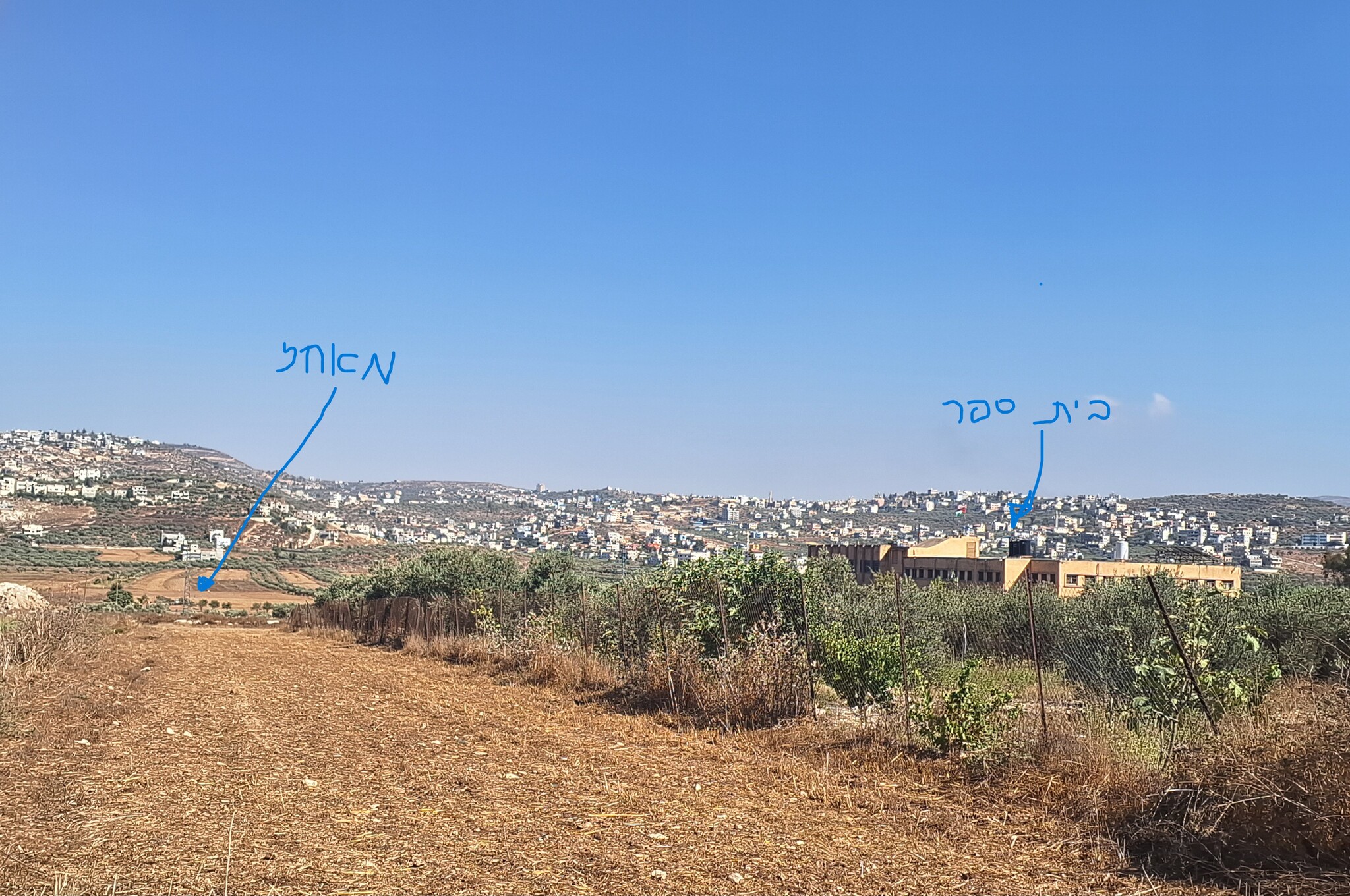 Ronit Dahan-RamatiAug-24-2026Huwara: The school on the outskirts of town and an outpost hidden among the trees
-
Kifl Harith
See all reports for this place-
Kifl Harith
This is a Palestinian located north-west of the settler-colony town of Ariel, 18 kilometers south of the city of Nablus. It numbers 3, 206 inhabitants, as of 2007. 42% of the village lands lie in Area B, and 58% in Area C. In 1978, some hundreds of dunams of the village’s farmland was sequestered in order to found the settler-colony of Ariel – in total 5,184 dunams from the Palestinian communities of Salfit, Iscaqa, Marda, and Kifl Harith. Dozens of square kilometers were also confiscated for paving road no. 5 as well as road 505 and their buffer zones, and the Israeli electricity company’s power station. Over the years the village has suffered harassment by sometimes-armed settler-colonists, even casualties. In 1968 the army’s rabbinate ruled the maqam site Nabi Yanoun (sanctified grave of the Prophet Yanoun) is in fact the tomb of Joshua, Son of Nun. Another structure in the village, named Nabi Tul Kifl by the Palestinians, has been identified by the Israeli authorities as to the tomb of Caleb, Son of Yefuneh. These sites are located in the heart of the village, near the mosque, and at times of Jewish religious festivities and pilgrimages, the center of the village is illuminated by projectors and thousands of Jews arrive, protected by hundreds of Israeli soldiers. During such a period, a night curfew is imposed on the village and the villagers are forced to stay shut inside their homes.
-
Za'tara (Tapuah)
See all reports for this place-
Za'tara (Tapuah) Za'tara is an internal checkpoint in the heart of the West Bank, at the intersection of Road 60 and Road 505 (Trans-Samaria), east of the Tapuah settlement. This checkpoint is the "border" marked by the IDF between the north and south of the West Bank, in accordance with the policy of separation between the two parts of the West Bank that has been in place since December 2005. At the Za'tara checkpoint, there are separate routes for Israelis and Palestinians. In the route for Israelis, there are no inspections and the route for Palestinians inspects. The queue lengthens and shortens suits. The checkpoint is open 24 hours a day. The checkpoint is partially staffed and the people who pass through it are checked at random.
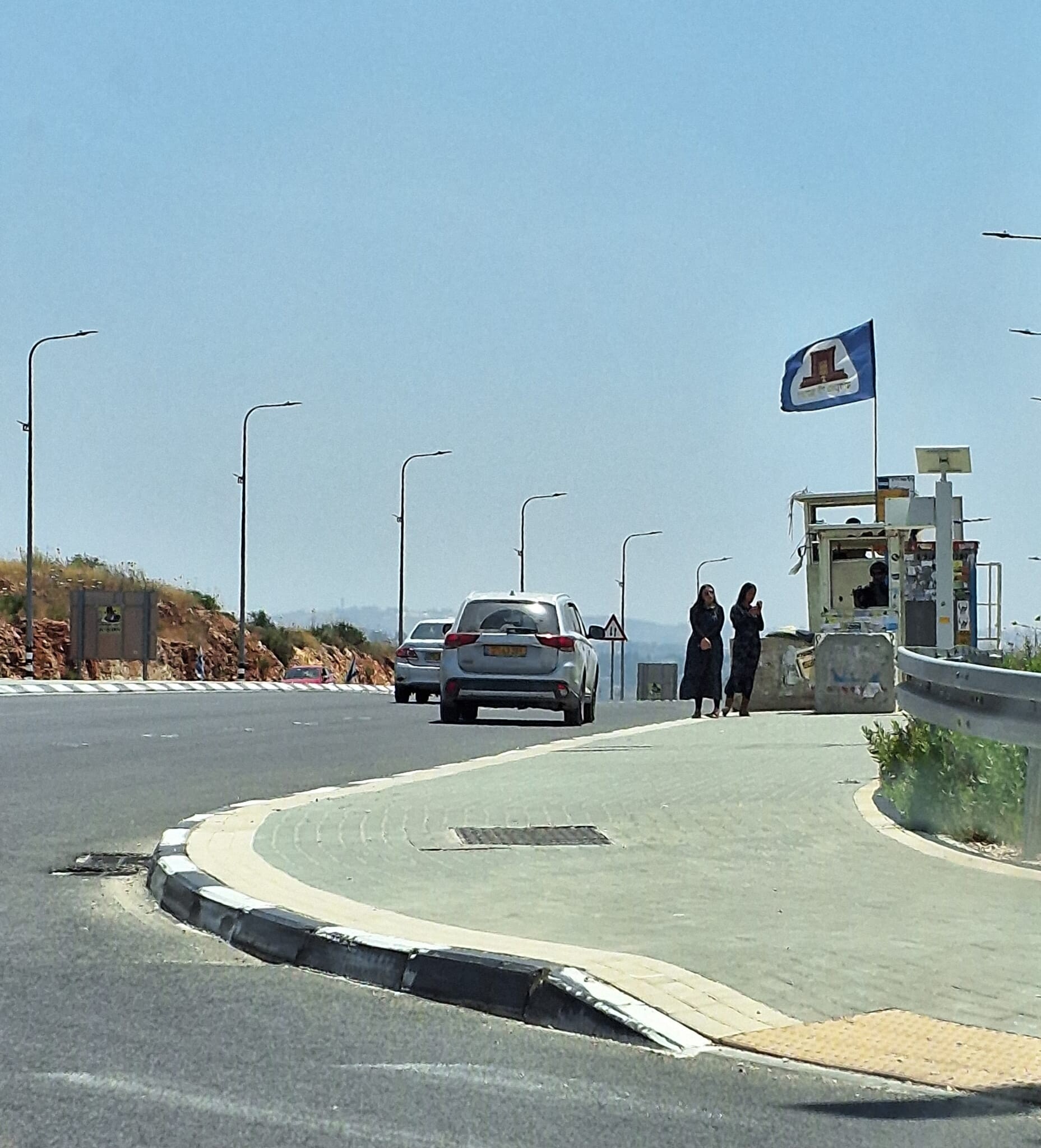 Ronit Dahan-RamatiJun-9-2026Za'atara (Tapuach Junction). The Temple Flag Above a Station
-
