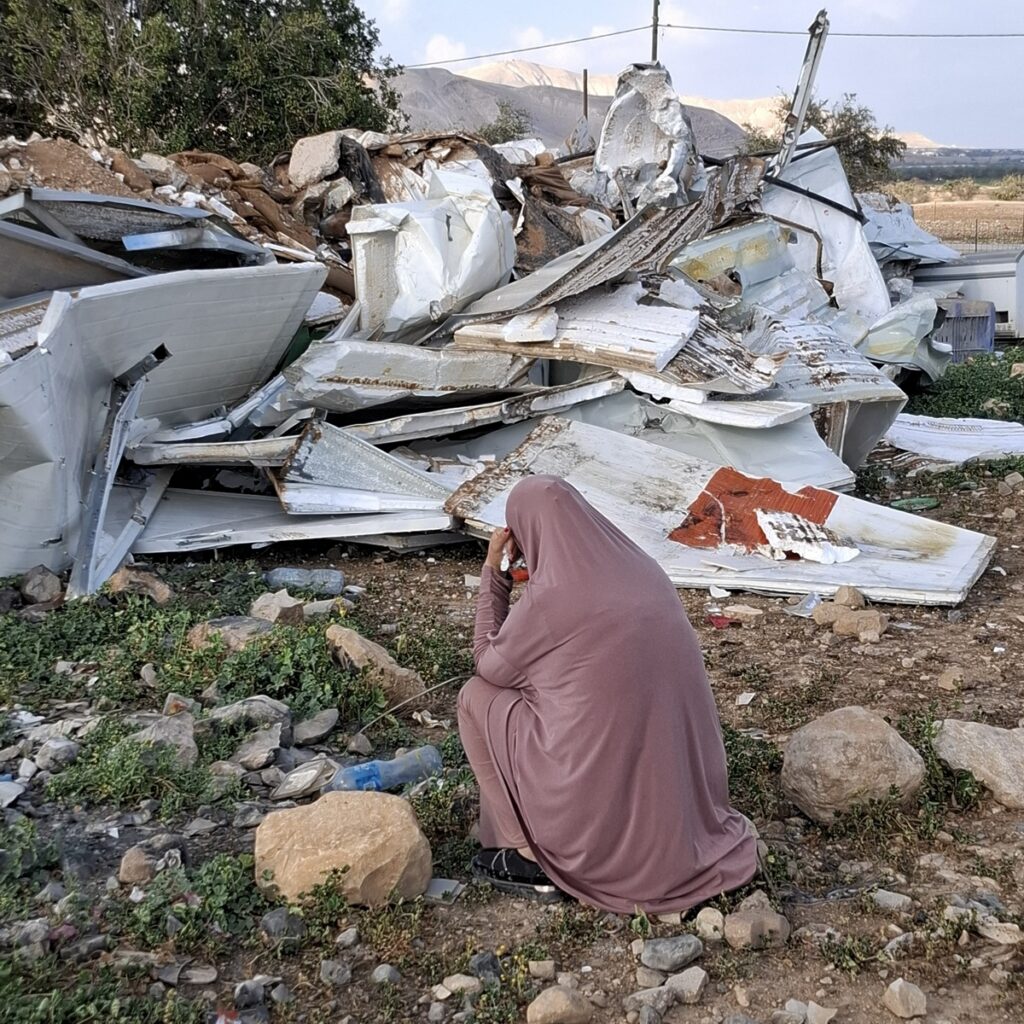
Habla
We arrive at 06:00 and it is dark. The soldiers have not arrived yet; they come at 06:05
At 06:11 the first people in the queue go through, five at a time. All vehicles — carts, bikes, cars — park on the side
and the passengers go on foot to be checked, body and papers, and then return to their vehicles and go through
.
After about 30 people cross, there is nobody waiting. Around 7 a.m. more people arrive, and by the time the CP closes, about the same number have crossed
.
Today seems to be a low volume day. People we saw last week are not here today
.
At 07:26 the CP shuts down, since there is no one waiting.
Habla
See all reports for this place-
Habla CP (1393)
The Habla checkpoint (1393) was established on the lands of the residents of Qalqilya, on the short road that
connected it for centuries to the nearby town of Habla. The separation barrier intersects this road twice and cut off the residents of Qalqilya from their lands in the seam zone.(between the fence and the green line).
There is a passage under Road 55 that connects Qalqilya to the sabotage This agricultural barrier is used by the farmers and nursery owners established along Road 55 from the Green Line and on both sides of the kurkar road leading to the checkpoint.
This agricultural checkpoint serves the residents of Arab a-Ramadin al-Janoubi (detached from the West Bank), who pass through it to the West Bank and back to their homes. The opening hours (3 times a day) of this agricultural checkpoint are longer than usual, about an hour (recently shortened to 45 minutes), and are coordinated with the transportation hours of a-Ramadin children studying in the occupied in the West Bank.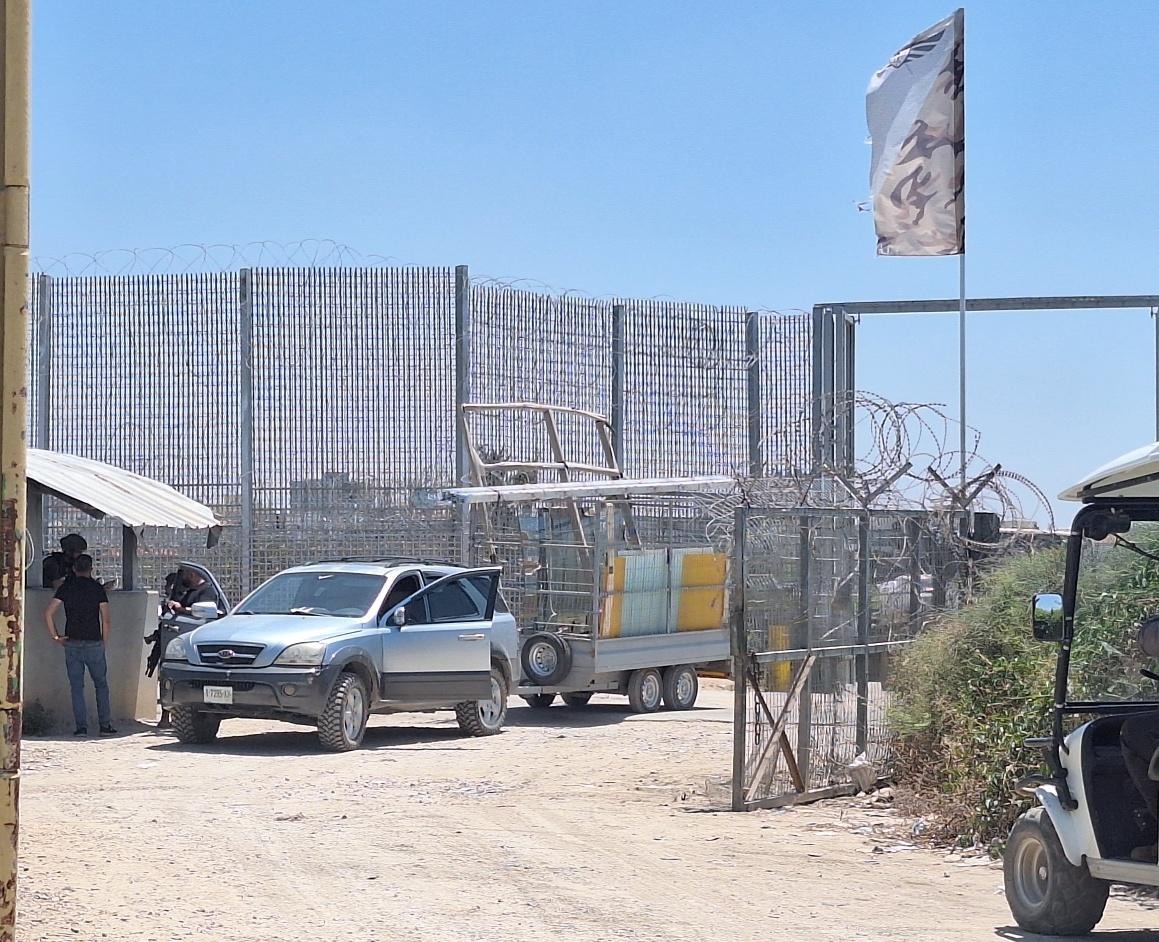 Shoshi AnbarJul-29-2026Habla. The gate is open for vehicle crossing
-