
AM
Ar-Ram, Qalandiya 18/4/2004 Watchers: Chana A., Noa R. (reporting) 6:45, Sho’afat. The line of cars goes apace. Only very few pedestrians and no detainees. 7:00, Ar-Ram. As we arrive we are accosted by a man who complains of having had to wait for 40 minutes even though the line is not long and he works in Jerusalem. The line is at a standstill, the BP’s bar the way across the barrier with their arms, pressing the small crowd back. They want the line to be neat, but almost no one is allowed through. Only school children are passing after opening their bags. 7:30, Qalandiya. Approaching the checkpoint, someone coming towards us warned us that a 12-year old was being detained on the charge of having thrown stones, “but they have no proof”. The person in question was indeed sitting on a bench (not with his back facing the CP this time) but turned out to be 17 and equipped with an ID that had been taken. One of the soldiers says he is sure this is the one who threw a stone at him yesterday. He clearly saw him and recognized him now. After half an hour, the boy is released and is given the choice of going either way: back or forwards. He decides to go back. There is a problem with an approximately 40-year old man from Banny Naim near Hebron. He crossed north to Ramallah the evening before to visit his brother there who is a doctor, and now he wants to go back south to return home. The sign on the northbound trail which warns against doing this has been ignored and now he can’t return. He speaks good Hebrew and we try to help, but the rules are rigid. Our phone calls to the IDF Humanitarian Center (Yuval answered) were to no avail. Our guy has to meet his 14-year old son on the south side and has no way of telling him that he is not allowed to cross. We offer to help in the absence of a mobile phone on the part of both father and son (“write him a note,” “he can’t read…”) Finally, the soldiers agree to take the ID as a guarantee for his return, and let him cross to talk to his son. He returns a few minutes later, takes his ID back and goes back to Ramallah. On the taxi side of the CP, the drivers are reluctant to talk to us. They are angry because of Rantissi. In the end, the one who speaks good Hebrew expresses his anger and doubt about there ever being an end to the tragedy. We can’t but agree.On the way back, we stand in line with the Palestinian cars. It takes half an hour for some ten cars to pass. We see seven detainees and park the car to talk to them. They were caught an hour and a half ago trying to outflank the CP. We can’t help.We go back to Sho’afat. Two detainees, a dental technician and a restaurant owner of a place in Al-Ezariya. They are not allowed through, have been waiting for two hours. They were just trying their luck, have no permits and usually get through somehow. Not today. We call the IDF Humanitarian Center phone, get Yuval again and he says it’s not his department. The minute they are in Area C, they are illegal and the police’s charges. After a few minutes, they are given back their ID’s and go back.
Hebron
See all reports for this place-
According to Wye Plantation Accords (1997), Hebron is divided in two: H1 is under Palestinian Authority control, H2 is under Israeli control. In Hebron there are 170,000 Palestinian citizens, 60,000 of them in H2. Between the two areas are permanent checkpoints, manned at all hours, preventing Palestinian movement between them and controlling passage of permit holders such as teachers and schoolchildren. Some 800 Jews live in Avraham Avinu Quarter and Tel Rumeida, on Givat HaAvot and in the wholesale market.
Checkpoints observed in H2:
- Bet Hameriva CP- manned with a pillbox
- Kapisha quarter CP (the northern side of Zion axis) - manned with a pillbox
- The 160 turn CP (the southern side of Zion axis) - manned with a pillbox
- Avraham Avinu quarter - watch station
- The pharmacy CP - checking inside a caravan with a magnometer
- Tarpat (1929) CP - checking inside a caravan with a magnometer
- Tel Rumeida CP - guarding station
- Beit Hadassah CP - guarding station
Three checkpoints around the Tomb of the Patriarchs
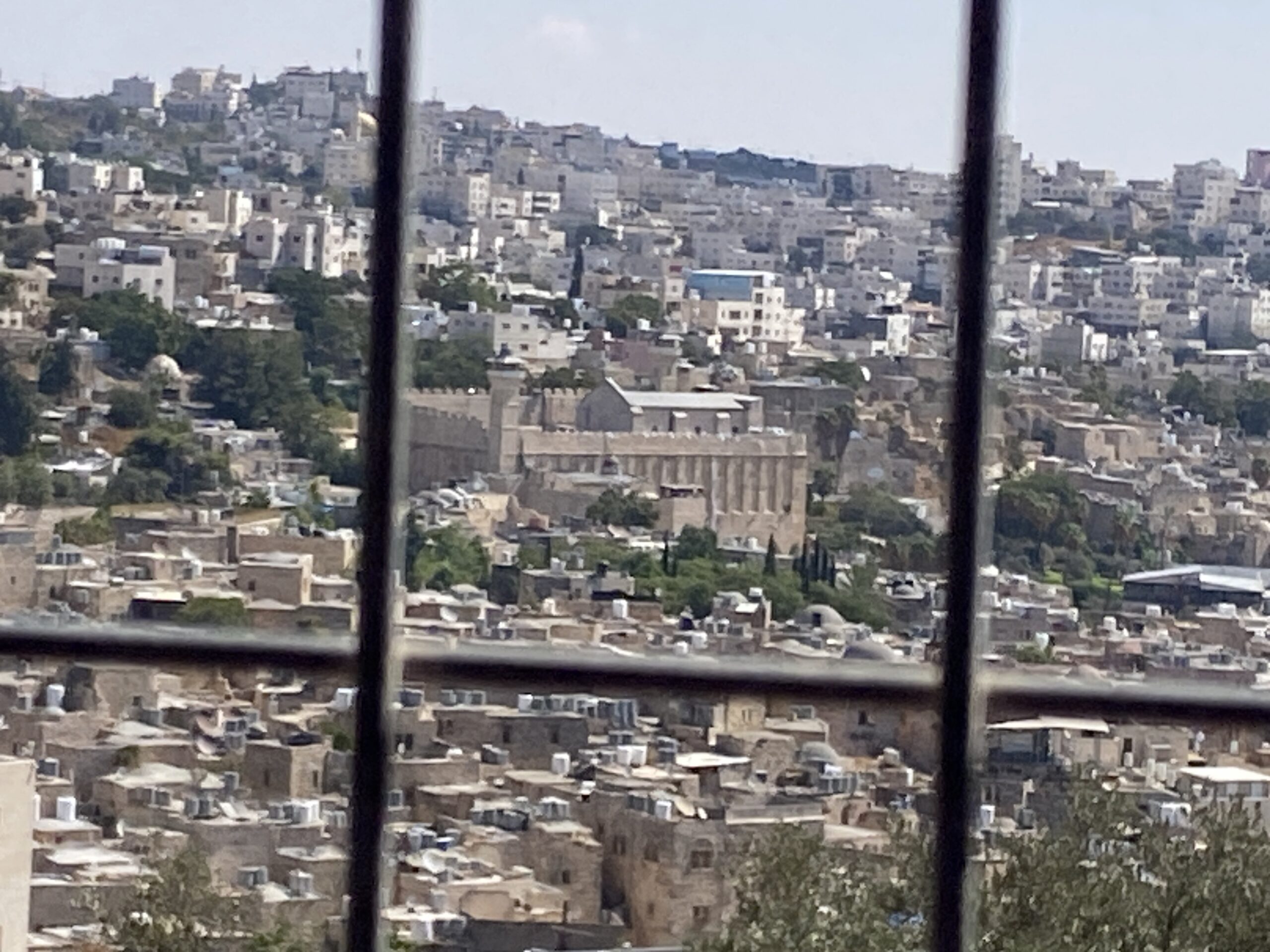 Yael ZoranSep-24-2026Hebron and the Cave of the Patriarchs from Beit Hashalom
-
Jerusalem
See all reports for this place-
The places in East Jerusalem which are visited routinely by MachsomWatch women are Silwan and Sheikh Jarrah. During the month of Ramadan, also the Old City and its environs are monitored.
-
