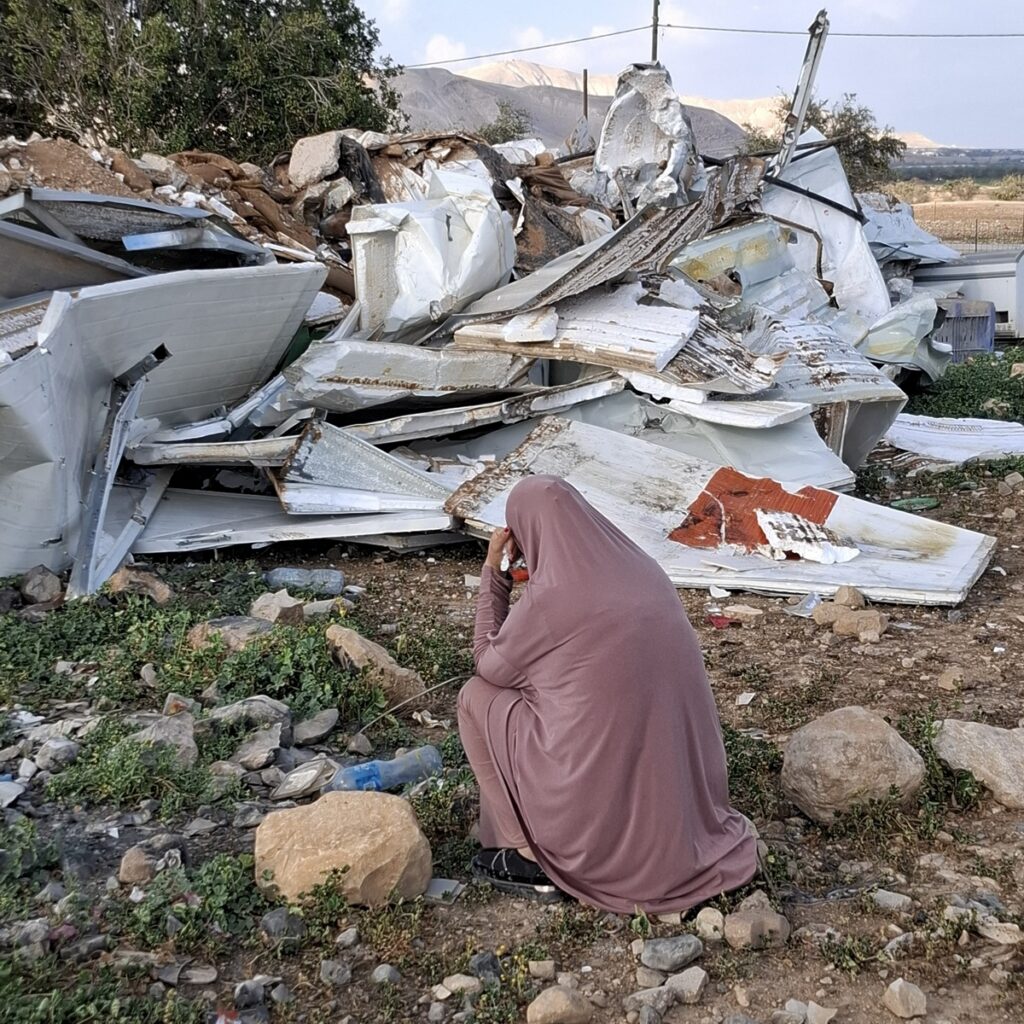
Beit Iba, Huwwara AM
BEIT IBA, HUWWARA, Wednesday 23 June 2004 AMObservers: Orit B., Miriam L., Nava Mann, Michal P. and Hannah A.(reporting together ) colour = red> Before the turnoff to Shavei Shomron there was an unannounced road-block: a military command- car was parked the width of the road halting traffic in both directions07:45 — Beit Iba The checkpoint is changing from watch to watch, and conditions are getting better (shelters, water, perhaps even loudspeaker announcements?) but, on the other hand, the checkpoints are becoming a permanent fixture.Many people, including families and children, were entering Nablus, in a regular flow. We were approached by families of law students who were due to attend a graduation ceremony today; some family members had been barred. We interceded and they went through. 2nd Lt. M. arrived [from the District Co-ordinating Office (DCO ) — the army section that handles civilian matters and usually has representatives at the checkpoints, ostensibly to alleviate the lot of the Palestinians] and informed the soldiers of the new order easing restrictions on entry to Nablus.09:30 — Huwwara A number of vehicles, including ambulances, were waiting, and it took about half-an-hour for a vehicle to go through. There were 15 young detainees.10:30 — By now there were 28 detainees. Without warning , a soldier trained his gun on them and shouted at them to sit down. One of them, suspected of having a forged ID card, was handcuffed and blindfolded and thrown onto the ground in the middle of the lane till a police car arrives to take him at 11.30. Only a few detainees were released, and our efforts to speed up the process with the DCO and the army’s “humanitarian” hotline were unsuccessful.Huwwara North There was now a single detainee and traffic was flowing. The megaphone had disappeared but there was an “innovation”: the table where the contents of cases were inspected had been moved and people now had to empty out their luggage on the ground; “Muhammad”, as the soldiers called him, and his friend had taken the initiative, moved a table, translated the soldiers’ orders for those who needed this service, and urged them to hurry up , and the soldiers apparently were cooperating with them. It turned out these were owners of confiscated taxis who were waiting ……for what exactly, it wasn’t quite clear to us.An elderly man went over to the DCO representative, explained that he had eight children, and that something in a document he showed was inaccurate. The officer asked a soldier to change the document, but then the man came back a second time — there was another inaccuracy ; it would be a good idea to take more care and thus avoid the unnecessary run around that people are given. At 10:00 there was a sudden hubbub. A very skinny young girl started running,with the soldiers chasing after her, shouting at her to stop. Muhammad tried to stop her, people tried to soothe her. When a woman soldier came over, she started running again. The soldier aimed her rifle at her. Orit went over to the girl, reassured her, took her hand and stayed with her. The girl responded well. They wanted to do a body search on her and she went over to the checking tent hand in hand with Orit, accompanied by two women soldiers, a sergeant and a DCO officer. At a certain point, they refused to let Orit in, the sergeant shouted that she was disturbing them and the women soldiers shouted and cursed her. The women soldiers were intent on heating up the atmosphere and constantly screamed obscenities and threats against the young woman. One of them refused a suggestion that she should return to checking the other people — she wasn’t going anywhere until that “bitch” has been checked, “I’ll give her what for, pushing my friend like that! Fuck her!” etc. etc. If the girl wouldn’t undress, one of the women soldiers said, “I’ll shoot her to make her do so!”. At that point, a car drove up with a settler from [the Jewish Israel settlement of] Har Bracha, named M., who told us we were traitors to Israel. The women soldiers egged him on him and he told us that there’d been women like us in Nazi Germany as well. Meanwhile the harassment of the young girl continued unabated, orchestrated and carried out by the women soldiers.What was it all about? The girl had a medallion with a picture of her 32-year-old brother who’d been shot by Israeli troops, not in a terrorist action, she told us. The woman soldier saw it and, when asked, the girl explained to her using the word “Shahid” [Arabic for one who dies or is killed in a sacred cause]. This was like a red rag to a bull for the woman soldier concerned and she quite lost her cool. At one point, she even called the young woman a “terrorist” .After some time, the girl’s mother arrived, shouted a little and they let the girl go.The soldier who was holding the ID cards of the detainees’ tried to check what was happening : the orders that he was given were to convey the details [to the General Security Services (GSS) — also known as the Shabak or Shin Bet, — which cross-checks the information against a list of security suspects and phones back the results to the checkpoint] only when he had 10 ID cards [which, of course, adds to the very considerable time the detainees are kept waiting]. At 11:45, when we were about to leave, there were 29 detainees, including two with Israeli ID cards. One at least had been waiting more than two hours. The DCO representative was awaiting instructions to release them all.
Beit Iba
See all reports for this place-
A perimeter checkpoint west of the city of Nablus. Operated from 2001 to 2009 as one of the four permanent checkpoints closing on Nablus: Beit Furik and Awarta to the east and Hawara to the south. A pedestrian-only checkpoint, where MachsomWatch volunteers were present daily for several hours in the morning and afternoon to document the thousands of Palestinians waiting for hours in long queues with no shelter in the heat or rain, to leave the district city for anywhere else in the West Bank. From March 2009, as part of the easing of the Palestinian movement in the West Bank, it was abolished, without a trace, and without any adverse change in the security situation.
 Jun-4-2014Beit-Iba checkpoint 22.04.04
-
Huwwara
See all reports for this place-
The Huwwara checkpoint is an internal checkpoint south of the city of Nablus, at the intersection of Roads 60 and 5077 (between the settlements of Bracha and Itamar). This checkpoint was one of the four permanent checkpoints that closed on Nablus (Beit Furik and Awarta checkpoints to the east and the Beit Iba checkpoint to the west). It was a pedestrian-only barrier. As MachsomWatch volunteers, we watched therre since 2001 two shifts a day - morning and noon, the thousands of Palestinians leaving Nablus and waiting for hours in queues to reach anywhere else in the West Bank, from the other side of the checkpoint the destination could only be reached by public transport. In early June 2009, as part of the easing of Palestinian traffic in the West Bank, the checkpoint was opened to vehicular traffic. The passage was free, with occasional military presence in the guard tower. Also, there were vehicle inspections from time to time. Since the massacre on 7.10.2023, the checkpoint has been closed to Palestinians.
On February 26, 2023, about 400 settlers attacked the town's residents for 5 hours and set fire to property, such as houses and cars. Disturbances occurred in response to a shooting of two Jewish residents of Har Bracha by a Palestinian Terrorist. The soldiers stationed in the town did not prevent the arson and rescued Palestinian families from their homes only after they were set on fire. No one was punished and Finance Minister Smotrich stated that "the State of Israel should wipe out Hawara." Left and center organizations organized solidarity demonstrations and support actions for the residents of Hawara.Hawara continued to be in the headlines in all the months that followed: more pogroms by the settlers, attacks by Palestinians and a massive presence of the army in the town. It amounted to a de facto curfew of commerce and life in the center of the city. On October 5, 2023, MK Zvi established a Sukkah in the center of Hawara and hundreds of settlers backed the army blocked the main road and held prayers in the heart of the town all night and the next day. On Saturday, October 7, 23 The "Swords of Iron" war began with an attack by Hamas on settlements surrounding Gaza in the face of a poor presence of the IDF. Much criticism has been made of the withdrawal of military forces from the area surrounding Gaza and their placement in the West Bank, and in the Hawara and Samaria region in particular, as a shield for the settlers who were taking over and rioting.
On November 12, 2023, the first section of the Hawara bypass road intended for Israeli traffic only was opened. In this way, the settlers can bypass the road that goes through the center of Hawara, which is the main artery for traffic from the Nablus area to Ramallah and the south of the West Bank. For the construction of the road, the Civil Administration expropriated 406 dunams of private land belonging to Palestinians from the nearby villages. The settlers are not satisfied with this at the moment, and demand to also travel through Hawara itself in order to demonstrate presence and control.(updated November 2023)
.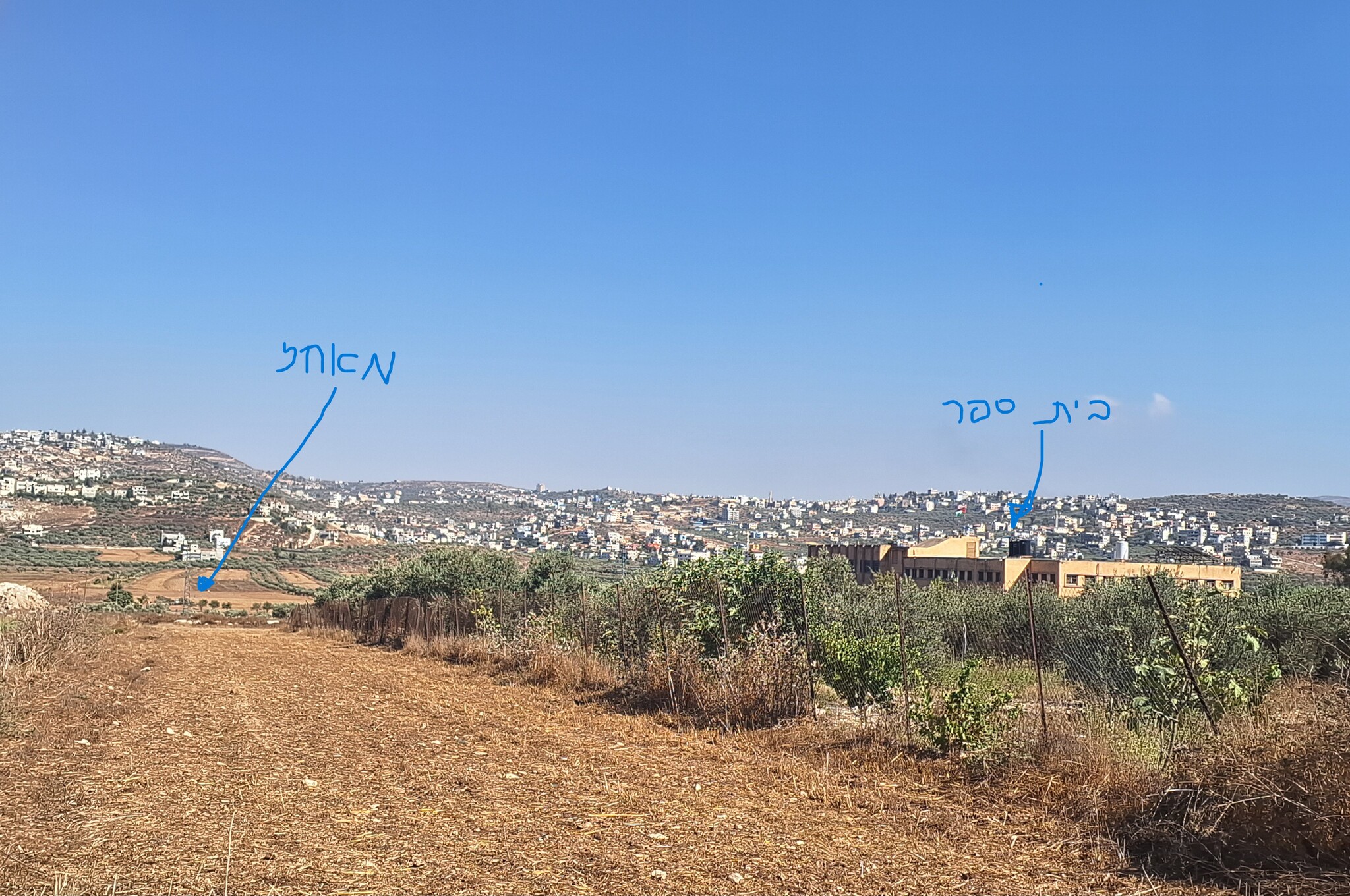 Ronit Dahan-RamatiAug-24-2026Huwara: The school on the outskirts of town and an outpost hidden among the trees
-