
Hamra, Tayasir
Hamra, Tayasir, Thursday, April 20, 2006, AMObserving and reporting: Anina K, Revital S, Yehudit H.Visitor: Nir H Hamra, 07:35 – 08:45Four soldiers at the checkpoint, inspecting papers in both directions. From Tubas, 11 trucks and cars, people sitting by the roadside; it seems they have been waiting a long time.From the side of Jiftlik, five cars in the direction of Tubas.Within a short while, the line disappears. One truck with a sole occupant is refused passage to Tubas. The driver circulates and tries time and again. In answer to our question, it appears that there is closure. How did all the others get in? Not clear.In a brief conversation, the officer says that “hidudim” (a new concept for us) were received. The meaning – warnings. No one may pass and the procedures need to be sharpened up.Who may pass? Who is prohibited? In an attempt to ask questions regarding the closure, and in general, the soldiers completely ignore us. No cooperation.We phoned the District Coordination Office. E responds: residents of the Jordan Valley are forbidden to enter Judea and Samaria. Till when? Not known.Meanwhile, additional cars, and again one vehicle with one man who is not allowed through. He doesn’t understand why his neighbors are allowed to pass and he is prohibited. Again we phone the DCO, and again it is impossible to understand who may and who may not pass.The ones who are barred remain to wait. They claim that quite possibly they will be allowed through as time goes on; they are not giving up, they have to buy things in Tubas – things that can’t be found in Jiftlik.Tayasir, 09:00 – 10:15We arrive at the point where we usually stand. The soldier at the checkpoint shouts at us to move back 30 meters from the checkpoint. We tell him that we have permission from the commander, but he says it is an order from the chief of staff. An officer arrives from within the base, and backs up the soldier’s story. We asked to see the chief of staff’s order in writing, but the officer says it was oral. The debate goes on, another soldier joins and they drive us back. In order not to hamper the passers by, we move from our place.Six cars are waiting to enter Tayasir.A young man with a woman and a sick child want to pass to Tubas, to go to the doctor. They are not allowed because the father is not yet 30 (he will be in a few months) – this according to the ID card he shows us.An older woman with daughter and granddaughter, with a medical pass for the daughter, are also rejected. Only a few schoolchildren go through. Everybody else is prohibited. When we tell the officer about the woman with the medical pass, he answers with a smile. Does something about the situation amuse him?A phone call to the DCO, to E. who passes us on to his commander, who is not willing to identify himself. He says he will try to clarify with the command post.Dullness and ambiguity prevail over everything. The people seeking to enter are waiting. We phoned the brigade commander’s office, and are told that the woman with the medical pass will apparently be allowed through. We leave, angry, frustrated and with many questions.
Jordan Valley
See all reports for this place-
Jordan Valley The Jordan Valley is the eastern strip of the West Bank. Its area consists of almost a third of the West Bank area. About 10,000 settlers live there, about 65,000 Palestinian residents in the villages and towns. In addition, about 15,000 are scattered in small shepherd communities. These communities are living in severe distress because of two types of harassment: the military declaring some of their living areas, as fire zones, evicting them for long hours from their residence to the scorching heat of the summer and the bitter cold of the winter. The other type is abuse by rioters who cling to the grazing areas of the shepherd communities, and the declared fire areas (without being deported). The many groundwaters in the Jordan Valley belong to Mekorot and are not available to Palestinians living in the Jordan Valley. The Palestinians bring water to their needs in high-cost followers.
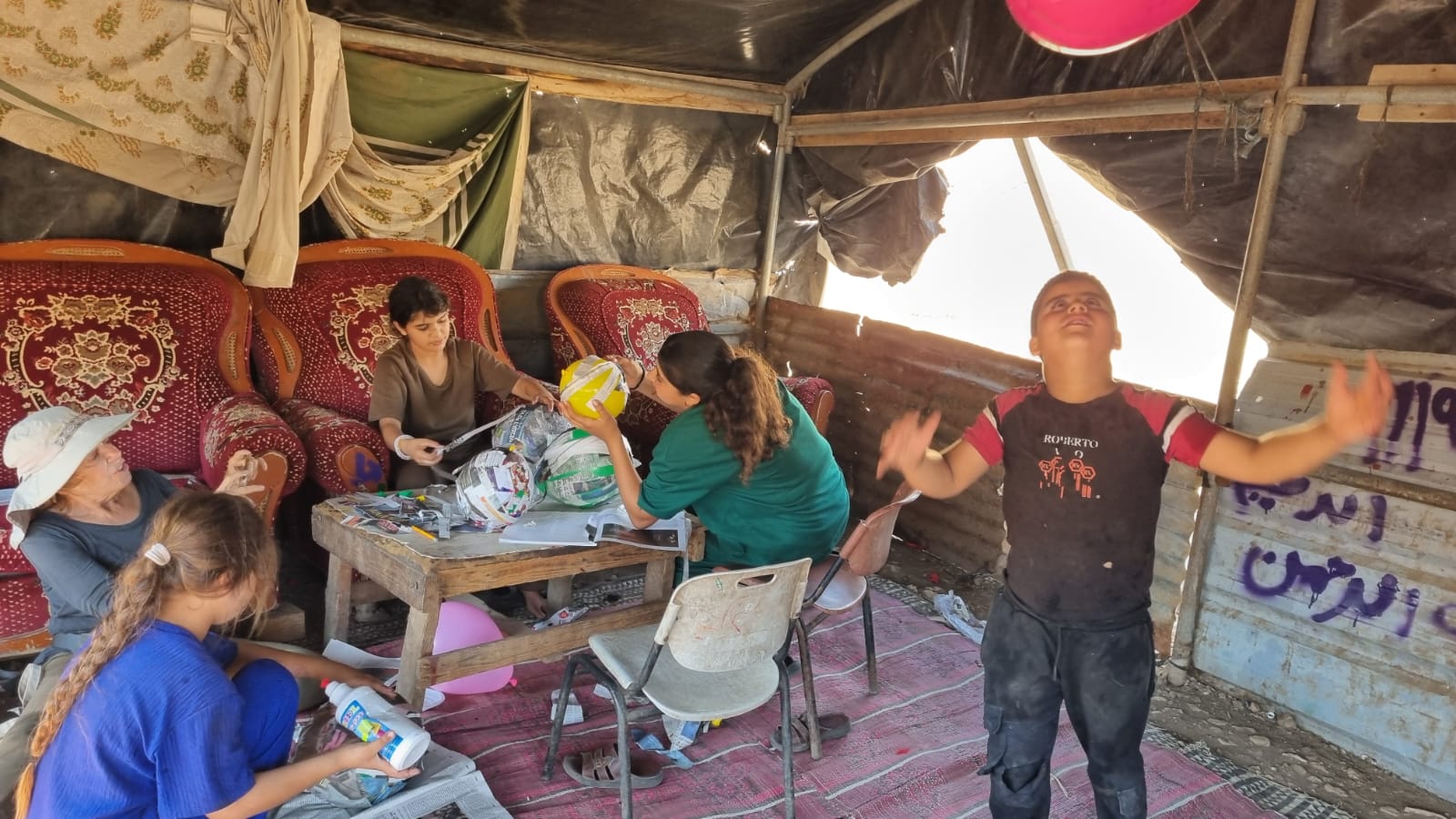 Bosmat HetzroniJul-2-2026Samra. Paper balloons
-