
South Hebron
South Hebron hills: Sun 14 May 05, AMObservers: Paula [Hebrew] and Zafrira [English]We left Tel Shoket at 6,45 and reached the Apartheid Rds 60, 356 and 317.There were no Palestinian cars on the roads, but many heavily loaded double-trucks, many of them driving recklessly and on two occasions endangering us. Isnt it wonderful to feel that evr4ything and everywhere is under our control.After a few monts of non-activity on my part, I was startled and shocked at the sight of the new electrified fence starting from Sansana and running for several Kms until it branches off. The additional sight of new concrete barriers on the sides of the road to prevent Palestinian cars from crossing the road, farmers to reach their field and shepherds to graze their flocksclose off the road except where there are natural topographic barriers that do the same, was equally disturbing.Lucky is the farmer who owns a donkey, and even he may not be able to lift his legs high enough to cross.The drive was uneventful -no hummers or army jeeps on the road except for one jeep with a couple of bored soldiers at the entrance to the girls school at Shiuch-Sair. Here the crossing for the pupils is as dangerous as it was. There are no signs for traffic to slow down or showing that this is a school crossing. The process of sealing off Rd 317 is nearly complete and there may or may not be an opening to allow traffic from El Tawani to reach Yatta -high school and medical centre.We returned to Tel Shoket with no problems at Sansana.
South Hebron Hills
See all reports for this place-
South Hebron Hills
South Hebron Hills is a large area in the West Bank's southern part.
Yatta is a major city in this area: right in the border zone between the fertile region of Hebron and its surroundings and the desert of the Hebron Hills. Yatta has about 64,000 inhabitants.
The surrounding villages are called Masafer Yatta (Yatta's daughter villages). Their inhabitants subsist on livestock and agriculture. Agriculture is possible only in small plots, especially near streams. Most of the area consists of rocky terraces.Since the beginning of the 1980s, many settlements have been established on the agricultural land cultivated by the Palestinians in the South Hebron Hills region: Carmel, Maon, Susia, Masadot Yehuda, Othniel, and more. Since the settlements were established and Palestinians cultivation areas have been reduced; the residents of the South Hebron Hills have been suffering from harassment by the settlers. Attempts to evict and demolish houses have continued, along with withholding water and electricity. The military and police usually refrain from intervening in violent incidents between settlers and Palestinians do not enforce the law when it comes to the investigation of extensive violent Jewish settlers. The harassment in the South Hebron Hills includes attacking and attempting to burn residential tents, harassing dogs, harming herds, and preventing access to pastures.
There are several checkpoints in the South Hebron Hills, on Routes 317 and 60. In most of them, no military presence is apparent, but rather an array of pillboxes monitor the villages. Roadblocks are frequently set up according to the settlers and the army's needs. These are located at the Zif Junction, the Dura-al Fawwar crossing, and the Sheep Junction at the southern entrance to Hebron.
Updated April 2022
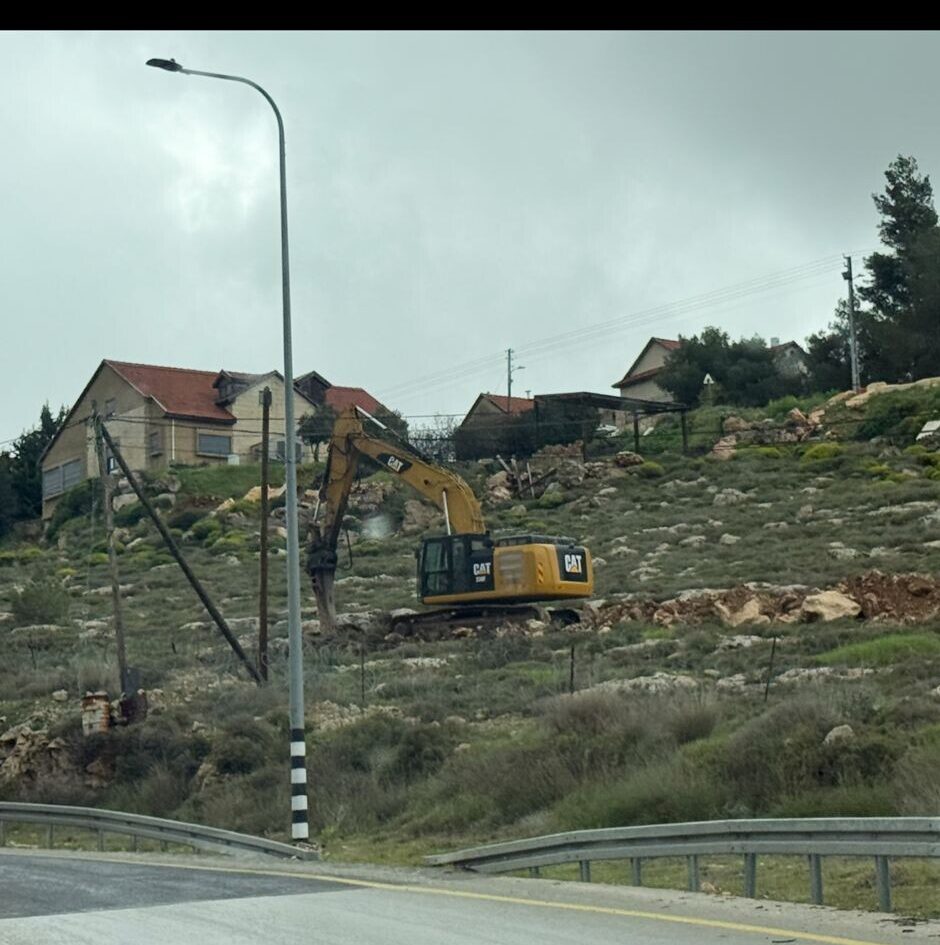 MuhammadFeb-24-2026South Hebron Hill, Beit Hagai: Paving an internal security road
-