
Huwwara, Kifl Harith, Za’tara (Tapuah)
Summary: Roadblocks at junctions to Za’tara, Huwwara and Awarta. The Palestinians are forced to take side roads and travel through the villages to reach their destination.
M., a Yesh Din fieldworker from Burin, recommends coordinating by phone with the head of the village before meeting additional individuals there. Our presence in the village without his knowledge might be of concern to him, as someone appointed by the Palestinian Authority and responsible for what goes on in the village.
Kifl Harith – meeting with A., a resident of Haris, a social activist and a member of ISM
A. is an “IDF disabled person.” He was shot in his village by soldiers in 2001. He went out to the street to get his children, so they wouldn’t be injured, and was himself wounded in the leg. Since then he’s been in a wheelchair.
He told us he’s in contact with mothers of jailed children, whose situation is particularly worrying because of the conditions in jail and the character of their cellmates. He says there are about 200 young people imprisoned, some 12 years old. Most are from the Jerusalem and Hebron area. The soldiers inspect their pockets and bags and then arrest them when they find knives.
He described the difficulties with transportation in the area from Za’tara junction to Huwwara checkpoint. Two months ago new traffic arrangements were instituted, overseen by the army and the police. At different times of the day, often from 07:30 to 22:00, the main roads are blocked to Palestinians while settlers can travel on them freely. Many drivers aren’t aware of this, arrive at Za’tara junction and are told to turn back. They must go through the villages of Jama’in and Einabus. It’s a very long detour on a narrow, poor road. At first there were roadworks, but they’re almost completed and there’s no more congestion. Someone who wants to travel from Nablus toward Huwwara will also discover the road is blocked. A yellow bar blocks the lane from Nablus in the direction of Huwwara. They must take alternate routes, which waste time and gasoline. To reach Nablus the Palestinians must drive through Wadi Qana to Sara and then on winding roads to their destinations. The situation is similar at Awarta. The main road is inaccessible. A long detour through the villages is necessary to exit from Beita.
He told us the holy tomb in Kifl Harith is visited a few times a year by settlers and organized Jewish tour groups from abroad. Large military forces are brought, ostensibly to provide security, but a closure is imposed 12 hours in advance on three villages: Kifl Harith, Haris and Qira. The military presence doesn’t prevent settlers from rioting and vandalizing cars and homes.
Huwwara: A meeting with M., a resident of Burin, a Yesh Din fieldworker
M., like A., reported problems because of roadblocks in the Za’tara-Huwwara-Nablus region.
We consulted with M. regarding the most appropriate and effective way for us to work in the village after we had difficulty contacting and coordinating a formal meeting with the head of Burin village.
To our question, “Is it all right to arrive without advance notice?” he answered a definite “No!”
He recommended we insist on making arrangements by phone and start with the head of the village. Our presence without his knowledge may be a matter of concern to him in his capacity as the appointee of the Palestinian Authority and responsible for what goes on in the village.
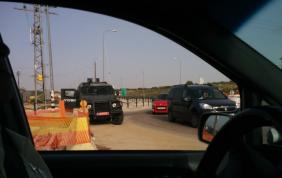
Roadblock at Za’tara junction:
Map of the route from Za’tara junction to Huwwara, via Jama’in:

Huwwara
See all reports for this place-
The Huwwara checkpoint is an internal checkpoint south of the city of Nablus, at the intersection of Roads 60 and 5077 (between the settlements of Bracha and Itamar). This checkpoint was one of the four permanent checkpoints that closed on Nablus (Beit Furik and Awarta checkpoints to the east and the Beit Iba checkpoint to the west). It was a pedestrian-only barrier. As MachsomWatch volunteers, we watched therre since 2001 two shifts a day - morning and noon, the thousands of Palestinians leaving Nablus and waiting for hours in queues to reach anywhere else in the West Bank, from the other side of the checkpoint the destination could only be reached by public transport. In early June 2009, as part of the easing of Palestinian traffic in the West Bank, the checkpoint was opened to vehicular traffic. The passage was free, with occasional military presence in the guard tower. Also, there were vehicle inspections from time to time. Since the massacre on 7.10.2023, the checkpoint has been closed to Palestinians.
On February 26, 2023, about 400 settlers attacked the town's residents for 5 hours and set fire to property, such as houses and cars. Disturbances occurred in response to a shooting of two Jewish residents of Har Bracha by a Palestinian Terrorist. The soldiers stationed in the town did not prevent the arson and rescued Palestinian families from their homes only after they were set on fire. No one was punished and Finance Minister Smotrich stated that "the State of Israel should wipe out Hawara." Left and center organizations organized solidarity demonstrations and support actions for the residents of Hawara.Hawara continued to be in the headlines in all the months that followed: more pogroms by the settlers, attacks by Palestinians and a massive presence of the army in the town. It amounted to a de facto curfew of commerce and life in the center of the city. On October 5, 2023, MK Zvi established a Sukkah in the center of Hawara and hundreds of settlers backed the army blocked the main road and held prayers in the heart of the town all night and the next day. On Saturday, October 7, 23 The "Swords of Iron" war began with an attack by Hamas on settlements surrounding Gaza in the face of a poor presence of the IDF. Much criticism has been made of the withdrawal of military forces from the area surrounding Gaza and their placement in the West Bank, and in the Hawara and Samaria region in particular, as a shield for the settlers who were taking over and rioting.
On November 12, 2023, the first section of the Hawara bypass road intended for Israeli traffic only was opened. In this way, the settlers can bypass the road that goes through the center of Hawara, which is the main artery for traffic from the Nablus area to Ramallah and the south of the West Bank. For the construction of the road, the Civil Administration expropriated 406 dunams of private land belonging to Palestinians from the nearby villages. The settlers are not satisfied with this at the moment, and demand to also travel through Hawara itself in order to demonstrate presence and control.(updated November 2023)
.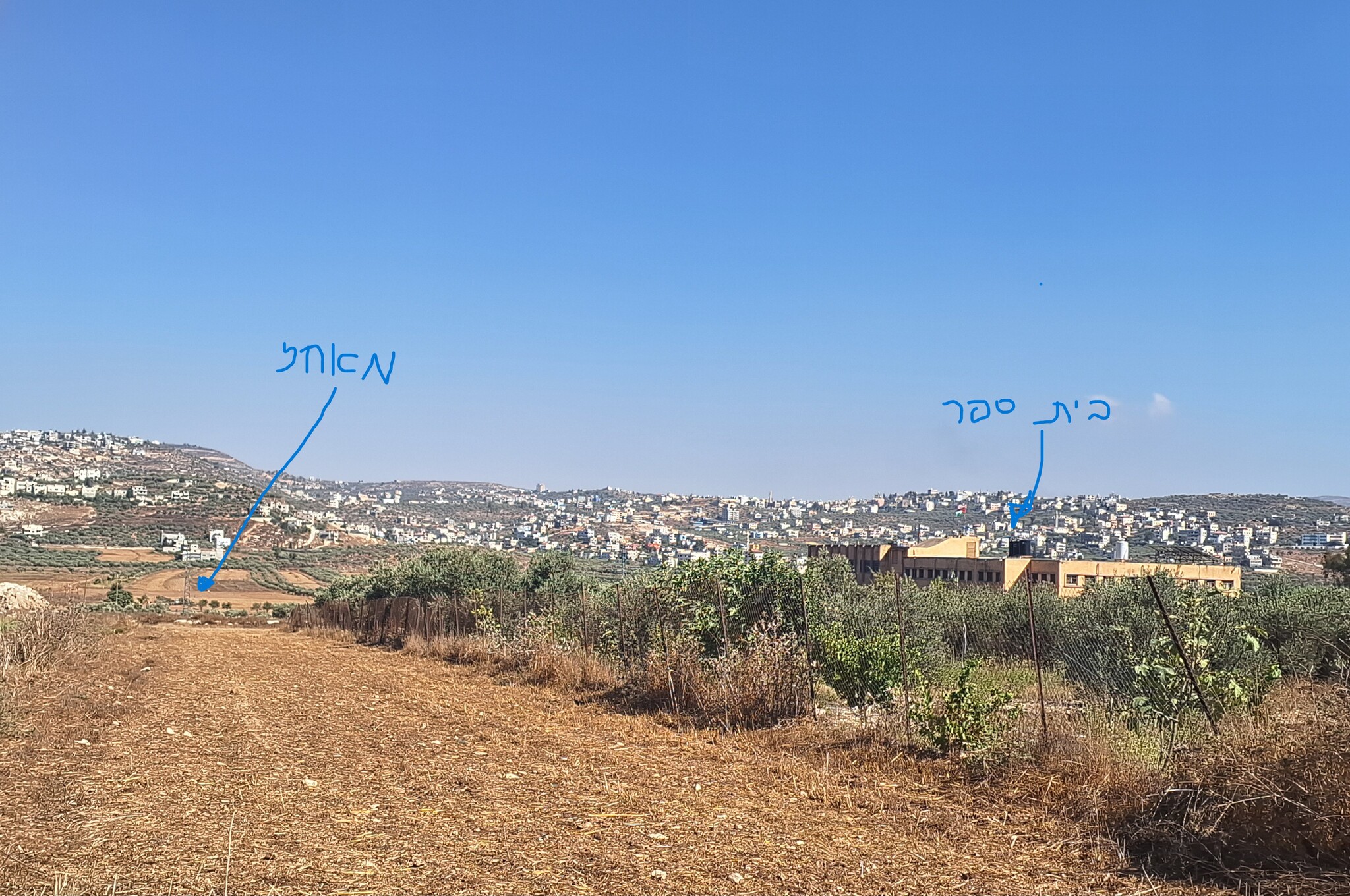 Ronit Dahan-RamatiAug-24-2026Huwara: The school on the outskirts of town and an outpost hidden among the trees
-
Kifl Harith
See all reports for this place-
Kifl Harith
This is a Palestinian located north-west of the settler-colony town of Ariel, 18 kilometers south of the city of Nablus. It numbers 3, 206 inhabitants, as of 2007. 42% of the village lands lie in Area B, and 58% in Area C. In 1978, some hundreds of dunams of the village’s farmland was sequestered in order to found the settler-colony of Ariel – in total 5,184 dunams from the Palestinian communities of Salfit, Iscaqa, Marda, and Kifl Harith. Dozens of square kilometers were also confiscated for paving road no. 5 as well as road 505 and their buffer zones, and the Israeli electricity company’s power station. Over the years the village has suffered harassment by sometimes-armed settler-colonists, even casualties. In 1968 the army’s rabbinate ruled the maqam site Nabi Yanoun (sanctified grave of the Prophet Yanoun) is in fact the tomb of Joshua, Son of Nun. Another structure in the village, named Nabi Tul Kifl by the Palestinians, has been identified by the Israeli authorities as to the tomb of Caleb, Son of Yefuneh. These sites are located in the heart of the village, near the mosque, and at times of Jewish religious festivities and pilgrimages, the center of the village is illuminated by projectors and thousands of Jews arrive, protected by hundreds of Israeli soldiers. During such a period, a night curfew is imposed on the village and the villagers are forced to stay shut inside their homes.
-
Za'tara (Tapuah)
See all reports for this place-
Za'tara (Tapuah) Za'tara is an internal checkpoint in the heart of the West Bank, at the intersection of Road 60 and Road 505 (Trans-Samaria), east of the Tapuah settlement. This checkpoint is the "border" marked by the IDF between the north and south of the West Bank, in accordance with the policy of separation between the two parts of the West Bank that has been in place since December 2005. At the Za'tara checkpoint, there are separate routes for Israelis and Palestinians. In the route for Israelis, there are no inspections and the route for Palestinians inspects. The queue lengthens and shortens suits. The checkpoint is open 24 hours a day. The checkpoint is partially staffed and the people who pass through it are checked at random.
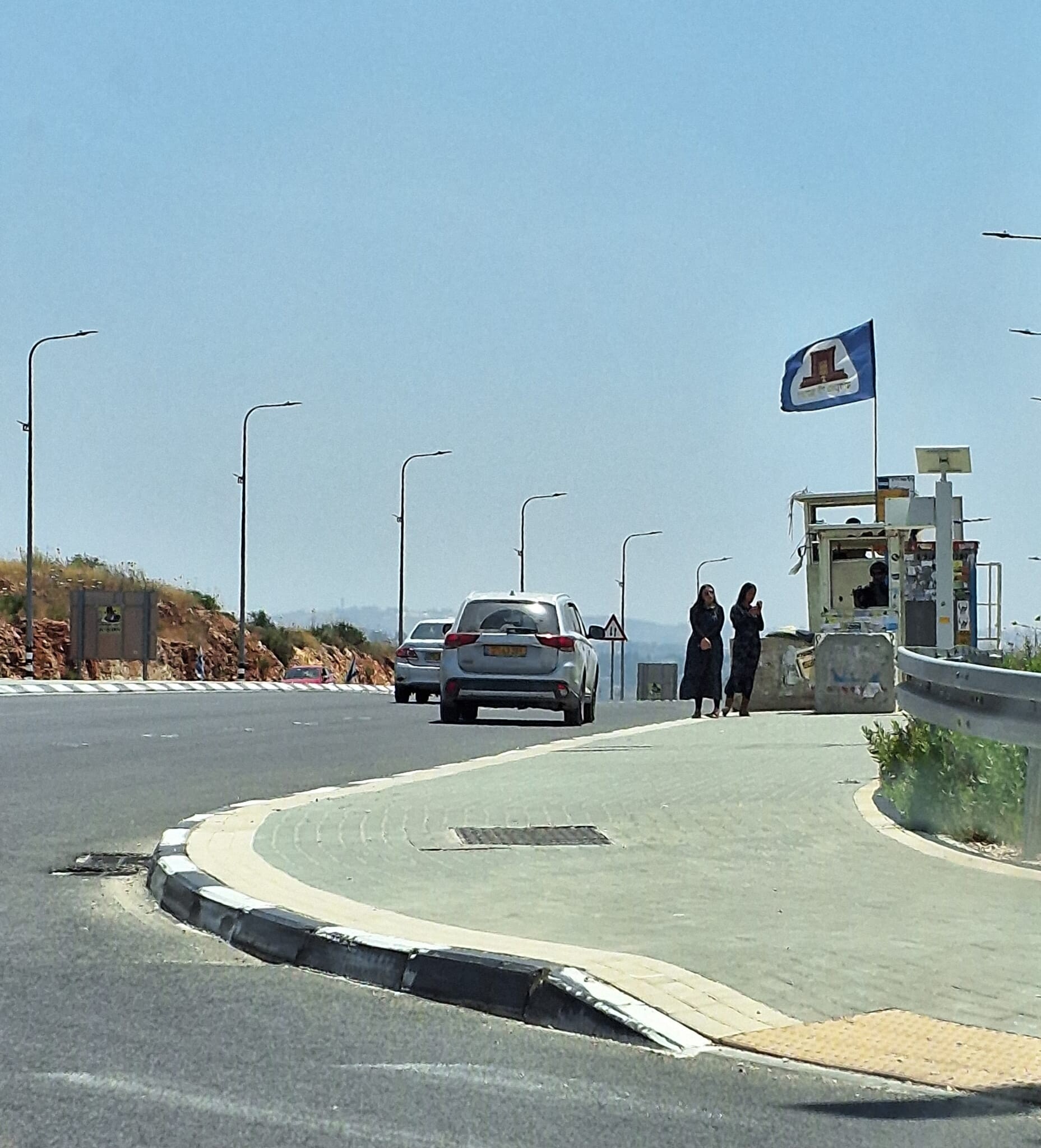 Ronit Dahan-RamatiJun-9-2026Za'atara (Tapuach Junction). The Temple Flag Above a Station
-
