
Jordan Valley
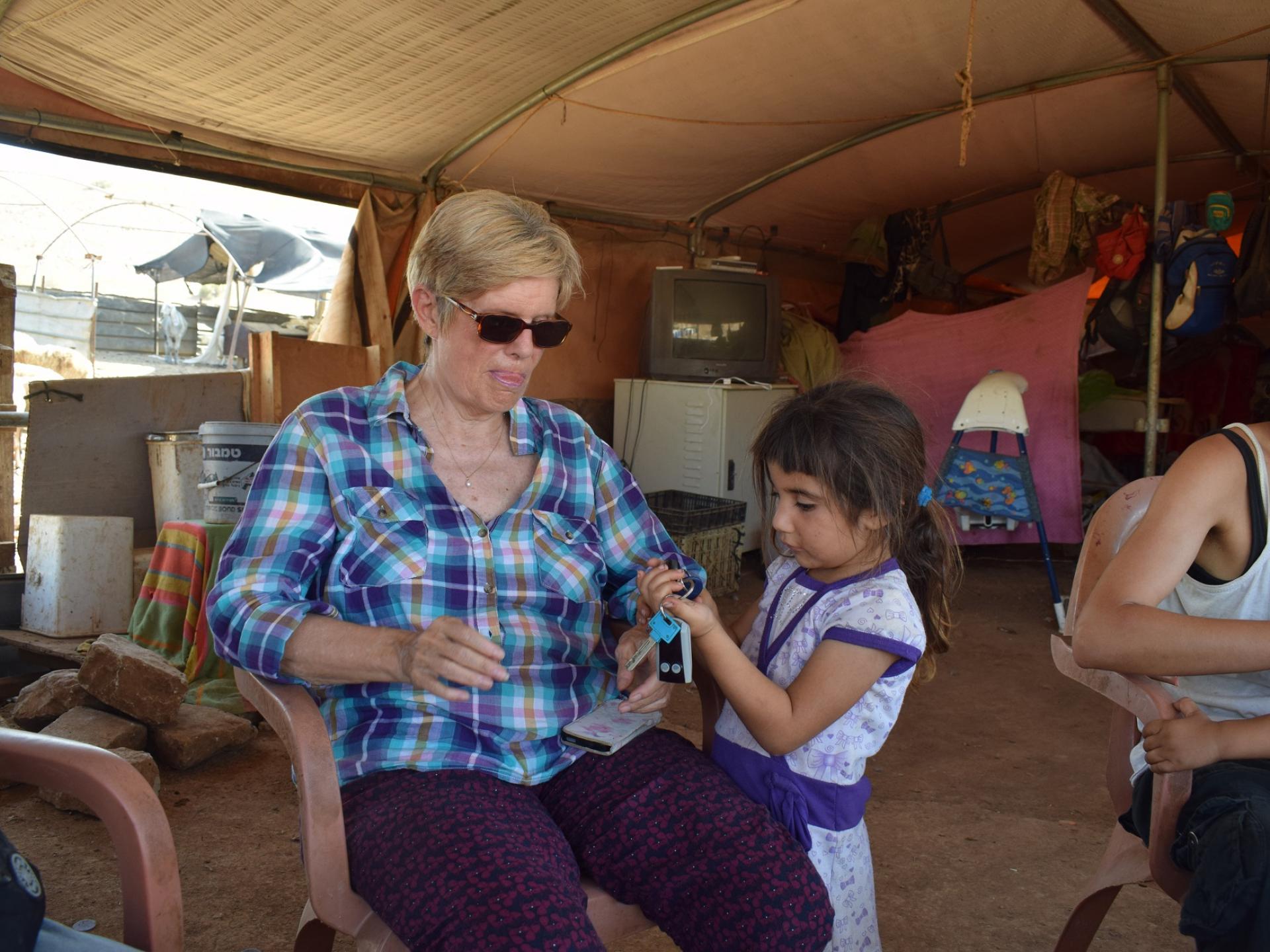
Since this was Nirit’s first time back in the valley, we went to visit each of the families in Khalat Makhoul. We discovered that the parents of Burhan, Yosef, and Ashraf had left the valley and gone to live in the town of Tamun. They were over 80 years old and could no longer cope with the difficult way of life – the terrible heat, the drought, and the lack of things that make life easier for elderly people. To this was added the occupation, repeated demolitions of their home, and living under constant threats, water being cut off, no electricity on a permanent basis, medical care, and minimal living conditions.
Omri entertained the little children with her special charm. Ashraf’s and Yosef’s children stood in line and waited for her to play with them.
We drove to the settlement of Rotem because we were told that a bulldozer is leveling land to build more buildings, in addition to those being built outside the perimeter fence during the past year. It was late in the day and we did not see any construction work.
We decided to finish the shift at Ein Sakot – a spring located on private Palestinian land. There are three springs here: one is used to water the Palestinians’ herds of cattle; the second is a deep spring for swimming, and the third has clear, knee-high water. We decided to organize a “spring day” for Palestinian families instead of the beach days that they are not permitted to attend. We need volunteers with cars.
On the way to the spring there are Palestinian fields confiscated after 1967 on the pretext that a military zone is needed for a no-man’s-land between the Jordan River and the valley. A year and a half ago the Supreme Court dictated that the government must return the land to its legal Palestinian owners, but this has not been carried out. The settlers continue to cultivate the land as if nothing had been ordered by the courts, accompanied by armed IDF security directors from the settlements. They are also assisted by soldiers who know nothing about the court ruling, but simply follow orders. They were told to evict Palestinians, and, like the good soldiers they were, did as they are told. This year the Palestinians let their flocks graze on this land after the harvest, but in the fall the problem will arise again when the settlers will want to cultivate crops on Palestinian land
Jordan Valley
See all reports for this place-
Jordan Valley The Jordan Valley is the eastern strip of the West Bank. Its area consists of almost a third of the West Bank area. About 10,000 settlers live there, about 65,000 Palestinian residents in the villages and towns. In addition, about 15,000 are scattered in small shepherd communities. These communities are living in severe distress because of two types of harassment: the military declaring some of their living areas, as fire zones, evicting them for long hours from their residence to the scorching heat of the summer and the bitter cold of the winter. The other type is abuse by rioters who cling to the grazing areas of the shepherd communities, and the declared fire areas (without being deported). The many groundwaters in the Jordan Valley belong to Mekorot and are not available to Palestinians living in the Jordan Valley. The Palestinians bring water to their needs in high-cost followers.
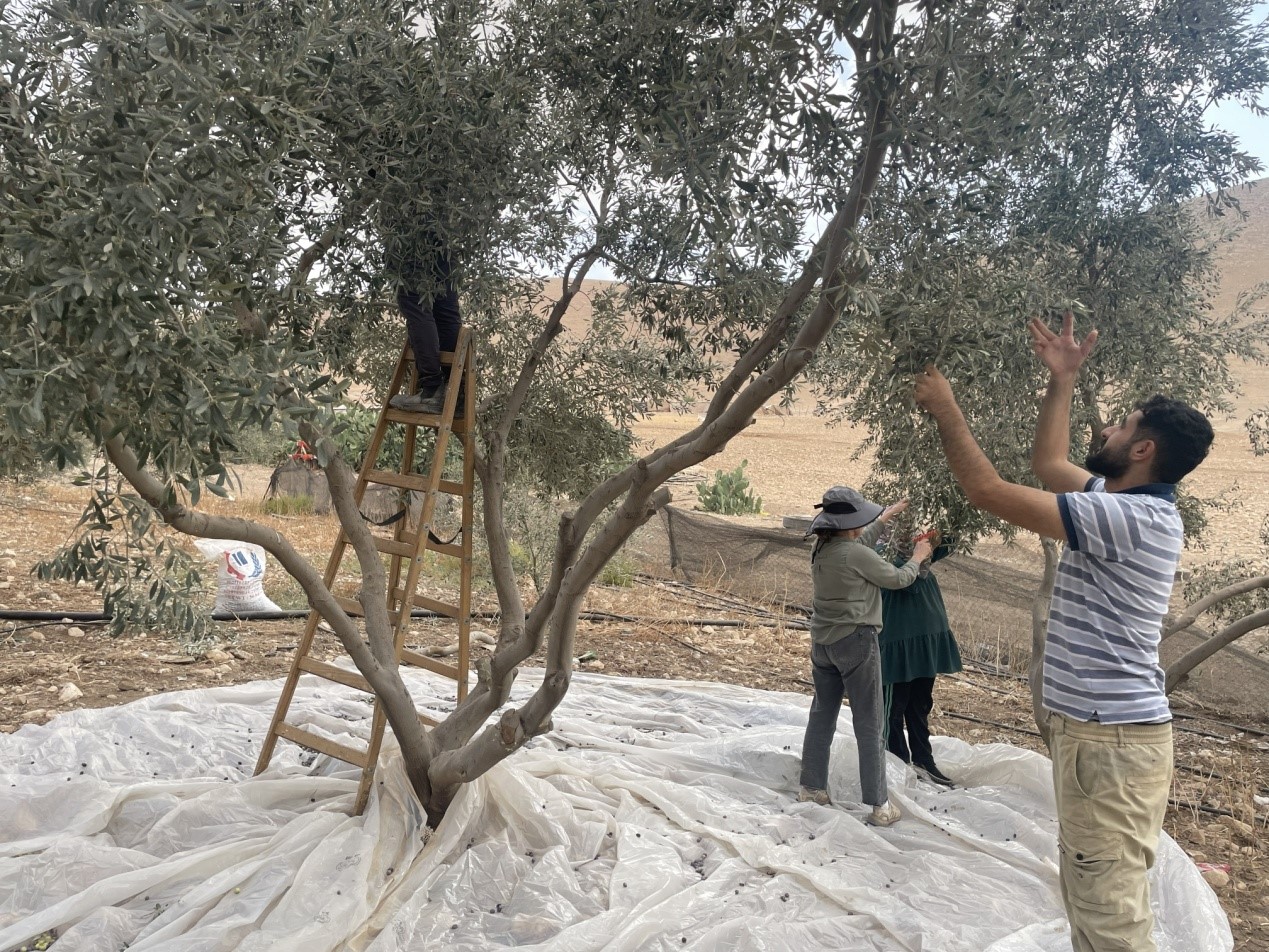 Rachel AfekOct-15-2026Olive Harvest in the Jordan Valley
-
