
Qalandiya
A ”good” day at Qalandiya.
05.30. As we approached the Israel side of the checkpoint, dozens of men were streaming out. And when we entered, we found that the short lines inside the shed were progressing rapidly. In fact for the most part everyone was in the shed and so we could for once photograph the corridor leading to it.
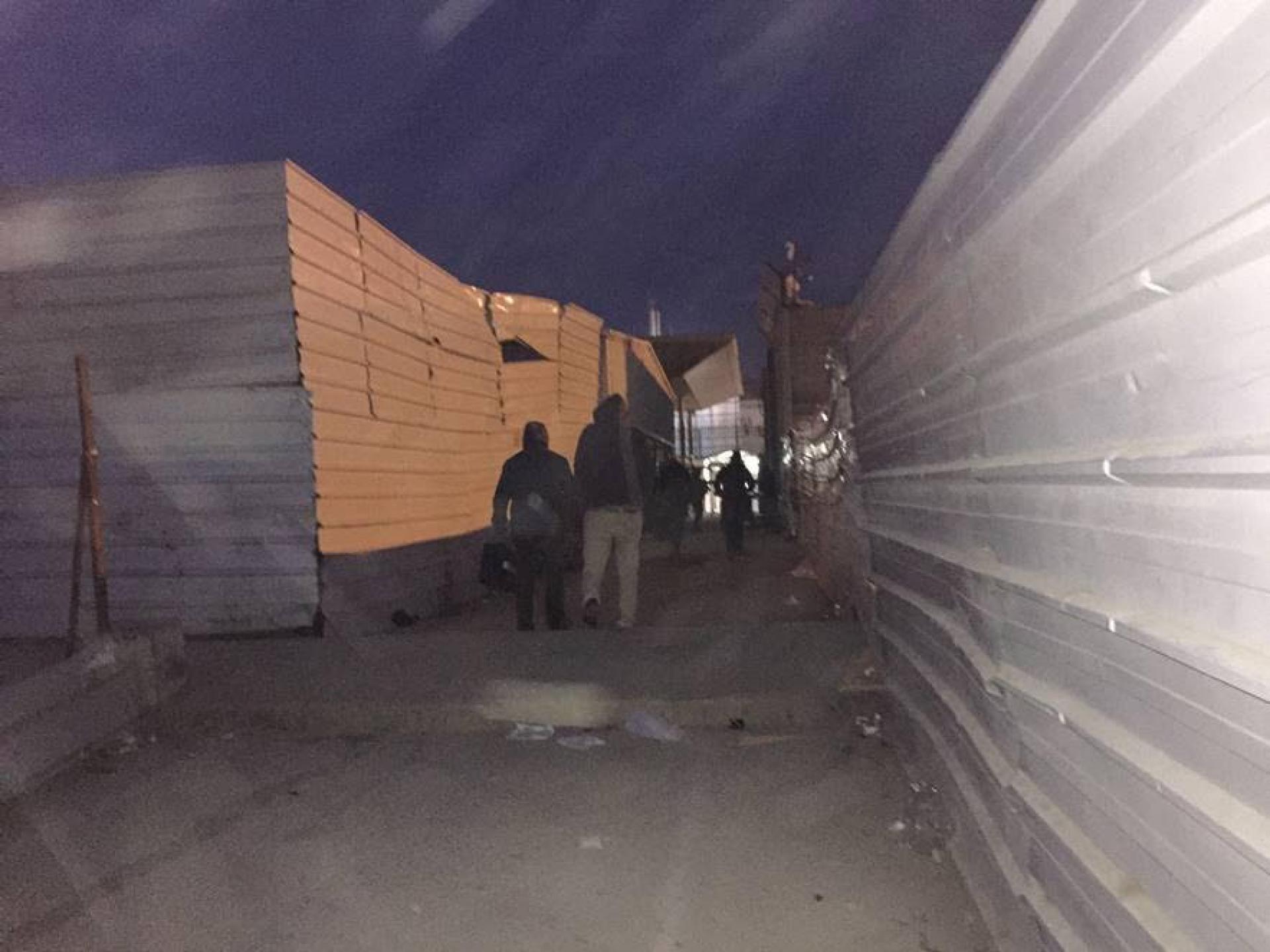
All the time we were there, movement was quick. All 5 checking stations were open. There was an announcement repeated a few times, clearly for a change, that checking station no.1 was open for document holders only, not for packages. The soldiers operating the turnstiles opened them frequently for quite large groups of people, and the soldiers in the checking stations themselves seemed to be working unusually efficiently. This didn’t stop one man from standing next to me, exclaiming “why are they doing this to us. It’s like Hitler.” On the other hand, others waved smilingly to us, saying “thank you,” as if we were responsible for the easy day they were having.
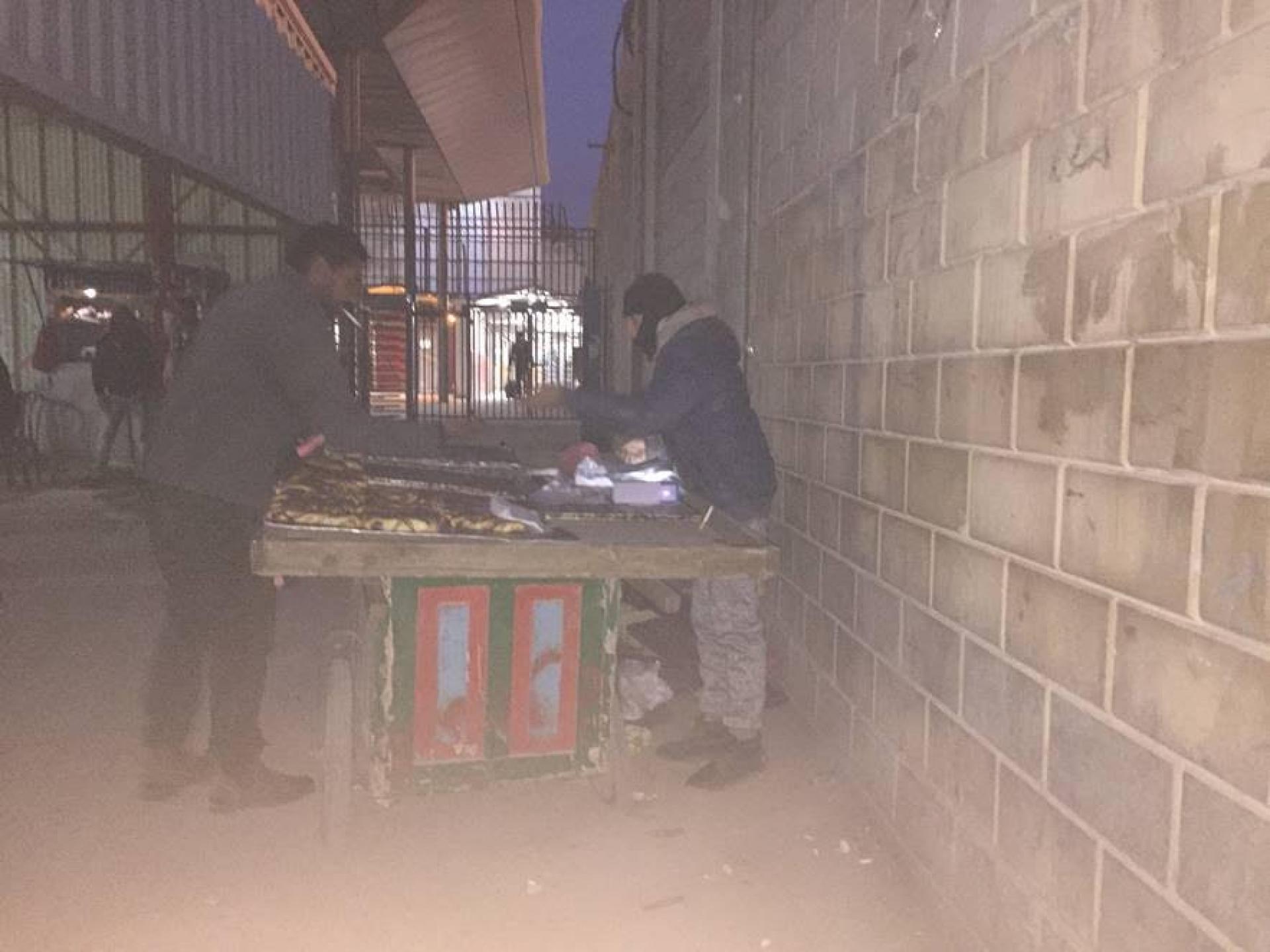
The young boy selling cake who was very interested to know why he was being photographed and happy to know that his picture would be seen by people not only in Israel. Actually the reason for the photgraph had been that we wanted to show the small light he had to use to give chance. The picture does not show how dark the area is where he stands.
One woman came very early, soon after we arrived in fact, and went to sit on a bench. It turned out she had come to renew her permit, which she could do only after 8. As she seemed to be familiar with procedures we do not understand why she came so early – unless perhaps she had an early lift ..
A D.C.O. officer and guard arrived at 6.15 to open the humanitarian gate. Not many used the gate, perhaps because the lanes in the cages were so short.
We joined a line at 6.40, and were through in less than 10 minute, and the cages were completely empty, except for individuals arriving. The soldiers in the checking station seemed to be in jolly mood One called out “Welcome to Qalandiya!” One, from a distance, gave a ‘thumbs up’ sign; the soldier checking our i.d. cards asked us, in a genuine-sounding way “were things okay today?” We said that we had never been able to leave there so early and they all looked very happy. It just shows how efficiency can improve matters in an otherwise difficult situation.
As we left Bruce got locked in the turnstyle.
How can we explain the difference in mood and efficiency between one day or week and another? Having to pass through Qalandiya on the way to work is not something I would wish on anyone – but today shows it can be a relatively tolerable experience.
As a bicycle rider had been knocked over by a taxi and was lying in the road stopping the light rail in both directions Chana and Natanya went their different ways. Natanya on the bus to Nofim with an Egged driver who had not been taught the way and had to be directed by the passengers with each one alighting telling the one ascending the act as Waze. Our efficient bus company.
Qalandiya Checkpoint / Atarot Pass (Jerusalem)
See all reports for this place-
Click here to watch a video from Qalandiya checkpoint up to mid 2019 Three kilometers south of Ramallah, in the heart of Palestinian population. Integrates into "Jerusalem Envelope" as part of Wall that separates between northern suburbs that were annexed to Jerusalem in 1967: Kafr Aqab, Semiramis and Qalandiya, and the villages of Ar-Ram and Bir Nabala, also north of Jerusalem, and the city itself. Some residents of Kafr Aqab, Semiramis and Qalandiya have Jerusalem ID cards. A terminal operated by Israel Police has functioned since early 2006. As of August 2006, northbound pedestrians are not checked. Southbound Palestinians must carry Jerusalem IDs; holders of Palestinian Authority IDs cannot pass without special permits. Vehicular traffic from Ramallah to other West Bank areas runs to the north of Qalandiya. In February 2019, the new facility of the checkpoint was inaugurated aiming to make it like a "border crossing". The bars and barbed wire fences were replaced with walls of perforated metal panels. The check is now performed at multiple stations for face recognition and the transfer of an e-card. The rate of passage has improved and its density has generally decreased, but lack of manpower and malfunctions cause periods of stress. The development and paving of the roads has not yet been completed, the traffic of cars and pedestrians is dangerous, and t the entire vicinity of the checkpoint is filthy. In 2020 a huge pedestrian bridge was built over the vehicle crossing with severe mobility restrictions (steep stairs, long and winding route). The pedestrian access from public transport to the checkpoint from the north (Ramallah direction) is unclear, and there have been cases of people, especially people with disabilities, who accidentally reached the vehicle crossing and were shot by the soldiers at the checkpoint. In the summer of 2021, work began on a new, sunken entrance road from Qalandiya that will lead directly to Road 443 towards Jerusalem and Tel Aviv. At the same time, the runways of the old Atarot airport were demolished and infrastructure was prepared for a large bus terminal. (updated October 2021)
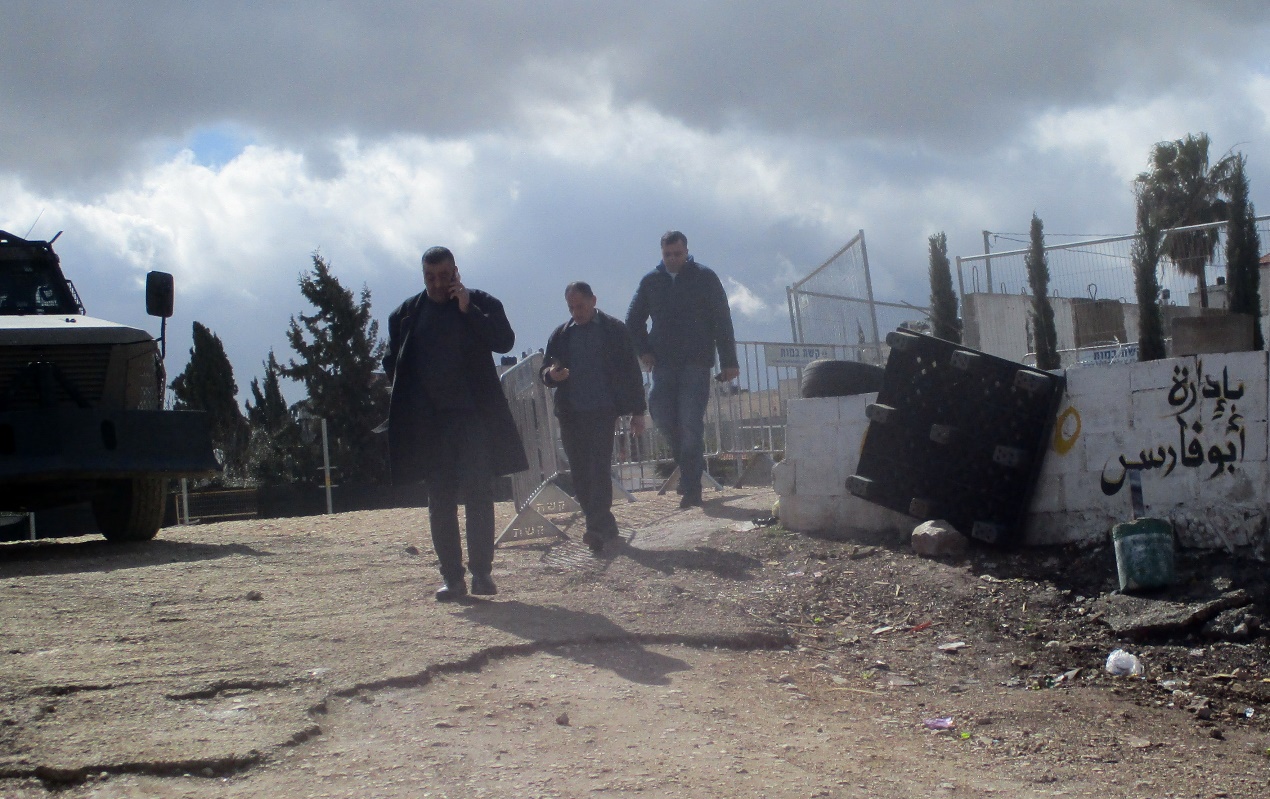 Tamar FleishmanFeb-27-2026Qalandiya: On the way to prayer
-