
South Hebron Hills
This time we tried to reach places that seemed important to us and which we had not visited the previous time. We drove to al-Tuwani. Already on the way, and throughout the tour Leah as she knows to do, took over the role of the interviewee is “above and beyond”, magnificently, with exhaustive explanations and her vast knowledge, which were drunk up thirstily by the crew who filmed and recorded.]
They heard the stories of the continual harassment of the Ma’on Farm residents, the archeological excavations of the so-called “ancient synagogue” in this village, which turned out to be an invention, the army which is supposed to keep the children from the neighborhood on their way to the school from the Ma’on Farm
We visited Nasser’s “museum”, although he was not at home, and we were very impressed with it. It reflects what is happening to this village. The Italians volunteeres (Operation Dove) were not there.
We drove to Umm Fakra. Here the local Hajj comes to us – speaks Hebrew and tells in detail about their suffering, the settlements surrounding them, the harassment, the demolition, (a mosque and a school and we were standing right next to the rubble), about the water cistern that had been set up and then destroyed. Then there were the electric poles which had been thrown down and lay at the side of the road……All this in the effort to prevent the Palestinians from making their lives a bit more normal. We went to the home of the Fadal family in the cave. We there received with refreshments, the cakes of Ramadan and the interview was continued.
From there we traveled to Yatta so as to give a ride to our hostess, Hadra and her daughter, and to view the edge of the city on the area of the ancient pools, which the municipality closed with fences to prevent the settlers from coming in droves and bathing in the pools.
The desire to visit a settlement (for example, Abigail) or an illegal outpost (for example, Asael) was rejected due to the lack of time. Maybe on another tour soon …
The boys seemed willing to hear more, we told about two cases of vineyards which had been cut down and they asked us to send them the report and the pictures, hoping that they will produce a successful and widely distributed film (and then all this reporting is unnecessary) …
South Hebron Hills
See all reports for this place-
South Hebron Hills
South Hebron Hills is a large area in the West Bank's southern part.
Yatta is a major city in this area: right in the border zone between the fertile region of Hebron and its surroundings and the desert of the Hebron Hills. Yatta has about 64,000 inhabitants.
The surrounding villages are called Masafer Yatta (Yatta's daughter villages). Their inhabitants subsist on livestock and agriculture. Agriculture is possible only in small plots, especially near streams. Most of the area consists of rocky terraces.Since the beginning of the 1980s, many settlements have been established on the agricultural land cultivated by the Palestinians in the South Hebron Hills region: Carmel, Maon, Susia, Masadot Yehuda, Othniel, and more. Since the settlements were established and Palestinians cultivation areas have been reduced; the residents of the South Hebron Hills have been suffering from harassment by the settlers. Attempts to evict and demolish houses have continued, along with withholding water and electricity. The military and police usually refrain from intervening in violent incidents between settlers and Palestinians do not enforce the law when it comes to the investigation of extensive violent Jewish settlers. The harassment in the South Hebron Hills includes attacking and attempting to burn residential tents, harassing dogs, harming herds, and preventing access to pastures.
There are several checkpoints in the South Hebron Hills, on Routes 317 and 60. In most of them, no military presence is apparent, but rather an array of pillboxes monitor the villages. Roadblocks are frequently set up according to the settlers and the army's needs. These are located at the Zif Junction, the Dura-al Fawwar crossing, and the Sheep Junction at the southern entrance to Hebron.
Updated April 2022
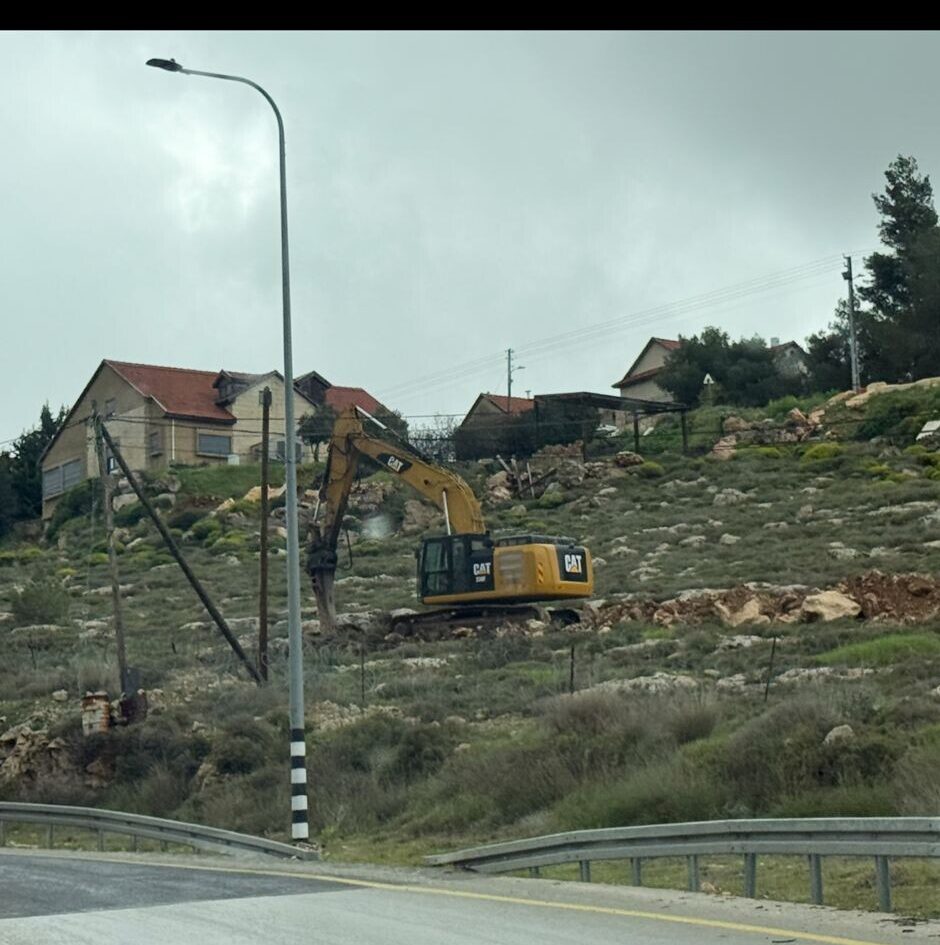 MuhammadFeb-24-2026South Hebron Hill, Beit Hagai: Paving an internal security road
-