
Qalandiya checkpoint: The exit gate is open - why are they standing silently, waiting?
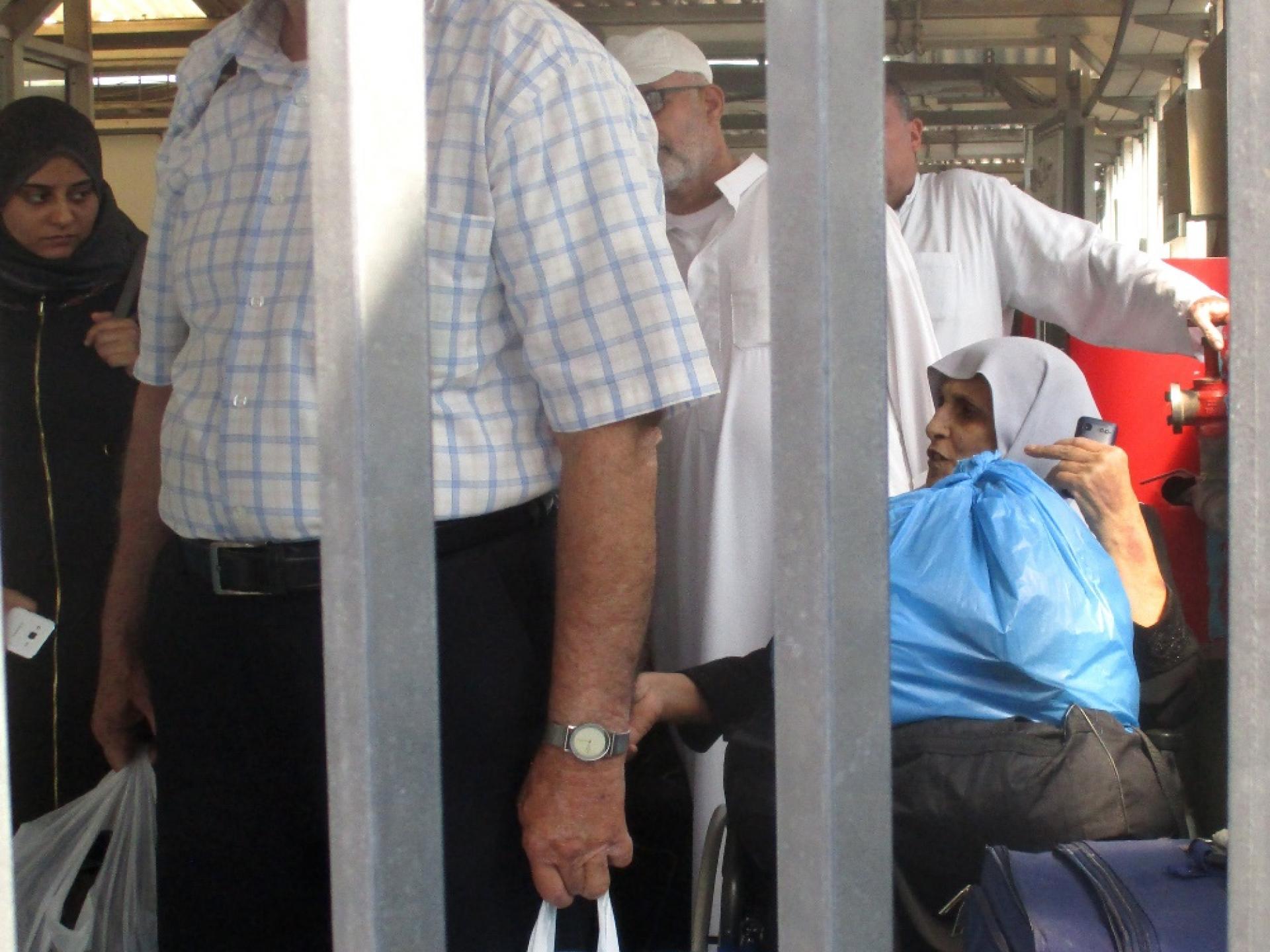
First they emerge with all their belongings out of the DCO offices, located deep inside the checkpoint compound, stop in front of the exit gate, some of them place their bags and suitcases down, others continue to hold on to them so that they won’t disappear, and they wait.
Palestinians wait quietly. Without nerves. Seemingly accepting some invisible law/logic. Not to know nor try to guess what will happen or is likely to happen immediately or soon or later.
They stand in the darkened interior and wait. Some are standing on their feet, others helped by crutches, some in the arms of their mothers, in wheelchairs. They wait. Although the gate in front of them is not locked, none of them tries to push the metal bars and exit, until the Civil Administration man arrives. Perhaps because he holds all of their IDs and transit permits. And the fate of Palestinians without IDs is not something one wishes to imagine.
Only then, accompanied by the Administration man and his weapon, the patients who have been released from hospitals in the West Bank and their escorts (if they have any) do exit, load their belongings onto their transport vehicle and get on their way, home to Gaza.
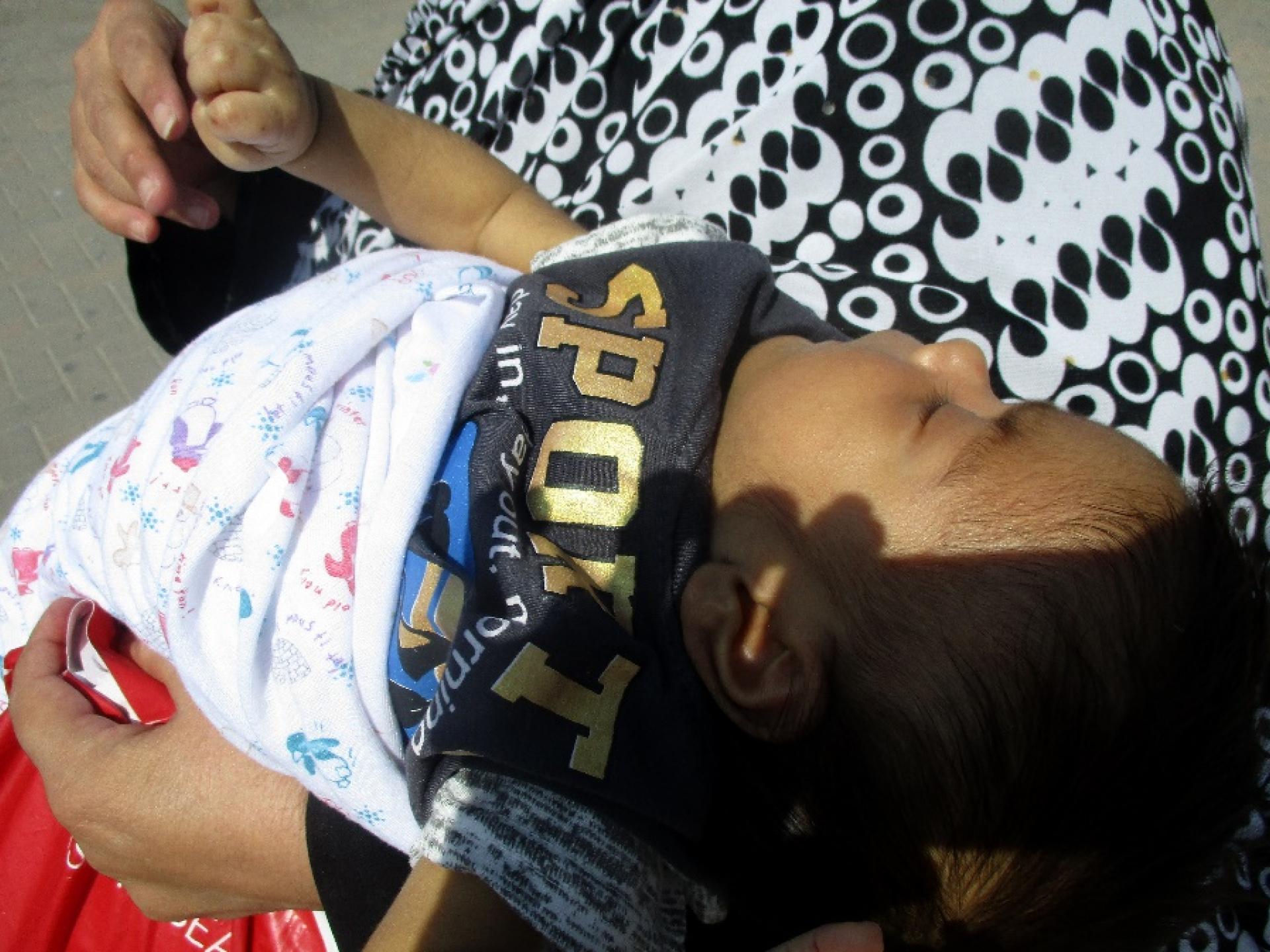
Youngest of today’s passengers is Abdulrahman, born two weeks ago in caesarian section at a Nablus hospital to his ill mother.
When I stood next to this mother and her baby son, her phone rang. It was home calling, Gaza. They were worried, wanted to know whether she and the baby were alright, that they were already on their way. The mother who was very busy with this phone call handed me the baby. I held him in my arms, rocked him and felt that I had never before experienced such pleasure in this place.
Are you entering? a security guard asked me. Yes, why? I asked. Because you look Jewish and it’s dangerous. Dangerous? I asked – depends for whom, I answered and continued to walk.
During the two hours I spent at this “dangerous” place, inside, I met many people and heard many stories, but of all I had heard, there is one thing I wish to tell: what happened to Sharif who lives in a house with a yard and a garden in a neighborhood not far from the refugee camp. One day soldiers raided his home. Two of them grabbed his arms and took him out of the home and garden, took out his wife as well, ran around inside and outside, making loud noises and yelling.
What are you doing? Asked Sharif. Shut up! They answered. It’s a maneuver.
What was worst, said Sharif, was that his two-year old son remained inside. Perhaps they hadn’t noticed him. The child said curled up and kept silent.
The child remained silent after the maneuver ended and the soldiers left. It took time until he could speak again.
Qalandiya Checkpoint / Atarot Pass (Jerusalem)
See all reports for this place-
Click here to watch a video from Qalandiya checkpoint up to mid 2019 Three kilometers south of Ramallah, in the heart of Palestinian population. Integrates into "Jerusalem Envelope" as part of Wall that separates between northern suburbs that were annexed to Jerusalem in 1967: Kafr Aqab, Semiramis and Qalandiya, and the villages of Ar-Ram and Bir Nabala, also north of Jerusalem, and the city itself. Some residents of Kafr Aqab, Semiramis and Qalandiya have Jerusalem ID cards. A terminal operated by Israel Police has functioned since early 2006. As of August 2006, northbound pedestrians are not checked. Southbound Palestinians must carry Jerusalem IDs; holders of Palestinian Authority IDs cannot pass without special permits. Vehicular traffic from Ramallah to other West Bank areas runs to the north of Qalandiya. In February 2019, the new facility of the checkpoint was inaugurated aiming to make it like a "border crossing". The bars and barbed wire fences were replaced with walls of perforated metal panels. The check is now performed at multiple stations for face recognition and the transfer of an e-card. The rate of passage has improved and its density has generally decreased, but lack of manpower and malfunctions cause periods of stress. The development and paving of the roads has not yet been completed, the traffic of cars and pedestrians is dangerous, and t the entire vicinity of the checkpoint is filthy. In 2020 a huge pedestrian bridge was built over the vehicle crossing with severe mobility restrictions (steep stairs, long and winding route). The pedestrian access from public transport to the checkpoint from the north (Ramallah direction) is unclear, and there have been cases of people, especially people with disabilities, who accidentally reached the vehicle crossing and were shot by the soldiers at the checkpoint. In the summer of 2021, work began on a new, sunken entrance road from Qalandiya that will lead directly to Road 443 towards Jerusalem and Tel Aviv. At the same time, the runways of the old Atarot airport were demolished and infrastructure was prepared for a large bus terminal. (updated October 2021)
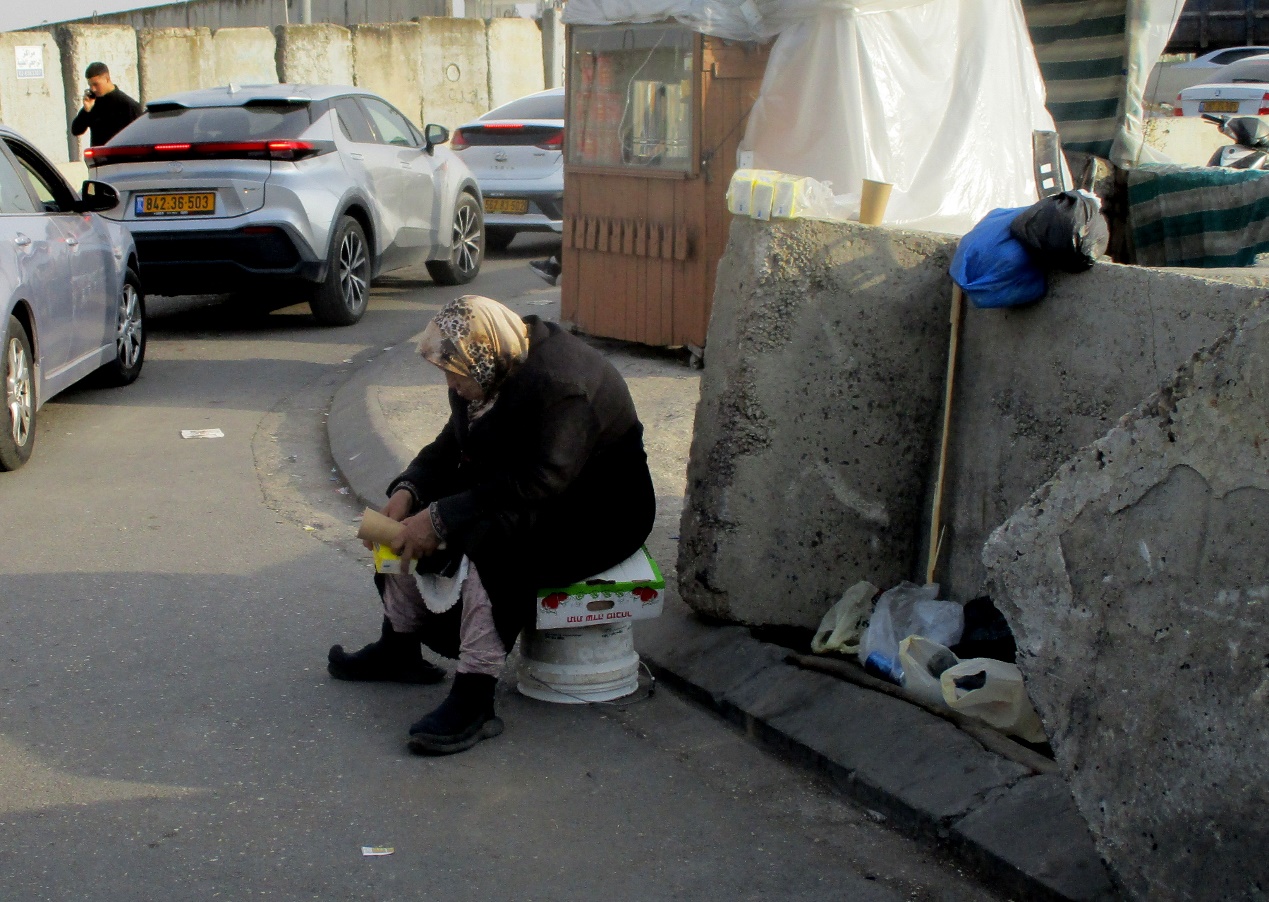 Tamar FleishmanOct-11-2026Qalandiya. Female Beggar
-
