
army firing zone is the settlers play ground
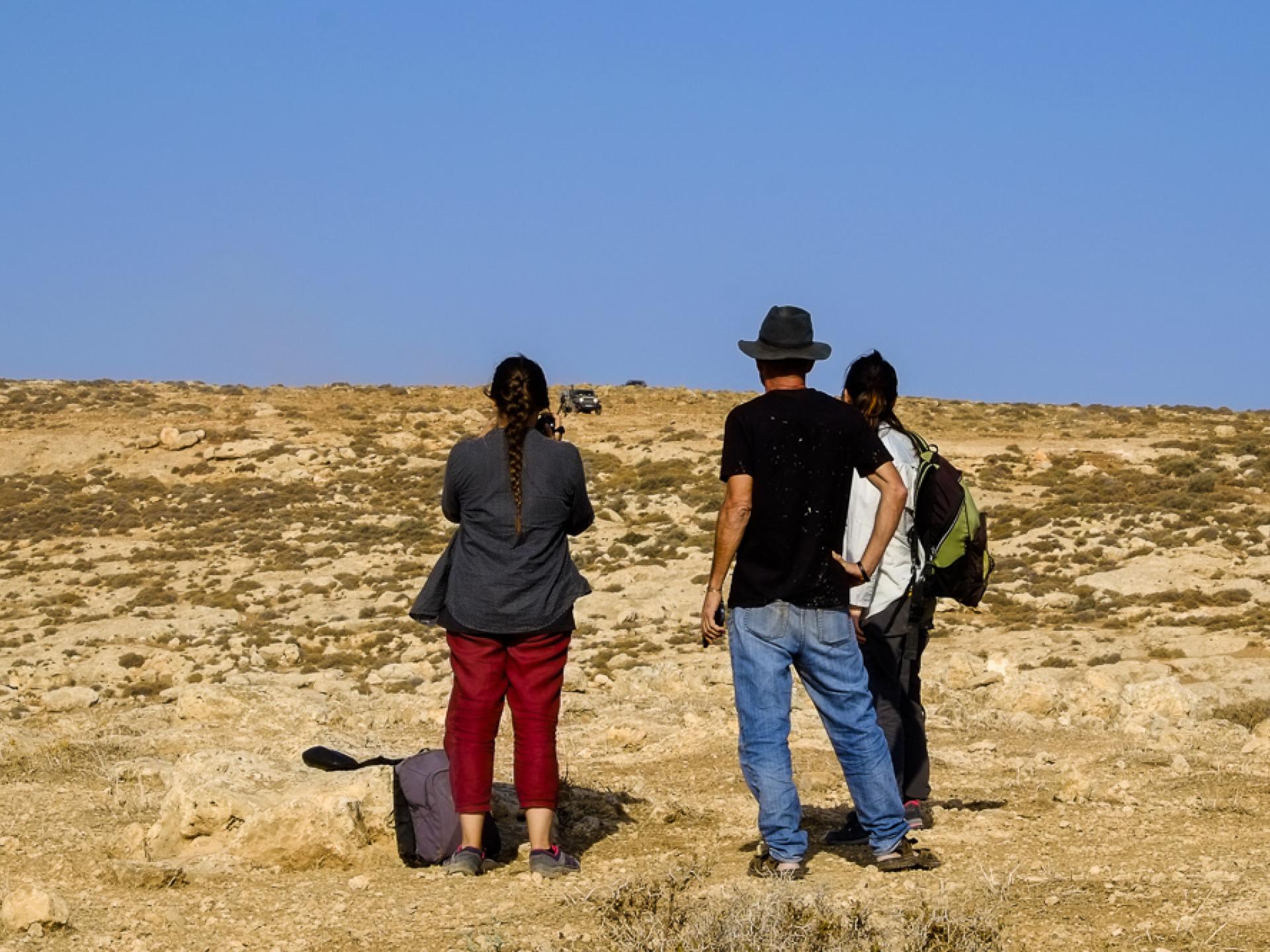
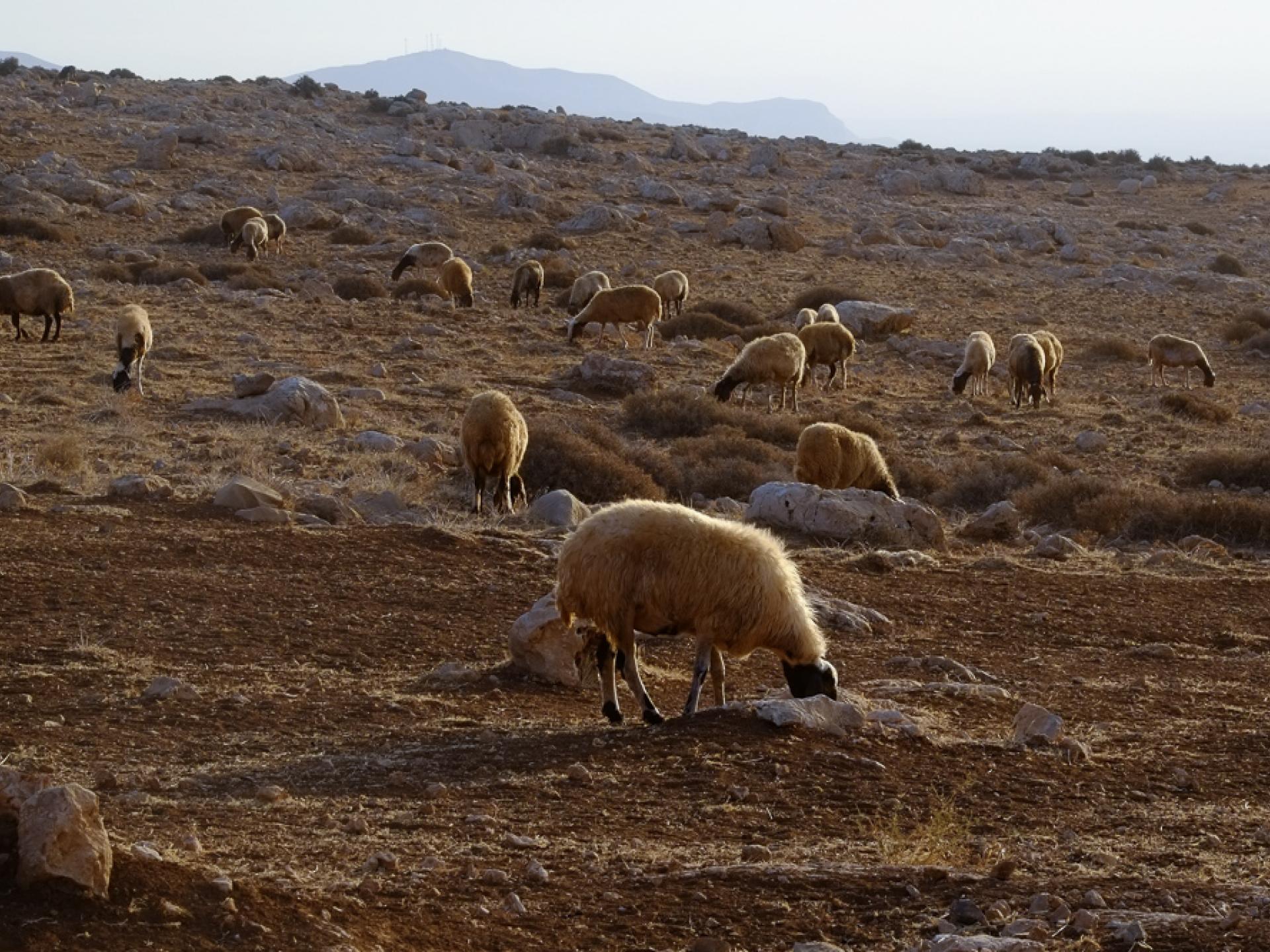
Sheep grazing peacefully in Rashash, off the Alon Road in an area that is an army firing zone. Before a new outpost was established – right next to an army base up on a hill (where do the settlers get their water and electricity?), the Palestinian shepherds were allowed to graze their sheep in the firing zone, and only when army exercises were held, not more than one week a year, would the herders be told to keep away. Now, with the settler-colonist outpost there, the settlers herd their own sheep in the firing zone undisturbed and the army has begun to keep the Palestinian shepherds away. Without our accompaniment, the Palestinians are afraid to go far from their compound, fearing harassment by the settlers.
This morning we noticed the settler sheep at a distance, clearly in the firing zone. Then a settler-colonist’s all-terrain-vehicle showed up on a hill, clearly looking at us – and about half an hour later, an army jeep appeared. We are certain it was the settler-colonists who alerted the army.
The soldiers were rather polite this time, and told us it is a firing zone and we have to tell the Palestinians to get off – which they did. The soldiers suggested they would also stop the settler-colonists from grazing in the firing zone – but the Palestinian herders do not believe this will happen.
On the way back to Jerusalem, we checked out a plot below Kochav HaShahar where the ground was being newly prepared – possibly for construction. Whether this is privately-owned land is a matter now being checked.
A-Rashash
See all reports for this place-
A-Rashash was founded by the patriarch of the family, Haj Suleiman, who fled in 1948 from Tel Amal near Tivon. He leased land around the valley from one of the Palestinian residents and raised a glorious family that today consists of three family heads numbering about 100 people, with electricity from solar panels and water that they bring in trailer tanks from Ein Samia. There is no school there and the children attend an elementary school in the village of Duma, which is over the mountain at a distance of about 5 kilometers, and leave when they reach high school.
The daily life of the residents of the place consists of trying to avoid the machinations and damage of the settlers of the settlements and outposts that surround their village, and to protect the grazing lands of the sheep that remain in their possession. At the same time there is the constant threat of the orders of the civil government carried out by the army. About 3 years ago the residents decided to give up the extensive grazing areas and the access to the Ein Rashash spring and they graze around the encampment and buy feed for the sheep for a lot of money.
After the outpost hooligans managed to drive out the residents of Ras a Tin, Ein Samia and Kaboun, hence began the severe day-and-night harassment of of A Rashash. Since August 2023, the Jordan Valley activists have been holding 24/7 vigils in the pastoral communities to protect them and encourage them to stay on their land. There are refreshing responses, but not enough to provide the residents with long-term protection. You are Welcome to join.
-
Jordan Valley
See all reports for this place-
Jordan Valley The Jordan Valley is the eastern strip of the West Bank. Its area consists of almost a third of the West Bank area. About 10,000 settlers live there, about 65,000 Palestinian residents in the villages and towns. In addition, about 15,000 are scattered in small shepherd communities. These communities are living in severe distress because of two types of harassment: the military declaring some of their living areas, as fire zones, evicting them for long hours from their residence to the scorching heat of the summer and the bitter cold of the winter. The other type is abuse by rioters who cling to the grazing areas of the shepherd communities, and the declared fire areas (without being deported). The many groundwaters in the Jordan Valley belong to Mekorot and are not available to Palestinians living in the Jordan Valley. The Palestinians bring water to their needs in high-cost followers.
 Rachel AfekMay-28-2026Samra. Colorful works
-