
Qalandiya Checkpoint is undergoing renovation works
Qalandiya Checkpoint is undergoing renovation works.
These have already caused much consternation because the car-park has been destroyed, the bus stop has been much further away, and the route to now be taken by pedestrians is potholed and strewn with rocks.
The victim this time was a nun who was slowly crossing what had been the bus depot, the whole length of which had been ditched by a D9 bulldozer.
Among the shards, rocks and clumps of soil the elderly nun tripped, her whole thin body falling to the ground. Passers-by rushed to help her up, supported her arms and nearly carried her to her destination, on the other side of the checkpoint.
The designated transport vehicle for patients returning to Gaza was already parked at its designated platform, waiting.
Behind the broad back of a security guard and against the restrictions placed by ‘human’ laws and local ‘laws’, I managed to reach the DCO.
There, in the waiting shed in front of the offices, and in a special room designated for the Gazans, a room that has only metal benches and an air conditioning unit working full blast and creating heat as if this were not a room but an incubator – making most of the patients cross over to the waiting shed in front of the DCO offices – men women and girls sat and waited.
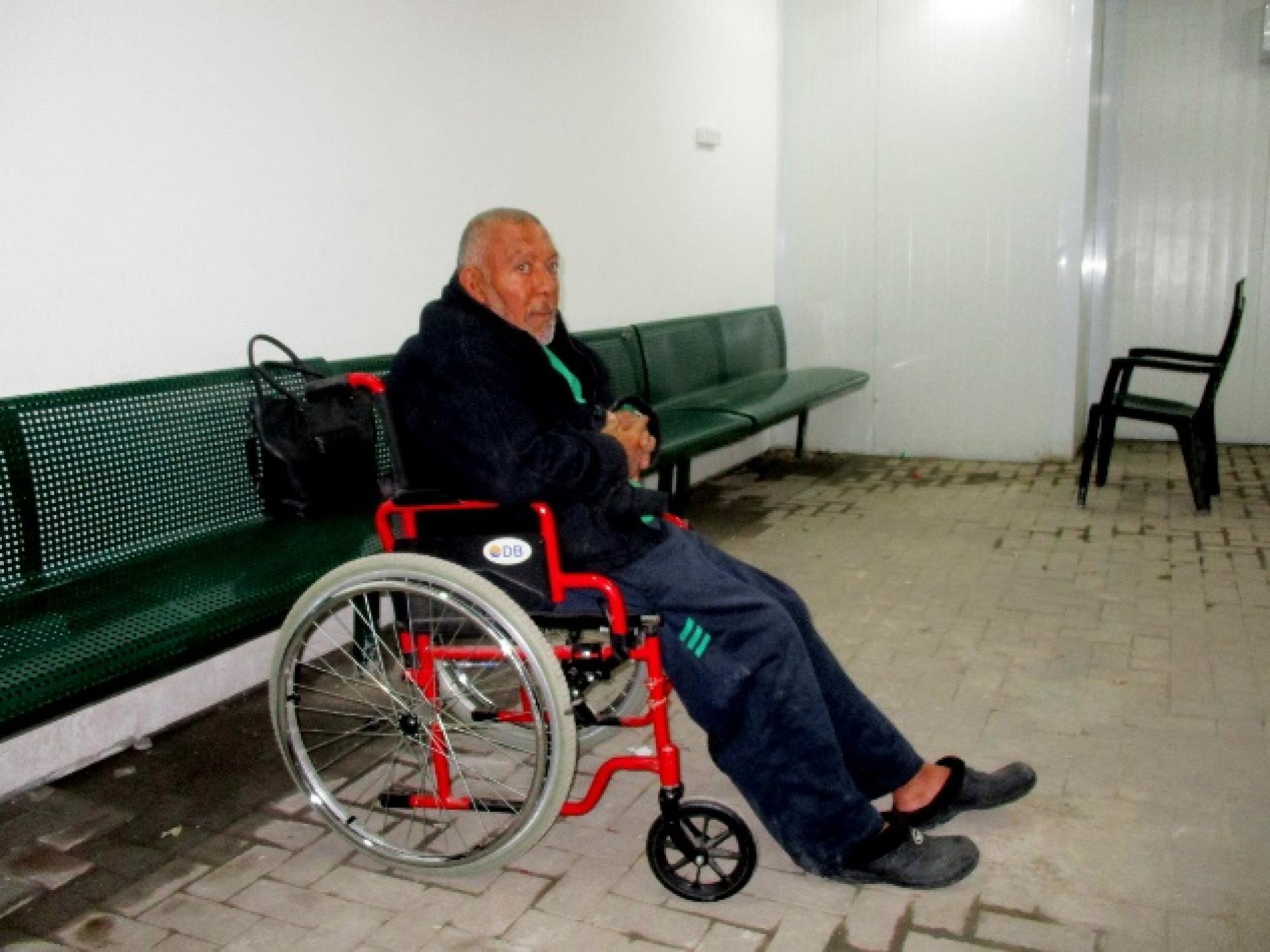
A woman asked me to photograph her husband sitting in his wheelchair, which reminded me of the words I have heard more than once while patients are being transferred between ambulances: “Take a picture and show everyone how we’re being treated.” I did. Later the woman asked me to give her husband “something sweet, if you have it.” I had it. I gave it.
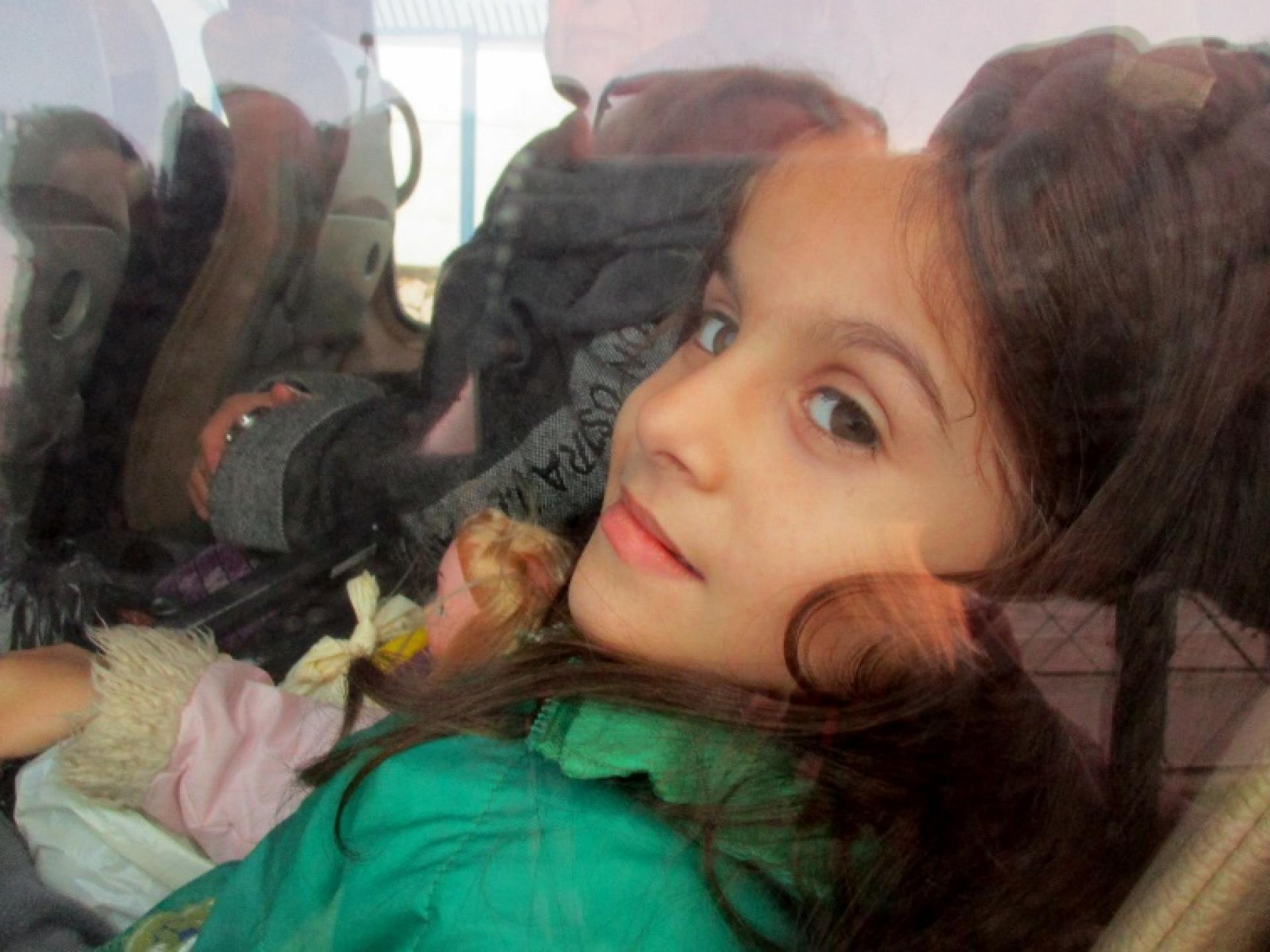
8-year old Maryam was also waiting there, having been released from the A-Najjah hospital in Nablus where she had undergone spinal column surgery. Most of the time Maryam lay on a prayer rug that her mother had spread over the metal bench.
A little while before 4 PM, a girl’s restrained, long whine shafted the silence. It was a girl, about 10 years old, one of her arms in a plaster cast and her neck restrained in an orthopedic collar. “She’s post-operation, suffering and miserable” said her mother, trying to calm her daughter down by stroking her head and offering her a bag of snacks. But the girl persisted, suffering, miserable, wailing.
“Patience is a must” said a man who spent hours awaiting his turn to enter the DCO office. But I, who spent “only” an hour and a half there, I have not the quiet patience that decades of oppression have etched in Palestinians.
As the DCO officer arrived to lead the group to their transit vehicle, a long, tired, crowded procession of people who have suffered hours of waiting without food or drink exited – having been moved from prison to prison to yet another prison. Minutes before 5 PM the transit vehicle took off.
When Maryam boarded the Gaza-designated vehicle, after about 9 hours of waiting at the checkpoint, and seated her doll next to herself, she sent me a heart-rending farewell smile.
Qalandiya Checkpoint / Atarot Pass (Jerusalem)
See all reports for this place-
Click here to watch a video from Qalandiya checkpoint up to mid 2019 Three kilometers south of Ramallah, in the heart of Palestinian population. Integrates into "Jerusalem Envelope" as part of Wall that separates between northern suburbs that were annexed to Jerusalem in 1967: Kafr Aqab, Semiramis and Qalandiya, and the villages of Ar-Ram and Bir Nabala, also north of Jerusalem, and the city itself. Some residents of Kafr Aqab, Semiramis and Qalandiya have Jerusalem ID cards. A terminal operated by Israel Police has functioned since early 2006. As of August 2006, northbound pedestrians are not checked. Southbound Palestinians must carry Jerusalem IDs; holders of Palestinian Authority IDs cannot pass without special permits. Vehicular traffic from Ramallah to other West Bank areas runs to the north of Qalandiya. In February 2019, the new facility of the checkpoint was inaugurated aiming to make it like a "border crossing". The bars and barbed wire fences were replaced with walls of perforated metal panels. The check is now performed at multiple stations for face recognition and the transfer of an e-card. The rate of passage has improved and its density has generally decreased, but lack of manpower and malfunctions cause periods of stress. The development and paving of the roads has not yet been completed, the traffic of cars and pedestrians is dangerous, and t the entire vicinity of the checkpoint is filthy. In 2020 a huge pedestrian bridge was built over the vehicle crossing with severe mobility restrictions (steep stairs, long and winding route). The pedestrian access from public transport to the checkpoint from the north (Ramallah direction) is unclear, and there have been cases of people, especially people with disabilities, who accidentally reached the vehicle crossing and were shot by the soldiers at the checkpoint. In the summer of 2021, work began on a new, sunken entrance road from Qalandiya that will lead directly to Road 443 towards Jerusalem and Tel Aviv. At the same time, the runways of the old Atarot airport were demolished and infrastructure was prepared for a large bus terminal. (updated October 2021)
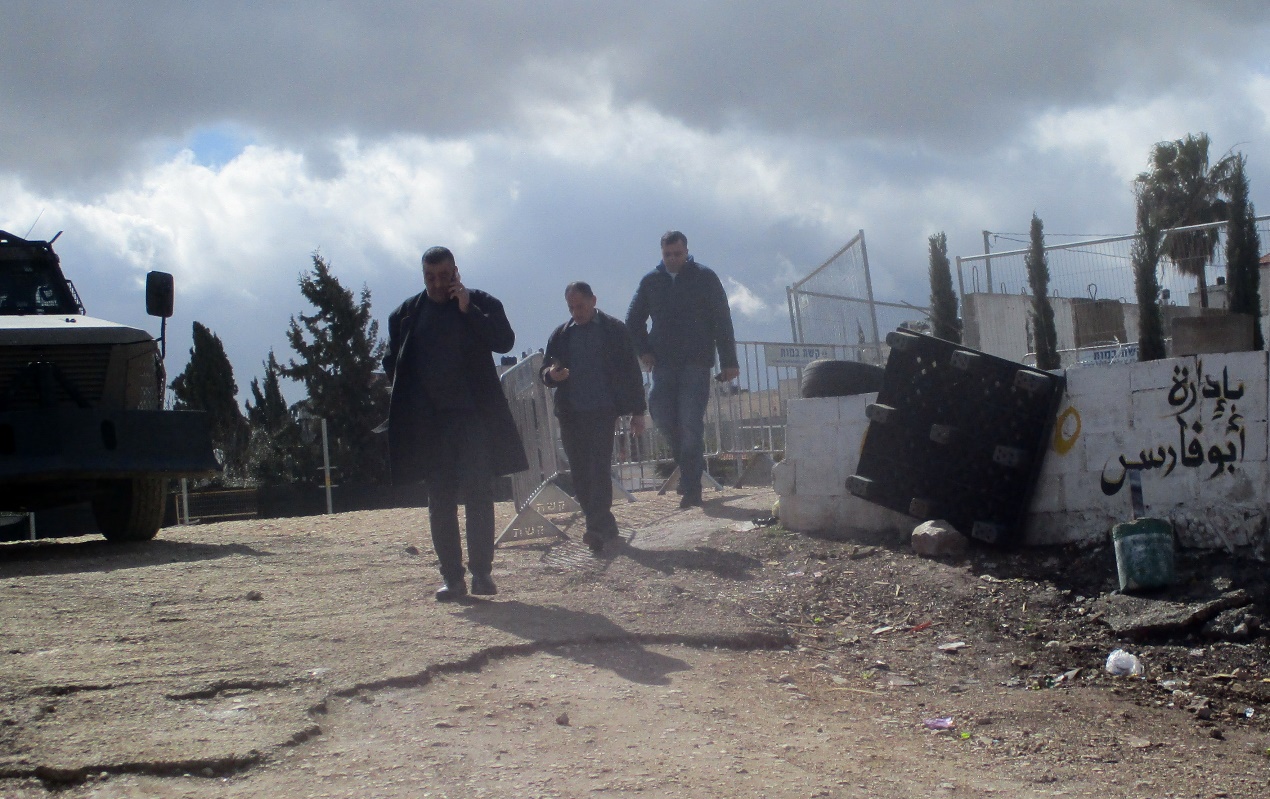 Tamar FleishmanFeb-27-2026Qalandiya: On the way to prayer
-