
South Hebron Hills

he closure is still in full swing and we did not enter Hebron
We drove to A-tuwani. The military presence is less on Route 317 but at the most important entrance to Carmill and Kawasis a blockade of dirt was raised overnight. We must follow this up.
At Tuwani on the ground floor of Nasser’s home, which also serves as a local art center which his wife tries to run, we also see a shop of local handiwork. Women are sitting and weaving by the ancient traditional method and are photographed today by an organization from Ramallah for Unesco.
Nasser and his son told us about last night’s events. A man who lives across the road in front of the entrance to the village came with a truck loaded with building materials to do work on his home. (Area C). Instantly, settlers and Regavim arrived and tried to steal the truck and equipment. Of course, soldiers and DCOs also arrived.After many hours, the equipment was returned to its owners and the settlers removed
This happens very often in this area.
Nasser wants us to organize a meeting of all the organizations together so that he can describe in a concentrated way their struggles (fascinating to me) and how they can be strengthened.
I would love to take the challenge and help them.
They ask that we help them by publishing their problems in English as well.
I am glad that Leah Shakdiel has now more time and and is ready to enter into this affair
We returned via Route 60.
At the southern entrance to Hebron under Beit Hagai settlement are posts on both sides of the road which are manned by soldiers.
South Hebron Hills
See all reports for this place-
South Hebron Hills
South Hebron Hills is a large area in the West Bank's southern part.
Yatta is a major city in this area: right in the border zone between the fertile region of Hebron and its surroundings and the desert of the Hebron Hills. Yatta has about 64,000 inhabitants.
The surrounding villages are called Masafer Yatta (Yatta's daughter villages). Their inhabitants subsist on livestock and agriculture. Agriculture is possible only in small plots, especially near streams. Most of the area consists of rocky terraces.Since the beginning of the 1980s, many settlements have been established on the agricultural land cultivated by the Palestinians in the South Hebron Hills region: Carmel, Maon, Susia, Masadot Yehuda, Othniel, and more. Since the settlements were established and Palestinians cultivation areas have been reduced; the residents of the South Hebron Hills have been suffering from harassment by the settlers. Attempts to evict and demolish houses have continued, along with withholding water and electricity. The military and police usually refrain from intervening in violent incidents between settlers and Palestinians do not enforce the law when it comes to the investigation of extensive violent Jewish settlers. The harassment in the South Hebron Hills includes attacking and attempting to burn residential tents, harassing dogs, harming herds, and preventing access to pastures.
There are several checkpoints in the South Hebron Hills, on Routes 317 and 60. In most of them, no military presence is apparent, but rather an array of pillboxes monitor the villages. Roadblocks are frequently set up according to the settlers and the army's needs. These are located at the Zif Junction, the Dura-al Fawwar crossing, and the Sheep Junction at the southern entrance to Hebron.
Updated April 2022
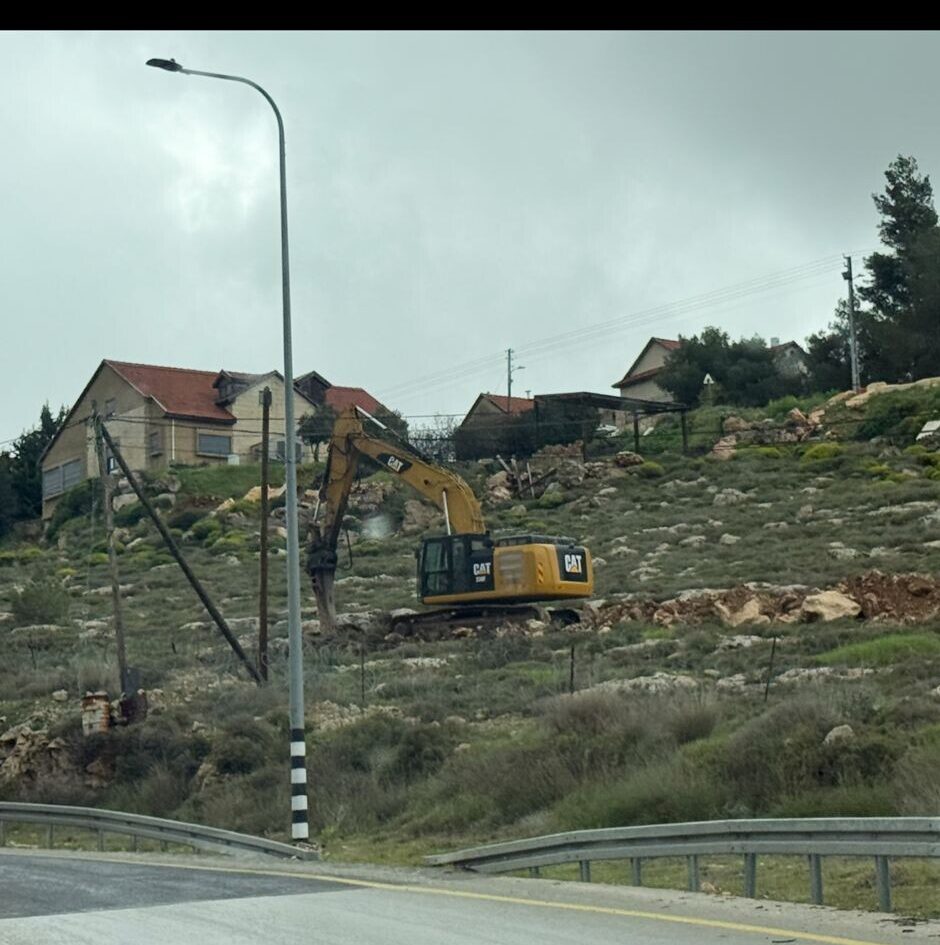 MuhammadFeb-24-2026South Hebron Hill, Beit Hagai: Paving an internal security road
-