
דרום הר חברון, חברון, יום ב’ 31.12.12, בוקר

Translator: Charles K.
We began our shift at Umm Faqra.
We came to see a man who’d been jailed in Abu Kabir and released without his documents or belongings – of course.
We gave him power-of-attorney forms to sign, which we’ll give to our colleagues in Tel Aviv who’ll go to the jail to get his belongings, give them to us and we’ll return them to him.
Lieberman said that it’s a paradise here. He must also have been thinking about the Palestinians.
The roads in the southern Hebron hills – Routss 316, 317 and 356 – are quiet. How much money has been spent on these phantom routes to three settlements and a few illegal locations and outposts.
Hebron
School is already out; it’s exam time and the children are already playing outside at 10 AM.
A gathering near the Cave of the Patriarchs, at the end of the worshippers route: officers from the DCO and the regional command headquarters, with locals. We asked what’s going on. Here’s the story:
Three months ago it was decided to fence and fortify the portion of the worshippers route near the Cave of the Patriarchs and separate Jewish and Arab pedestrians there as well.
The locals, sensing new trouble, requested that a vehicle lane be left between the buildings, for ambulances and the handicapped. “OK, OK,” said the people from the Civil Administration, and…nothing was done other than installing a green fence and concrete barriers, and separating pedestrians. Now this “project” is proceeding up the route.
And, on the other hand, the local residents, with the help of experts in restoring old structures, are beautifully restoring their nearby buildings.
“The Lords of the Land” there, who tell the army what to do, were able to have the route widened, narrow the passage for the locals and expand apartheid (cf. photographs).
Today we heard a discussion between the officers and the people carrying out renovations. The locals asked the Civil Administration for permission to clean up the abandoned area and reopen a crossing the army had blocked, saying that if the route is being widened for worshippers, their side must also be upgraded so that they’re able to move around freely and securely in the area open to them. A severely handicapped person also lives there who must be allowed to leave his home, notwithstanding the settlers’ security demands.
A low-ranking officer nods politely. He was sent, along with the regional command’s engineering officer, to make it seem that someone cares.
The resident of Hebron says: “So why don’t you just put up a sign like in South Africa!” Occupation, occupation. But why are the settlers running the army?!
Two little girls walk on the other side of the concrete barriers, on the side intended for Palestinians. I saw them arrive; they made no mistake. They immediately knew where to go. Generation after generation has been born into a life of mistreatment, bullying and denial of rights.
While Israeli pupils touring Hebron are told about Palestinian violence and Jewish victims.
We called some journalists; let’s hope at least part of the story will reach the right people.
Southern Hebron Hills
On Route 60, on our way back, a little before Beit Haggai, there’s a Palestinian locality called Klilkis. Army and border police vehicles stand at the entrance; they don’t want to tell us what’s going on. “Providing security for soldiers doing something connected to water,” they say. From a distance we see soldiers in a field protecting Civil Administration vehicles dismantling irrigation lines.
That’s that – from now on, the water’s just for Jews.

Hebron
See all reports for this place-
According to Wye Plantation Accords (1997), Hebron is divided in two: H1 is under Palestinian Authority control, H2 is under Israeli control. In Hebron there are 170,000 Palestinian citizens, 60,000 of them in H2. Between the two areas are permanent checkpoints, manned at all hours, preventing Palestinian movement between them and controlling passage of permit holders such as teachers and schoolchildren. Some 800 Jews live in Avraham Avinu Quarter and Tel Rumeida, on Givat HaAvot and in the wholesale market.
Checkpoints observed in H2:
- Bet Hameriva CP- manned with a pillbox
- Kapisha quarter CP (the northern side of Zion axis) - manned with a pillbox
- The 160 turn CP (the southern side of Zion axis) - manned with a pillbox
- Avraham Avinu quarter - watch station
- The pharmacy CP - checking inside a caravan with a magnometer
- Tarpat (1929) CP - checking inside a caravan with a magnometer
- Tel Rumeida CP - guarding station
- Beit Hadassah CP - guarding station
Three checkpoints around the Tomb of the Patriarchs
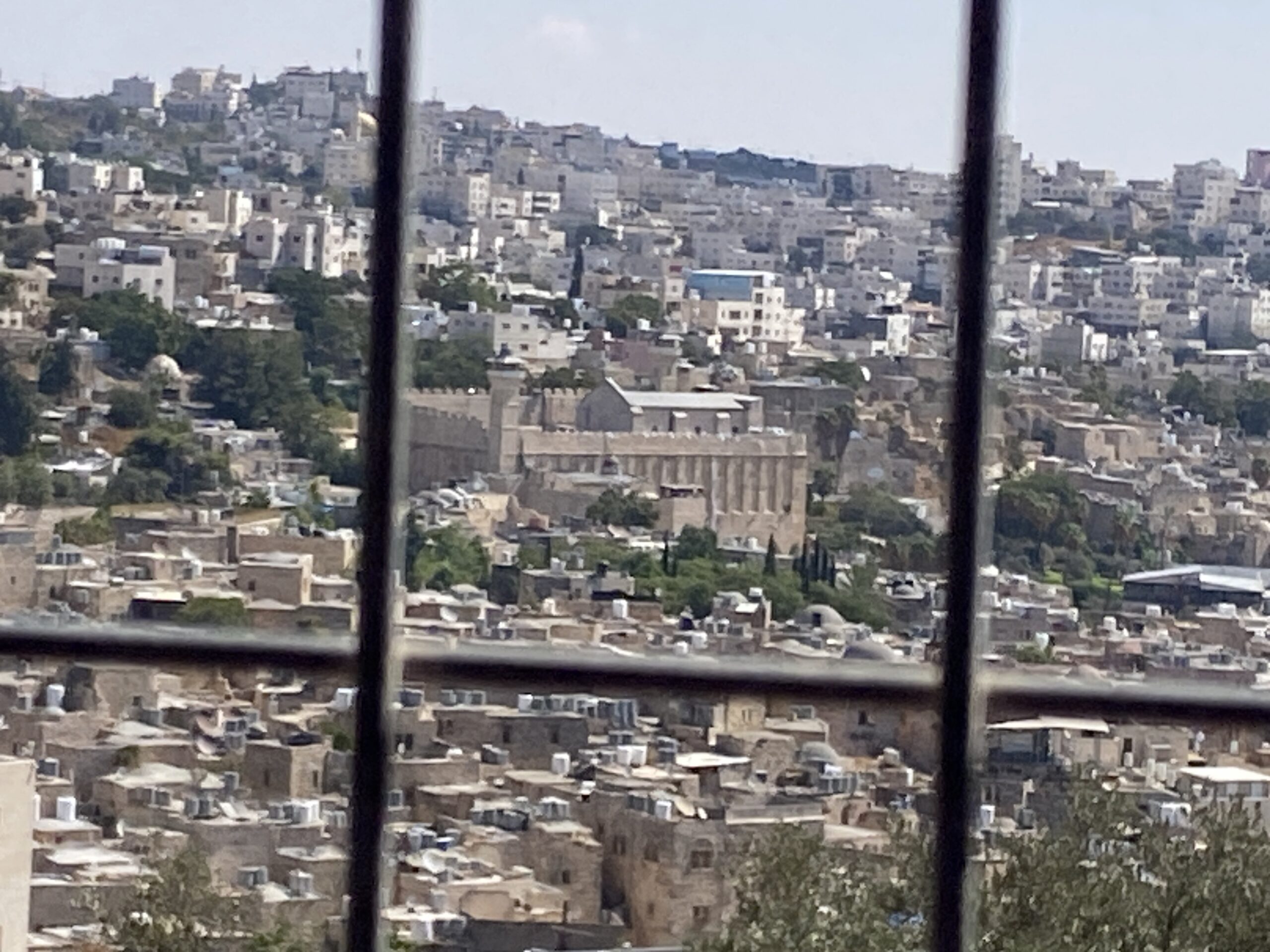 Yael ZoranSep-24-2026Hebron and the Cave of the Patriarchs from Beit Hashalom
-
South Hebron Hills
See all reports for this place-
South Hebron Hills
South Hebron Hills is a large area in the West Bank's southern part.
Yatta is a major city in this area: right in the border zone between the fertile region of Hebron and its surroundings and the desert of the Hebron Hills. Yatta has about 64,000 inhabitants.
The surrounding villages are called Masafer Yatta (Yatta's daughter villages). Their inhabitants subsist on livestock and agriculture. Agriculture is possible only in small plots, especially near streams. Most of the area consists of rocky terraces.Since the beginning of the 1980s, many settlements have been established on the agricultural land cultivated by the Palestinians in the South Hebron Hills region: Carmel, Maon, Susia, Masadot Yehuda, Othniel, and more. Since the settlements were established and Palestinians cultivation areas have been reduced; the residents of the South Hebron Hills have been suffering from harassment by the settlers. Attempts to evict and demolish houses have continued, along with withholding water and electricity. The military and police usually refrain from intervening in violent incidents between settlers and Palestinians do not enforce the law when it comes to the investigation of extensive violent Jewish settlers. The harassment in the South Hebron Hills includes attacking and attempting to burn residential tents, harassing dogs, harming herds, and preventing access to pastures.
There are several checkpoints in the South Hebron Hills, on Routes 317 and 60. In most of them, no military presence is apparent, but rather an array of pillboxes monitor the villages. Roadblocks are frequently set up according to the settlers and the army's needs. These are located at the Zif Junction, the Dura-al Fawwar crossing, and the Sheep Junction at the southern entrance to Hebron.
Updated April 2022
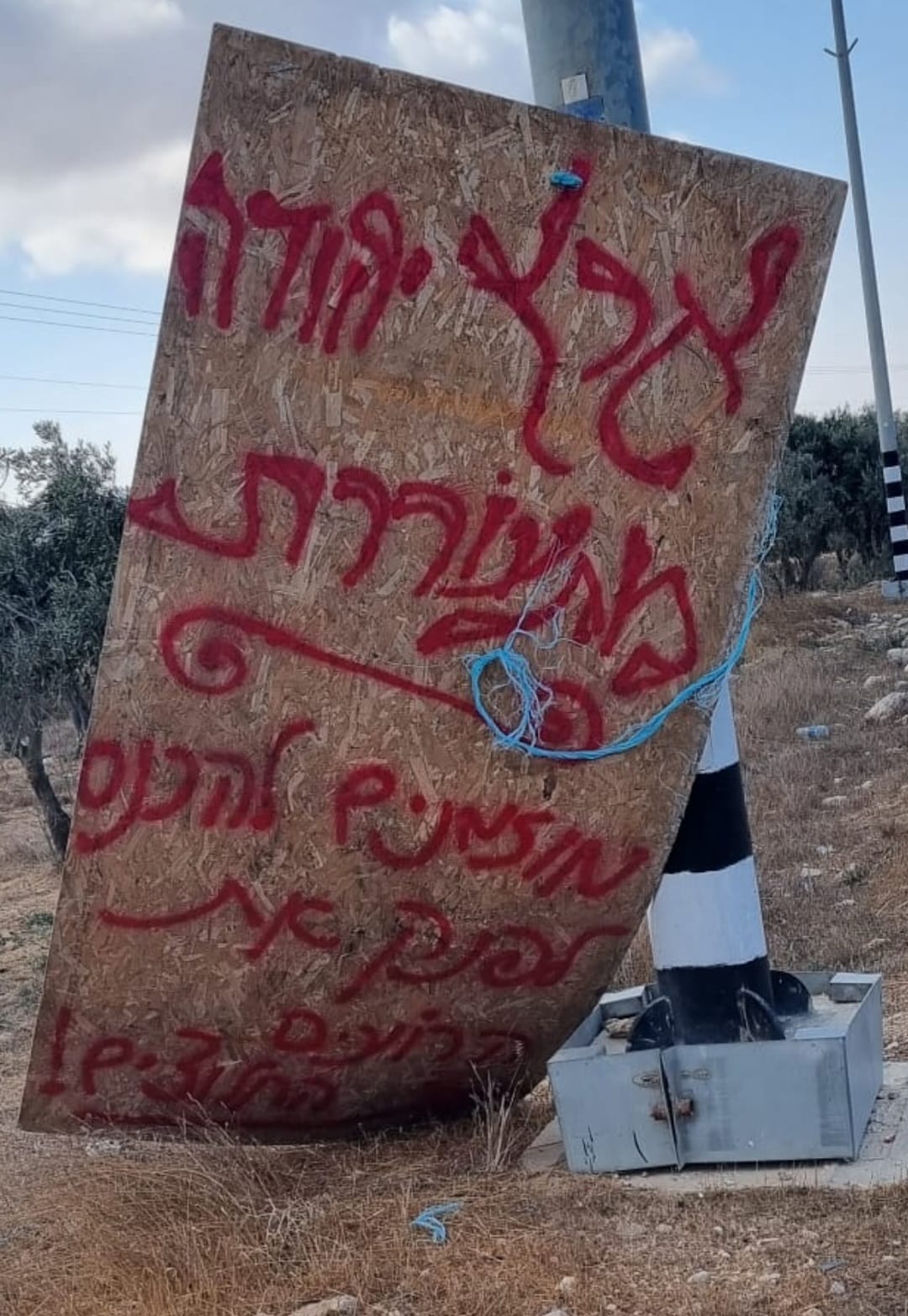 Smadar BeckerOct-17-2026A sign placed by those who call themselves the Pioneer Shepherds, at the outpost adjacent to Qawawis
-
