
חברון, תרקומיא, יום ד’ 10.8.11, בוקר
Translator: Charles K.
Tarqumiyya
Following the previous report about Tarqumiyya, we spoke to Israeli drivers waiting here for passengers who told us that the situation is terrible, it’s the worst of all the crossings (Meitar and others…). Both the physical conditions and the way people are treated – humiliations, harsh policies, etc.
We spoke with Zion, the crossing director – he wanted to hear all the complaints – also about how we were treated the previous time we were here, and he has answers and explanations for everything, and a promise that a contractor has already begun constructing what’s missing.
Hebron
A few children running around the streets, otherwise quiet.
Cave of the Patriarchs: Children playing on the grass (a summer camp?)
Michael and Yehuda, from Breaking the Silence, are going around with representatives of the American Consulate.
At the Border Police booth, soldiers have detained four people. The soldier says that there are more attempts to carry out attacks because of Ramadan. It turns out that he’s the soldier who was the target of an attempted stabbing two days ago near the casbah. He’s fine.
The detainees waited about 25 minutes; their complaints didn’t help because the Shin Bet – according to the soldier – can detain them for as long as necessary…and he hasn’t yet been authorized to release them.
All along our route things seemed pretty quiet. The soldiers at Tel Rumeida were glad of the opportunity to spend a little time with us, understand who and what we are. They’re “keeping track” of a Jewish girl who came through here, checking to see whether she reached her destination, “because someone was raped here [some] months ago.” (Has any of us heard about this??)
On our way back we were again stopped at the Tarqumiyya crossing, insistent on checking what we had in the vehicle, including removing a large table we’d bought at Azzam’s metal shop which requires two people to remove from the car and put through the scanner (it barely fit), and also, of course, the bags of figs and grapes were examined, all this despite the fact that Zion was around and saw us, and it didn’t matter that we’d spoken to him that morning…
I wonder why they’ve become so much stricter than in the past at this crossing, and apparently also at other crossings (can anyone find out?)
Hebron
See all reports for this place-
According to Wye Plantation Accords (1997), Hebron is divided in two: H1 is under Palestinian Authority control, H2 is under Israeli control. In Hebron there are 170,000 Palestinian citizens, 60,000 of them in H2. Between the two areas are permanent checkpoints, manned at all hours, preventing Palestinian movement between them and controlling passage of permit holders such as teachers and schoolchildren. Some 800 Jews live in Avraham Avinu Quarter and Tel Rumeida, on Givat HaAvot and in the wholesale market.
Checkpoints observed in H2:
- Bet Hameriva CP- manned with a pillbox
- Kapisha quarter CP (the northern side of Zion axis) - manned with a pillbox
- The 160 turn CP (the southern side of Zion axis) - manned with a pillbox
- Avraham Avinu quarter - watch station
- The pharmacy CP - checking inside a caravan with a magnometer
- Tarpat (1929) CP - checking inside a caravan with a magnometer
- Tel Rumeida CP - guarding station
- Beit Hadassah CP - guarding station
Three checkpoints around the Tomb of the Patriarchs
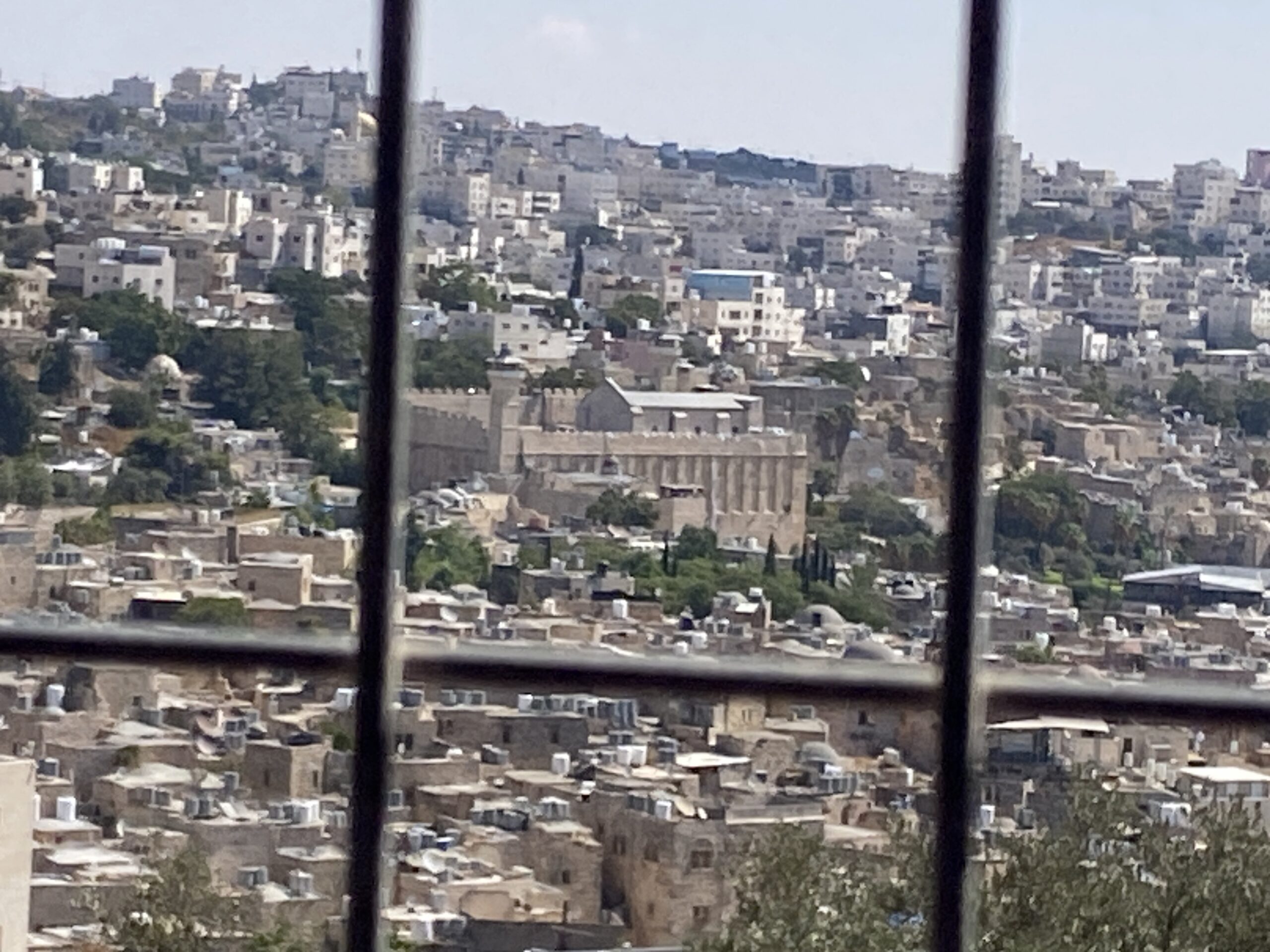 Yael ZoranSep-24-2026Hebron and the Cave of the Patriarchs from Beit Hashalom
-
Tarqumiya CP
See all reports for this place-
The Tarqumiya Checkpoint is one of the largest and busiest checkpoints where people and goods cross into Israel. It is located on the Separation Barrier close to the Green Line, on Road 35 (connecting Beer Sheva and Hebron). It is run by the Israel Defense Ministry’s Crossings Administration with civilian secuirty companies running the day to day operations. The checkpoint is indeed open to vehicles in both directions 24/7, but Palestinians are prevented from crossing in vehicles, except in special cases. MachsomWatch activists visit the checkpoint as it opens at 3:45 am, in order to observe the daily passage of nearly 10,000 Palestinian workers. The workers arrive from throughout the Southern West Bank. Our activists report on the tremendous overcrowding at this checkpoint; they have observed young men climbing and scrambling on the fences and roofs of the ‘access cages’. This is how the work day begins for those who ‘build the land of Israel’. updated November 2019
-
