
Qawawis - selling herds to survive
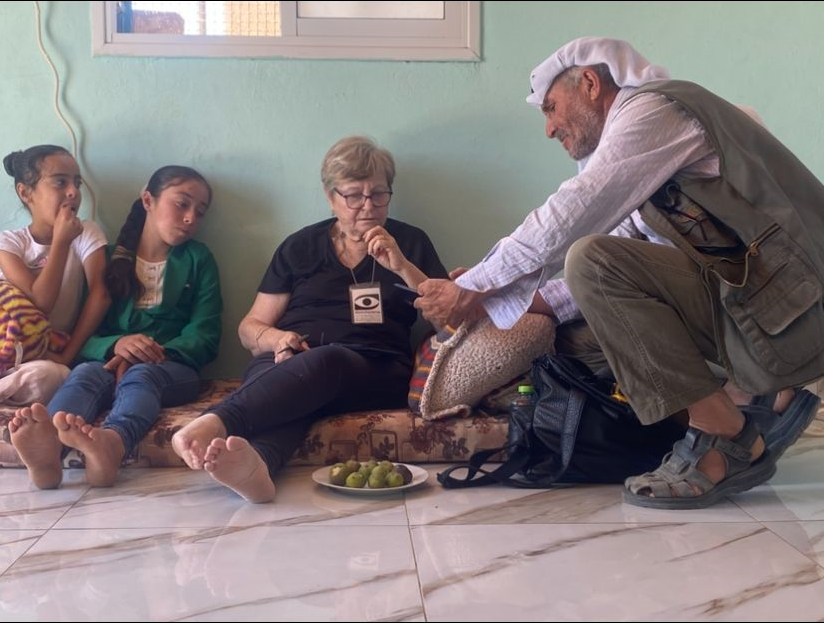
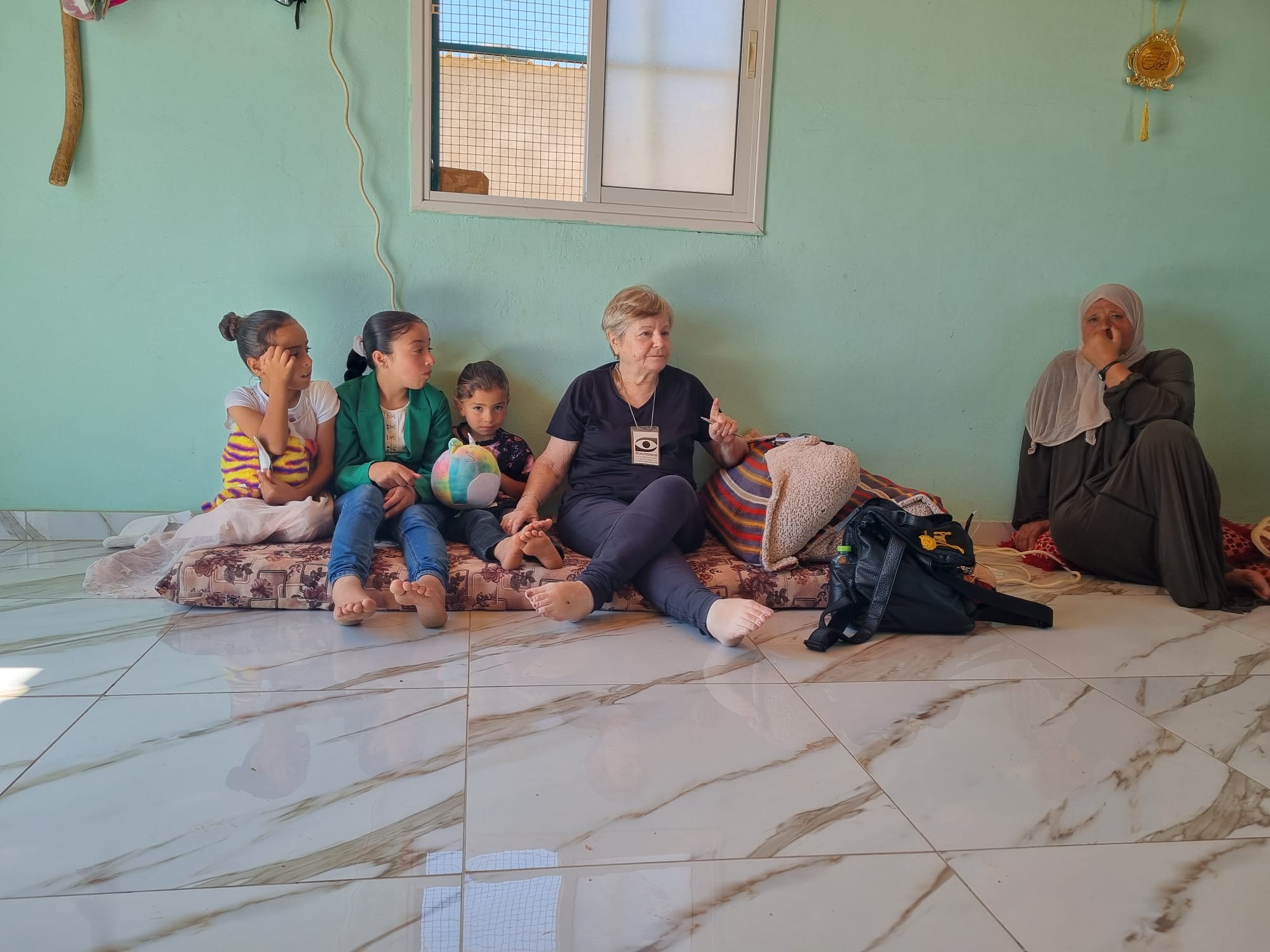
We travelled to Qawawis following Saber’s request that we come. Event follows event, and the situation is getting worse. I point out that this is the case in all the occupied territories, and in the reports of the Machsom Watch members on the website and other websites, you can read and update yourself.
We arrive and the children come to meet us. I had stuffed animals that I brought for them, and they hugged them throughout the visit. We also left a basket of food and clothes from the donations for which they were very grateful.
Taleb, who speaks fluent Hebrew, says that at 6 o’clock this morning a settler arrived with a flock of sheep from the farm opposite Khalet a-Daba’, into Qawawis, to the door of Jibrin’s house. We have written before about the settlers’ invasion of his land near Qawawis, destroying, stealing, and expelling his family.
Jibrin, who joined us for the meeting in the shig, (place where there are meetings and where guests are received) says that he called the Palestinian DCO to report it, and there they referred him to the Israeli DCO. Around 7:30, the Israeli police arrived. The settler with his flock of sheep was still there, and Jibrin informed the police that this happens every day and even presented them with documents proving his ownership of the land. The police ordered the invading settler to leave the place, and he left. When the police left the village, he returned there.
We are told that about a month ago, several settlers came to the village, broke the door of one of the houses, and tore open a tank. The police arrived, but as usual, referred them to file a complaint with the Kiryat Arba police. Every such trip involves paying for a taxi when there is no car available (200 NIS), so they stopped going there.
I ask Taleb how they make a living, and he sadly says, “We had 270 sheep and only 50 are left.”
They barely have enough to buy food supplies, and when a ton of food bags for a flock costs 1,400 shekels, they have no choice. According to him, they will probably have to sell the rest of the herd next year.
A bright spot is two girls who graduated from high school this year with 90+ grades. Both were accepted to study at the University of Yatta and will study mathematics.
*After our visit, they again invaded Qawawis, beat the activists and destroyed everything around them.
#Thisistheoccupation
Location Description
Masafer Yatta*
See all reports for this placeSouth Hebron Hills
See all reports for this place-
South Hebron Hills
South Hebron Hills is a large area in the West Bank's southern part.
Yatta is a major city in this area: right in the border zone between the fertile region of Hebron and its surroundings and the desert of the Hebron Hills. Yatta has about 64,000 inhabitants.
The surrounding villages are called Masafer Yatta (Yatta's daughter villages). Their inhabitants subsist on livestock and agriculture. Agriculture is possible only in small plots, especially near streams. Most of the area consists of rocky terraces.Since the beginning of the 1980s, many settlements have been established on the agricultural land cultivated by the Palestinians in the South Hebron Hills region: Carmel, Maon, Susia, Masadot Yehuda, Othniel, and more. Since the settlements were established and Palestinians cultivation areas have been reduced; the residents of the South Hebron Hills have been suffering from harassment by the settlers. Attempts to evict and demolish houses have continued, along with withholding water and electricity. The military and police usually refrain from intervening in violent incidents between settlers and Palestinians do not enforce the law when it comes to the investigation of extensive violent Jewish settlers. The harassment in the South Hebron Hills includes attacking and attempting to burn residential tents, harassing dogs, harming herds, and preventing access to pastures.
There are several checkpoints in the South Hebron Hills, on Routes 317 and 60. In most of them, no military presence is apparent, but rather an array of pillboxes monitor the villages. Roadblocks are frequently set up according to the settlers and the army's needs. These are located at the Zif Junction, the Dura-al Fawwar crossing, and the Sheep Junction at the southern entrance to Hebron.
Updated April 2022
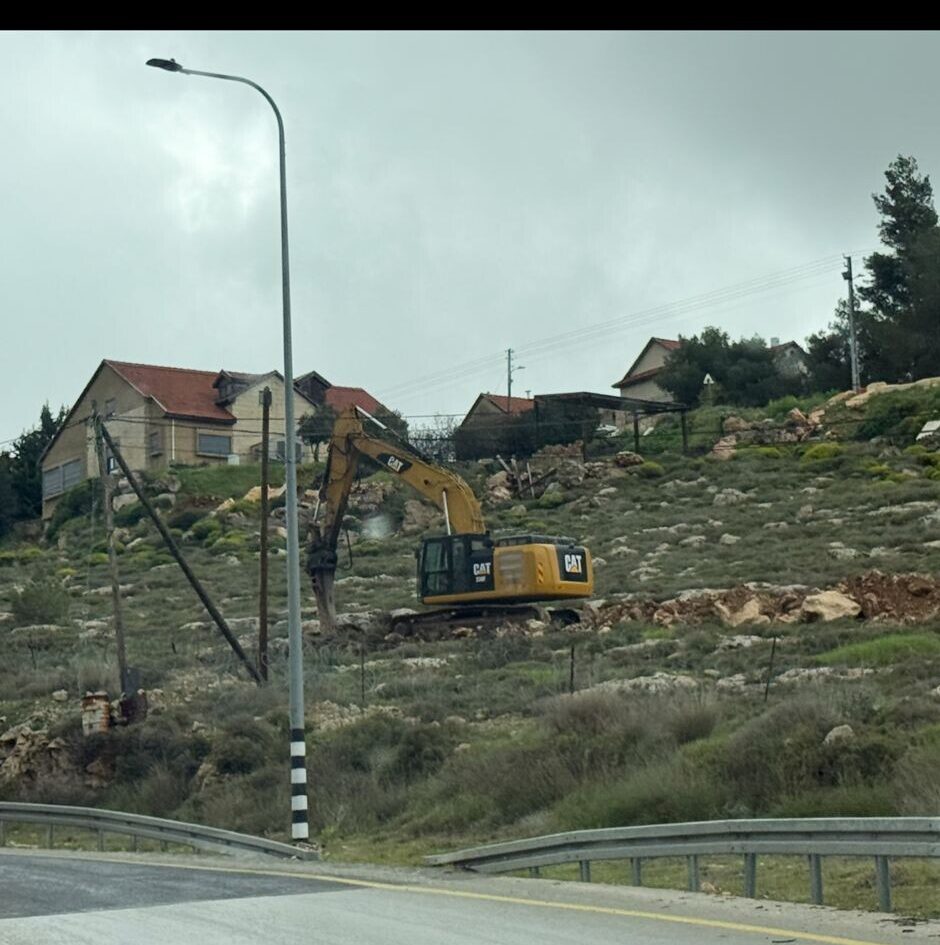 MuhammadFeb-24-2026South Hebron Hill, Beit Hagai: Paving an internal security road
-