
Sha'ab al-Butum - Settler Amichai Shiloh is plowing the Jabarin family's lands
We went again to the Jabarin family in Sha’ab al-Butum.
All the people living in their neighbourhood suffer from harassment, intimidation and threats from the settlers next door, mainly from Mitzpe Avigail, Mitzpe Yair and the new settlements around them, which have been established in the last two years and we are constantly monitoring, filming and reporting on them.
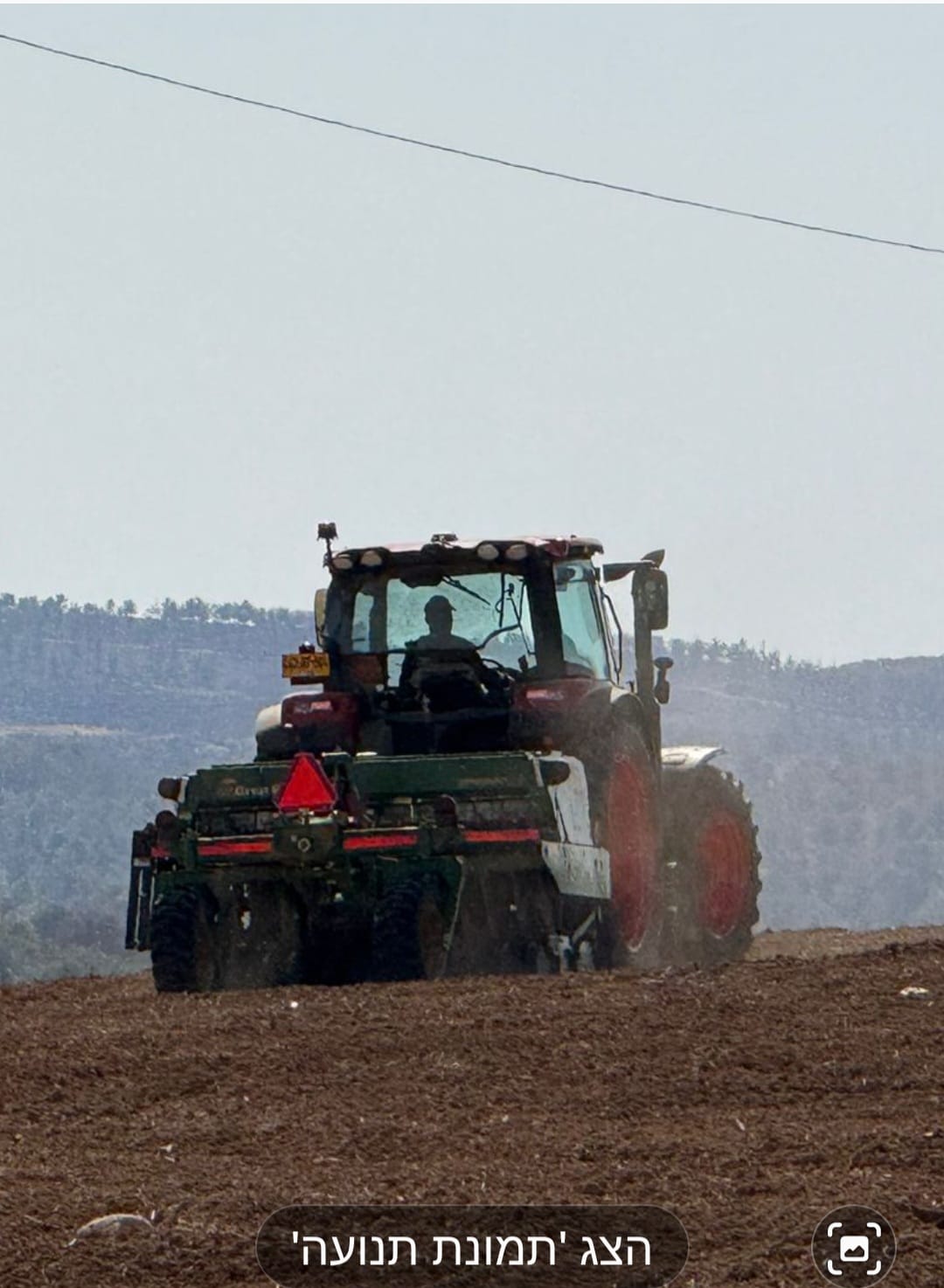
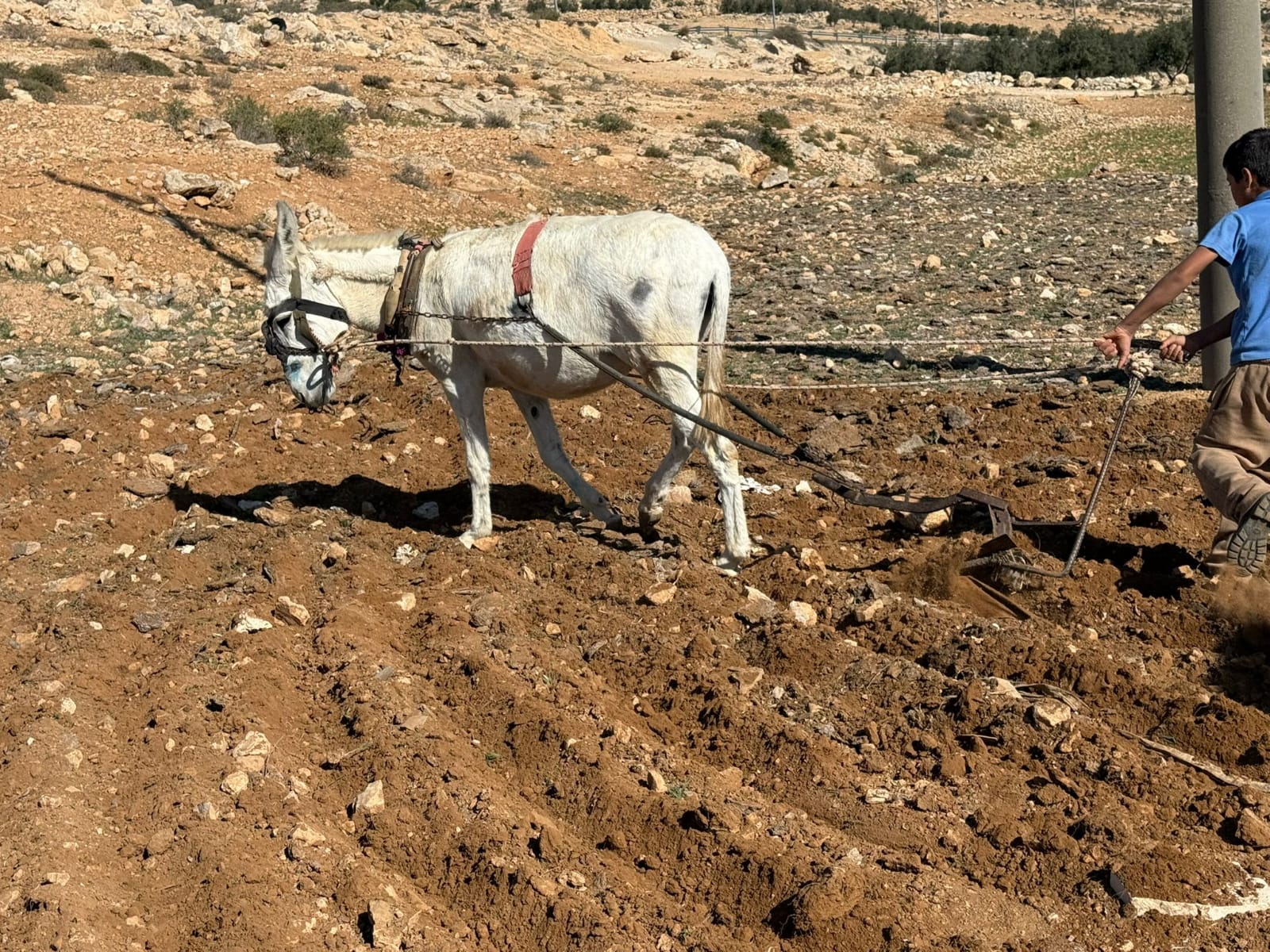
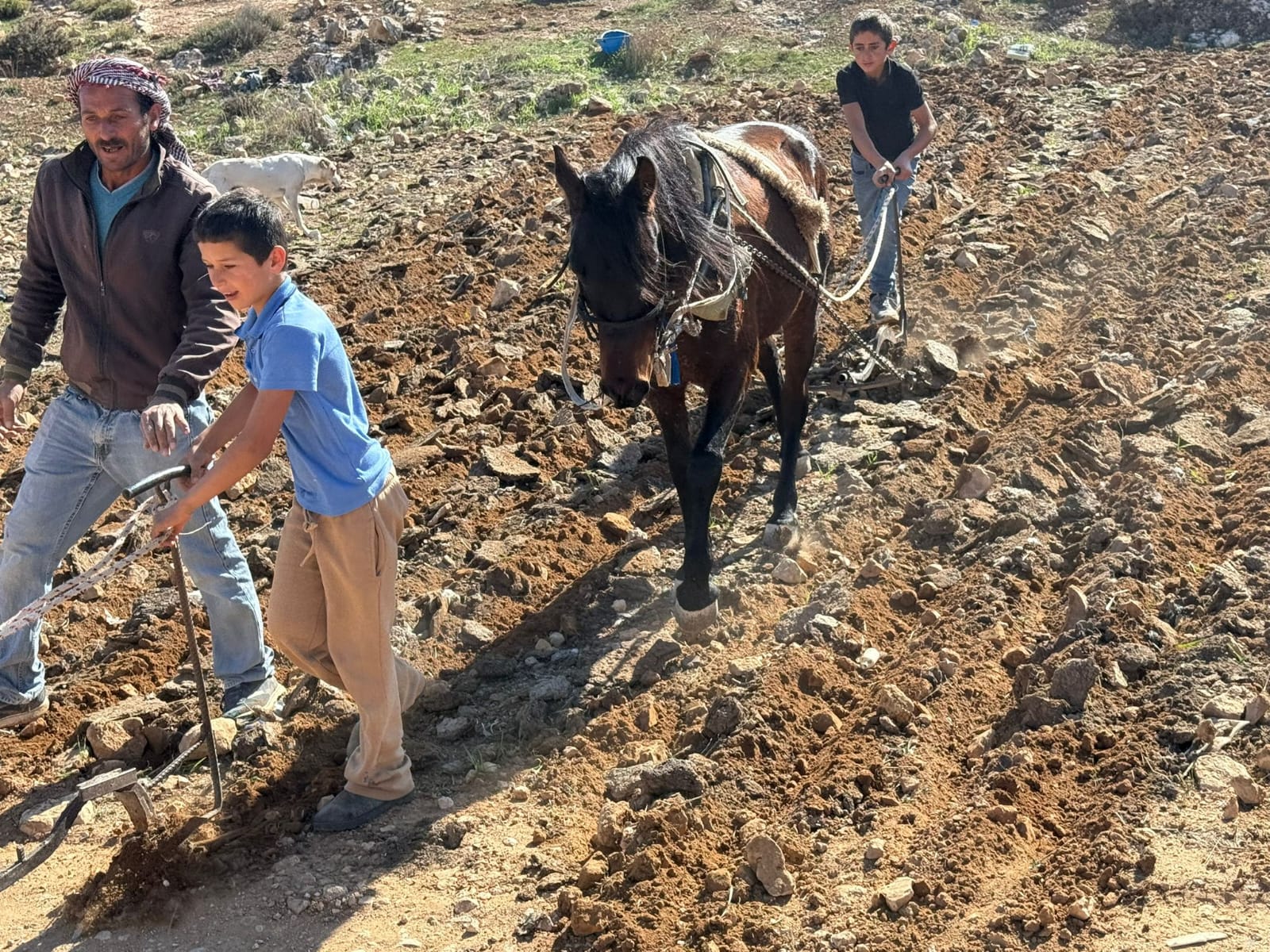
On the way through the fields near the pillbox at the Shani Livne junction, a tractor plowing. A pastoral picture? No. Muhammad draws my attention to the new tractor with a settler plowing in the fields of the people of Upper Wadada who were expelled from their homes about 3 years ago and are now in Samu’. Less than 5 minutes pass and further along the road on other small plots, men and children plow with donkeys and wooden plows that are only displayed in the Tel Hai Museum and its like. Plowing like this is not done out of nostalgic fondness for the past, and yet why? Muhammad tells me that they have some small, old-fashioned tractors, but they could finish the plowing in two days instead of twelve, as is the case now. They don’t dare use them for fear of being confiscated by the settlers and their agents in the Civil Administration. This is what H. explains to us.
Now, on the sidelines, volunteers from abroad are sitting and monitoring their work because they have already been stopped and detained three times at the base in Susiya on the pretext that they are plowing without a coordination (tansiq).
Do you understand? You have to get permission to plow your land with a donkey and a plow. Why? Because you have to make life miserable and demonstrate lordship. So, the pastoral images, like those of Abraham, no matter how they may be, are fraught with acts of oppression and wickedness.
Another man from the area, M.N., comes towards us excitedly, and says that people from Mitzpe Yair come to him all the time, they have come three times recently, beaten and cursed him. He asks that volunteers come to him too, so that they can sleep at night. Their presence probably deters the rioters a little.
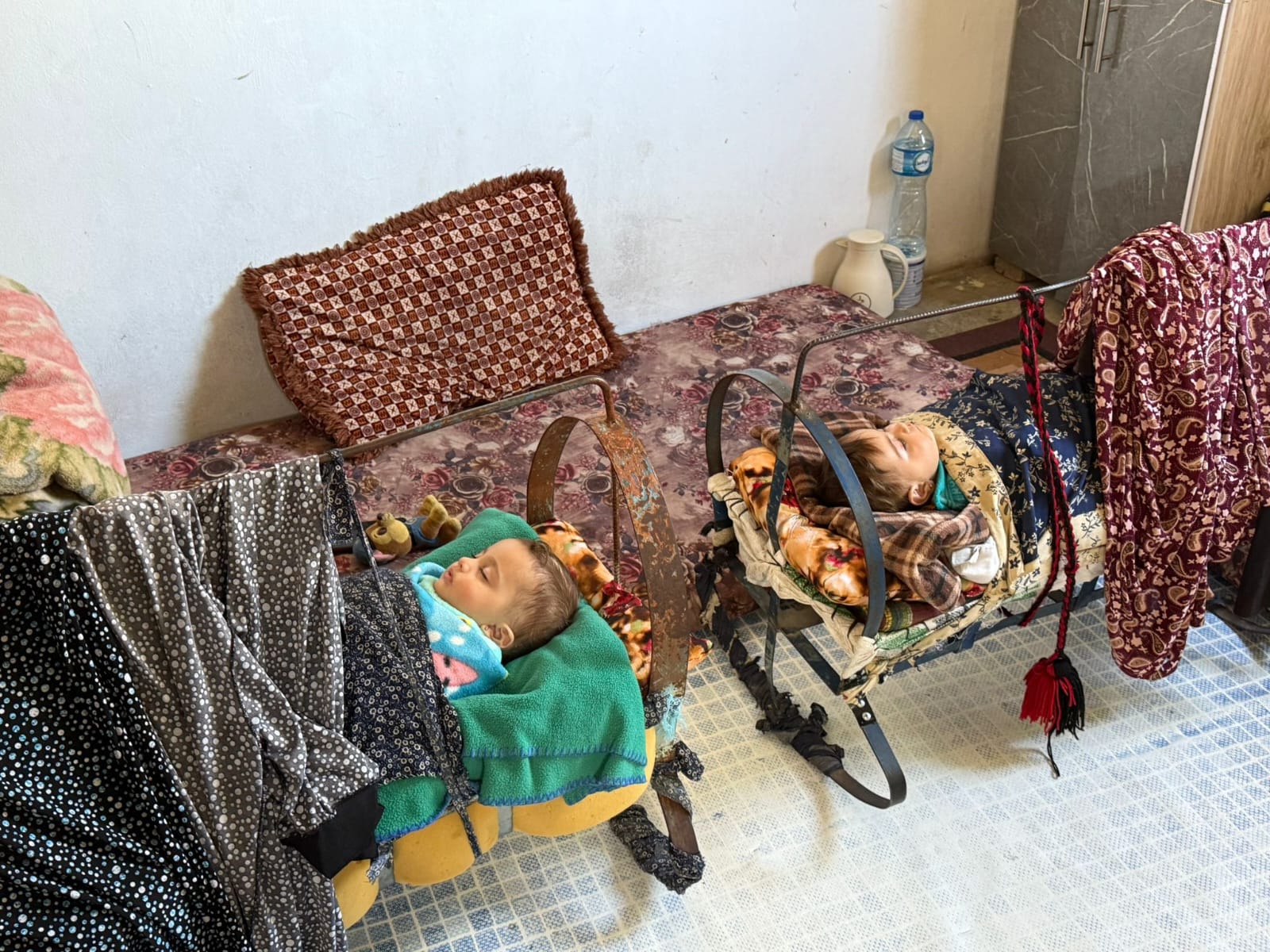
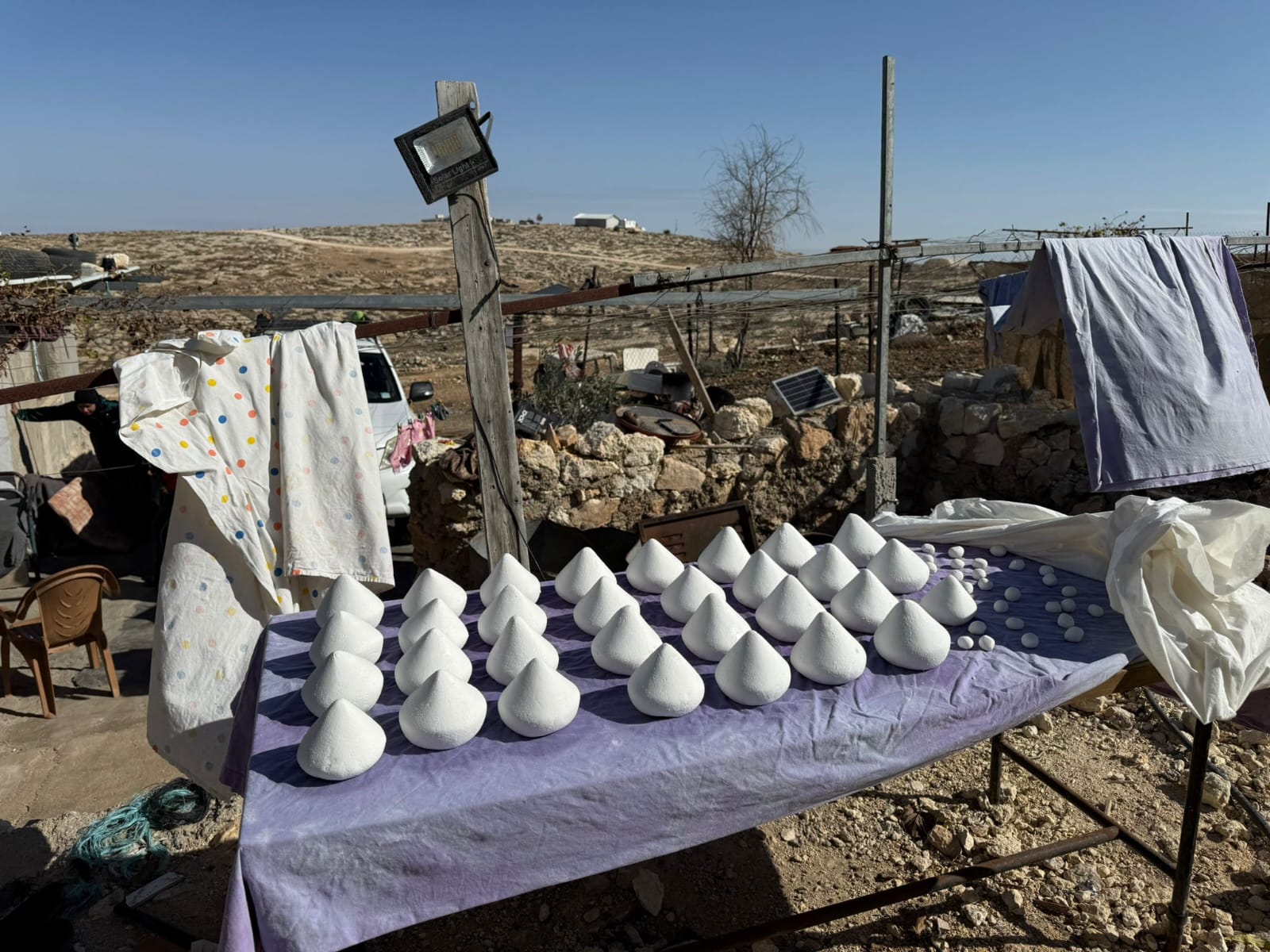
We arrived at the Jabarin family home. The son says that the relatively new settler who lives across the street from them on the hill, named Amichai Shilo, came to his father at night a few days ago, put a gun to his head and said: “I’ll kill you if you don’t get out of here.”
When we arrived, we said goodbye to Erela of the Villages Group who had been there before we arrived, and now there are journalists from Al-Jazeera. For the first time, we are told. Until now, they have not been allowed in. They interview the family at length. Later “the righteous of the generation” will probably complain to us about the articles that defames them.
After they leave, the family members tell us that Amichai Shilo and his boys arrived again in the morning with their flock and went onto the family land, where the flock eats every olive and every vine. By the time the police arrive. the settlers have left.
But in the meantime, the day before yesterday, Amichai came and plowed Jabarin’s land. On Saturday, he came twice with the flock that eats everything. Every day he comes, sometimes in the morning and in the afternoon. It has happened that they have come five times a day and he called the police all 5 times. According to him, it has happened that Amichai Shilo showed the police fake paperwork indicating his ownership. Even though it has already been proven and written that these are private lands and not state lands.
That’s how they live.
Location Description
Sha'ab al-Butum
See all reports for this place-
This is one of the small Palestinian communities in Masafer Yatta in the southern Hebron Hills, near the settlement of Mitzpe Avigail.
Since the outbreak of the October 7, 2023 war, settler violence against residents has escalated greatly, as in the entire Palestinian community. This violent conduct receives full backing from the state and full cooperation from the IDF. The goal is to make the lives of the Palestinian residents miserable and make them abandon and leave.
The population consists of mostly shepherds who peacefully seek to cultivate the land and graze their sheep, whom the settlers treat as a dangerous enemy. They prohibit them from any movement related to herding sheep and cultivating the land and harm everything: trampling crops, breaking olive trees, smuggling herds, scaring shepherds, conducting wild searches of houses, shouting, cursing and threatening - at all hours of the day. "We are Besieged, but will not move from our land," says Lila G. New settlements are springing up around them. At first it's a bus or a truck that turns into residential buildings, on top of which every week more residential buildings and animal sheds are added. With the open encouragement of the current government, Jewish terrorism is raising its head, with authority and permission. The settlers have received army uniforms and weapons, and no one is stopping them. The police, who are supposed to protect the Palestinians from the settlers' riots, sometimes respond to calls for help, but in practice they don't do much more than provide them with a report, and they are required to go and file a complaint in Kiryat Arba Settlemnt police station . Though the settlers' identities are known, they are !never arrested.
-
South Hebron Hills
See all reports for this place-
South Hebron Hills
South Hebron Hills is a large area in the West Bank's southern part.
Yatta is a major city in this area: right in the border zone between the fertile region of Hebron and its surroundings and the desert of the Hebron Hills. Yatta has about 64,000 inhabitants.
The surrounding villages are called Masafer Yatta (Yatta's daughter villages). Their inhabitants subsist on livestock and agriculture. Agriculture is possible only in small plots, especially near streams. Most of the area consists of rocky terraces.Since the beginning of the 1980s, many settlements have been established on the agricultural land cultivated by the Palestinians in the South Hebron Hills region: Carmel, Maon, Susia, Masadot Yehuda, Othniel, and more. Since the settlements were established and Palestinians cultivation areas have been reduced; the residents of the South Hebron Hills have been suffering from harassment by the settlers. Attempts to evict and demolish houses have continued, along with withholding water and electricity. The military and police usually refrain from intervening in violent incidents between settlers and Palestinians do not enforce the law when it comes to the investigation of extensive violent Jewish settlers. The harassment in the South Hebron Hills includes attacking and attempting to burn residential tents, harassing dogs, harming herds, and preventing access to pastures.
There are several checkpoints in the South Hebron Hills, on Routes 317 and 60. In most of them, no military presence is apparent, but rather an array of pillboxes monitor the villages. Roadblocks are frequently set up according to the settlers and the army's needs. These are located at the Zif Junction, the Dura-al Fawwar crossing, and the Sheep Junction at the southern entrance to Hebron.
Updated April 2022
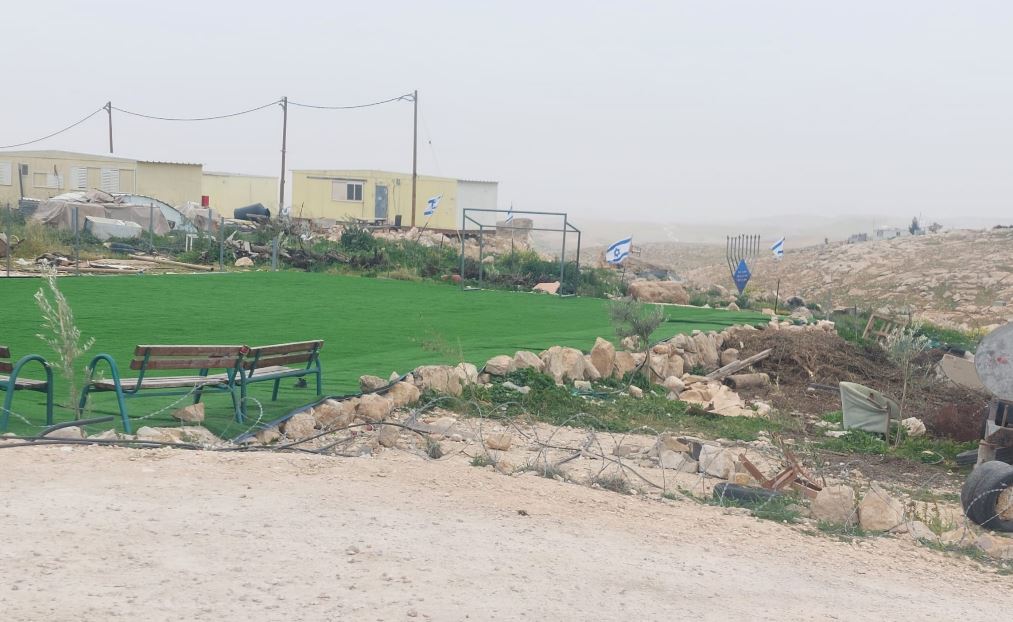 Michal TsadikFeb-17-2026Umm al-Khair: The soccer field for Palestinian children is surrounded by new trailers and lots of Israeli flags
-