
Jordan Valley, Ein El Hilweh: Settlers attacked a shepherd in the field and stole sheep from her
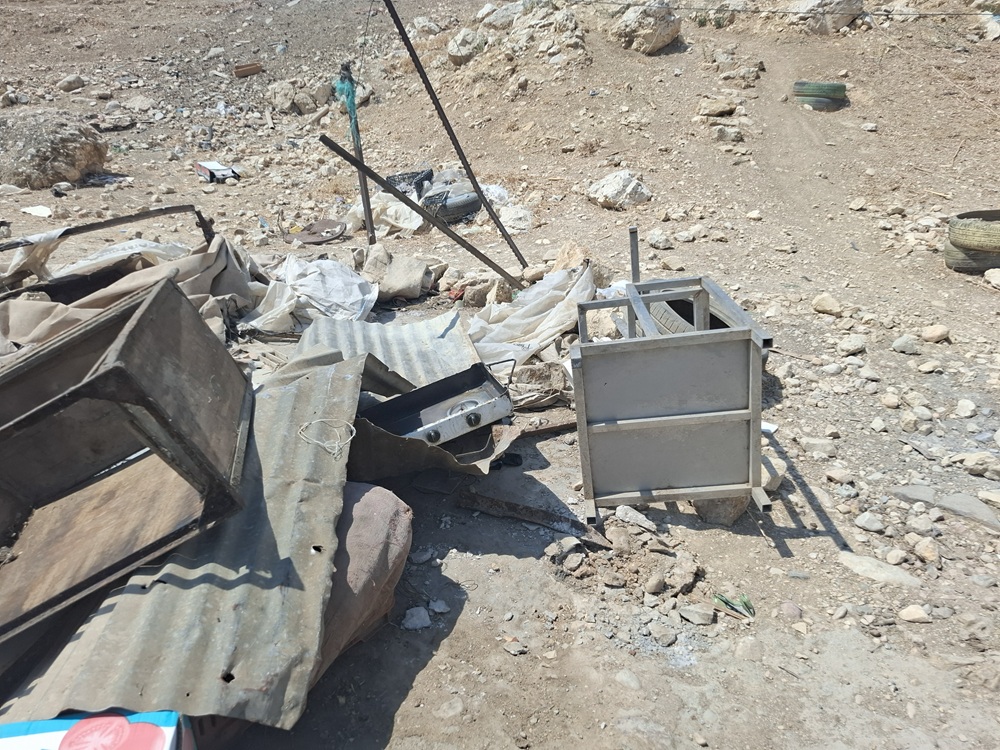
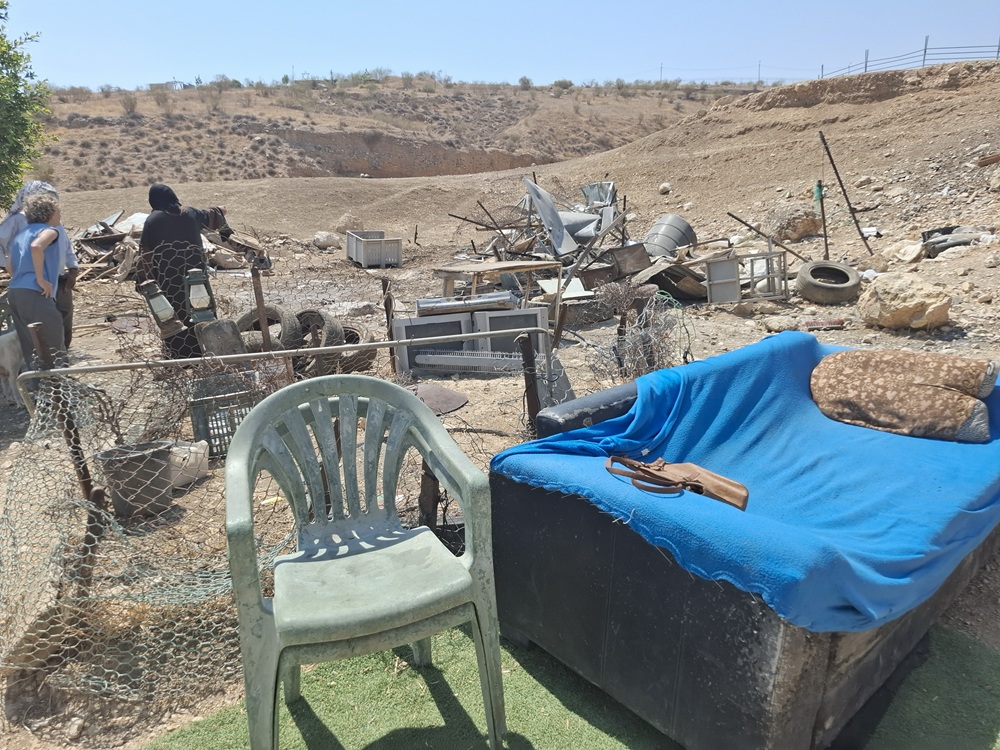
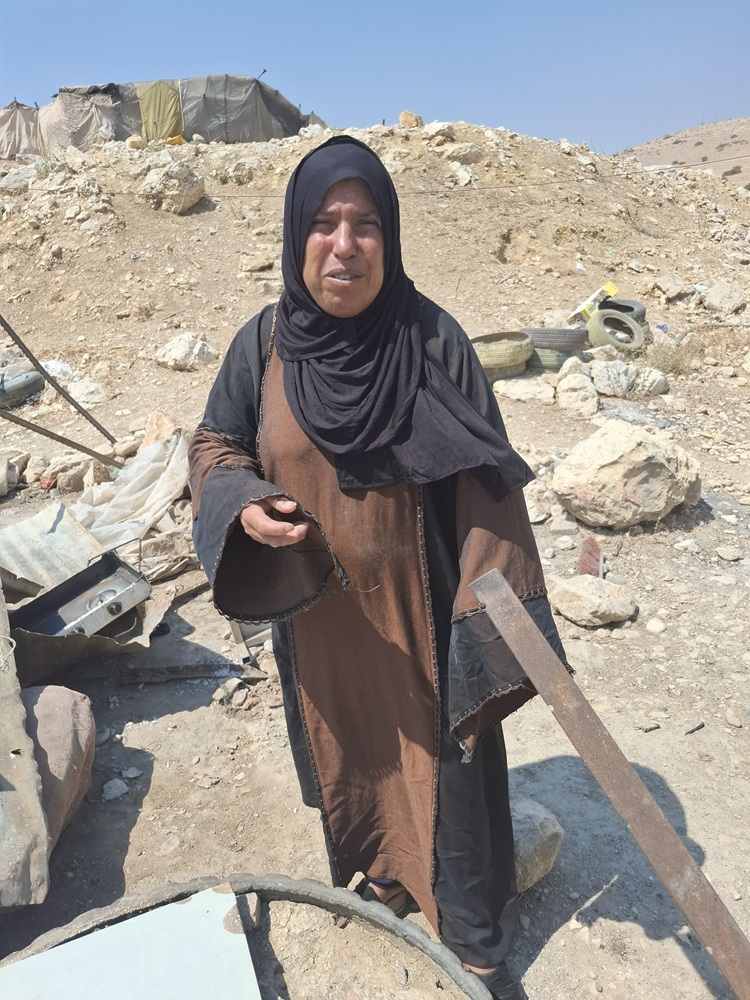

Distributing food at Humra and the demolished home at Ein al-Hilweh
Since the settlers have already expelled most of the herding communities in Area C (under Israeli control) and/or are preventing them from taking their herds out to graze in the fields, they have now turned their attention to harassing communities in Area B (joint Israeli and Palestinian Authority control). We are unable to accompany the herdsmen there because to get there you have to pass through Beqa’ot checkpoint and the army doesn’t usually let us across. Through one of the activists, we got a permit to cross over to the area of Beit Hassan (Humra).
We took 29 parcels of dried food, including flour, sugar, rice, oil, pasta, etc., and climbed along a rough track (we went wrong a few times) to distribute them to families living west of Beqa’ot checkpoint. These communities are suffering terribly from violent attacks, arson, and sheep rustling, all orchestrated by the saintly Moshe Sharvit and another settler known as Coco. On our way back, there was a backlog of 62 vehicles waiting to cross from west to east, among them a truck with an advert for Ariel laundry powder, and I marked it as the back of the line.
Instead of waiting in the line, we drove off to distribute crates of food to more communities north of the checkpoint. We were there for about two hours and when we got back, the line/jam was still just as long and the Ariel truck had hardly moved. We jumped the line and when we got to the front, we understood why the Palestinians had been stuck for so many hours – the soldiers weren’t there and the gate was blocked! Tamar went up to the army post above the checkpoint and asked the soldiers to come down and check, and they replied that they were on a break – quite a long break if the vehicles that had been there two hours earlier were still waiting. At first, they refused to go down, but at the end of the argument, when Tamar refused to move, they came down to the checkpoint. The female soldiers asked us for documents and gave us a lecture about how they were there to protect us while we didn’t appreciate them, and asked for some respect.
Afterwards, they began to inspect the Palestinians and let them through. The Palestinians say – and we’ve seen this on other occasions – that the inspection lasts about half an hour and then the soldiers rest for an hour or two, depending how they feel. It’s true, it’s hot – very – and it’s not easy for the soldiers at the checkpoint. But for the Palestinians who wait in the sun for hours, and not all of them have air conditioning, it’s very much harder.
We drove to Ein al Hilweh. One of the sisters who lives there has burns all over her face and body. Not an easy sight. She lives alone with a small flock. At first the settlers stole sheep from her. They ambushed her when she went out alone to the pasture and attacked her time and again. And then, because it was hard to make a living, she sold the goats she still owned. And then the army came and destroyed her guest tent and kitchen. The whole area is full of broken dishes, a smashed stove, a torn sofa, and poor Fatma stands in the middle, wringing her hands, petrified. Where will she go now? What will she do?
We checked and saw that Tayasir checkpoint was completely closed.
Location Description
'Ein al-Hilwe
See all reports for this place-
Ein al-Hilwe is a natural spring and a Palestinian grazing area in the Jordan Valley that was used by the Palestinian shepherd communities for watering their flocks and for daily use. As of 2021, settlers from the Maskyot settlement took control of the spring: they fenced it off, built a wading pool and a mikveh, and installed flags and recreational facilities.
Palestinians are effectively denied access to the spring, and are forced to make do with running water in a remote wadi or, when the road is blocked, buy water from vendors at high prices.
The spring is located in the heart of an area where illegal outposts are being established, as part of a broader trend of pushing Palestinian communities away by denying them access to essential resources. Neighboring communities such as Umm Jamal and Khirbet Samra have already left due to the pressure.
Over the years, MachsomWatch members have reported arrests on false claims by settlers, harassment and violence, including damage to herds, intrusion into homes, and the intimidation of children. MachsomWatch volunteers participate in a protective presence in areas around the spring to prevent harassment of shepherds due to the presence of settlers.
-