
"I remember blood" Sawer answers Galia Oz's question: "What do you remember from the night that your neighbours, Khader and Fatma, were attacked?"
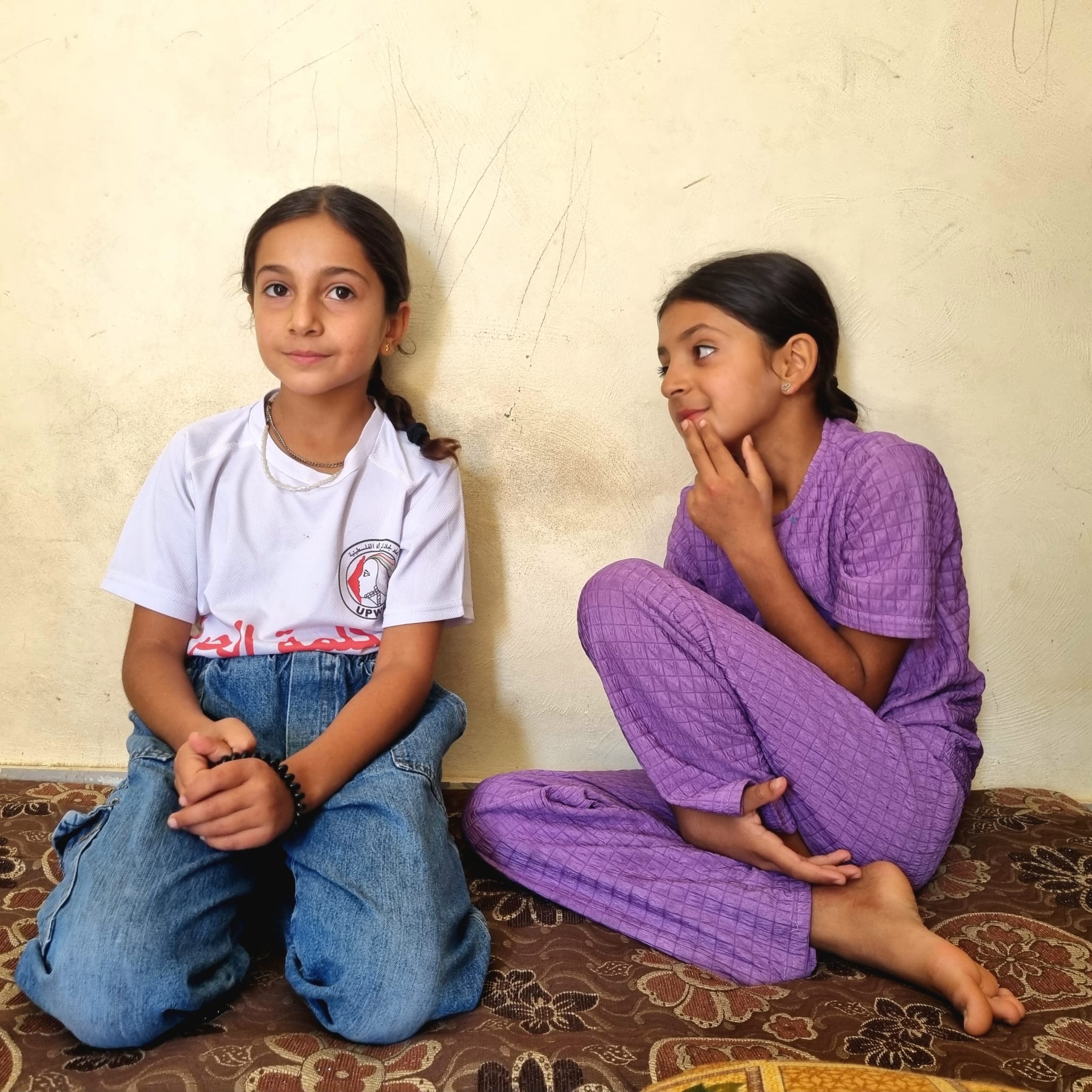
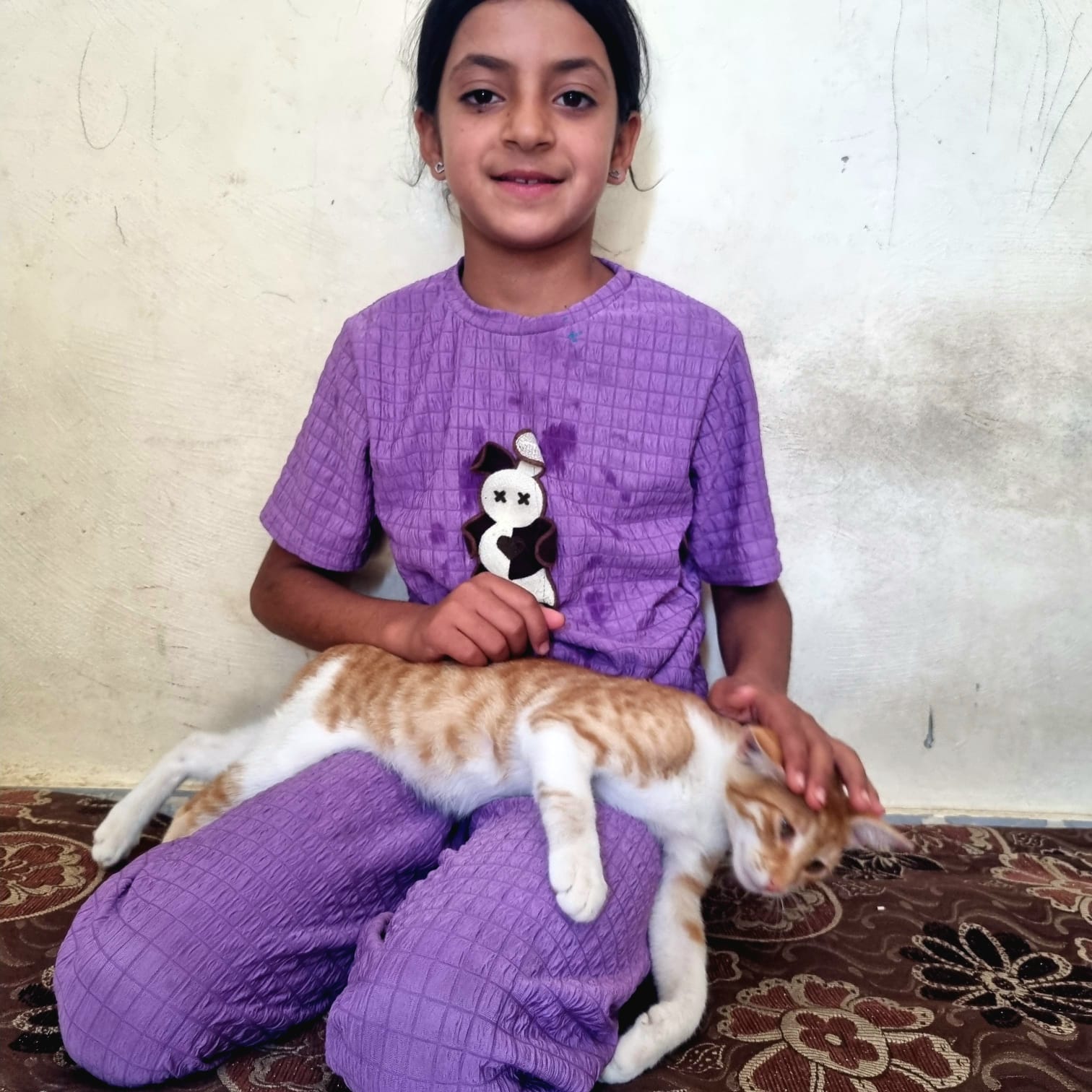

“I Remember blood,” replies 11-year-old Sawer to Galia Oz’s question: “What do you remember from the night they attacked Khader and Fatma, your neighbours?”
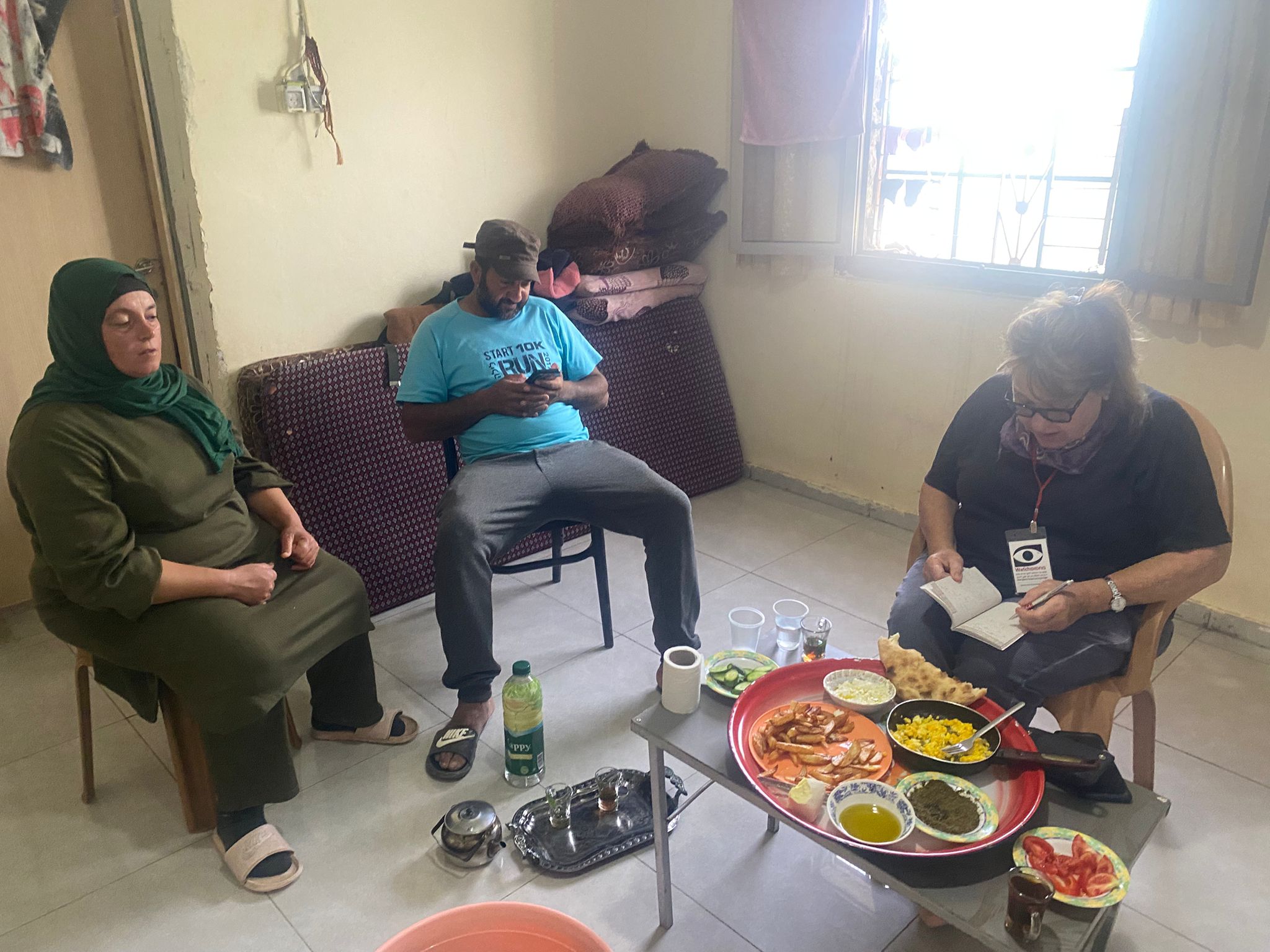
Yesterday’s shift was dedicated to Galia Oz’s meeting and conversation with Sara and Sawer, ages 10 and 11.
Halima and Ahmad Nawajah’s daughters live in Susiya and regularly suffer harassment from settlers, especially those from the new settlements that crown them on the hills between the Susiya settlement and the tourist site, ancient Susiya. Gadi and Shem Tov Luski, his son, live in the new settlement right next to ancient Susiya.
We’ve written about them more than once when the settlers come up with their cows and sheep on to Palestinian land and they eat their vines and olives and don’t allow Ahmad’s flock to graze. Pavel and Malka have been living on another hill since October 7, further along Amishav Peled’s shepherd’s farm near Old Susiya.
They can be seen mostly from Azzam and Wada’s house. But they attack those who are more scattered in the area where the Nawaja’ah family lives. Last night, they say, “they just” walked around them at night. They disturbed their peace and frightened them. “But,” says Halima. “We are constantly afraid and cannot sleep.” Ahmad sleeps outside on the cart I already reported on, now only he sleeps in it to protect his family.
Galia talks to the girls and asks what they remember from the night of August 15, when settlers attacked the Khader and Fatma Nawaja’ah family. They live in the house next door.
“I remember blood,” replies Sawer. “We heard screams, we were afraid, we are afraid all the time.” “10 settlers” arrived, says Ahmad, entering their home while they were sleeping, a couple in their late 50s. He is a teacher at the school. “I ran outside with a flashlight and called out to all the neighbours. We saw masked men with sticks beating them both brutally until they bled. They broke their hands and noses, they wanted to hit them in the head on purpose,” says Ahmad. When the police arrived, they fled. The police can tell exactly who the attackers were, but no one was arrested. We called an ambulance from Yatta, which evacuated them. They are still in hospital needing medical attention after undergoing surgery.
Halima and the girls waited for morning, but then they ran barefoot to Yatta. The girls, who stayed with their grandparents, were afraid to return. They only returned for the start of the school year. (It hadn’t started yet. The PA doesn’t have the money to pay the teachers’ salaries).
Halima says: They used to harass from afar. This year they are not afraid of anything. They enter the house, beat women, children and the elderly indiscriminately, brutally. The police arrive after they flee. The army aims to protect only the settlers, as you remember. Attached are videos of the meeting and videos of the shocking injury of Khader and Fatma.
The girls are intelligent and eloquent and say that they cannot ride the bicycles they received from us because the settlers come to the path and scare them.
There are volunteers who sleep with them at night, which alleviates the feeling of fear a little.
Halima prepared a festive and delicious meal. Galia says: “This is the most delicious rice and salad I have ever eaten.” They asked us to come and visit and promised to come and visit all the time.

On the way back, all the way from Susiya and the outpost Mitzpe Asael to the turnoff to Route 60, in addition to the state flags, there are flags with the symbol of the Temple and the inscription: “And they will make a temple for me.” Part of the verse “And they made me a temple and I dwelt among them.” A topic that deserves attention because these flags are increasing in the southern Hebron Mountains.
An awful routine.
Location Description
'Atara
See all reports for this place-
'Atara Checkpoint
Situated at the northern entrance to Ramallah from Route 465, called also Bir Zeit Checkpoint. Nowadays only remains of what used to be a busy checkpoint remain, a pillbox and concrete blocks.
-
South Hebron Hills
See all reports for this place-
South Hebron Hills
South Hebron Hills is a large area in the West Bank's southern part.
Yatta is a major city in this area: right in the border zone between the fertile region of Hebron and its surroundings and the desert of the Hebron Hills. Yatta has about 64,000 inhabitants.
The surrounding villages are called Masafer Yatta (Yatta's daughter villages). Their inhabitants subsist on livestock and agriculture. Agriculture is possible only in small plots, especially near streams. Most of the area consists of rocky terraces.Since the beginning of the 1980s, many settlements have been established on the agricultural land cultivated by the Palestinians in the South Hebron Hills region: Carmel, Maon, Susia, Masadot Yehuda, Othniel, and more. Since the settlements were established and Palestinians cultivation areas have been reduced; the residents of the South Hebron Hills have been suffering from harassment by the settlers. Attempts to evict and demolish houses have continued, along with withholding water and electricity. The military and police usually refrain from intervening in violent incidents between settlers and Palestinians do not enforce the law when it comes to the investigation of extensive violent Jewish settlers. The harassment in the South Hebron Hills includes attacking and attempting to burn residential tents, harassing dogs, harming herds, and preventing access to pastures.
There are several checkpoints in the South Hebron Hills, on Routes 317 and 60. In most of them, no military presence is apparent, but rather an array of pillboxes monitor the villages. Roadblocks are frequently set up according to the settlers and the army's needs. These are located at the Zif Junction, the Dura-al Fawwar crossing, and the Sheep Junction at the southern entrance to Hebron.
Updated April 2022
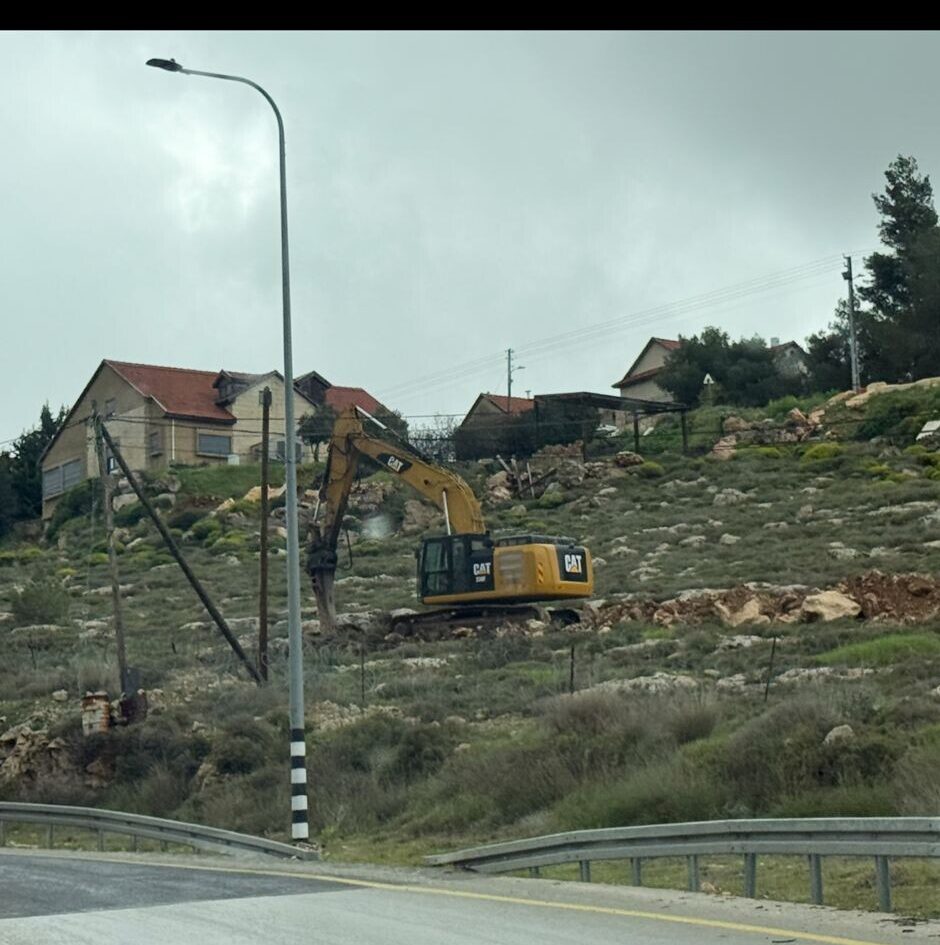 MuhammadFeb-24-2026South Hebron Hill, Beit Hagai: Paving an internal security road
-
Susiya
See all reports for this place-
Susiya The Palestinian area lies between the settlement of Susya and a military base. The residents began to settle in areas outside the villages in the 1830s and lived in caves, tents and sukkot. To this day they maintain a traditional lifestyle and their livelihood is based on agriculture and herding. Until the 1948 war, the farmers cultivated areas that extended to the Arad area. As a result of the war, a significant portion of their land left on the Israeli side was lost. After the 1967 war and the Israeli occupation, military camps were established in the area, fire zones and nature reserves were declared, and the land area was further reduced. The Jewish settlement in Susya began in 1979. Since then, there has been a stubborn struggle to remove the remains of Palestinian residents who refuse to leave their place of birth and move to nearby town Yatta. With the development of a tourist site in Khirbet Susya in the late 1980s (an ancient synagogue), dozens of families living in caves in its vicinity were deported. In the second half of the 1990s, a new form of settlement developed in the area - shepherds' farms of individual settlers. This phenomenon increased the tension between the settlers and the original, Palestinian residents, and led to repeated harassment of the residents of the farms towards the Palestinians. At the same time, demolition of buildings and crop destruction by security forces continued, as well as water and electricity prevention. In the Palestinian Susya, as in a large part of the villages of the southern Hebron Mountains, there is no running water, but the water pipe that supplies water to the Susya Jewish settlement passes through it. Palestinians have to buy expensive water that comes in tankers. Solar electricity is provided by a collector system, installed with donation funds. But the frequent demolitions in the villages do not spare water cisterns or the solar panels and power poles designed to transfer solar electricity between the villages. Updated April 2021, Anat T.
-