
"It's true, there are no cameras here and you can curse and hit us, but God sees everything."
“It’s true, there are no cameras here and you can curse and hit us, but God sees everything.”
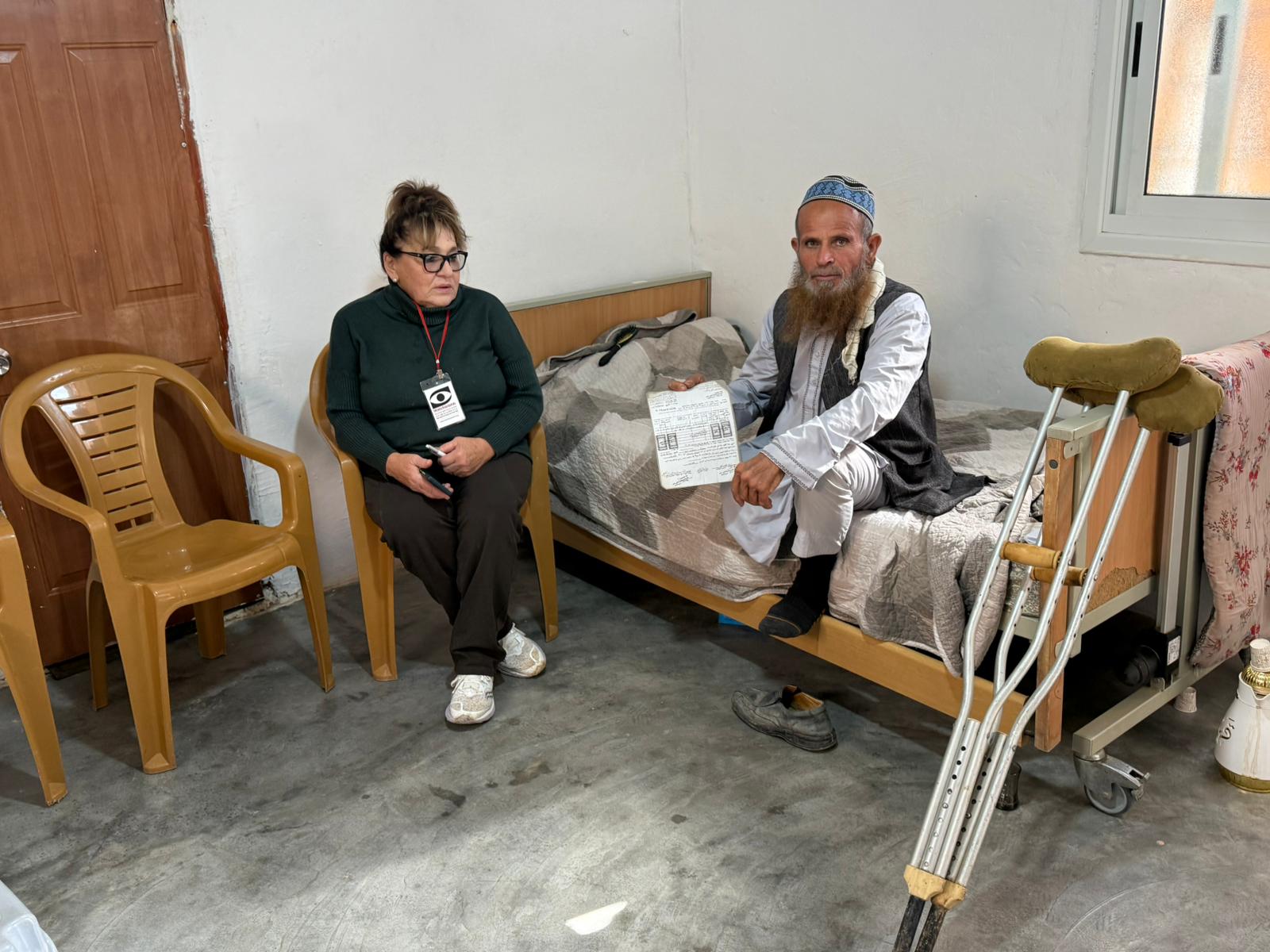
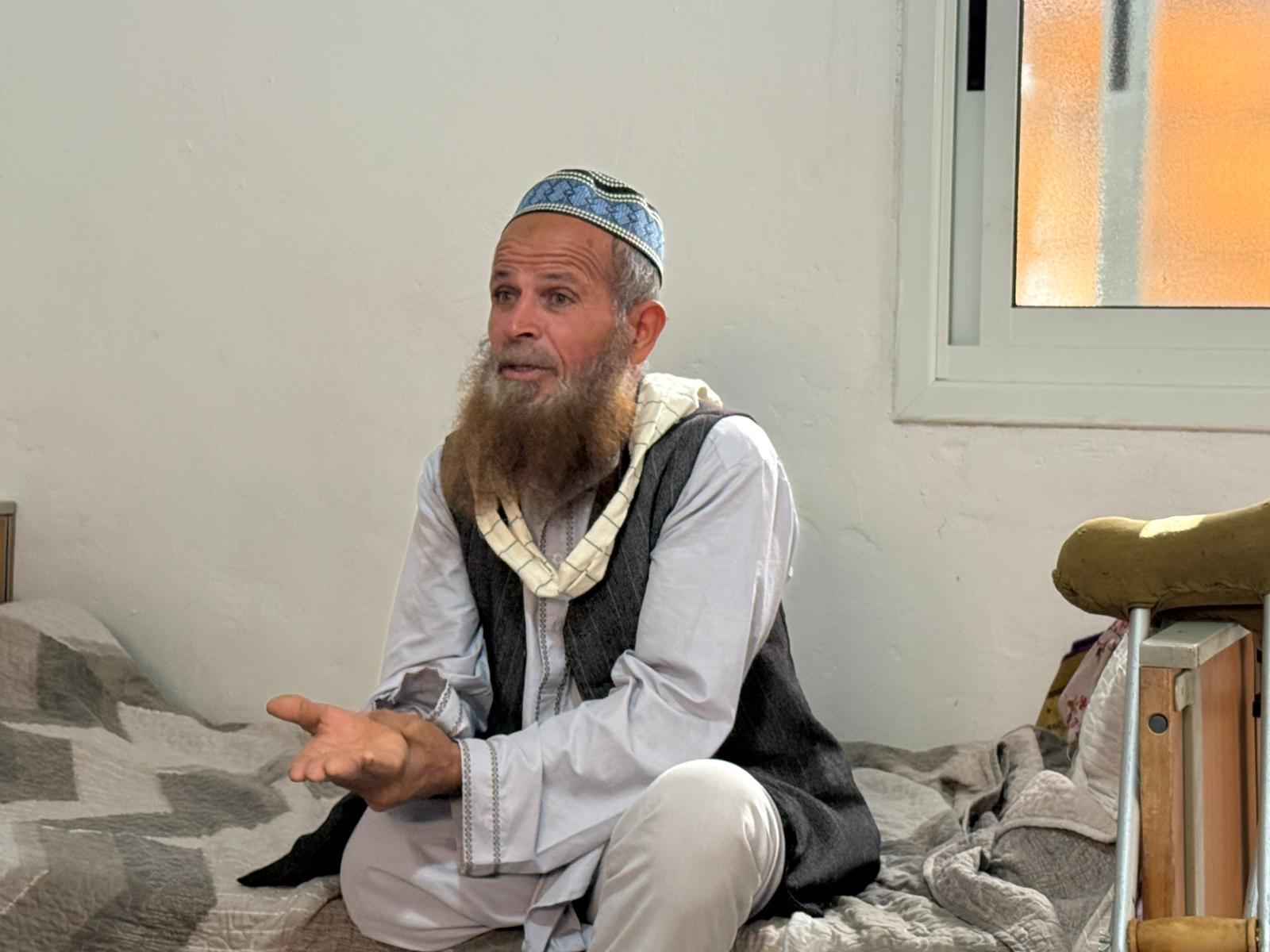
We arrived at the tiny cave village near A-Tuwani, A-Rakiz. We had been there many times before. This time we went to visit Sheikh Said, the amputee, again, to ask about his well-being because the day before he had been beaten and arrested by the IDF, despite his disability. Sheikh Said, despite everything, radiates a bright eye and a lot of strength and faith.
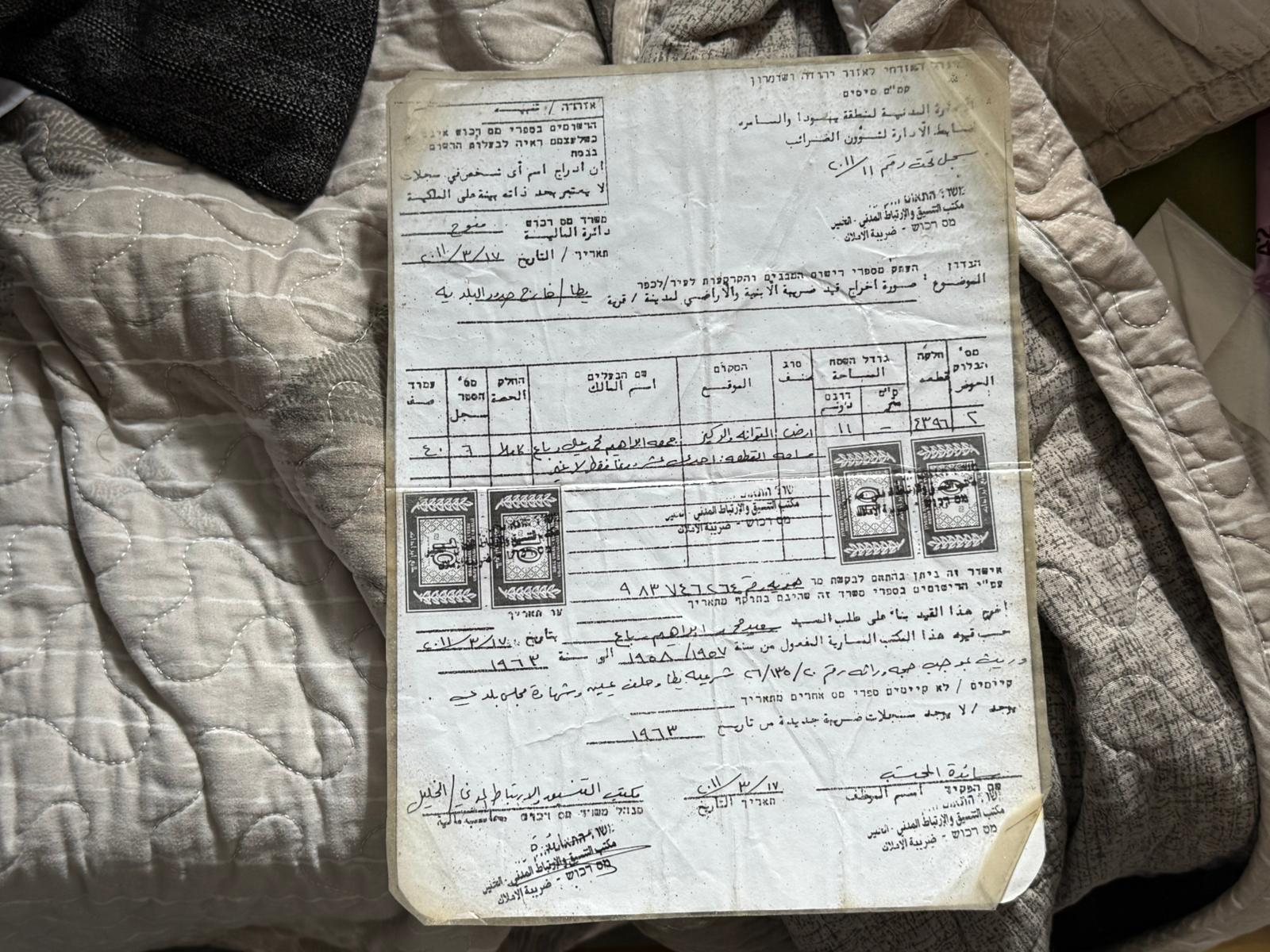
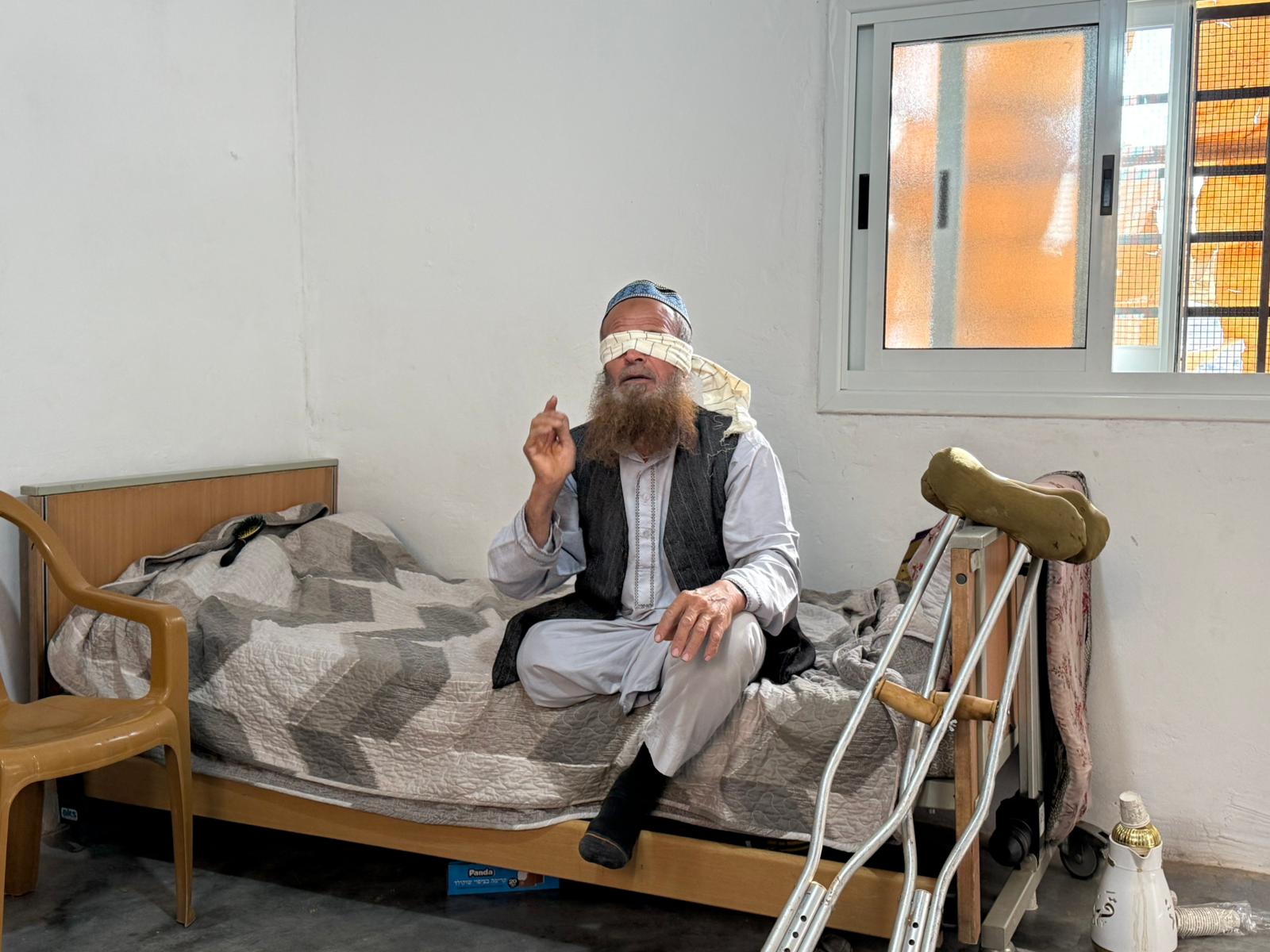
He says that he saw soldiers arrive at his plot in the morning and begin to cut the fence. He rushed there to prevent them from doing so. He brought with him the document proving his ownership and showed it to the soldiers. They paid no attention and continued to cut and load it into their vehicle. He asked them to wait for the police, but they ignored him and continued. Then Amichai Shilo, the settler, arrived with his tractor and began to make raids around the plot. “He is the one who activates the army,” says Sheikh Said. By chance, Erelah Dunayevsky from the Villages Group was there and she called the police 5 times and also tried to talk the soldiers into seeing this elderly man who was crippled and needed medical treatment and not arrest. She also told them: “If you are taking him from the house, return him to his house.” They told her that they would do so. But they ignored him, dragged him to the car and beat him. Inside the car they continued to beat him, tied his eyes and hands and beat him mercilessly in the face.
They took him to the base in Susiya and kept shouting: “This is Jewish land, not yours.” In Susiya, he was held at the base from 9 am to 4:30 pm, beaten and shouted at “You are Hamas!” while he was handcuffed and blindfolded. Then he heard them talking among themselves: “We will take him 400 meters from here and throw him in a field.” And so they did.
One of the soldiers told him: “There are no cameras here. We can do anything to you.” Sheikh Said answered him: “There are no cameras, but God sees everything.” The force was silent. And yet they dropped him off in the middle of the road, in a field, and drove away. Luckily for him, someone arrived after five minutes. It turns out that he was watching because he had a similar experience a few months ago.
He took him to his home and called an ambulance that came and took him to the Yatta hospital. There they examined him, took X-rays of his legs and arms, and when they saw that they were just blows without any damage, they waited for his son to take him home. Now he shows me his land ownership document from 1957.
He says that two months ago, soldiers came to his field with this settler, but then when he showed them the paper, they respected him, took the settler out of there and left.
“These were human beings,” he says. “Now they were not.” He sits upright on his bed and radiates strength and confidence.
During the conversation, Fadel from neighboring Mufaqara calls and says that the army has just arrived, turned the house upside down. They told him: “Don’t make trouble,” and they left.
Sheikh Said continues: “The settlers say, we are a people without land and you have land and you are not a people, so we deserve this land.”
“This is our land. “We will not leave here,” says Sheikh Said.
Meanwhile, daily violent harassment is the order of the day there in Masafer Yatta.
Location Description
Mesafer Yatta
See all reports for this place-
This is happening in Fire Area 918 in the South Hebron Hills
On the eve of Remembrance Day (the day before Israel Independence Day), 4th May, 2022, the Israeli High Court decided on the transfer and expulsion of residents from 8 Palestinian communities in the area of Masafar Yata in the South Hebron Hills. Residents of the villages have been living under the threat of demolition, evacuation and expropriation since the IDF issued evacuation orders in 1999 based on the 1980s proclamation of their area of residence as a firing zone for IDF drills. None of the nearby settlements were included in this zone. The Masafer Yata Palestinian villages retain a special lifestyle and ancient agricultural culture. They also posess a clear historical documentation that testifies to a Palestinian settlement in this area, generations before the establishment of Israel, long ago in the caves and at later times outside them.
Evacuating residents from the area means destroying these historic villages and leaving entire families (about 2,000 people, children, adults, and the elderly) homeless. This is contrary to international law.
In June 2022, a firing drill started, and life became harder.
-
South Hebron Hills
See all reports for this place-
South Hebron Hills
South Hebron Hills is a large area in the West Bank's southern part.
Yatta is a major city in this area: right in the border zone between the fertile region of Hebron and its surroundings and the desert of the Hebron Hills. Yatta has about 64,000 inhabitants.
The surrounding villages are called Masafer Yatta (Yatta's daughter villages). Their inhabitants subsist on livestock and agriculture. Agriculture is possible only in small plots, especially near streams. Most of the area consists of rocky terraces.Since the beginning of the 1980s, many settlements have been established on the agricultural land cultivated by the Palestinians in the South Hebron Hills region: Carmel, Maon, Susia, Masadot Yehuda, Othniel, and more. Since the settlements were established and Palestinians cultivation areas have been reduced; the residents of the South Hebron Hills have been suffering from harassment by the settlers. Attempts to evict and demolish houses have continued, along with withholding water and electricity. The military and police usually refrain from intervening in violent incidents between settlers and Palestinians do not enforce the law when it comes to the investigation of extensive violent Jewish settlers. The harassment in the South Hebron Hills includes attacking and attempting to burn residential tents, harassing dogs, harming herds, and preventing access to pastures.
There are several checkpoints in the South Hebron Hills, on Routes 317 and 60. In most of them, no military presence is apparent, but rather an array of pillboxes monitor the villages. Roadblocks are frequently set up according to the settlers and the army's needs. These are located at the Zif Junction, the Dura-al Fawwar crossing, and the Sheep Junction at the southern entrance to Hebron.
Updated April 2022
 Michal TsadikJan-29-2026Umm al-Khair - a security risk for Carmel settlers
-