
Susiya - Ongoing abuse of Palestinians: cutting down trees, dumping dead animals near homes, demolishing houses and their contents
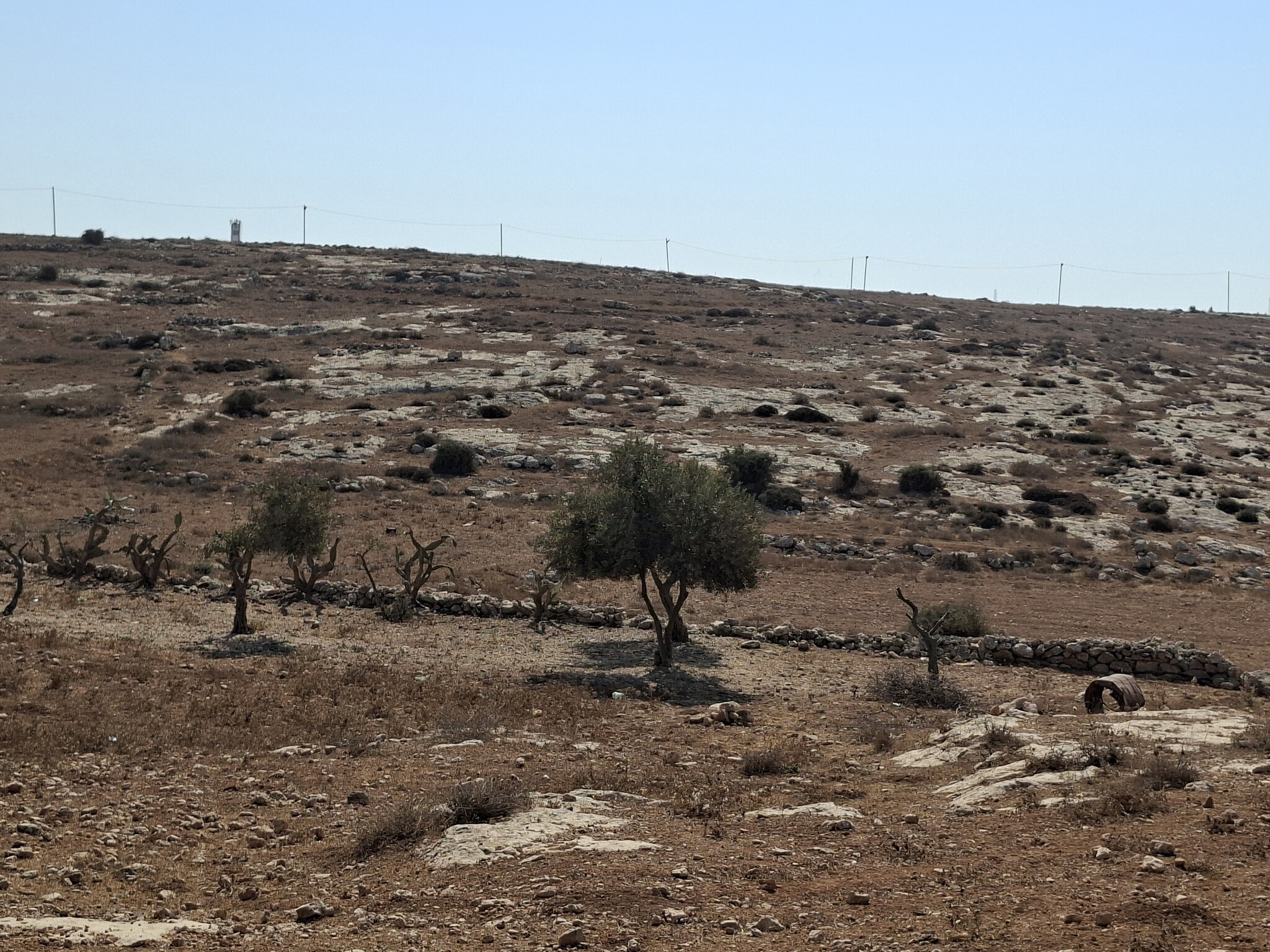
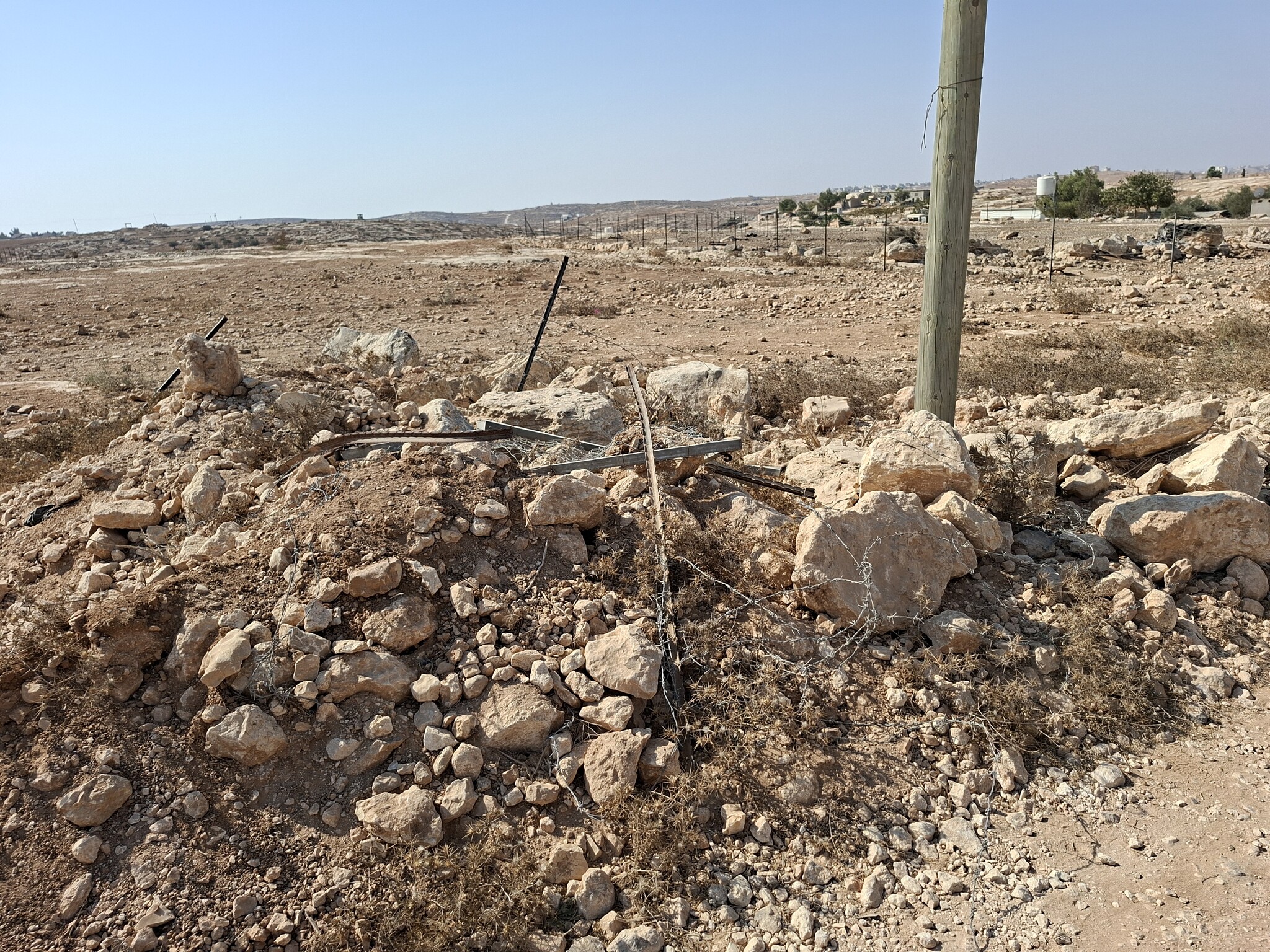
Mohammad reports that colonists cut down Palestinians’ olive trees. H. and N. of the eastern part of Susya lead me out to see the damage done. I took photos of the cut-down trees. Before the war Palestinians tended their fields including the wadi that separates the village and the colony. Today they are not allowed to get there. I also took photos of the bones of animals. H. explains that these were sheep devoured by the colony’s dogs. The Palestinians’ dogs are always tied up. We walked around the fence erected by the colonists two years ago around a tended Palestinian area, instead of the old fence.
H. shows me the gate that was destroyed by the colonists’ bulldozer – namely, they are also prevented from tending the fenced-in area. H. speaks Hebrew, used to work in Israel, and now he hardly makes a living transporting and plowing for Palestinians when the chance and money to pay him are available.
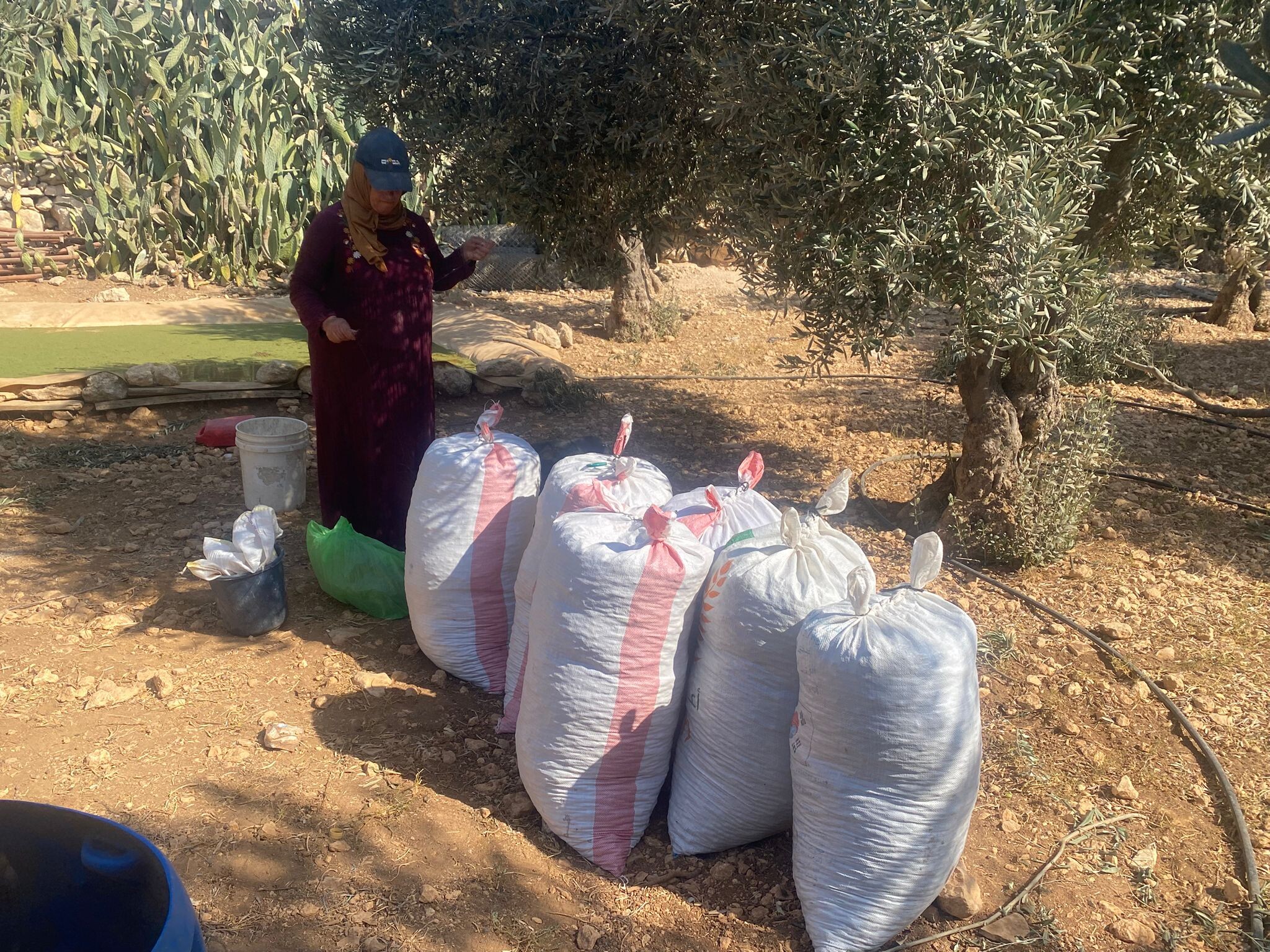
M. brings H. pots, for colonists who attacked her home destroyed her cooking pots as well. I also bought a bottle of last year’s olive oil from her. We see sacks of olives that were harvested quickly and will be immediately brought to the oil press at Yatta, before the colonists manage to steal them.
Now for a visit at W. and A. in the western part of the village. I bought a jerry-can of last year’s olive oil from them. Mohammad brings clothes and toys to families in this neighborhood.
A. reports: the colonists throw out dead calves and dogs as well as piles of garbage near their homes. On Friday night, colonists set afire a home, and the volunteers’ car. He wonders what the future holds for these young colonists. Will they become a criminal gang? Then he tells us about the policeman who turned off his body camera in order to tell him that in spite of top-down police instructions to act against this violence, they do nothing of the kind because of the colonists’ pressure, even if they disagree. Once, when colonists threatened A. with a knife, police were summoned and arrived and one of attackers escaped. The policeman caught the second one but only confiscated his knife and released him. He suggested that A. lodge a complaint, and even told him, “Don’t compare me to other policemen”. A. asked him, “If this were a Palestinian, would you be satisfied with only confiscating his knife?”
A. tells of the Israelis who come to him, one bringing the other, already numbering about 12, and call him Baba – daddy – which is a great honor. Now he rolls a cigarette from tobacco he grows and dries himself. He says that he was once stopped at Tarqumiah Checkpoint, held in a room. After they covered the cameras, they searched him and found the tobacco pack. They wouldn’t believe him that this is really tobacco until a Bedouin soldier arrived and affirmed this.
A UN vehicle as well as a Red Cross vehicle arrive – Physicians Without Borders – to visit N. They explain that this is UNOCHA, initials that stand for the UN Office for the Coordination of Humanitarian Affairs, with their head office in East Jerusalem. An American official is visiting Susya for the first time, as well as the woman who heads the office in Hebron, an East Jerusalem Palestinian. It is unclear whether they have any influence on what really goes on here.
Location Description
Susiya
See all reports for this place-
Susiya The Palestinian area lies between the settlement of Susya and a military base. The residents began to settle in areas outside the villages in the 1830s and lived in caves, tents and sukkot. To this day they maintain a traditional lifestyle and their livelihood is based on agriculture and herding. Until the 1948 war, the farmers cultivated areas that extended to the Arad area. As a result of the war, a significant portion of their land left on the Israeli side was lost. After the 1967 war and the Israeli occupation, military camps were established in the area, fire zones and nature reserves were declared, and the land area was further reduced. The Jewish settlement in Susya began in 1979. Since then, there has been a stubborn struggle to remove the remains of Palestinian residents who refuse to leave their place of birth and move to nearby town Yatta. With the development of a tourist site in Khirbet Susya in the late 1980s (an ancient synagogue), dozens of families living in caves in its vicinity were deported. In the second half of the 1990s, a new form of settlement developed in the area - shepherds' farms of individual settlers. This phenomenon increased the tension between the settlers and the original, Palestinian residents, and led to repeated harassment of the residents of the farms towards the Palestinians. At the same time, demolition of buildings and crop destruction by security forces continued, as well as water and electricity prevention. In the Palestinian Susya, as in a large part of the villages of the southern Hebron Mountains, there is no running water, but the water pipe that supplies water to the Susya Jewish settlement passes through it. Palestinians have to buy expensive water that comes in tankers. Solar electricity is provided by a collector system, installed with donation funds. But the frequent demolitions in the villages do not spare water cisterns or the solar panels and power poles designed to transfer solar electricity between the villages. Updated April 2021, Anat T.
-