
Susiya - A threatening harassment routine

We went to Khader and Fatma Nawaja’a who were seriously injured in a settler attack. They are still hospitalized in the Yatta hospital awaiting surgery.
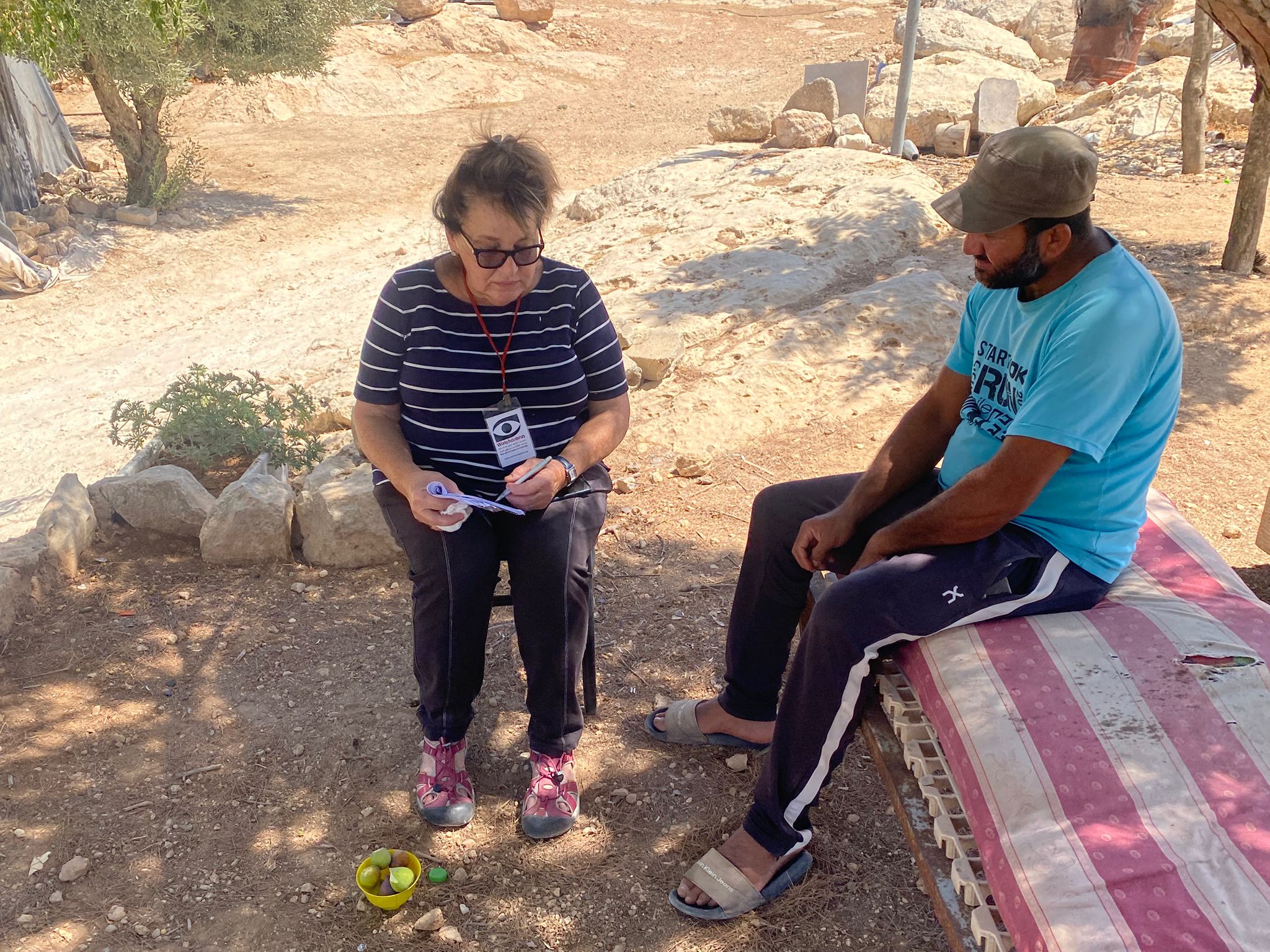
Then we went to their neighbours, Ahmad, Halima, Azzam, and Wadha. Azzam again mentions the names of the settlers Amishav Peleg, Gadi, and Shem Tov Luski. They continue their threatening harassment.
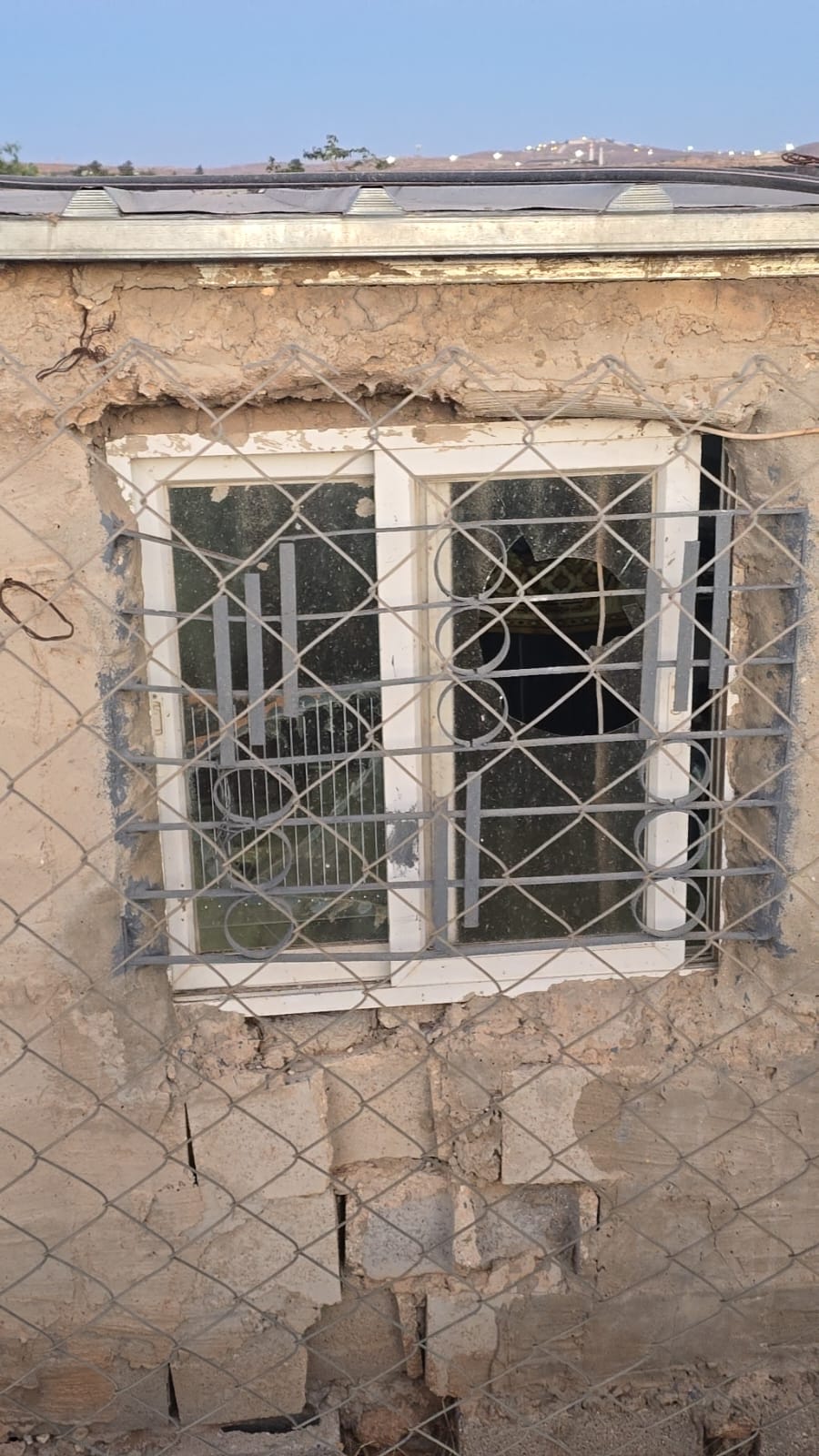
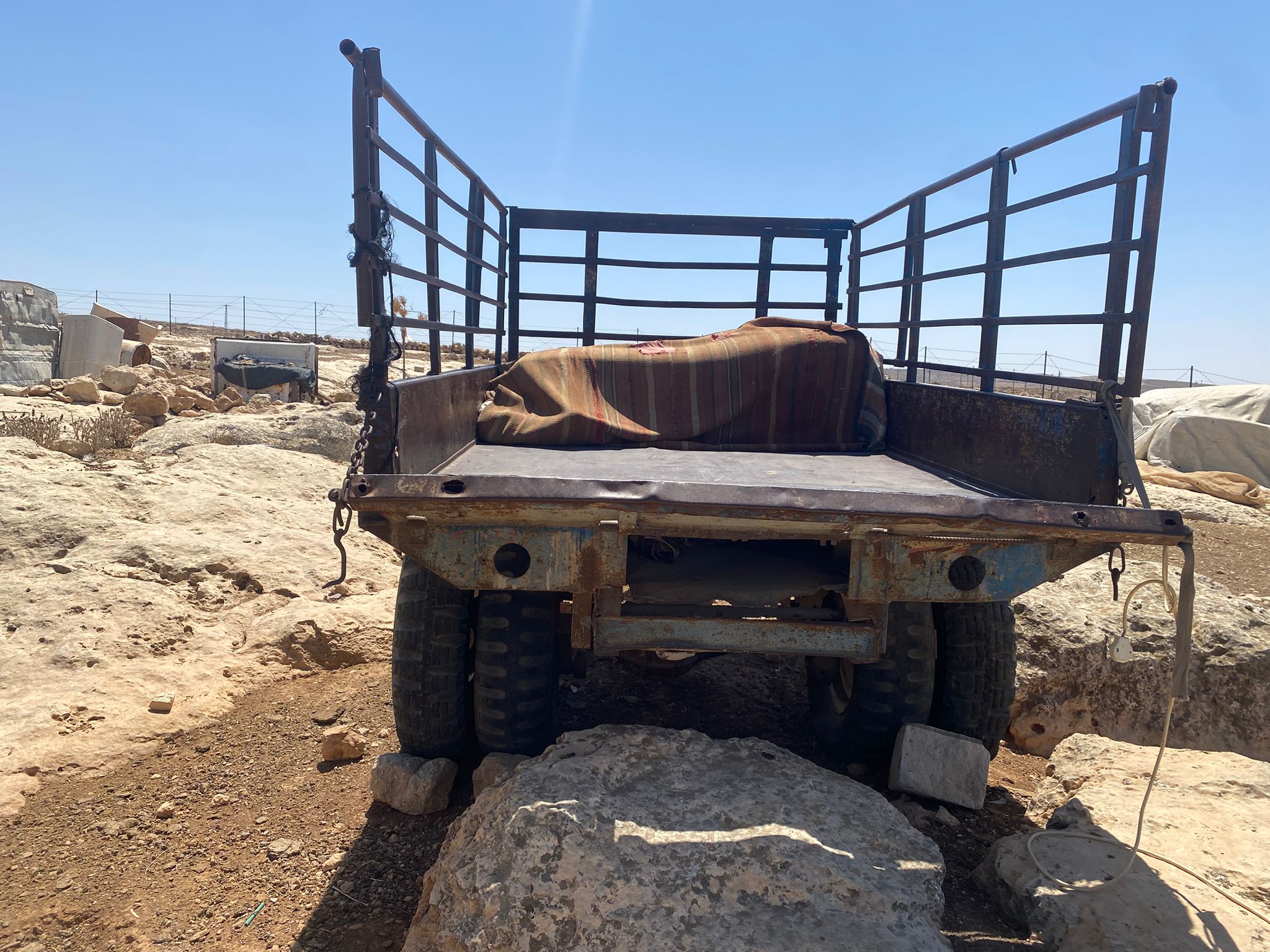
Yesterday, around 7-8 pm, the shepherds of these two (helpers from the Hilltop Youth) arrived, went to the areas of Nasser Shartah and Abu Saddam, with their sheep and cows. Then another shepherd of Shem Tov Luski arrived. They started throwing stones at Nasser Shartah’s house and car, breaking the windows of the house and the car. They also continued throwing stones at the neighbours who came to help. A 15-year-old boy was hit in the head by a stone.
Five more settlers from Tov Luski arrived in cars that were identified as theirs. The people called the police and the army, and when they arrived, the settlers, who were not arrested of course, fled. This morning, the same shepherds arrived with their sheep and cattle on the land of Ahmad Khalil Hurrayni.
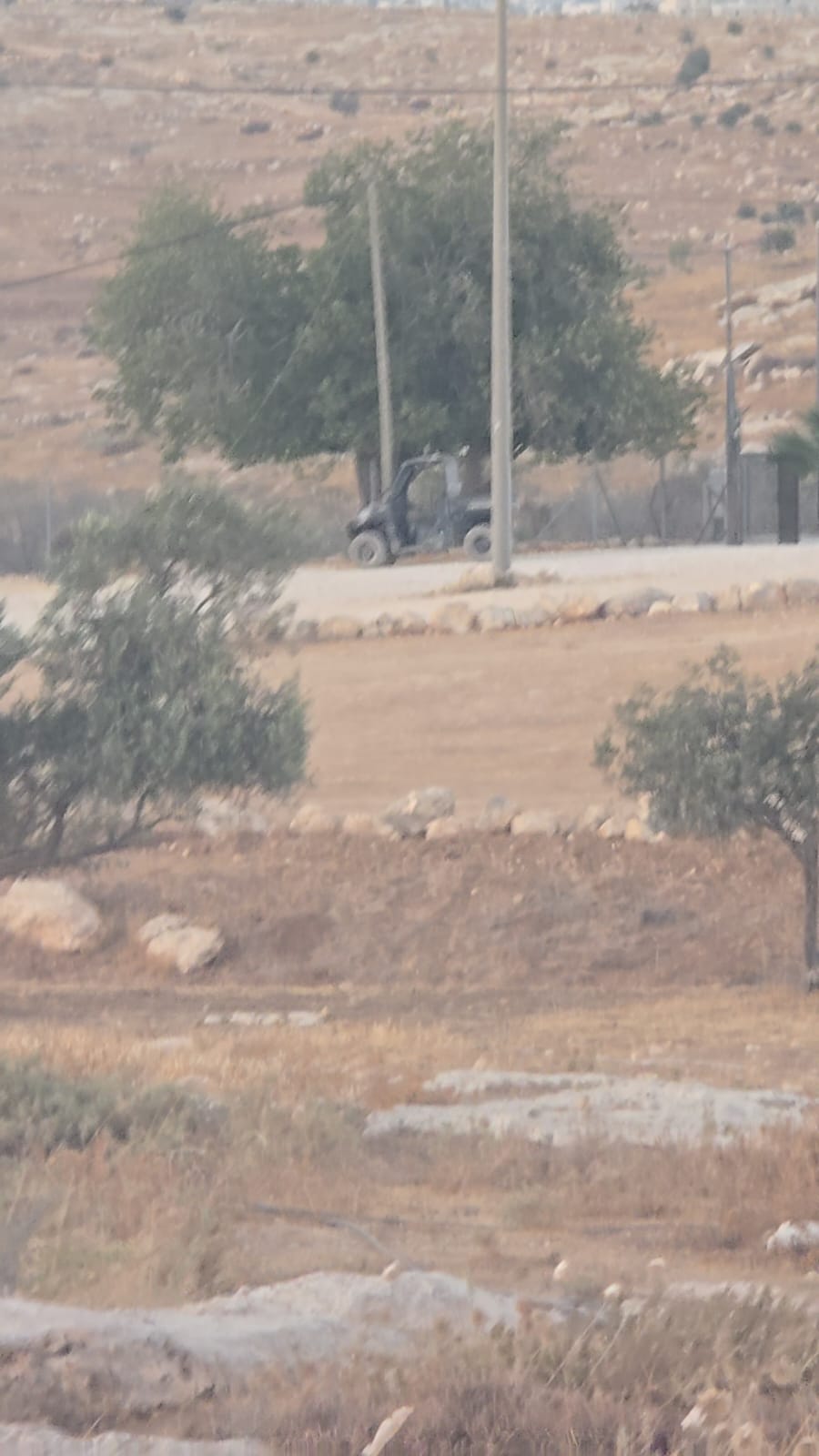
A military vehicle arrived. Two female soldiers got out of it and walked around doing nothing but taking pictures of themselves in impressive poses so they would have something to show at home and be proud of their significant service. The settlers left anyway.
Harassment and threatening are a daily occurrence.
Azzam says that if they really want to help us, the general should lift his ban on volunteers from Israel and abroad whose presence is helpful and necessary. “We don’t sleep well,” he says. “At all hours of the night, I receive distress calls from my terrified neighbours as the settlers arrive at all hours and threaten and scare us. For example, last night Ahmad Nawaja’a called in a panic (Azzam plays his call for me). “Three cars with settlers arrived and road back and forth on the road to the old Susiya, making noise and cursing.” He received such calls at 2, 3, and 5 in the morning from more neighbours. The nights pass without sleep.
Harassment and threatening are a routine of life for the Palestinians.
We also came to Ahmad and Halima Nawaja’a, whose neighbours, Khader and Fatma, are still hospitalized. They say that last night four settler vehicles came, turned on their headlights, blew whistles, cursed in Arabic: “Go to Yatta, we will kill you,” and curses they don’t want to quote. They scare the Palestinians and leave.
Halima says: “We don’t sleep at night because we are so afraid. I sent my daughters to Grandma in Yatta, because they heard Khader and Fatma’s screams and saw how they were wounded, and they are afraid. “The same night they threw stones at us too.
We sleep in a cart outside because I’m afraid they’ll come and burn us, like they did to our neighbours. The soldiers who came at night asked: ‘Why are you sleeping like this, on the cart? Why aren’t you at home? Who’s at home? How many people? Why isn’t there anyone at Khader’s house?’ The police came, made a detour and drove away. You can’t see their faces of the settlers. They’re all masked. They’ll eventually kick us out of here,” she says quietly.
Because of the events of October 7, reservists were recruited to deal with the attack launched by Hamas and Hezbollah’s intention to do the same in the north was revealed. Hamas is also very active in the rest of the occupied territories in Judea and Samaria. Then the settlers were recruited into the reserves, some to protect their communities, and then they were conscripted, meaning they received uniforms, weapons, and the authority to conduct themselves as IDF soldiers in their communities. The Palestinians recognize who they are. In order not to be sued in the future, they are more careful to be masked than regular soldiers. Then you see “soldiers” with civilian shoes, ritual fringes under their uniforms, and who are masked. They are authorized to carry out IDF orders to search homes, declare a closed military area, stop, and interrogate with violence.
“I’m afraid for my children. I hope we can hold out.”
The school year is starting soon, and they might not open the school because the PA isn’t paying teachers’ salaries. Maybe they’ll teach two days a week.
The harassment routine is very frightening, did I mention this?
We promised to keep in touch. On the way back, the messianic flag we saw near the settlement Asael is also flying on the road near Susiya. The Kingdom of Judeah continues to try and grow.
Location Description
South Hebron Hills
See all reports for this place-
South Hebron Hills
South Hebron Hills is a large area in the West Bank's southern part.
Yatta is a major city in this area: right in the border zone between the fertile region of Hebron and its surroundings and the desert of the Hebron Hills. Yatta has about 64,000 inhabitants.
The surrounding villages are called Masafer Yatta (Yatta's daughter villages). Their inhabitants subsist on livestock and agriculture. Agriculture is possible only in small plots, especially near streams. Most of the area consists of rocky terraces.Since the beginning of the 1980s, many settlements have been established on the agricultural land cultivated by the Palestinians in the South Hebron Hills region: Carmel, Maon, Susia, Masadot Yehuda, Othniel, and more. Since the settlements were established and Palestinians cultivation areas have been reduced; the residents of the South Hebron Hills have been suffering from harassment by the settlers. Attempts to evict and demolish houses have continued, along with withholding water and electricity. The military and police usually refrain from intervening in violent incidents between settlers and Palestinians do not enforce the law when it comes to the investigation of extensive violent Jewish settlers. The harassment in the South Hebron Hills includes attacking and attempting to burn residential tents, harassing dogs, harming herds, and preventing access to pastures.
There are several checkpoints in the South Hebron Hills, on Routes 317 and 60. In most of them, no military presence is apparent, but rather an array of pillboxes monitor the villages. Roadblocks are frequently set up according to the settlers and the army's needs. These are located at the Zif Junction, the Dura-al Fawwar crossing, and the Sheep Junction at the southern entrance to Hebron.
Updated April 2022
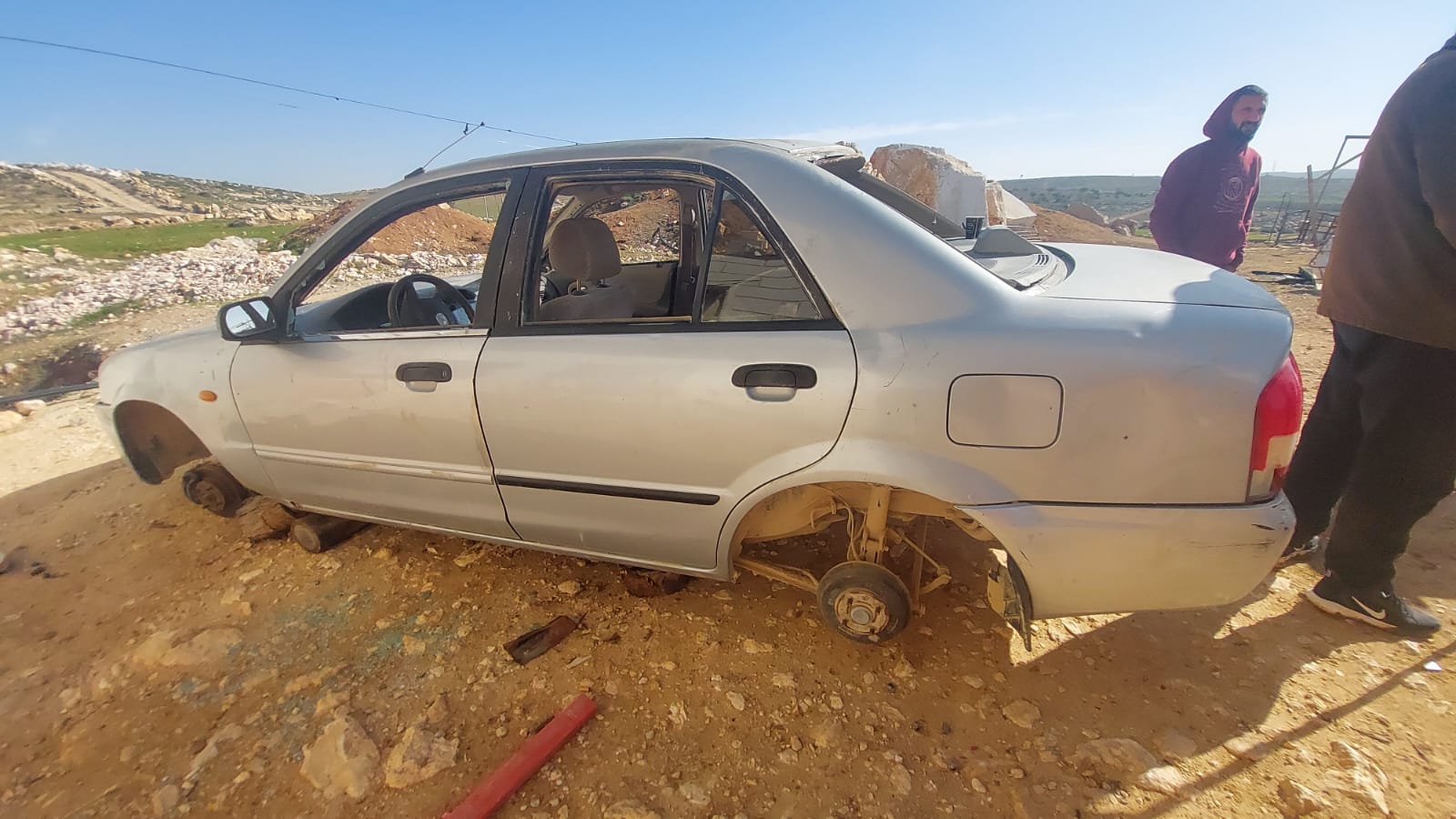 Michal TsadikDec-23-2025Wadi Shahish - The family car vandalized by settlers
-
Susiya
See all reports for this place-
Susiya The Palestinian area lies between the settlement of Susya and a military base. The residents began to settle in areas outside the villages in the 1830s and lived in caves, tents and sukkot. To this day they maintain a traditional lifestyle and their livelihood is based on agriculture and herding. Until the 1948 war, the farmers cultivated areas that extended to the Arad area. As a result of the war, a significant portion of their land left on the Israeli side was lost. After the 1967 war and the Israeli occupation, military camps were established in the area, fire zones and nature reserves were declared, and the land area was further reduced. The Jewish settlement in Susya began in 1979. Since then, there has been a stubborn struggle to remove the remains of Palestinian residents who refuse to leave their place of birth and move to nearby town Yatta. With the development of a tourist site in Khirbet Susya in the late 1980s (an ancient synagogue), dozens of families living in caves in its vicinity were deported. In the second half of the 1990s, a new form of settlement developed in the area - shepherds' farms of individual settlers. This phenomenon increased the tension between the settlers and the original, Palestinian residents, and led to repeated harassment of the residents of the farms towards the Palestinians. At the same time, demolition of buildings and crop destruction by security forces continued, as well as water and electricity prevention. In the Palestinian Susya, as in a large part of the villages of the southern Hebron Mountains, there is no running water, but the water pipe that supplies water to the Susya Jewish settlement passes through it. Palestinians have to buy expensive water that comes in tankers. Solar electricity is provided by a collector system, installed with donation funds. But the frequent demolitions in the villages do not spare water cisterns or the solar panels and power poles designed to transfer solar electricity between the villages. Updated April 2021, Anat T.
-