
Susya – Have the Palestinians’ fields been poisoned

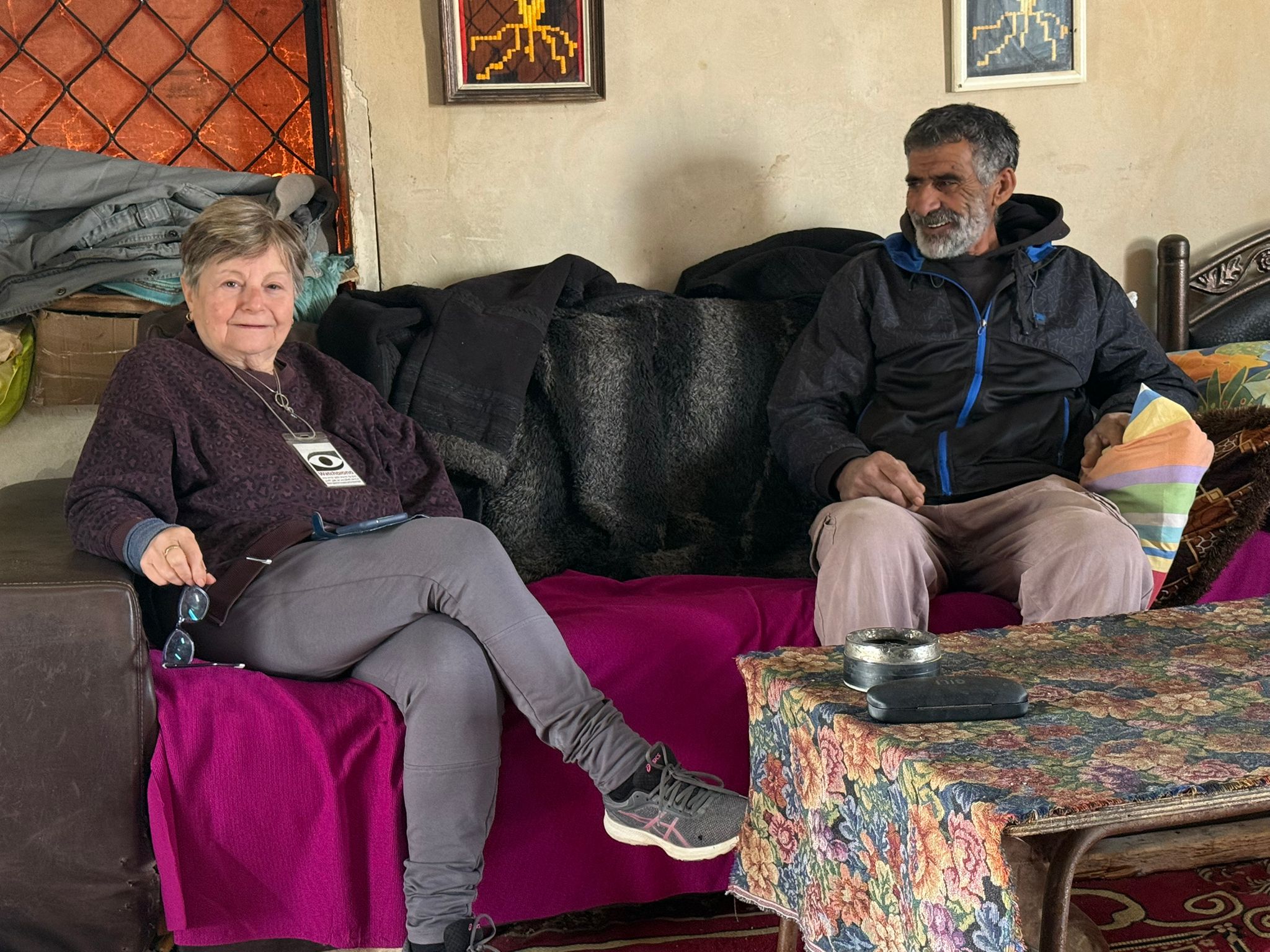
N. had to urgently go out of the village. We met his father and expressed our condolences with the family on behalf of MachsomWatch for the death of the mother.
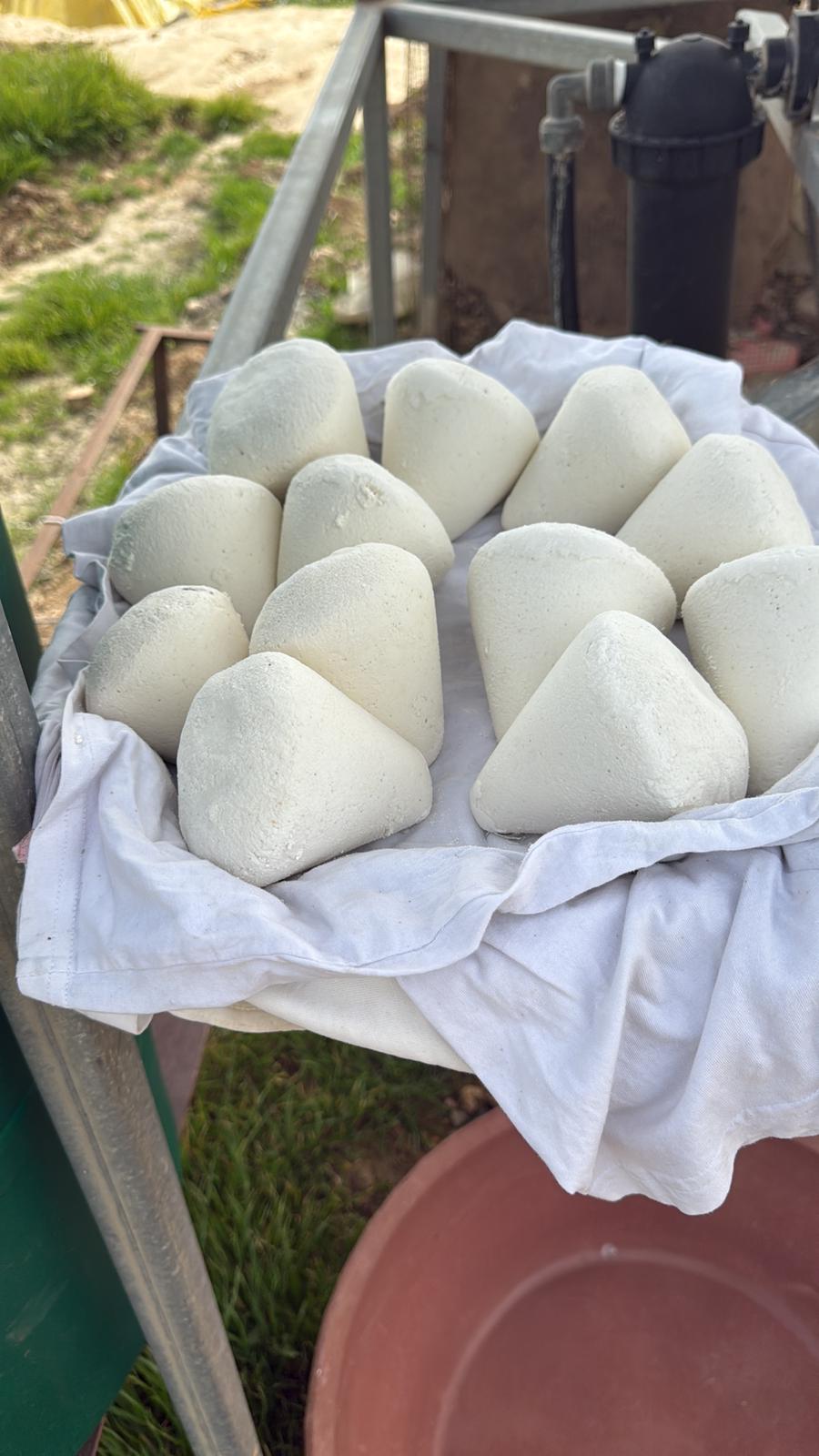
We continued to A.’s and I.’s family who were out grazing not far from their home. W. comes to greet us. A. also comes and says they noticed that the barley plots next to Samu’a have begun to dry up. A. and the neighbor decided to check the fields around the homes and discovered everything covered with some white substance.
Police came too and the policemen suggested a professional investigation. The substance was sent to a laboratory in Birzeit and two more labs in Israel.
adds: This morning soldiers arrested a teacher from Susya who teaches in Yatta on his way to work. They interrogated him for an hour and then released him.
We hear again what has been clear and known for years – the occupation is everywhere.
N., H., and I. return to Susya and apparently the poisoned appearance of the farmed area is very much on their minds and worries.
We are waiting for results.
Before driving home, we stopped as H. and I. graze their sheep adjacent to their home. The colonists, as they do everywhere, have been restricting them.
We left clothes, and wished them Ramadan Kareem.
Across the road from their road, violent colonist Shem Tov Lasky was grazing his cattle from Susia colony.
This is occupation.
Location Description
Susiya
See all reports for this place-
Susiya The Palestinian area lies between the settlement of Susya and a military base. The residents began to settle in areas outside the villages in the 1830s and lived in caves, tents and sukkot. To this day they maintain a traditional lifestyle and their livelihood is based on agriculture and herding. Until the 1948 war, the farmers cultivated areas that extended to the Arad area. As a result of the war, a significant portion of their land left on the Israeli side was lost. After the 1967 war and the Israeli occupation, military camps were established in the area, fire zones and nature reserves were declared, and the land area was further reduced. The Jewish settlement in Susya began in 1979. Since then, there has been a stubborn struggle to remove the remains of Palestinian residents who refuse to leave their place of birth and move to nearby town Yatta. With the development of a tourist site in Khirbet Susya in the late 1980s (an ancient synagogue), dozens of families living in caves in its vicinity were deported. In the second half of the 1990s, a new form of settlement developed in the area - shepherds' farms of individual settlers. This phenomenon increased the tension between the settlers and the original, Palestinian residents, and led to repeated harassment of the residents of the farms towards the Palestinians. At the same time, demolition of buildings and crop destruction by security forces continued, as well as water and electricity prevention. In the Palestinian Susya, as in a large part of the villages of the southern Hebron Mountains, there is no running water, but the water pipe that supplies water to the Susya Jewish settlement passes through it. Palestinians have to buy expensive water that comes in tankers. Solar electricity is provided by a collector system, installed with donation funds. But the frequent demolitions in the villages do not spare water cisterns or the solar panels and power poles designed to transfer solar electricity between the villages. Updated April 2021, Anat T.
-