
Qawawis – repeated violent attacks by settlers
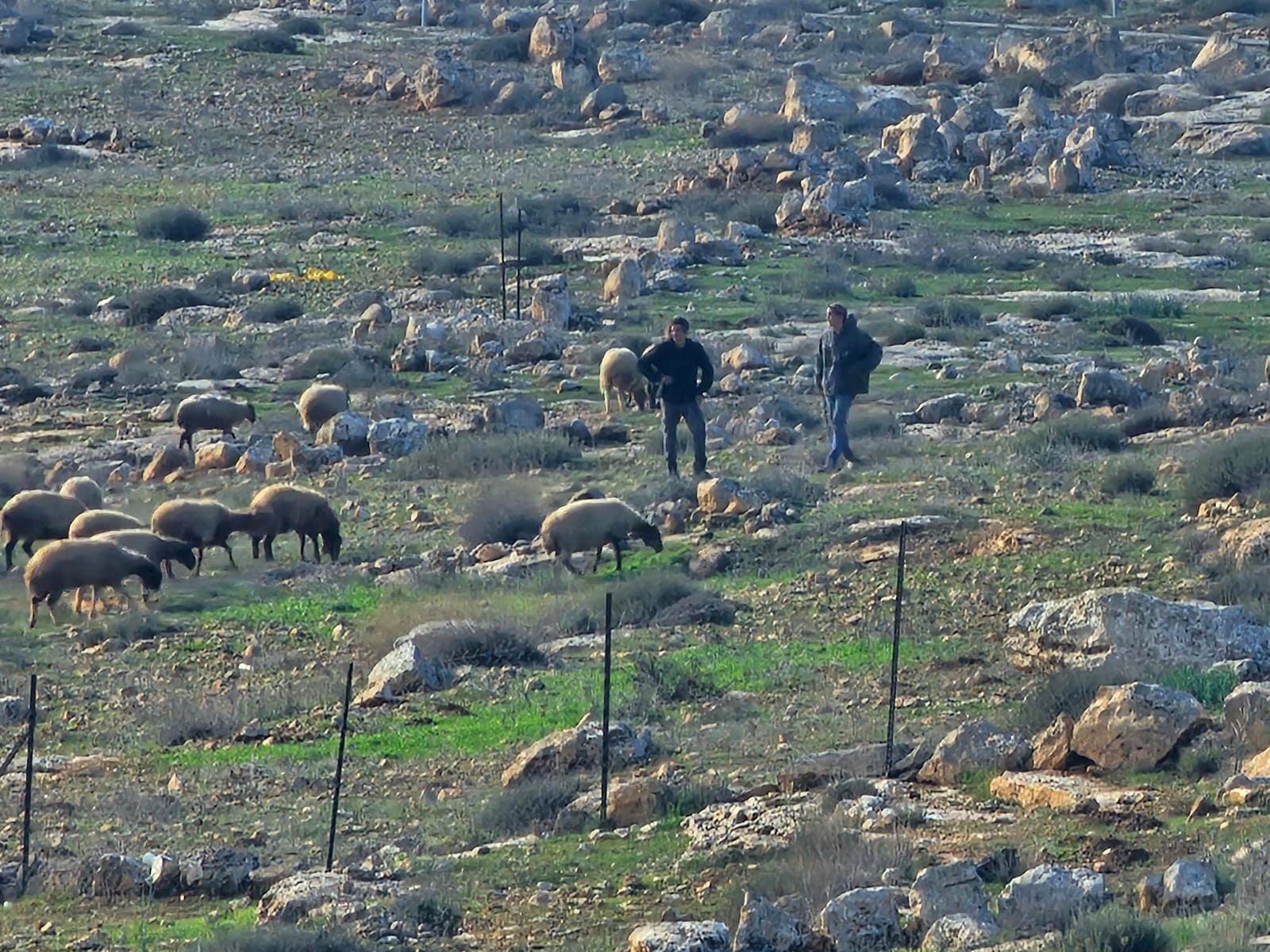
We drove again to the Abu Aram family in driving rain in Qawawis, bringing basic food supplies we had purchased, along with donated clothing and other essential items.
Smadar was there two months ago and reported, and our friend Yael Zoran visited three weeks ago. But because of the constant harassment—accompanied by violence and verbal abuse—that they experience all the time, we came again. Taleb and his two wives, Halima and Aisha, and their children live there, as do their married son Saber, his wife, and their four children.
Taleb, who worked for many years in Israel, speaks Hebrew well enough to communicate almost without translation. He describes a long chain of harassment and violence over many months. The first time they arrived, almost a year ago, five settlers came with sticks and stones, beat them, and killed the dog, shouting insults: “Arabs are thieves,” “Go from here to Jordan,” “This land is ours, not yours,” and other “blessings” like these.
On 26.8 many settlers came and also beat their neighbor. At that time there were Israeli women volunteers present. One of them had her arm broken in three places from the blows. The settlers fled. The police arrived only after half an hour, and neither the police nor the army believed them. They said, “Check the cameras.” Taleb, of course, did not agree that they take them, and in the end the video materials were transferred only at 1 a.m.
In addition, they were told to go file a complaint at the Kiryat Arba police station.
“Do you recognize any of the attackers?” they were asked.
“Yes,” he said. “I know the security coordinator from Susiya—his name is Elkanah—and he is constantly threatening and cursing.”
That same day they broke a window because the door was locked and sprayed pepper spray into the room.
This was the room where the women and children had fled to hide. Everyone was affected by inhaling the gas and required oxygen treatment at the hospital.
“Even holding an onion to the nose helps,” the women say.
They say that this Elkanah received house arrest a month ago, and now they truly no longer see him.
Once again, the settlers roam the family’s land with their sheep to demonstrate their presence, while their sheep eat the olive trees and everything the family grows for their livelihood.
“We were about 40 people here,” says Taleb, “the extended family. But out of great fear they left for Carmel, and now only about 12 of us remain here. They want us all to leave, even though we have documents proving that this land is ours.”
The children go to school in nearby Sha‘ab al-Butum, 3 km away.
“When I was working, I could finance transportation for the children,” says Taleb. “Now they walk this distance back and forth every day— even children aged 5–6 walk this distance daily.”
In the meantime, a picture emerges of harassment like this happening every day.
Luckily, at night there are volunteers from Israel and from around the world.
But they live in constant fear. A routine of fear.
Location Description
Sha'ab al-Butum
See all reports for this place-
This is one of the small Palestinian communities in Masafer Yatta in the southern Hebron Hills, near the settlement of Mitzpe Avigail.
Since the outbreak of the October 7, 2023 war, settler violence against residents has escalated greatly, as in the entire Palestinian community. This violent conduct receives full backing from the state and full cooperation from the IDF. The goal is to make the lives of the Palestinian residents miserable and make them abandon and leave.
The population consists of mostly shepherds who peacefully seek to cultivate the land and graze their sheep, whom the settlers treat as a dangerous enemy. They prohibit them from any movement related to herding sheep and cultivating the land and harm everything: trampling crops, breaking olive trees, smuggling herds, scaring shepherds, conducting wild searches of houses, shouting, cursing and threatening - at all hours of the day. "We are Besieged, but will not move from our land," says Lila G. New settlements are springing up around them. At first it's a bus or a truck that turns into residential buildings, on top of which every week more residential buildings and animal sheds are added. With the open encouragement of the current government, Jewish terrorism is raising its head, with authority and permission. The settlers have received army uniforms and weapons, and no one is stopping them. The police, who are supposed to protect the Palestinians from the settlers' riots, sometimes respond to calls for help, but in practice they don't do much more than provide them with a report, and they are required to go and file a complaint in Kiryat Arba Settlemnt police station . Though the settlers' identities are known, they are !never arrested.
-
South Hebron Hills
See all reports for this place-
South Hebron Hills
South Hebron Hills is a large area in the West Bank's southern part.
Yatta is a major city in this area: right in the border zone between the fertile region of Hebron and its surroundings and the desert of the Hebron Hills. Yatta has about 64,000 inhabitants.
The surrounding villages are called Masafer Yatta (Yatta's daughter villages). Their inhabitants subsist on livestock and agriculture. Agriculture is possible only in small plots, especially near streams. Most of the area consists of rocky terraces.Since the beginning of the 1980s, many settlements have been established on the agricultural land cultivated by the Palestinians in the South Hebron Hills region: Carmel, Maon, Susia, Masadot Yehuda, Othniel, and more. Since the settlements were established and Palestinians cultivation areas have been reduced; the residents of the South Hebron Hills have been suffering from harassment by the settlers. Attempts to evict and demolish houses have continued, along with withholding water and electricity. The military and police usually refrain from intervening in violent incidents between settlers and Palestinians do not enforce the law when it comes to the investigation of extensive violent Jewish settlers. The harassment in the South Hebron Hills includes attacking and attempting to burn residential tents, harassing dogs, harming herds, and preventing access to pastures.
There are several checkpoints in the South Hebron Hills, on Routes 317 and 60. In most of them, no military presence is apparent, but rather an array of pillboxes monitor the villages. Roadblocks are frequently set up according to the settlers and the army's needs. These are located at the Zif Junction, the Dura-al Fawwar crossing, and the Sheep Junction at the southern entrance to Hebron.
Updated April 2022
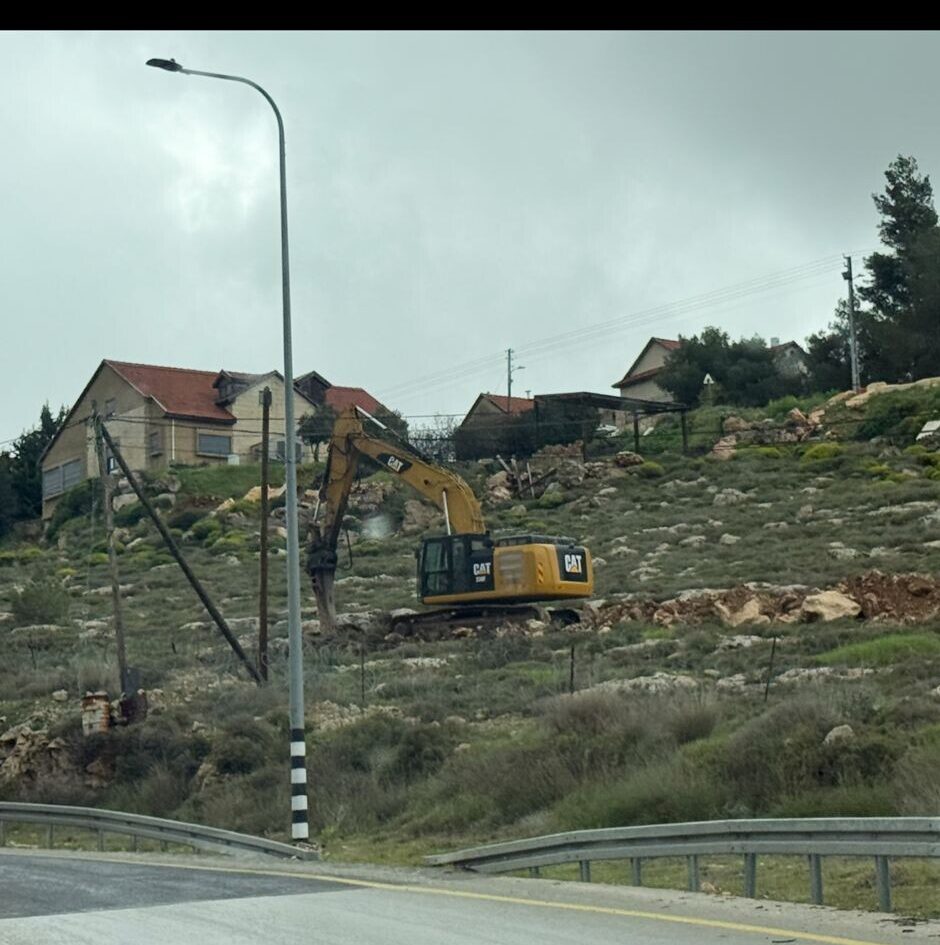 MuhammadFeb-24-2026South Hebron Hill, Beit Hagai: Paving an internal security road
-