
Qawawis - Few olives in the harvest due to lack of rainfall and damage from settlers and their herds
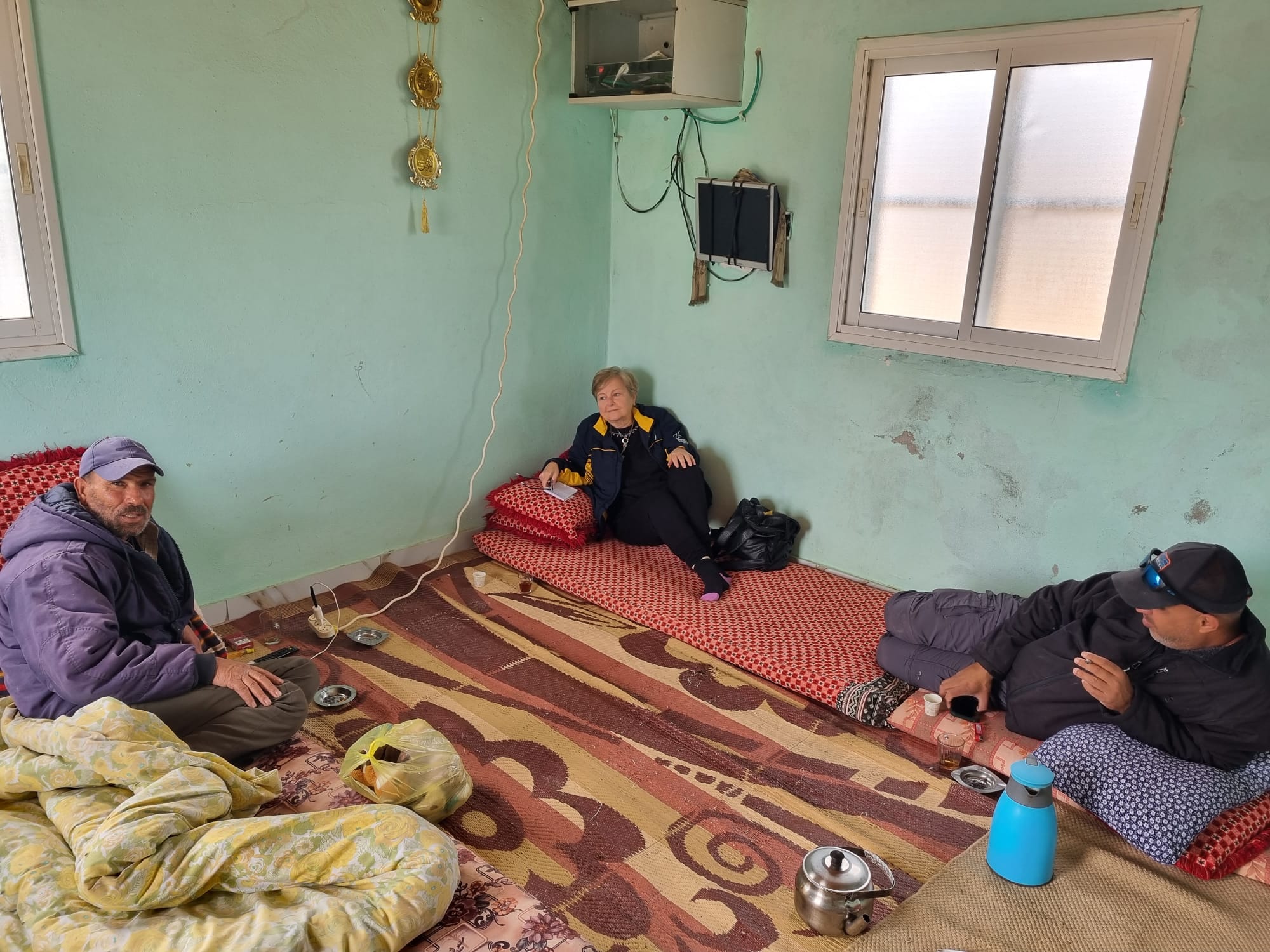
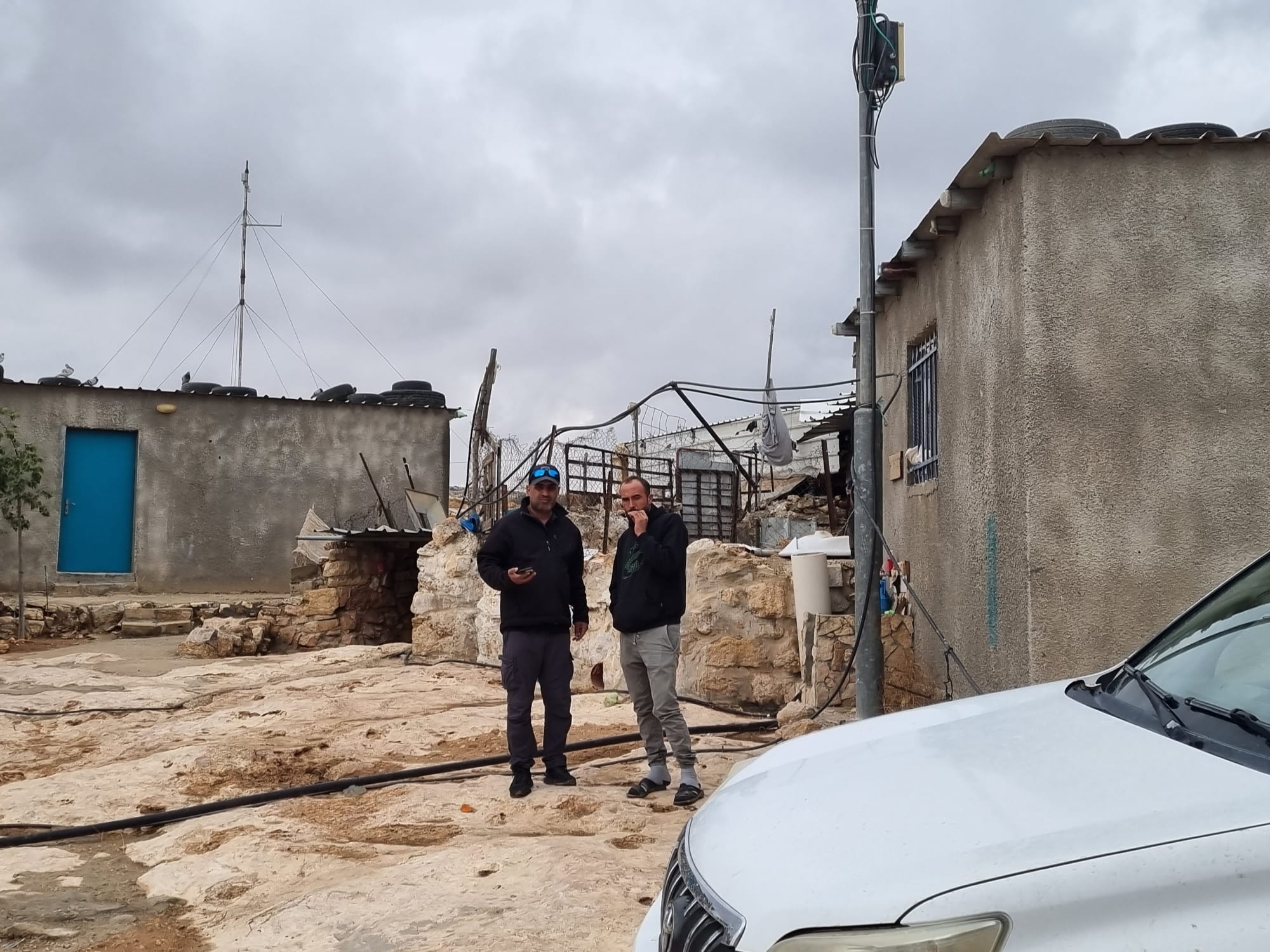
We came, after many rainless days but now, a heavy rain drenches the trees and the few crops in the field. Taleb and his family welcome us, and we sit in the hut where guests are received, and which also serves as a place to sleep for some of the family.
I ask if the rain has filled the well, and the answer is that they have not yet cleaned it of the dirt that accumulated in the summer. And how is the harvest, I keep asking, and the answer, like most of the families we visit, is sad: In the valley near the village, there were 2,000 olive trees, which yielded 10 tons of olives. This year, they barely harvested 500 kg.
For years, settlers from the area have been coming to the orchards with their flocks of sheep. The sheep eat some of the trees, and the settlers also add to the destruction by uprooting and breaking branches. It takes years for a tree to recover, if that is even possible. In the additional orchard, which has about 250 trees, there was almost no fruit due to the lack of rain. To bring in water is very costly and not an option.
The settlers continue to enter their living area. Sometimes 5 times a week, and sometimes once. Taleb’s flock of about 60 sheep is fed with food bought in bags. Maybe now, after the rain, there will be a little grass around the house.
The two daughters of the family who started a year of study at the university in Yatta, travel there twice a week. The rest of the studies are on Zoom. They travel by taxi, which costs them large sums, but they will do anything for the girls’ studies.
The children return from the school in Sha’ab al-Butum. Today they had to walk because the shuttle broke down.
They are happy with the toys we brought, eating lunch together.
The occupation is here on every corner.
#ThisIsTheOccupation
Location Description
Mesafer Yatta
See all reports for this place-
This is happening in Fire Area 918 in the South Hebron Hills
On the eve of Remembrance Day (the day before Israel Independence Day), 4th May, 2022, the Israeli High Court decided on the transfer and expulsion of residents from 8 Palestinian communities in the area of Masafar Yata in the South Hebron Hills. Residents of the villages have been living under the threat of demolition, evacuation and expropriation since the IDF issued evacuation orders in 1999 based on the 1980s proclamation of their area of residence as a firing zone for IDF drills. None of the nearby settlements were included in this zone. The Masafer Yata Palestinian villages retain a special lifestyle and ancient agricultural culture. They also posess a clear historical documentation that testifies to a Palestinian settlement in this area, generations before the establishment of Israel, long ago in the caves and at later times outside them.
Evacuating residents from the area means destroying these historic villages and leaving entire families (about 2,000 people, children, adults, and the elderly) homeless. This is contrary to international law.
In June 2022, a firing drill started, and life became harder.
-
Sha'ab al-Butum
See all reports for this place-
This is one of the small Palestinian communities in Masafer Yatta in the southern Hebron Hills, near the settlement of Mitzpe Avigail.
Since the outbreak of the October 7, 2023 war, settler violence against residents has escalated greatly, as in the entire Palestinian community. This violent conduct receives full backing from the state and full cooperation from the IDF. The goal is to make the lives of the Palestinian residents miserable and make them abandon and leave.
The population consists of mostly shepherds who peacefully seek to cultivate the land and graze their sheep, whom the settlers treat as a dangerous enemy. They prohibit them from any movement related to herding sheep and cultivating the land and harm everything: trampling crops, breaking olive trees, smuggling herds, scaring shepherds, conducting wild searches of houses, shouting, cursing and threatening - at all hours of the day. "We are Besieged, but will not move from our land," says Lila G. New settlements are springing up around them. At first it's a bus or a truck that turns into residential buildings, on top of which every week more residential buildings and animal sheds are added. With the open encouragement of the current government, Jewish terrorism is raising its head, with authority and permission. The settlers have received army uniforms and weapons, and no one is stopping them. The police, who are supposed to protect the Palestinians from the settlers' riots, sometimes respond to calls for help, but in practice they don't do much more than provide them with a report, and they are required to go and file a complaint in Kiryat Arba Settlemnt police station . Though the settlers' identities are known, they are !never arrested.
-
South Hebron Hills
See all reports for this place-
South Hebron Hills
South Hebron Hills is a large area in the West Bank's southern part.
Yatta is a major city in this area: right in the border zone between the fertile region of Hebron and its surroundings and the desert of the Hebron Hills. Yatta has about 64,000 inhabitants.
The surrounding villages are called Masafer Yatta (Yatta's daughter villages). Their inhabitants subsist on livestock and agriculture. Agriculture is possible only in small plots, especially near streams. Most of the area consists of rocky terraces.Since the beginning of the 1980s, many settlements have been established on the agricultural land cultivated by the Palestinians in the South Hebron Hills region: Carmel, Maon, Susia, Masadot Yehuda, Othniel, and more. Since the settlements were established and Palestinians cultivation areas have been reduced; the residents of the South Hebron Hills have been suffering from harassment by the settlers. Attempts to evict and demolish houses have continued, along with withholding water and electricity. The military and police usually refrain from intervening in violent incidents between settlers and Palestinians do not enforce the law when it comes to the investigation of extensive violent Jewish settlers. The harassment in the South Hebron Hills includes attacking and attempting to burn residential tents, harassing dogs, harming herds, and preventing access to pastures.
There are several checkpoints in the South Hebron Hills, on Routes 317 and 60. In most of them, no military presence is apparent, but rather an array of pillboxes monitor the villages. Roadblocks are frequently set up according to the settlers and the army's needs. These are located at the Zif Junction, the Dura-al Fawwar crossing, and the Sheep Junction at the southern entrance to Hebron.
Updated April 2022
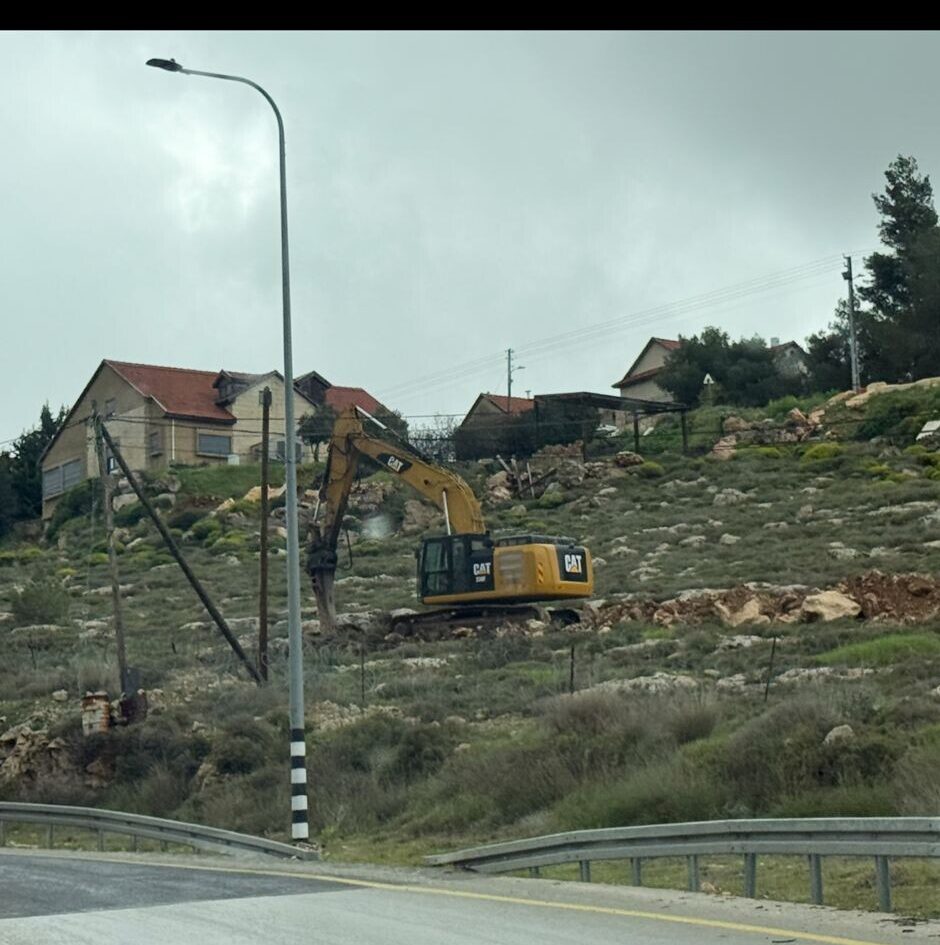 MuhammadFeb-24-2026South Hebron Hill, Beit Hagai: Paving an internal security road
-