
Shweika - settlers from Yehuda Farm arrived a few days ago and stole 50 sheep
Review of checkpoints on Highway 60:
Samu’ – open
Simiya – open
Dahariya – closed
Abda – closed
Qilqis – closed on both sides of the road.
Before the Fawwar junction, a soldier’s post is manned by two armed men, their faces directed towards the road. Usually, this post is empty.
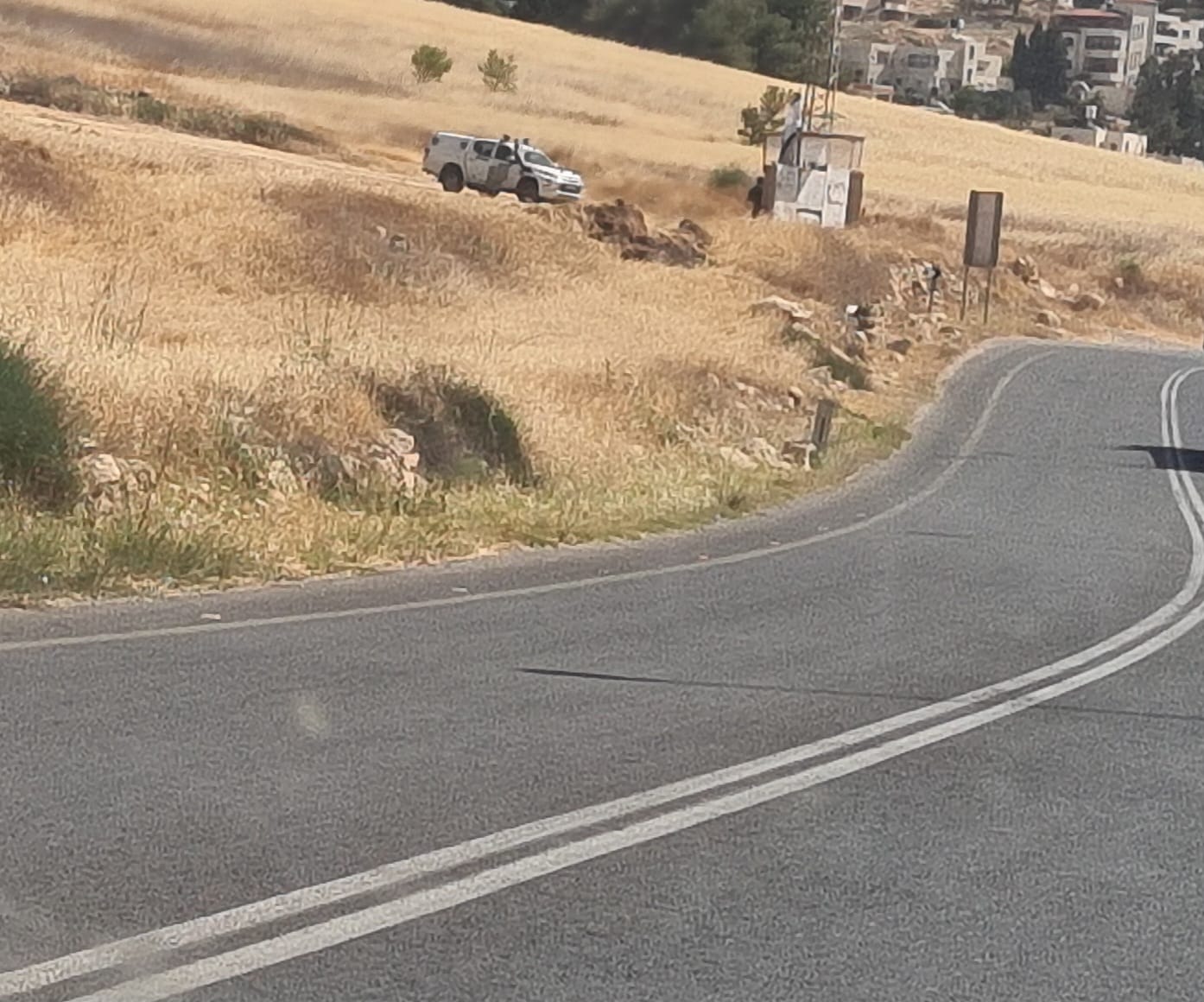
After about 300 meters, a military pickup truck with several armed soldiers next to it.
At the entrance to Dura, near the pillbox, several armed soldiers again.
Throughout the entire trip there, we saw more army and police jeeps than usual. This may be because Jerusalem Day fell on that day.
We stop at Nabil’s grocery store at the Zif junction to buy the kindergarten children personalized cakes and drinks for each child, to make them happy.
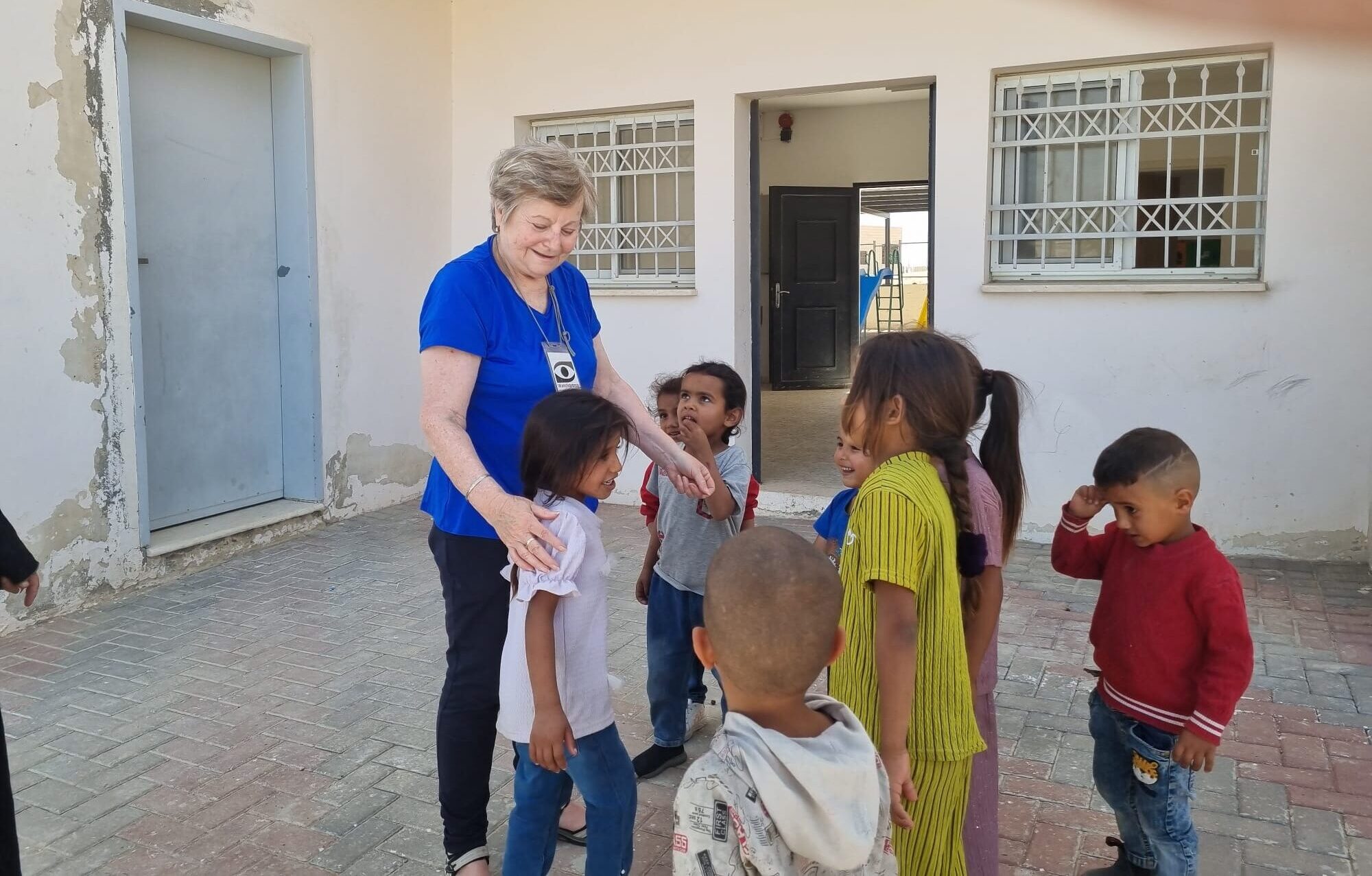
Hashem a-Daraj, a small village located in the desert. The children are 3-5 years old and are assigned to 2 classes according to age. Huda, the kindergarten teacher, asked us to come again and bring certificates like last year. Each child will receive a certificate at the end of the year, thanks to our Muhammad who took care of purchasing the certificates.
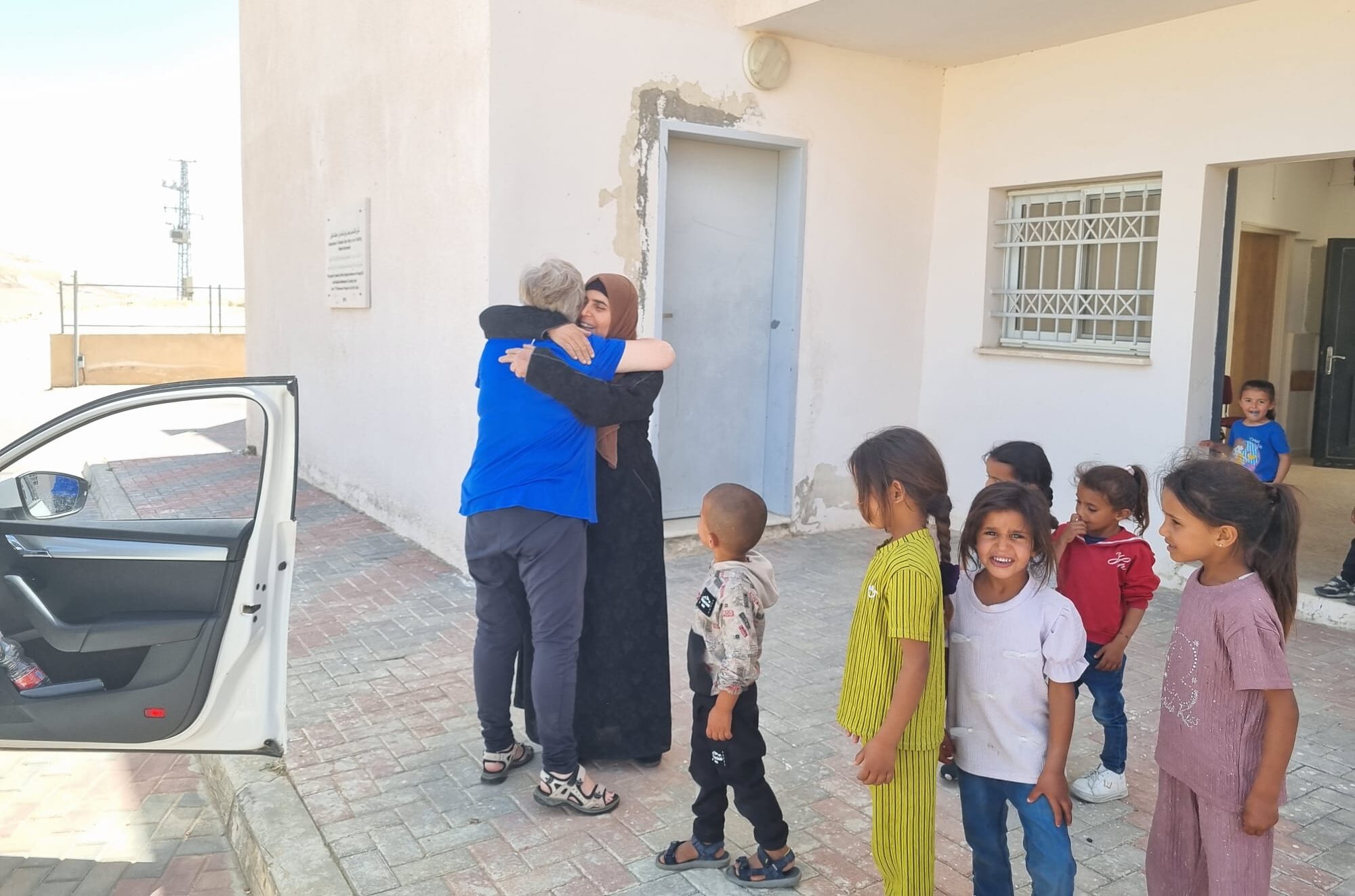
The children saw that we had arrived and came running towards us, happy and excited. Warm hugs that moved me to tears. In all the difficult shifts, great sadness, and being there – the opposite experience. In a few days the school year will end, and all the children will spend the summer, until September, at their homes. There are no other programs.
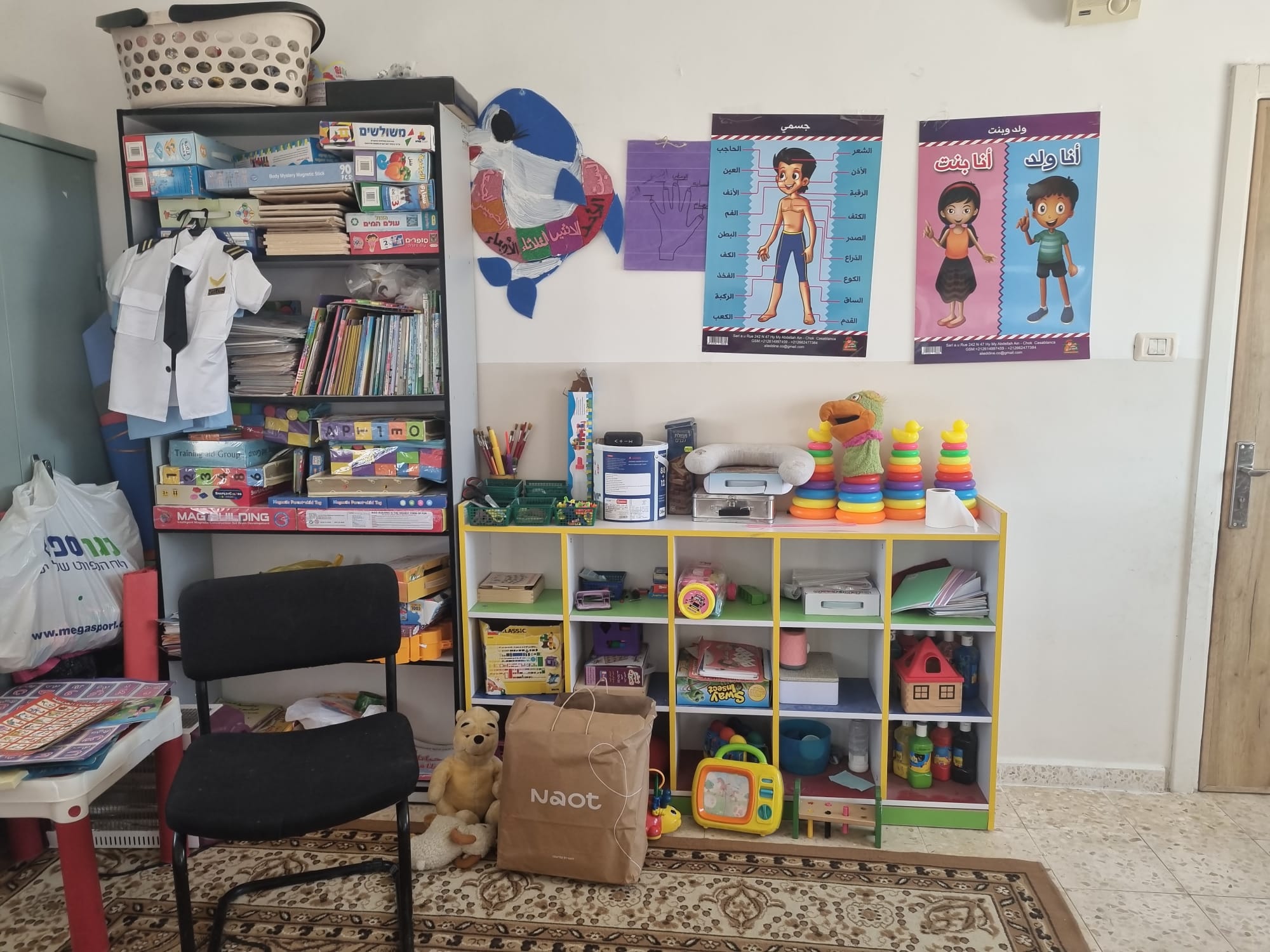
We brought plates, clothes and toys from the donations.
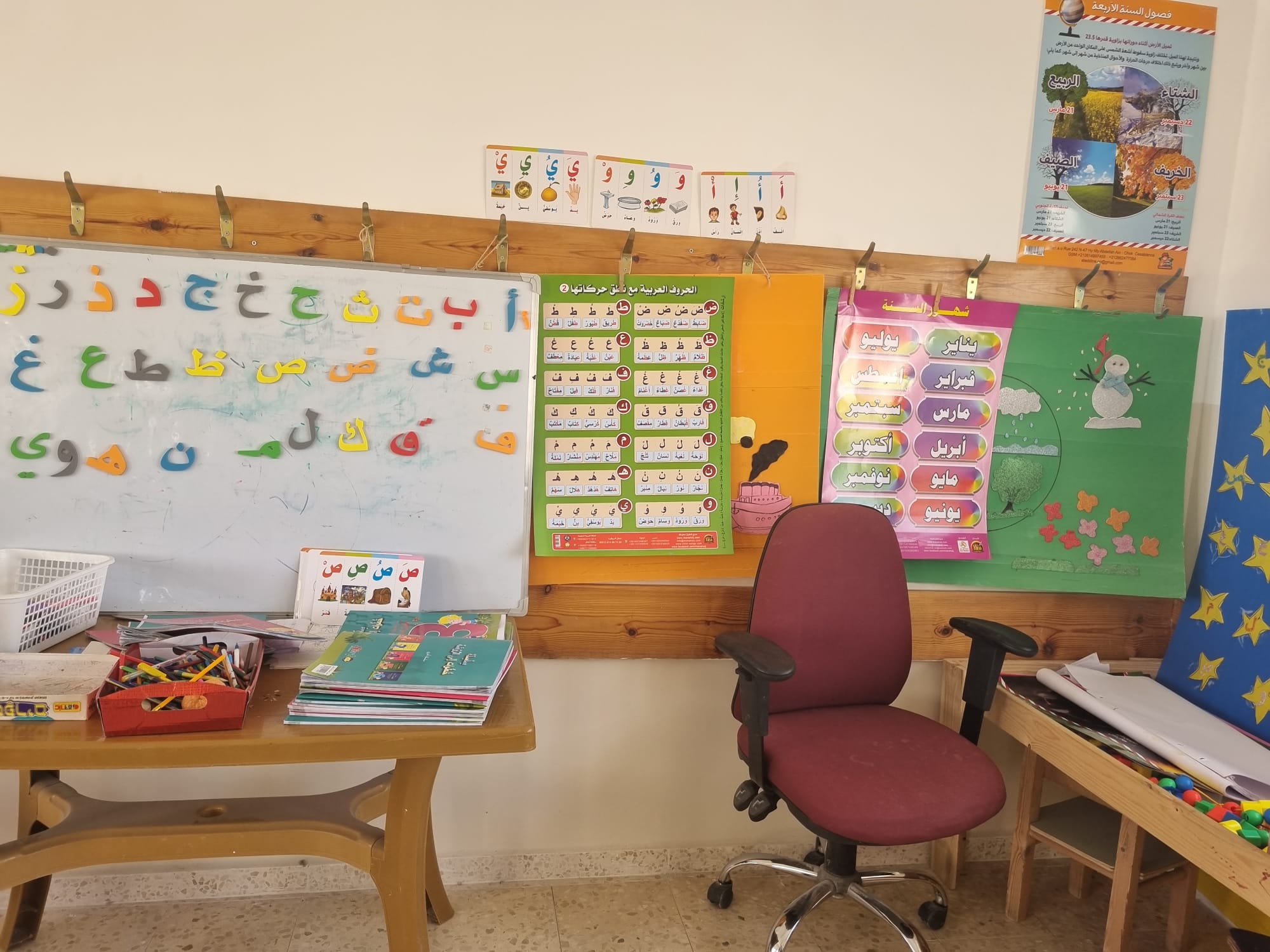
Attached are photos from the kindergarten. You can see how much the kindergarten teachers and assistants invest in giving the children the best even without means, and the conversation and excitement when we were there.
For lunch, each child received rice porridge, because it is the most they can give. Sad.
To bring back the harsh reality of the occupation, on our way to Zanuta on Route317, we saw several vehicles driving into the village. We called Fares, who was expelled from Zanuta to Shweika, to inform him about this. According to him, apparently the residents of the place who were expelled came to plan a meeting in two days.
We asked what was new with them and Fares told us about settlers from Elyashiv Nahum’s Yehuda farm who arrived a few days ago, in the evening hours, and stole 50 sheep. When they called the police, they police demanded that they come and file a complaint with the Kiryat Arba police. Therefore, Fares and his brothers organized themselves and brought back the sheep by themselves.
#ThisIsTheOccupation

Location Description
Dura Al-Fawwar Junction
See all reports for this place-
Junction on Route 60: west - the town of El Dura, east - the Al Fawwar refugee camp. There is a manned pillbox at the junction. From time to time the army sets up flying checkpoints at the entrance to El Fawwar and Al Dura. Al-Fawwar is a large refugee camp (7,000 inhabitants in 2007) established in 1949 to accommodate Palestinian refugees from Be'er Sheva and Beit Jubrin and environs. There are many incidents of stone-throwing. In the vicinity of the pillbox there are excellent agricultural areas, Farmers set up stalls adjacent to the plots close to the road. In recent months the civil administration has set up dirt embankments thereby blocking access to the stalls, and making it impossible for the farmers to sell their vegetables. Updated April 2021, Michal T.
-
South Hebron Hills
See all reports for this place-
South Hebron Hills
South Hebron Hills is a large area in the West Bank's southern part.
Yatta is a major city in this area: right in the border zone between the fertile region of Hebron and its surroundings and the desert of the Hebron Hills. Yatta has about 64,000 inhabitants.
The surrounding villages are called Masafer Yatta (Yatta's daughter villages). Their inhabitants subsist on livestock and agriculture. Agriculture is possible only in small plots, especially near streams. Most of the area consists of rocky terraces.Since the beginning of the 1980s, many settlements have been established on the agricultural land cultivated by the Palestinians in the South Hebron Hills region: Carmel, Maon, Susia, Masadot Yehuda, Othniel, and more. Since the settlements were established and Palestinians cultivation areas have been reduced; the residents of the South Hebron Hills have been suffering from harassment by the settlers. Attempts to evict and demolish houses have continued, along with withholding water and electricity. The military and police usually refrain from intervening in violent incidents between settlers and Palestinians do not enforce the law when it comes to the investigation of extensive violent Jewish settlers. The harassment in the South Hebron Hills includes attacking and attempting to burn residential tents, harassing dogs, harming herds, and preventing access to pastures.
There are several checkpoints in the South Hebron Hills, on Routes 317 and 60. In most of them, no military presence is apparent, but rather an array of pillboxes monitor the villages. Roadblocks are frequently set up according to the settlers and the army's needs. These are located at the Zif Junction, the Dura-al Fawwar crossing, and the Sheep Junction at the southern entrance to Hebron.
Updated April 2022
 Michal TsadikJan-29-2026Umm al-Khair - a security risk for Carmel settlers
-
Zanuta
See all reports for this place-
Zanuta was a small rural Palestinian locality until its demolition. It was situated in the space around the town Dahariya in the South Hebron Hills, about a ten-minute ride from Meitar Checkpoint. There are documented remains of a large Byzantine settlement in the area. Since the Ottoman (Turkish Empire) period (1516-1917) Zanuta was documented as a locality of shepherds and farmers who live in the remains of the ancient structures and the residential caves near them.
Two individual ranches of colonists were created next to Zanuta: Meitarim (of the colonist Yinon Levi) to the east, and Yehudah (of the colonist Elyashiv Nachum) to the north. Endless attacks, harassments and attempt to chase away the Zanuta villagers have originated in these two outposts.
Until the expulsion, four families lived in the village: A-Samama, Al-Tel, Al Batat, and Al-Qaisia. Farming constituted their main economic activity and employed most of the villagers. The total area of the village is about 12,000 dunams, of which about 3,000 are tended, mostly with field crops.
This village has never had a master plan that would legitimize construction permits. The Civil Administration claimed it was too small and the distance to the next town, Dahariya, too great. For this reason, the Israeli authorities pressured the villagers to leave. The colonists did the job for them.
-
Zif Junction
See all reports for this place-
Zif Junction located on the crossroads that directs towards Road 356 to Yata. Yata is the district city of the southern Hebron Mountains. Usually, this junction is open to traffic. The nearby pillbox is unmanned. But the army and police are present occasionally, sometimes setting up a checkpoint and sometimes detaining residents from the big city. Often, the Israeli policemen inspect vehicles and distribute driving reports to Palestinian vehicles. s
-