
Sha'ab al-Butum - Attack on a Palestinian compound by settlers
We traveled to Sha‘ab al-Butum following a phone call Muhammad received from Layla, reporting a settler attack two days earlier, on 23.9.
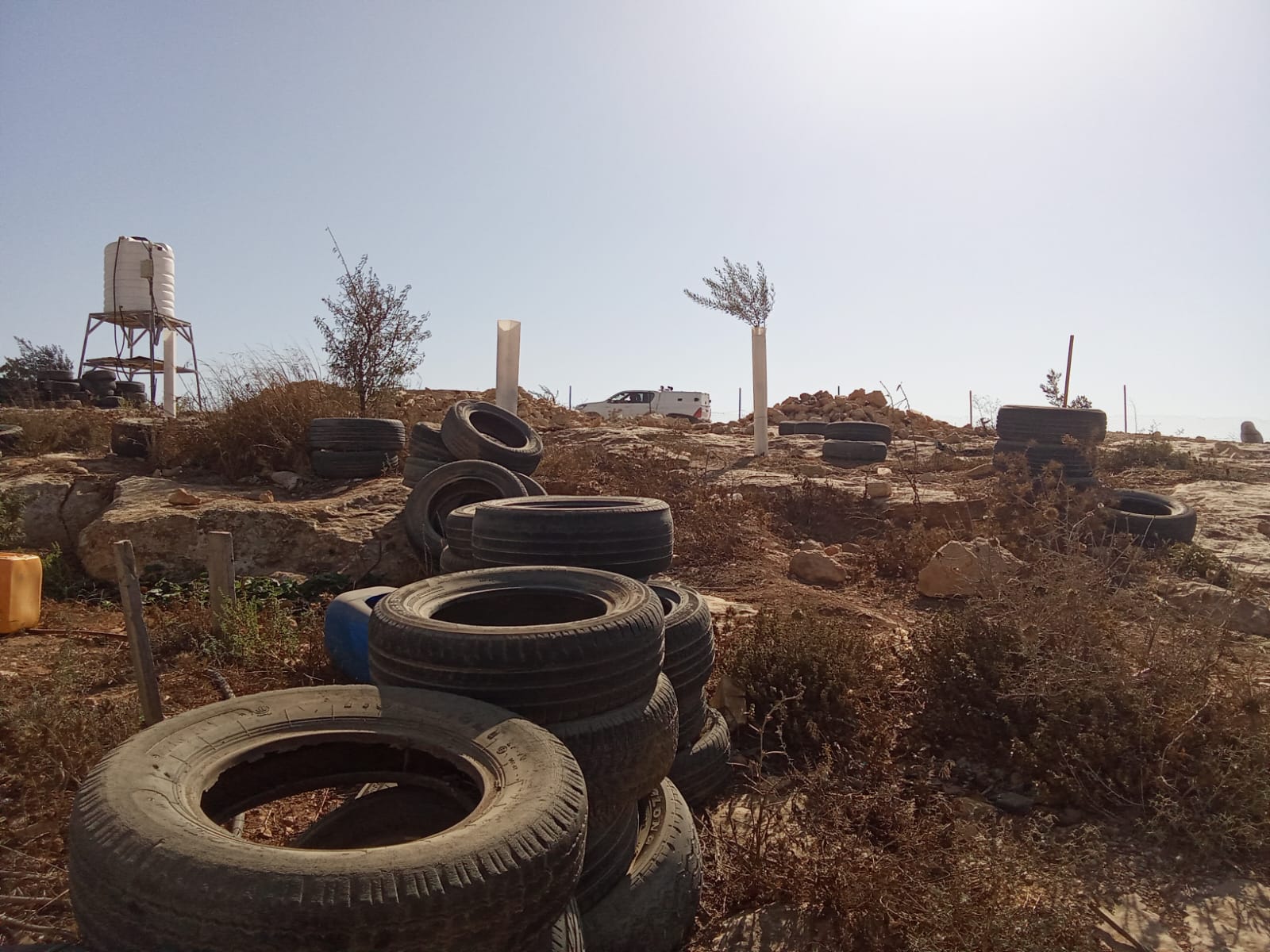
Layla and Muhammad’s compound in Sha‘ab al-Butum, Umm-Darit: the compound is located at the end of a dirt road more than about 3 km long from Road 317, with its final section rocky and passable only by a high-clearance 4×4 vehicle. The compound lies at the edge of the village and apparently belongs to the part that was formerly called Umm-Darit. Opposite it is Havat Droma; a bit further on, above the settlement of Ma‘on, is Havat Ma‘on; on the other side is Mitzpe Yair; and from the road side, the settlement of Avigayil. There are also a few additional tents scattered here and there on hilltops, in an unclear pattern.
The compound belongs to Layla and Muhammad, and there is now also legal authorization confirming ownership. Muhammad inherited the small “estate” from his family.
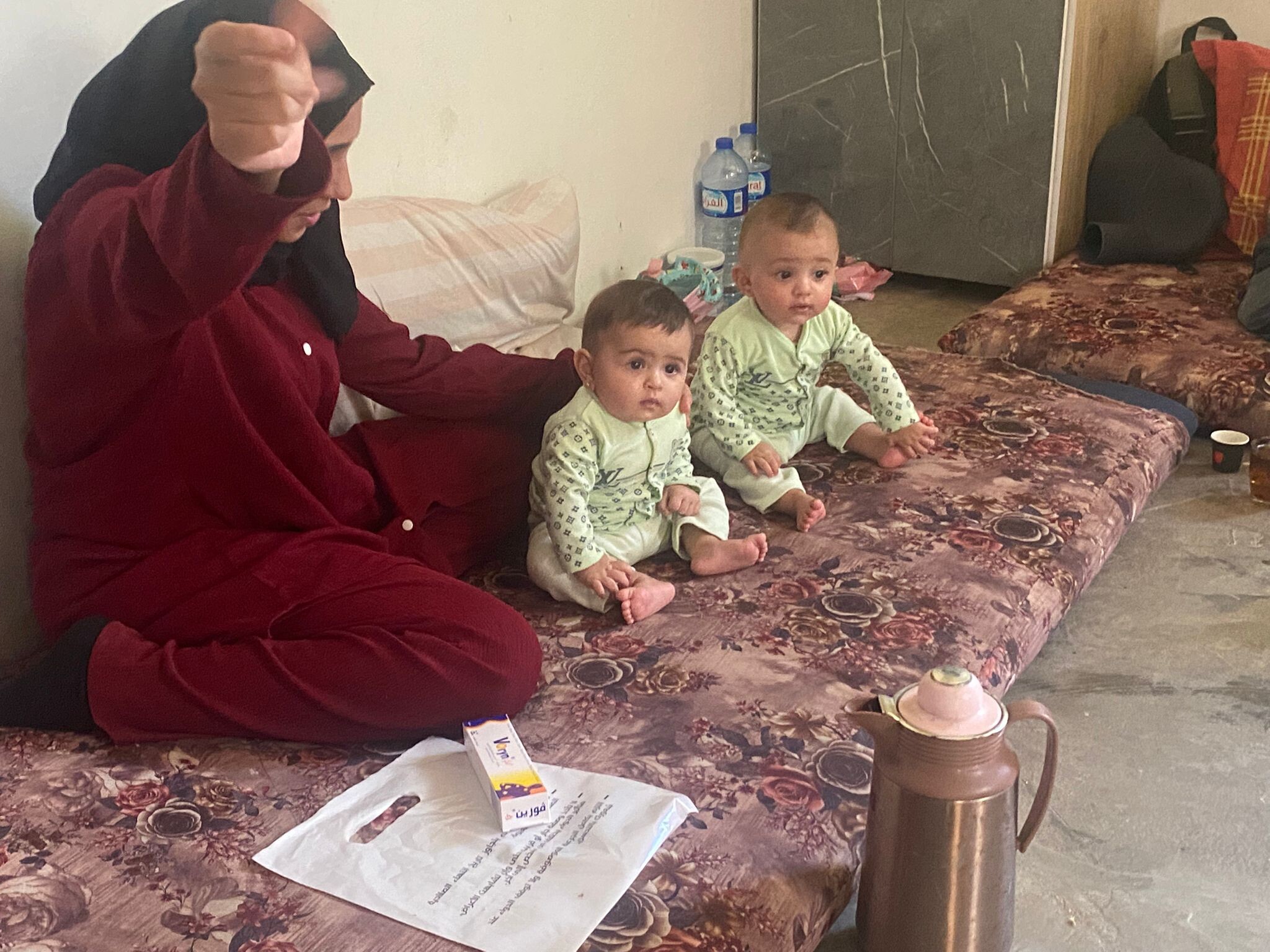
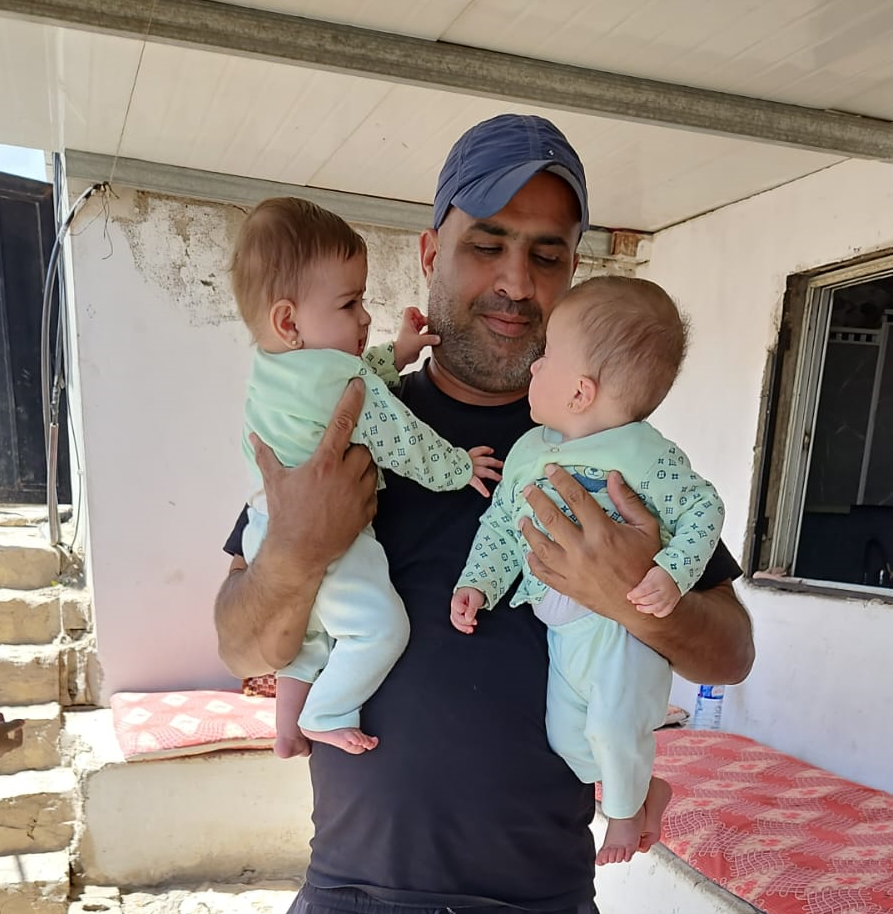
Seventeen people live in the compound—Layla and Muhammad’s children and their families. Balkis and Shayma are the wives of two of the sons. Balkis now has two infant twin girls (the sweet Doha and Saja in the photo) and is expecting another child.
We brought basic supplies and a lot of clothing (which Smadar collects). As usual, we were served delicious food that Layla cooks with the help of the other women. They also gave us pita bread from the taboon.
The compound functions as an autarkic farm: there is a taboon oven, a water cistern, three large water tanks filled by a pump, a cow, geese, turkeys, chickens, and rabbits. The sheep were moved elsewhere, since in any case they cannot be taken out to graze nearby because they are surrounded on all sides by wild (literally and figuratively) farm outposts, which only steal them during attacks. There was also a donkey, but it was stolen. Electricity is supplied via a cable drawn from the school’s solar panels.
On one side there is a fenced vegetable garden. Around it are several orchard plots with plum, pomegranate, fig, and other trees. Farther away, in the direction of Avigayil, there is an olive grove with young trees. There used to be large trees, but they were uprooted in settler attacks. Downhill, below the orchard from which the latest attack began, there are also field plots, but they no longer try to sow there. In any case, every time they planted, the settlers and their sheep made sure to graze all the plants before they could be harvested.
The pickup truck was burned, and now they move only on foot from the road. The women of the family traveled back with us, intending to reach Samu‘, beyond Road 317.
There is now a new cave that Muhammad is trying to make usable. They drilled into the rock to create a sitting bench on which mattresses are placed.
The entire compound conveys an impressive sense of functional simplicity.
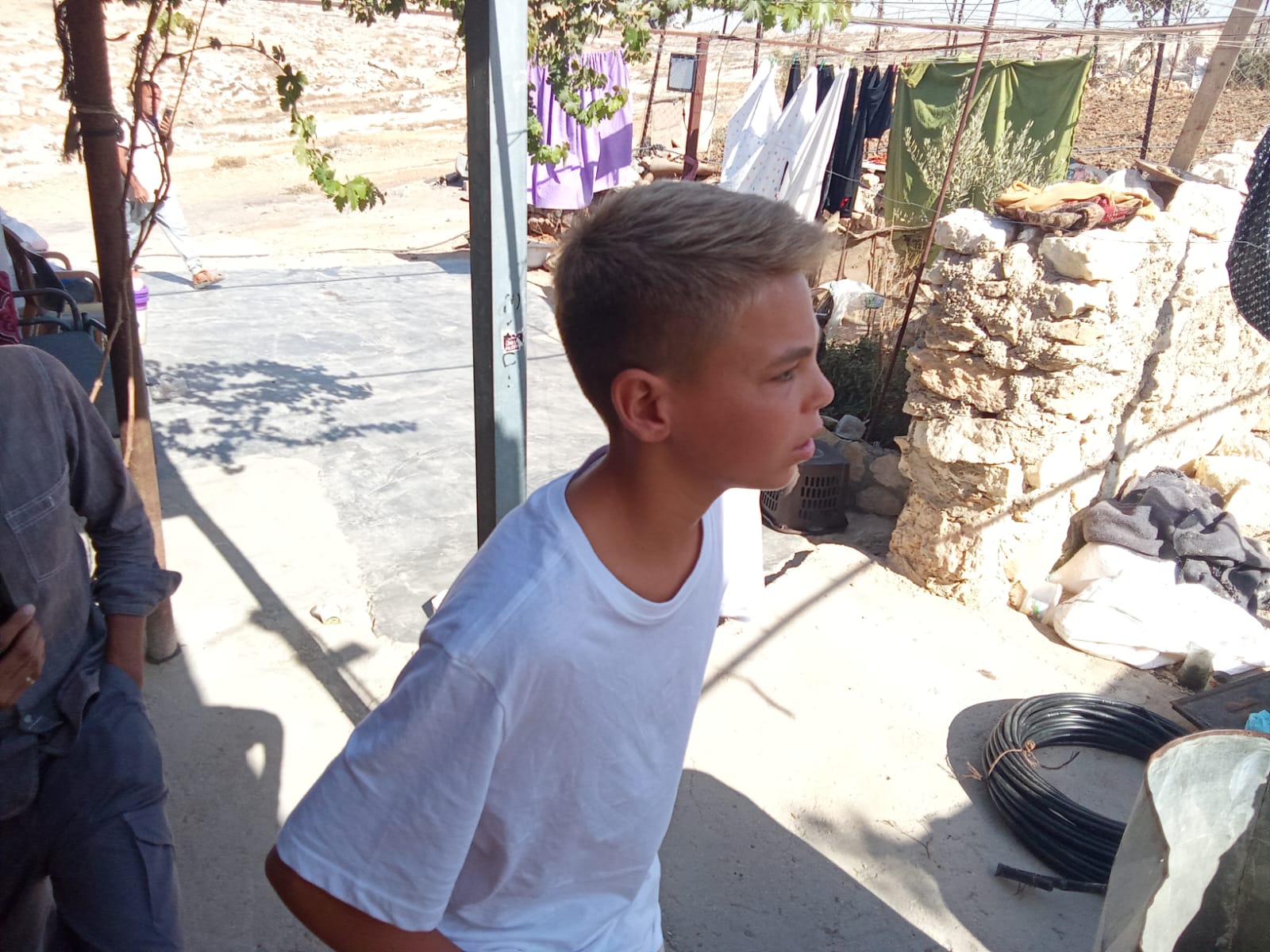
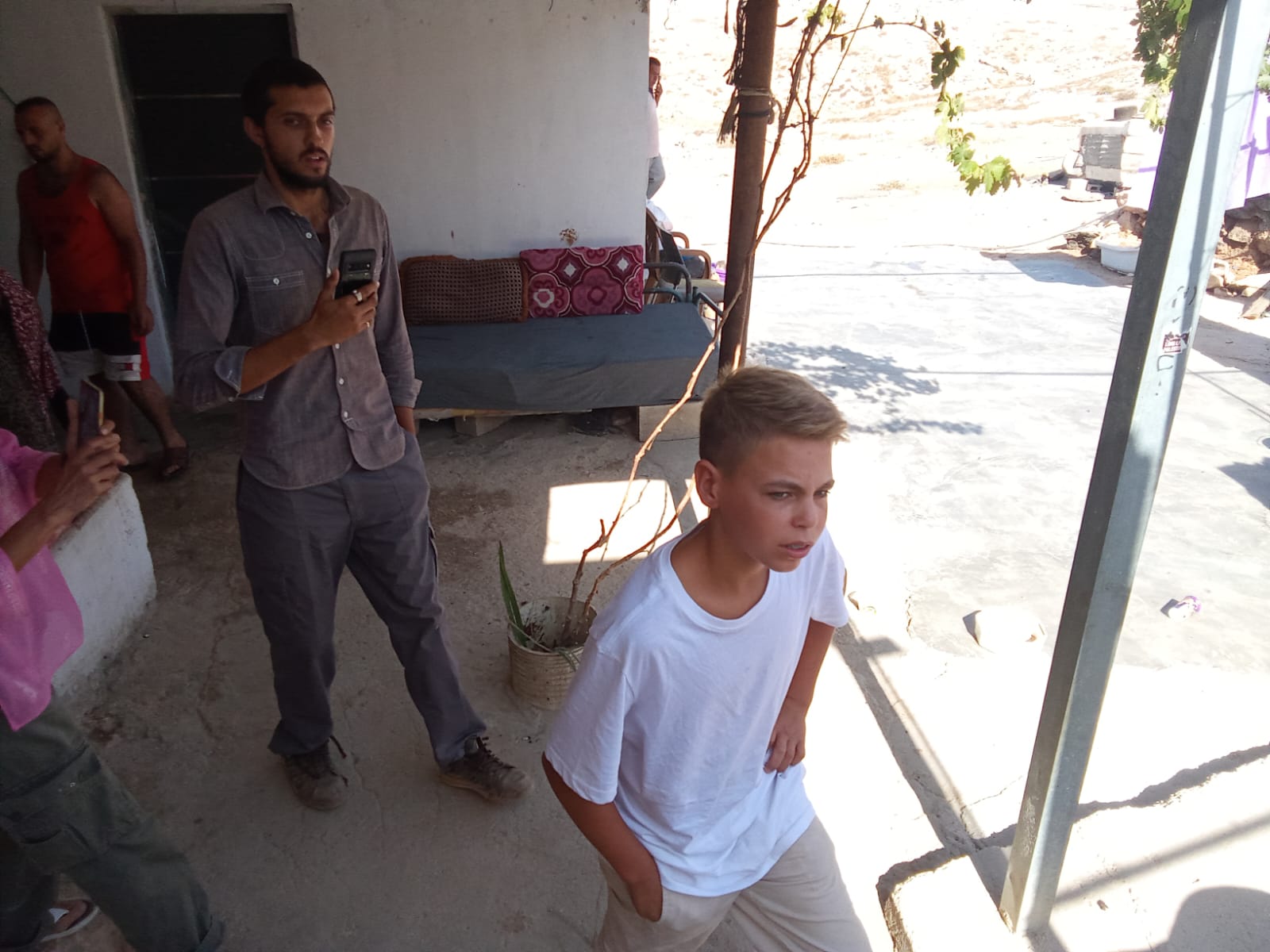
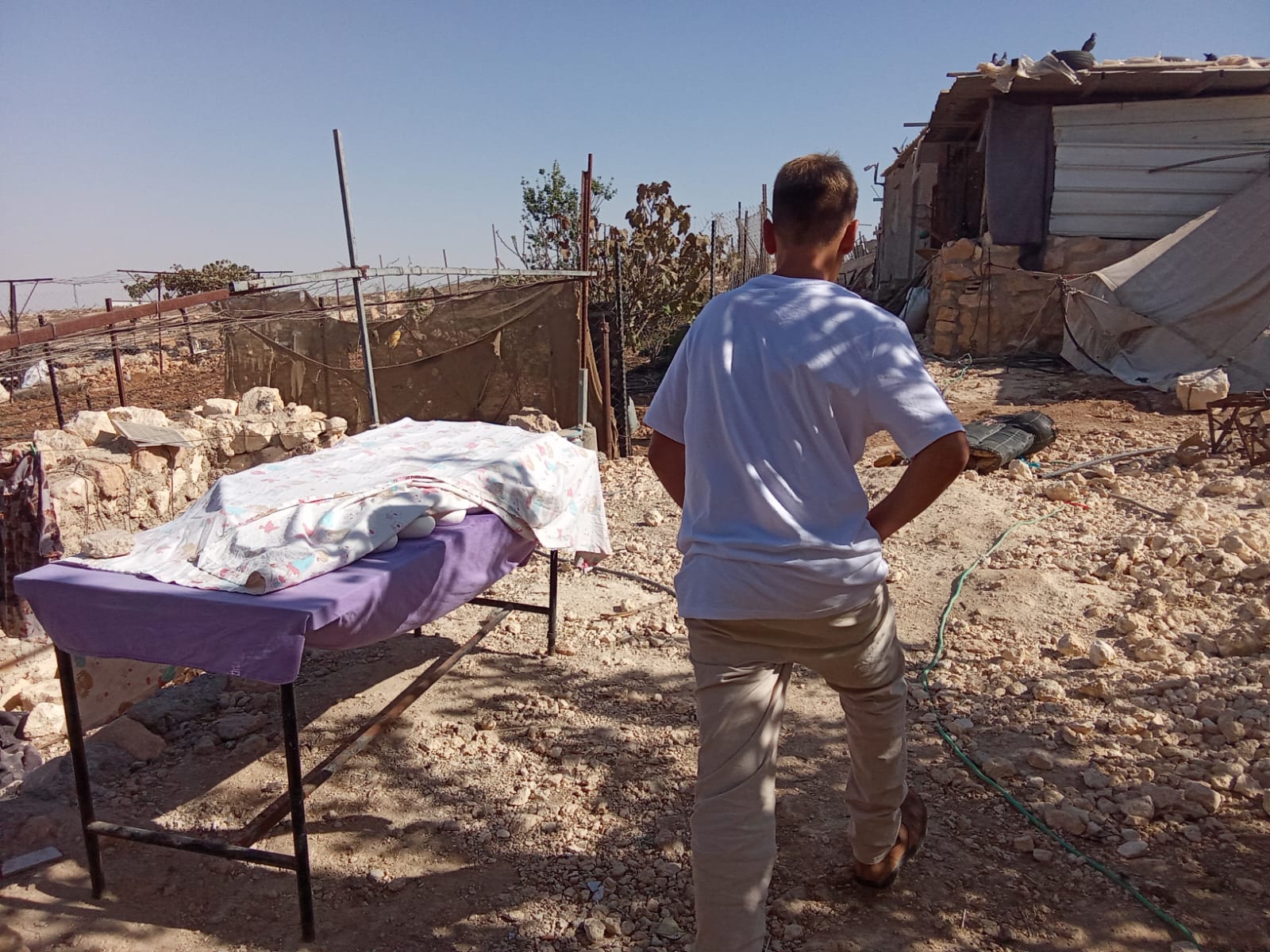
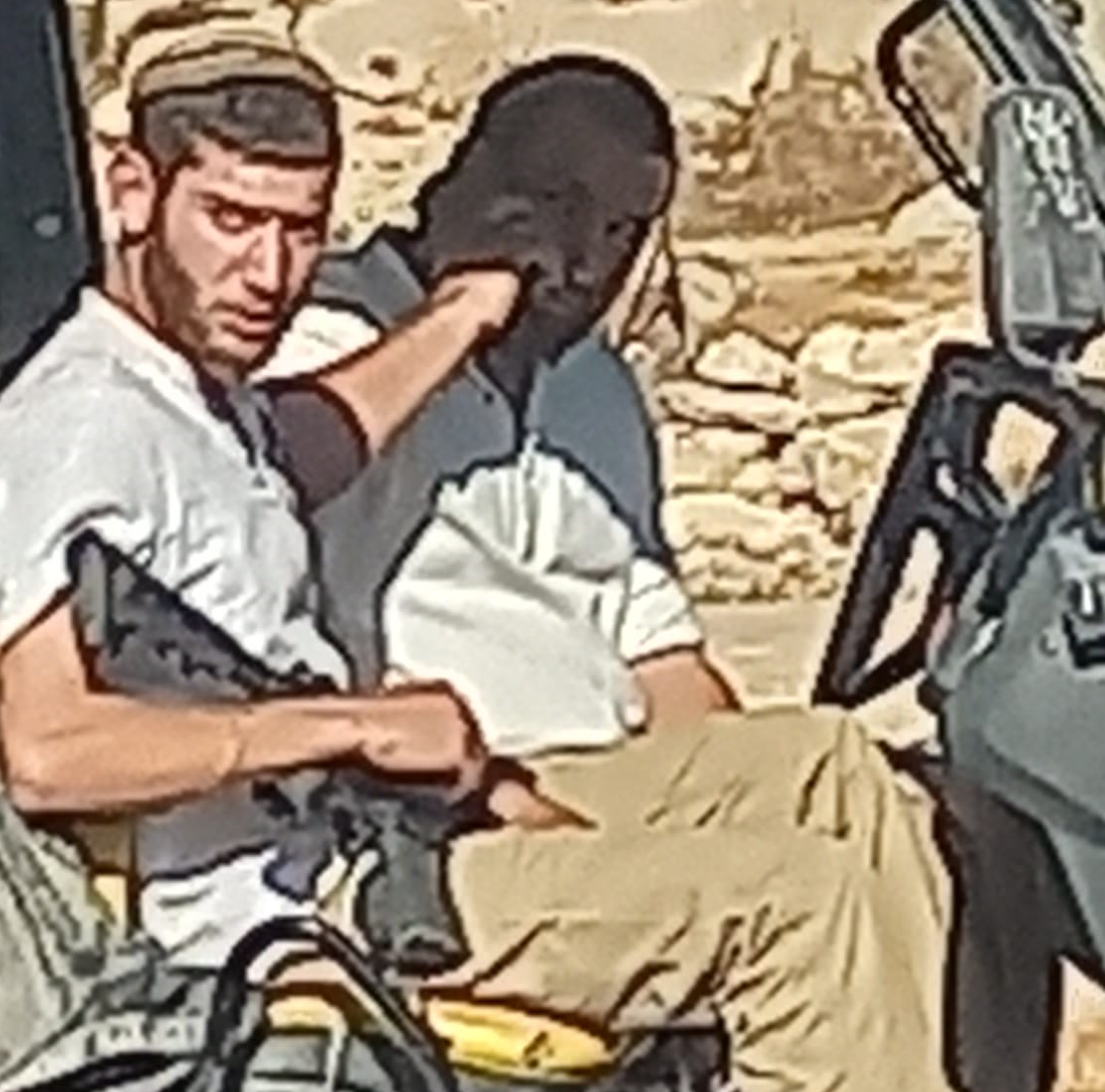
The story of the attack: At midday, Shayma, the wife of one of the sons, went down to their orchard below the family compound to pick pomegranates, a walk of just a few minutes. On her way back, without noticing, settlers approached, threw stones, hit her, and injured her legs. She fled home, with them chasing after her.
They arrived on ATVs and in a jeep. They entered the compound, sat down, and climbed with their feet onto the stone benches at the entrance (stepping on the seat cushions). Then they moved on to the rest of the “estate”: the vegetable garden, the water cistern, the water tanks, the panels, the animal enclosures—and in general, the homeowners themselves.
The family members shut themselves inside the house. The American volunteers (who were asleep during our visit) defended the place and filmed.
Bodi, the violent security coordinator (ravshatz) of Avigayil, also arrived (even though his entry into their compound was apparently prohibited).
Muhammad called the army and the Border Police; they did nothing. Eventually the police did arrive, and the officers helped drive them away.
At night, Muhammad and one of the sons—and sometimes volunteers as well—do not sleep: they patrol around and keep watch in defensive shifts—“the new Arab guard”! Because of this, they ask that plenty of coffee be brought to them for the night watches.
Photos: from the home cameras installed by B’Tselem, and also by volunteers.
Susiya: On the way back we stopped in Susiya at Azzam and Wadḥa’s. But they were under pressure and hurried to send us away. The reason: the army is looking for two Palestinian youths whom a settler complained he saw outside the village. Two vehicles of Doctors Without Borders (apparently non-Israeli) were also being expelled. We were as well. It turns out that according to army orders, none of us are allowed to be here—only residents are permitted to stay. No volunteers, no activists, no guests, no relatives, no friends! They are under pressure because in the end they will suffer and be arrested because of us.
It is unclear what legal status allows this—an ongoing closed military zone order? Another form of non-life.
Road 317: On the way back. Fenced vineyards of the murderer Yinon Levi on the hilltops.
Road 60: Plantings, apparently by the Jewish National Fund (JNF). Zanuta, from the eastern side to the abandoned Zanuta.
Location Description
Masafer Yatta*
See all reports for this placeSha'ab al-Butum
See all reports for this place-
This is one of the small Palestinian communities in Masafer Yatta in the southern Hebron Hills, near the settlement of Mitzpe Avigail.
Since the outbreak of the October 7, 2023 war, settler violence against residents has escalated greatly, as in the entire Palestinian community. This violent conduct receives full backing from the state and full cooperation from the IDF. The goal is to make the lives of the Palestinian residents miserable and make them abandon and leave.
The population consists of mostly shepherds who peacefully seek to cultivate the land and graze their sheep, whom the settlers treat as a dangerous enemy. They prohibit them from any movement related to herding sheep and cultivating the land and harm everything: trampling crops, breaking olive trees, smuggling herds, scaring shepherds, conducting wild searches of houses, shouting, cursing and threatening - at all hours of the day. "We are Besieged, but will not move from our land," says Lila G. New settlements are springing up around them. At first it's a bus or a truck that turns into residential buildings, on top of which every week more residential buildings and animal sheds are added. With the open encouragement of the current government, Jewish terrorism is raising its head, with authority and permission. The settlers have received army uniforms and weapons, and no one is stopping them. The police, who are supposed to protect the Palestinians from the settlers' riots, sometimes respond to calls for help, but in practice they don't do much more than provide them with a report, and they are required to go and file a complaint in Kiryat Arba Settlemnt police station . Though the settlers' identities are known, they are !never arrested.
-
South Hebron Hills
See all reports for this place-
South Hebron Hills
South Hebron Hills is a large area in the West Bank's southern part.
Yatta is a major city in this area: right in the border zone between the fertile region of Hebron and its surroundings and the desert of the Hebron Hills. Yatta has about 64,000 inhabitants.
The surrounding villages are called Masafer Yatta (Yatta's daughter villages). Their inhabitants subsist on livestock and agriculture. Agriculture is possible only in small plots, especially near streams. Most of the area consists of rocky terraces.Since the beginning of the 1980s, many settlements have been established on the agricultural land cultivated by the Palestinians in the South Hebron Hills region: Carmel, Maon, Susia, Masadot Yehuda, Othniel, and more. Since the settlements were established and Palestinians cultivation areas have been reduced; the residents of the South Hebron Hills have been suffering from harassment by the settlers. Attempts to evict and demolish houses have continued, along with withholding water and electricity. The military and police usually refrain from intervening in violent incidents between settlers and Palestinians do not enforce the law when it comes to the investigation of extensive violent Jewish settlers. The harassment in the South Hebron Hills includes attacking and attempting to burn residential tents, harassing dogs, harming herds, and preventing access to pastures.
There are several checkpoints in the South Hebron Hills, on Routes 317 and 60. In most of them, no military presence is apparent, but rather an array of pillboxes monitor the villages. Roadblocks are frequently set up according to the settlers and the army's needs. These are located at the Zif Junction, the Dura-al Fawwar crossing, and the Sheep Junction at the southern entrance to Hebron.
Updated April 2022
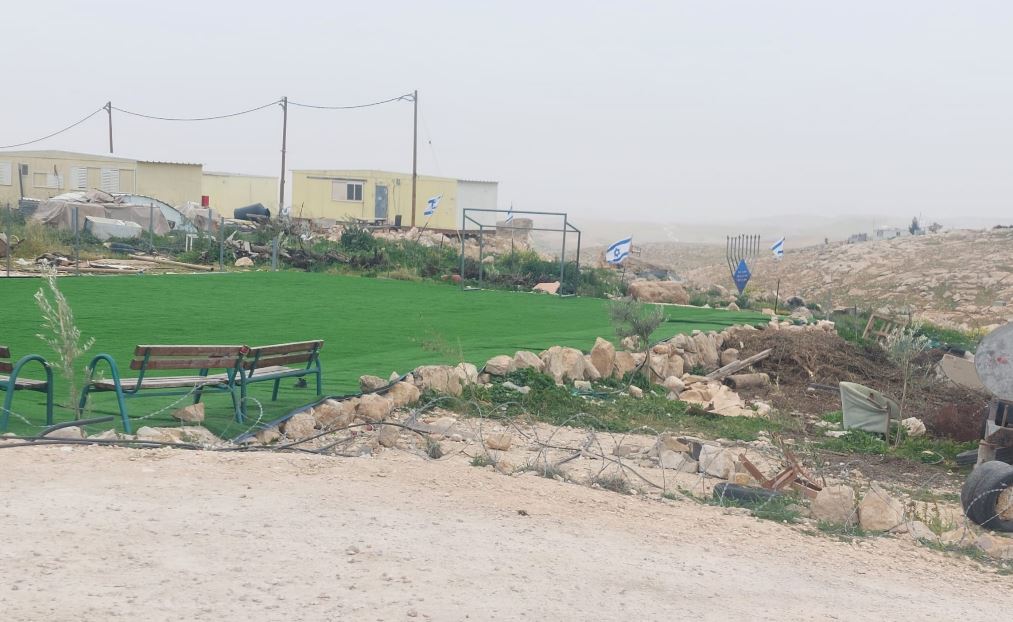 Michal TsadikFeb-17-2026Umm al-Khair: The soccer field for Palestinian children is surrounded by new trailers and lots of Israeli flags
-