
Sheikh Sa'id: "The amputated leg doesn't hurt. My heart hurts."
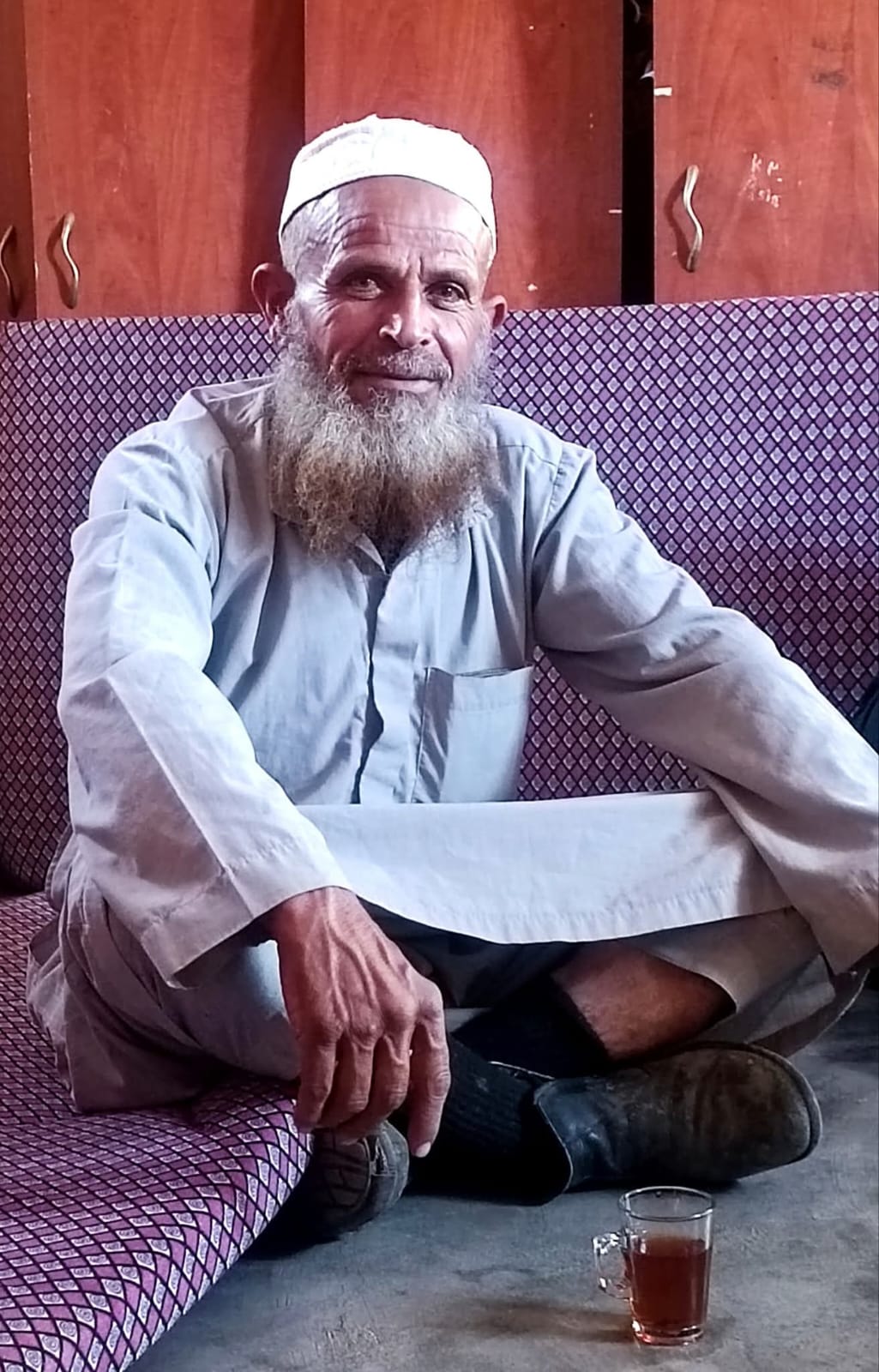
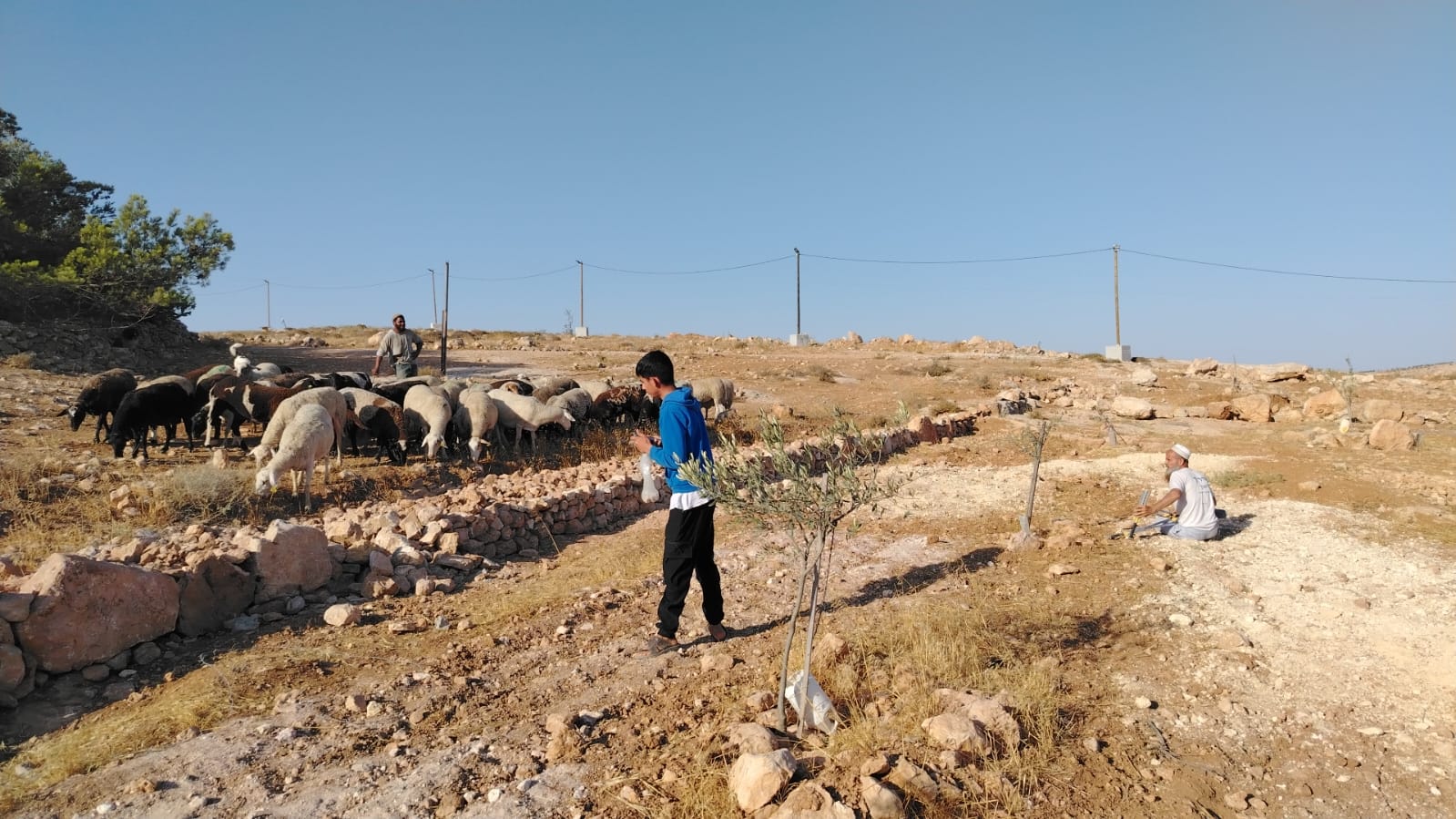
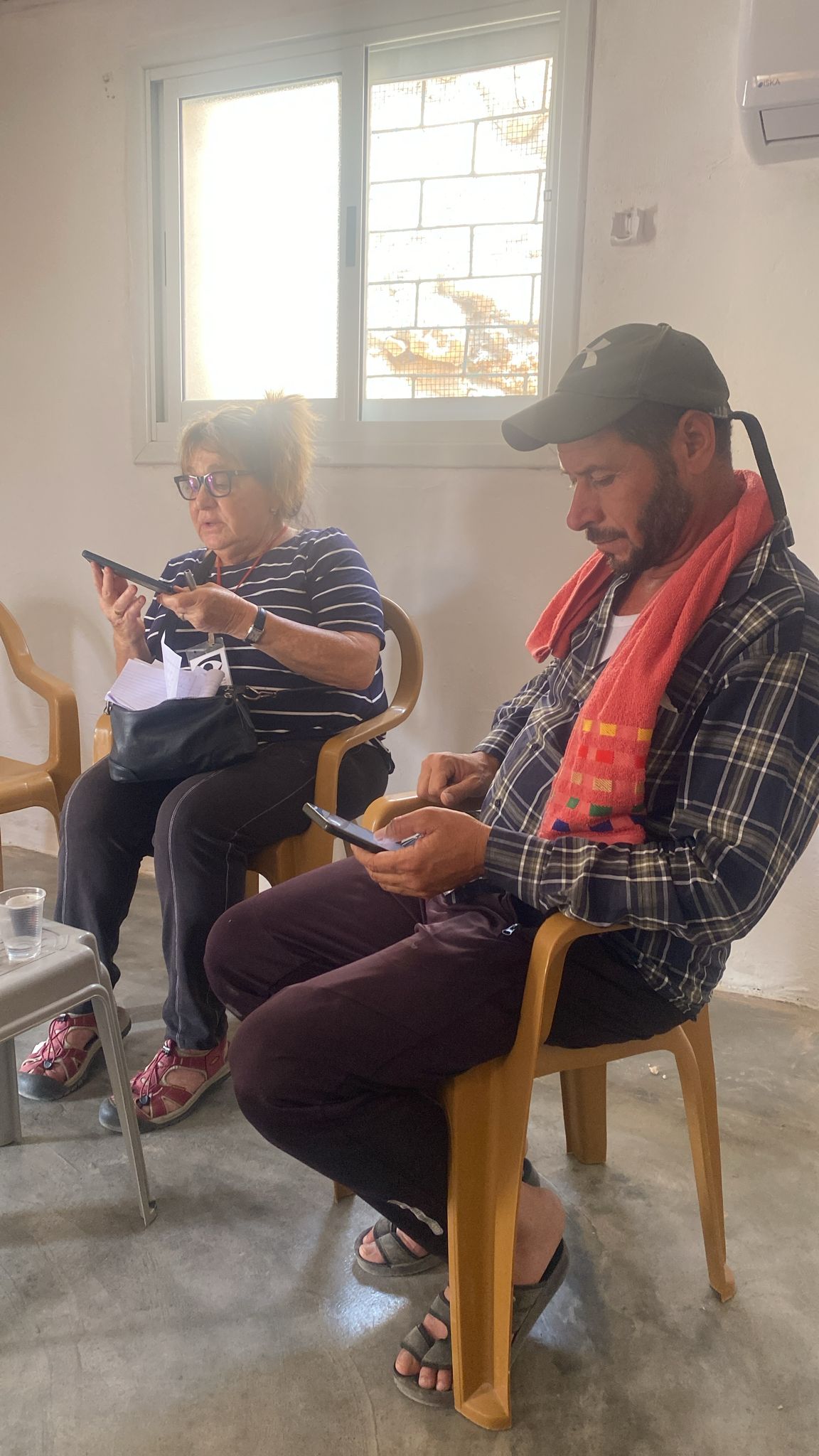
Following the attack on Nasser Adra in A-Tuwani three days earlier, we went to visit him. We were happy to know and to see that apart from some blows to the back and hands, he was in good condition and had only been in the hospital for a few hours. I filmed and recorded his story and attached it to the report.
And this is the gist of the matter: They saw settlers from the nearby Ma’on farm coming to his land and placing mattresses and furniture there and arranging to stay there. When he arrived with his young son and volunteers from abroad, the settlers, two adults and five boys aged 15-17, began beating him and knocking him down when he asked them to leave the place. The volunteers called the police and when they arrived, they took all the mattresses and equipment, removed the rioters and issued them an eviction order, since it was legally registered Palestinian land. Nasser was taken to the Yatta Hospital and after a few hours he was released home, and now, because of the order, they are not returning there for the time being.
Since he is in reasonable condition, he accompanied us to a-Rakiz to visit Sheikh Sa’id, who and his neighbours are suffering from bullying by the people of Mitzpe Avigayil settlement, who constantly invade his land with their herds.
As mentioned, the Sheikh was attacked a few months ago by settlers who seriously injured his leg, and at Soroka Hospital, where he was rushed, they had to amputate his leg. Today he told us what has been happening in recent weeks: the security coordinator of Mitzpe Avigayil, named Avichai, arrived with a shepherd and his herd and they roamed his territory. The sheep ate everything that grows there. When he complained to the police, they told him: Don’t go near them. File a complaint. On Friday, they told him to file a complaint on Sunday. When they went to the Hebron police station on Sunday with the photographs, they waited from 9 a.m. to 4 p.m. Only after they called a lawyer were they taken in for questioning. The policeman did not allow his son with the photographs to enter, and only Sheikh Sa’id entered.
Then the policeman told him that the settler had filed a complaint against him for throwing stones and tearing his shirt. Pay 500 NIS bail until the trial. A big argument began. Sheikh Sa’id insisted that he had no money and that he was not justified in paying (“I know they do it so I won’t complain,” he says). At the end of the argument, he gave up and withdrew his demand to pay. He also told the police to tell the settlers that he was spraying the weeds and that they knew that they were endangering their flock, which could be poisoned by the spraying. “Don’t bring in sheep so they won’t die,” he tells them. The policeman asks: “Why is your son running away?” It turns out that the son runs away when the police arrive because he is afraid that he will be arrested for no reason. The policeman asks: Why is he running away? Maybe he did something? After they finished with him, they called in the son, Elias, 16, and interrogated him. They interrogated him for an hour and a half, showing the policeman a video in which the settler pushes the elderly sheikh, who is on crutches, and knocks him to the ground. The incident took place on August 8. At the end of the interrogation, they told them that they are not allowed to approach a settler who arrives for a month, even when he comes with his sheep to his field. Just take pictures.
“Don’t cause trouble,” the police say.
In the meantime, the settlers continue to arrive every day with 50 heads of sheep and trample everything that grows. And they only take pictures, as the police ordered. The policemen know that the land belongs to the Raba’a family. Sheikh Sa’id lives there with his two wives. Another wife lives in Yatta. He has 14 children, from the ages of 32 to 5. He himself is a sheikh of the Da’wah sect in Islam, who believe in spreading Islam through the ways of kindness and peace, as Muhammad tells me: Da’wah is good. The word Da’wah means invitation.
When we left, we saw a police car entering A-Tuwani. We inquired, and they went to the police station at Ma’on Farm and did not enter A-Tuwani.
On the way to the foot of Mitzpe Asael, new flags are symbols of messianism in the southern Hebron Mountains.
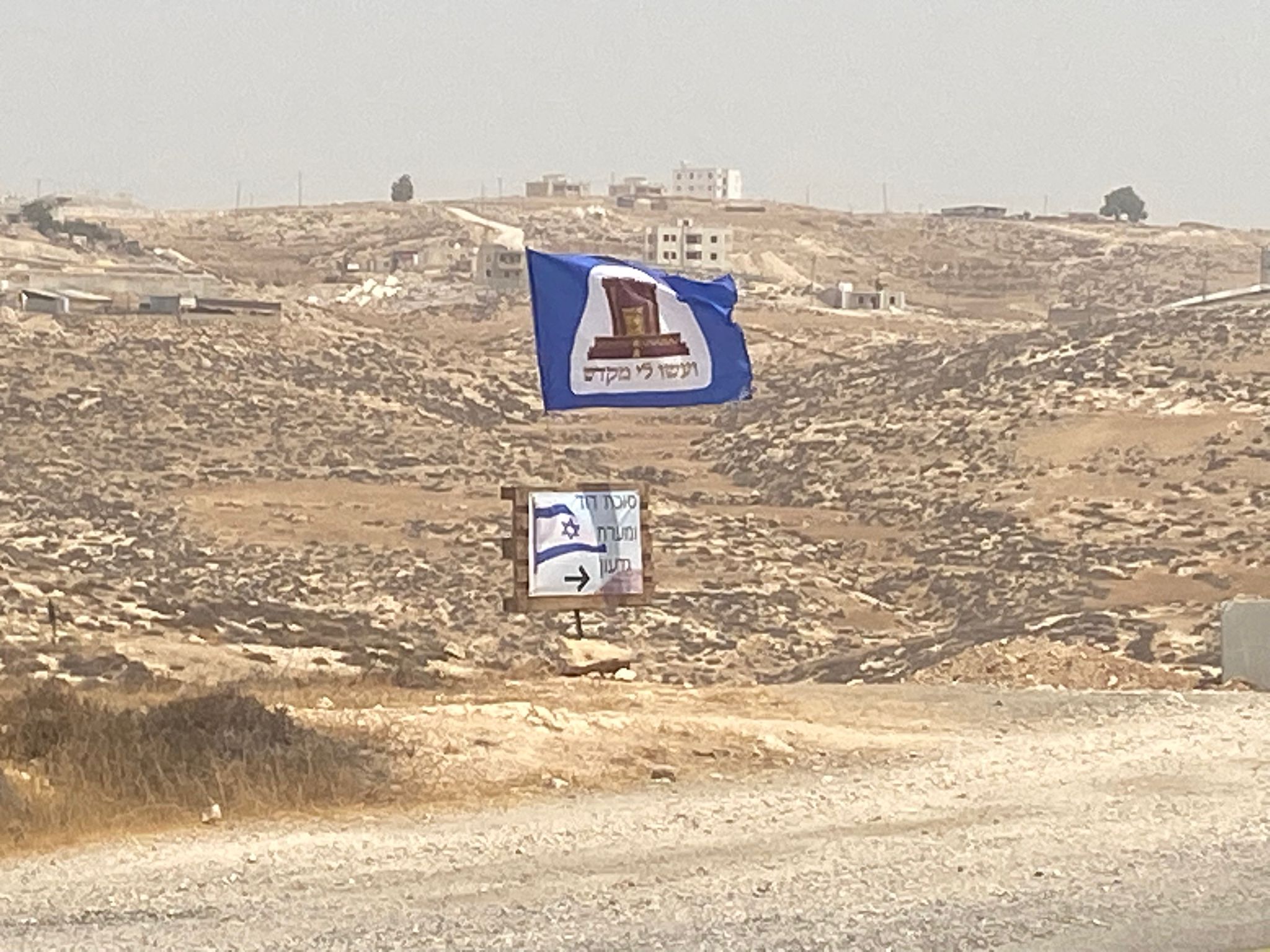
On the way to the foot of Mitzpe Asael, new flags are symbols of messianism in the southern Hebron Mountains.
Location Description
A-Tuwani
See all reports for this place-
A-Tuwani
The locals came to a-Tuwani during the 20th century from the village of Yatta. They settled in abandoned ruins, utilizing the arable land, pastures for grazing sheep and the abundance of natural caves for habitation. The residents who settled in the caves came from families who could not purchase land for houses in the mother villages, as well as shepherds who did not have enough land to graze. They were joined by clan members who quarreled with other families in the mother locality.
Some of the residents today live in concrete buildings built above the caves. In the area of the village are several water cisterns and an ancient water well called 'Ein a-Tuwani. Local residents are forced to buy water in containers and transport them through many road blocks to the village. With the help of international organizations, an electrical system was installed in the village. In the late 90s of the 20tTh century, an elementary school was established in the serving several small villages in the area.
In 2004, MachsomWatch began visiting and reporting from the Khirbet Tuwani cave village, which suffers badly from the settlers of nearby outposts, and especially from the extremist Ma'on outpost. . The settlers contaminate cisterns, poison the flocks and uproot trees.Particularly notable is the harassment of children from the surrounding villages on their way to school in a-Tuwani, so much so that military escort of children is required to separate them from the attackers (this was arranged following an initiative of the organization's members). In the past year, the escort has been without the vital presence of overseas volunteers.
Near a-Tuwani there are several families who have returned to the caves due to the incessant demolitions of the civil administration (as there is a total construction ban in all of area C). Destroyed are not only residential and agricultural buildings, but also water pipes, machinery. Even water cisterns are clogged up. a-Tuwani residents have created an association for non-violent demolition protests, but in the past year the army’s harsh harassment and settler violence have intensified and escalated. The incident of the small generator confiscation, which left a young man paralyzed, is one of many examples - any legitimate protection of property rights leads to violence and even shootings by the army and the civil administration.
Updated April 2022
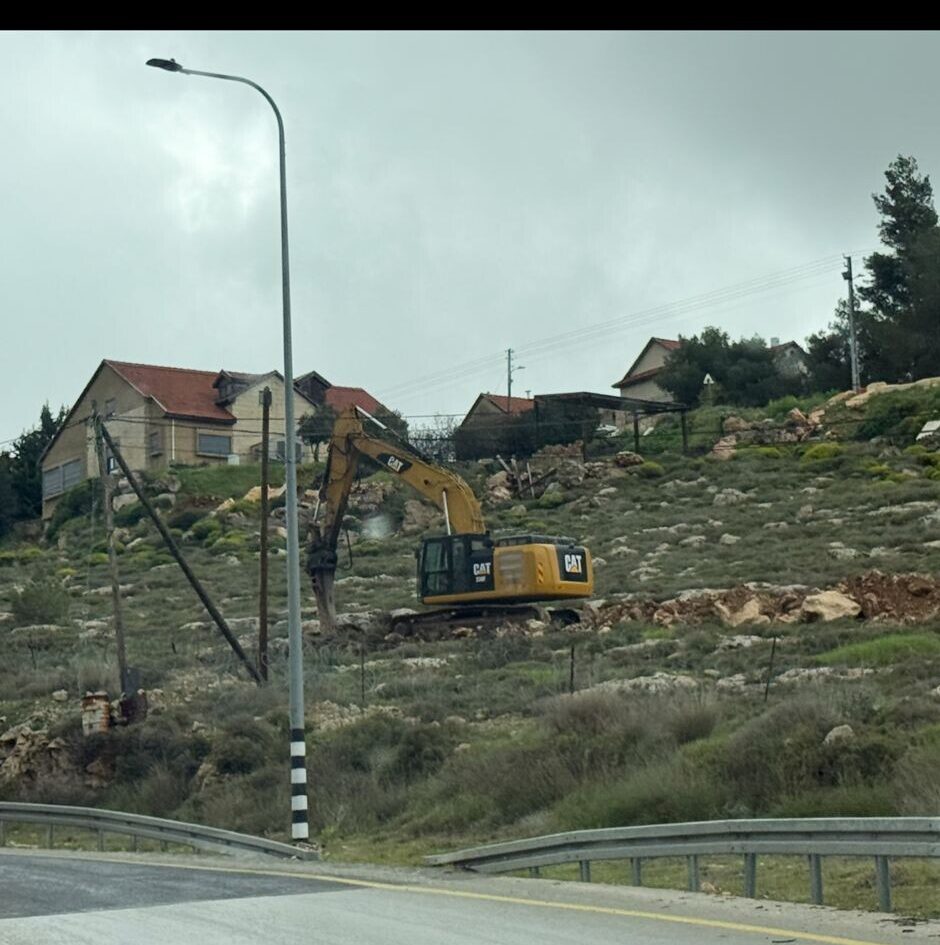 MuhammadFeb-24-2026South Hebron Hill, Beit Hagai: Paving an internal security road
-
South Hebron Hills
See all reports for this place-
South Hebron Hills
South Hebron Hills is a large area in the West Bank's southern part.
Yatta is a major city in this area: right in the border zone between the fertile region of Hebron and its surroundings and the desert of the Hebron Hills. Yatta has about 64,000 inhabitants.
The surrounding villages are called Masafer Yatta (Yatta's daughter villages). Their inhabitants subsist on livestock and agriculture. Agriculture is possible only in small plots, especially near streams. Most of the area consists of rocky terraces.Since the beginning of the 1980s, many settlements have been established on the agricultural land cultivated by the Palestinians in the South Hebron Hills region: Carmel, Maon, Susia, Masadot Yehuda, Othniel, and more. Since the settlements were established and Palestinians cultivation areas have been reduced; the residents of the South Hebron Hills have been suffering from harassment by the settlers. Attempts to evict and demolish houses have continued, along with withholding water and electricity. The military and police usually refrain from intervening in violent incidents between settlers and Palestinians do not enforce the law when it comes to the investigation of extensive violent Jewish settlers. The harassment in the South Hebron Hills includes attacking and attempting to burn residential tents, harassing dogs, harming herds, and preventing access to pastures.
There are several checkpoints in the South Hebron Hills, on Routes 317 and 60. In most of them, no military presence is apparent, but rather an array of pillboxes monitor the villages. Roadblocks are frequently set up according to the settlers and the army's needs. These are located at the Zif Junction, the Dura-al Fawwar crossing, and the Sheep Junction at the southern entrance to Hebron.
Updated April 2022
MuhammadFeb-24-2026South Hebron Hill, Beit Hagai: Paving an internal security road
-