
A tour in the Jordan Valley


Ein Rashash
We drove to Ein Rashash, dwelling site of a Palestinian shepherd community near Duma village. Next to this community an illegal settler-colonist outpost was erected in 2017, pretending to be a farm ranch, and bearing the ironic name Angels of Peace… Since its founding, the shepherds’ lives are hell. This gang of terrorists harasses them, blocks their paths and attacks them, all in order to chase them away from grazing grounds east of the two present outposts. It took us an hour of walking around in this area and getting lost time and again until we actually found the Palestinian encampment. The Jewish outpost on the other hand seems to be permanently settled in its structures.
We met two groups of EAPPI activists who reside at the Palestinian village of Khirbat Yanoun, as well as Guy Hircefeld of Taayush and another activist who had concluded their shepherd accompanying activity for the day. This ended earlier than usual because a settler-colonist came out on his mini-tractor, harassing the shepherds and scattering their flock. He summoned the Israeli army for help, as usual, and the soldiers removed the accompaniers. There was nothing to be done except repeatedly phone the DCO and warn of the violence.
Al Ujja
I’ve been visiting this spring for ten years now, a spring that used to be an abundant and amazing source of water, I’ve been following its water-supply to the Palestinian communities in the area and to the Dead Sea, and mostly seeing dried ditches and a barren spring. In April there is usually still a measly drip but from the month of May on everything dries up. The scenes are heart-rending. Thousands of people lived, grew vegetables and watered their livestock with this water. No longer. The drying up has happened for two reasons: the first is a series of dry years and a tough drought. The second and main reason is the wild and extensive pumping of water by giant pumps (Na’aran 1, 2, 3) in order to provide it almost exclusively to Jewish settler-colonies. Today, at the beginning of our journey, finally a sight for sore eyes: water ditches with water running over and further. Further on, the “slide” pours large quantities of water to the pool below, and an abundant spring of water above. Along the ditches sit Palestinians and soak their feet. Others open picnic tables and enjoy themselves there for the first time in years. Such an experience used to be an important part of their lives in the past and has been denied them in recent years. How much longer will they be able to enjoy the water of winter 2019? Most likely very soon Jews will be pumping the water and the ditches will once again be dry and barren.
Bardala
We drove there to show our guests how Mekorot (Israeli water company) steals all of the water from a Palestinian community that is situated over impressive water sources. The giant pumps are stuck in the heart of the Palestinian community and the only pump belonging to the Palestinians stands deserted because they have been forbidden to draw water from the depths pumped by Mekorot. Later we ran into a group of workers with a bulldozer, laying a large pipe which according to the contractor will provide water to the water reservoir at the top of the hill overlooking the area’s Jewish settler-colonies (Mekhola, Giv’at Sal’it, Shadmor Mekhola). This water is intended to supply all the needs of the northern Palestinian Jordan Valley settler-colonies at the expense of the local indigenous population, inhabitants of Bardala and Ein Al Beida, whose allotment of water is diminishing year by year.
Gokhia Gate
We stopped by the new red gate, on both sides of which earth dykes rise, which the recent rains have lowered a bit, as well as giant boulders and ditches. I explained to our guests that all of this has one purpose only – to disconnect the residents of the Palestinian Jordan Valley from the rest of the West Bank which is the hub of their everyday lives. Note – the Palestinian Jordan Valley is part and parcel of the West bank, of Palestine, occupied by Israel, and any such disruption is clearly illegal, immoral and inhuman! It prevents medical care, schooling, family ties and free passage to the hub of life for shopping, celebrating, socializing and everything else! And why? Simply to make the lives of the local population in the Palestinian Jordan Valley miserable enough so that they get up and leave. This is quiet ethnic cleansing, no less.
I said all of this to the woman-officer and the soldier who leapt at us with their army jeep as soon as we stopped by the gate. Here’s our verbal exchange:
Officer: You’re not allowed to be here.
Me: Why?
Officer: It’s a military zone.
Me: Looks perfectly civilian to me, just a gate!
Officer: No, it’s a military zone. What are you doing here anyway?
Me: Glad you’re asking. I’m here with guests, explaining to them the ways in which this gate has been hugely disrupting the lives of Palestinians who have been living here for generations.
(The woman in uniform listened to this explanation, the male soldier seems cross at my ‘harassment’ of them).
As I concluded, the woman officer said, pretending innocence: There are no Palestinians here. Only Jewish settlements (pointing at Beqa’ot and R’oi). Where do you see Palestinians here?
Me: I’ve already met you, you’re not new around here, and you know very well that there are many Palestinian shepherd communities here: Al Hadidiya, Homsa, Makhoul, Samra and others. They cannot lead a normal life when they’re so disconnected from the hub of their life.
Officer: What’s the problem? They can go through the checkpoint (Hamra, 10 kilometers away).
Me: In order to get across to this village right here (I point at ‘Atouf, a few kilometers away) they need to make a 30-kilometer detour. Does that seem reasonable to you? What’s this gate for anyway?
Officer: So they won’t smuggle stuff, weapons etc…
Me: But it’s all one land – here’s Palestine, there’s Palestine, no border. Besides three weeks ago this gate stood broken and for three whole weeks nothing (no “security breach”) happened.
Officer: Yes, they keep breaking the gate.
Me: “They” didn’t break a thing. The Israeli army shattered it and pushed down the concrete blocs in order to have its tanks get through for a military maneuver.
Officer: (again) But what’s the problem? They can drive through the checkpoint.
Me: Where do you live?
Officer (hesitating): In Yavne. (In the southern part of Israel’s central region)
Me: So you too drive from your home through Netanya (dozens of kilometers north of there) just to buy groceries or get to school?
Officer: It’s not up to me. I just follow orders. I didn’t make the rules. I can’t change them.
Me: Right. I’m not asking you to change them. But under that uniform hides a human being, and I’m addressing the human being in you. You don’t have to do anything. Just listen and think about the instructions you’re carrying out and what they do to the people living here.
This was the end of the conversation. She turned to her jeep and we proceeded on our way.
Location Description
A-Rashash
See all reports for this place-
A-Rashash was founded by the patriarch of the family, Haj Suleiman, who fled in 1948 from Tel Amal near Tivon. He leased land around the valley from one of the Palestinian residents and raised a glorious family that today consists of three family heads numbering about 100 people, with electricity from solar panels and water that they bring in trailer tanks from Ein Samia. There is no school there and the children attend an elementary school in the village of Duma, which is over the mountain at a distance of about 5 kilometers, and leave when they reach high school.
The daily life of the residents of the place consists of trying to avoid the machinations and damage of the settlers of the settlements and outposts that surround their village, and to protect the grazing lands of the sheep that remain in their possession. At the same time there is the constant threat of the orders of the civil government carried out by the army. About 3 years ago the residents decided to give up the extensive grazing areas and the access to the Ein Rashash spring and they graze around the encampment and buy feed for the sheep for a lot of money.
After the outpost hooligans managed to drive out the residents of Ras a Tin, Ein Samia and Kaboun, hence began the severe day-and-night harassment of of A Rashash. Since August 2023, the Jordan Valley activists have been holding 24/7 vigils in the pastoral communities to protect them and encourage them to stay on their land. There are refreshing responses, but not enough to provide the residents with long-term protection. You are Welcome to join.
-
Bardala
See all reports for this place-
A relatively large township in Area B in the northern part of the Valley, home to about 300 families of farmers and other families. The villages of Bardala and Kardala, located nearby, sit on a very large reservoir of groundwater. In 1968, an "agreement" was signed between the occupier (represented by the Mekorot water company) and three villages (including Ein al-Bida), stipulating that in exchange for their agreement to stop pumping water their wells, Mekorot would establish its own pumping stations on their land and allocate them a "generous" quota of waterinfo-iconfor at the cost of pumping only (a few cents per cubic meter). Over the years, Mekorot violated the agreement, decreased the quotas drastically (from 240 cubic meters per hour to 100 and sometimes 40 cubic meters), and quadrupled the price. The residents refused to pay, and the PA paid for them. In late 2024, the army began paving a new road around Karbala and Bardala. According to the plan, the road will surround and Karbala from the south and Bardala from north and west, and finally turn east to Highway 90. The road will completely surround Bardala on all sides, cutting off the village from all its lands and imprisoning the village within its boundaries. The residents will no longer be able to come and work their lands freely. Our friends were unable to see the roadworks because the army had set up a checkpoint on the road to the new route.
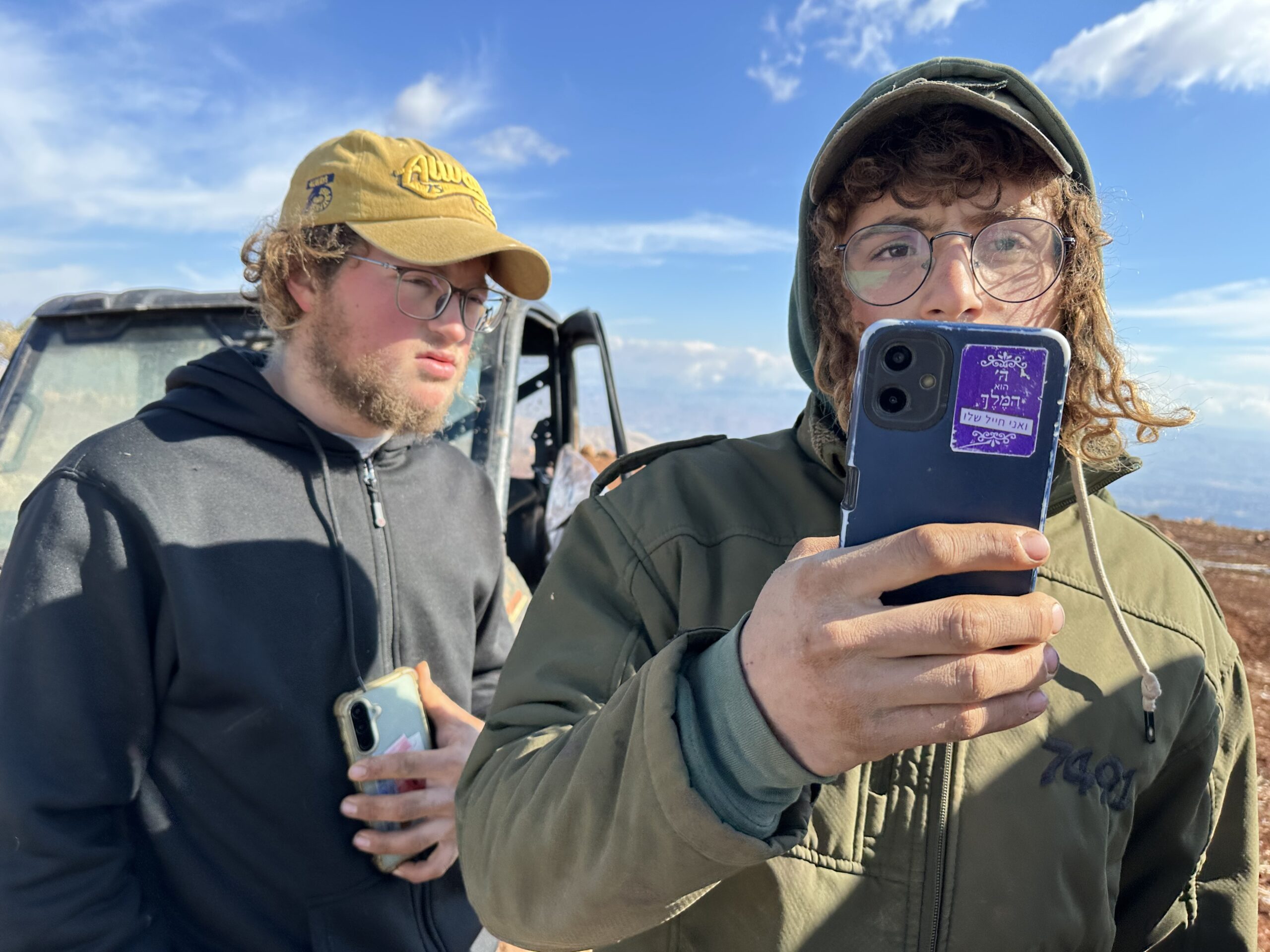 Nurit PopperDec-16-2027Nurit is threatened by settlers from close range.
-
Jordan Valley
See all reports for this place-
Jordan Valley The Jordan Valley is the eastern strip of the West Bank. Its area consists of almost a third of the West Bank area. About 10,000 settlers live there, about 65,000 Palestinian residents in the villages and towns. In addition, about 15,000 are scattered in small shepherd communities. These communities are living in severe distress because of two types of harassment: the military declaring some of their living areas, as fire zones, evicting them for long hours from their residence to the scorching heat of the summer and the bitter cold of the winter. The other type is abuse by rioters who cling to the grazing areas of the shepherd communities, and the declared fire areas (without being deported). The many groundwaters in the Jordan Valley belong to Mekorot and are not available to Palestinians living in the Jordan Valley. The Palestinians bring water to their needs in high-cost followers.Nurit PopperDec-16-2027Nurit is threatened by settlers from close range.
-