
A-Tuwani, Sansana (Meitar Crossing)
We left with a car loaded and packed with things collected by Semadar and a friend from Kibbutz Elon.
Muhammad and Ariela, as usual lately very full. Hope this indicates that people are making a living.
Last Monday, on July 26, Fais called Muhammad. He istol head of the Zenuta Council, and said that the day before, the army had arrived in Zanuta to photograph houses that had received demolition orders three months ago.
We went to visit Omar at Maktal Umm-Salem,who a few weeks ago had three tents confiscated from him. Nada and Yasser, two of his children ran towards us with great joy and helped us unload some of the things we brought them. As usual, the great joy is with the toys. Omar’s wife again told a story about a skimmer that the settlers raise to keep track of what is happening in their territory and therefore they do not dare to set up a new tent.
On the way to A-Tuwani, to meet Nava and her friends, who had came to stay there for a few days to accompany the shepherds and protect them from the thugs of the Havat Maon, we stopped at Abu Safi. Abu Safi has run out of fuel for his tractor. He told us that he could not fetch water, because even the donkey he had was dead and he did not have a 4×4 vehicle. We drove to get some jerrycans and bring fuel to the tractor so he could get water.
We unloaded the rest of the equipment that was in the car and here too the great joy was with the toys. Lucky that a child remains a child even in these impossible conditions. Abu Safi’s young daughters were happy with the Lego and glasses we brought.
We met people from the Palestinian Ministry of the Environment who came to check how the family is doing in the difficult conditions, especially this year, after the dry winter. Already last time Abu Safi told me that this year he grows vegetables only for self-consumption because of the great shortage of water. In a conversation with one of the people from the PA, we talked about the water problem in the territories and he told me that they had written a report on the subject. I very much hope that we can raise and spread the issue of water in the occupied territories.
We continued with the jerricans to A-Tuwani to meet Nava. We met Vanessa and Gali, two young students and Naomi, a friend of Nava who together go out to accompany shepherds in the Jordan Valley and this time came to the southern Hebron Mountains. That morning some people from the village went out to measure their private lands, to mark the areas between the families, and our “pleasant” settlers from Havat Maon went down to them and also called the police. Nava and her friends are staying with Basel and in the morning Basel’s mother gives them Arabic lessons along with breakfast. A wonderful idea for an Arabic course.
On a A-Tuwani road, we came across a young, fenced-in vineyard, another settler takeover of private Palestinian land “acre by acre”. It’s the only green color we’ve seen in all the gray shades of brown along the way.
We returned to Abu Safi with the jerrycans full of diesel so he could take the tractor to fetch water. The so-called back-to-back way of doing things.

A-Tuwani
See all reports for this place-
A-Tuwani
The locals came to a-Tuwani during the 20th century from the village of Yatta. They settled in abandoned ruins, utilizing the arable land, pastures for grazing sheep and the abundance of natural caves for habitation. The residents who settled in the caves came from families who could not purchase land for houses in the mother villages, as well as shepherds who did not have enough land to graze. They were joined by clan members who quarreled with other families in the mother locality.
Some of the residents today live in concrete buildings built above the caves. In the area of the village are several water cisterns and an ancient water well called 'Ein a-Tuwani. Local residents are forced to buy water in containers and transport them through many road blocks to the village. With the help of international organizations, an electrical system was installed in the village. In the late 90s of the 20tTh century, an elementary school was established in the serving several small villages in the area.
In 2004, MachsomWatch began visiting and reporting from the Khirbet Tuwani cave village, which suffers badly from the settlers of nearby outposts, and especially from the extremist Ma'on outpost. . The settlers contaminate cisterns, poison the flocks and uproot trees.Particularly notable is the harassment of children from the surrounding villages on their way to school in a-Tuwani, so much so that military escort of children is required to separate them from the attackers (this was arranged following an initiative of the organization's members). In the past year, the escort has been without the vital presence of overseas volunteers.
Near a-Tuwani there are several families who have returned to the caves due to the incessant demolitions of the civil administration (as there is a total construction ban in all of area C). Destroyed are not only residential and agricultural buildings, but also water pipes, machinery. Even water cisterns are clogged up. a-Tuwani residents have created an association for non-violent demolition protests, but in the past year the army’s harsh harassment and settler violence have intensified and escalated. The incident of the small generator confiscation, which left a young man paralyzed, is one of many examples - any legitimate protection of property rights leads to violence and even shootings by the army and the civil administration.
Updated April 2022
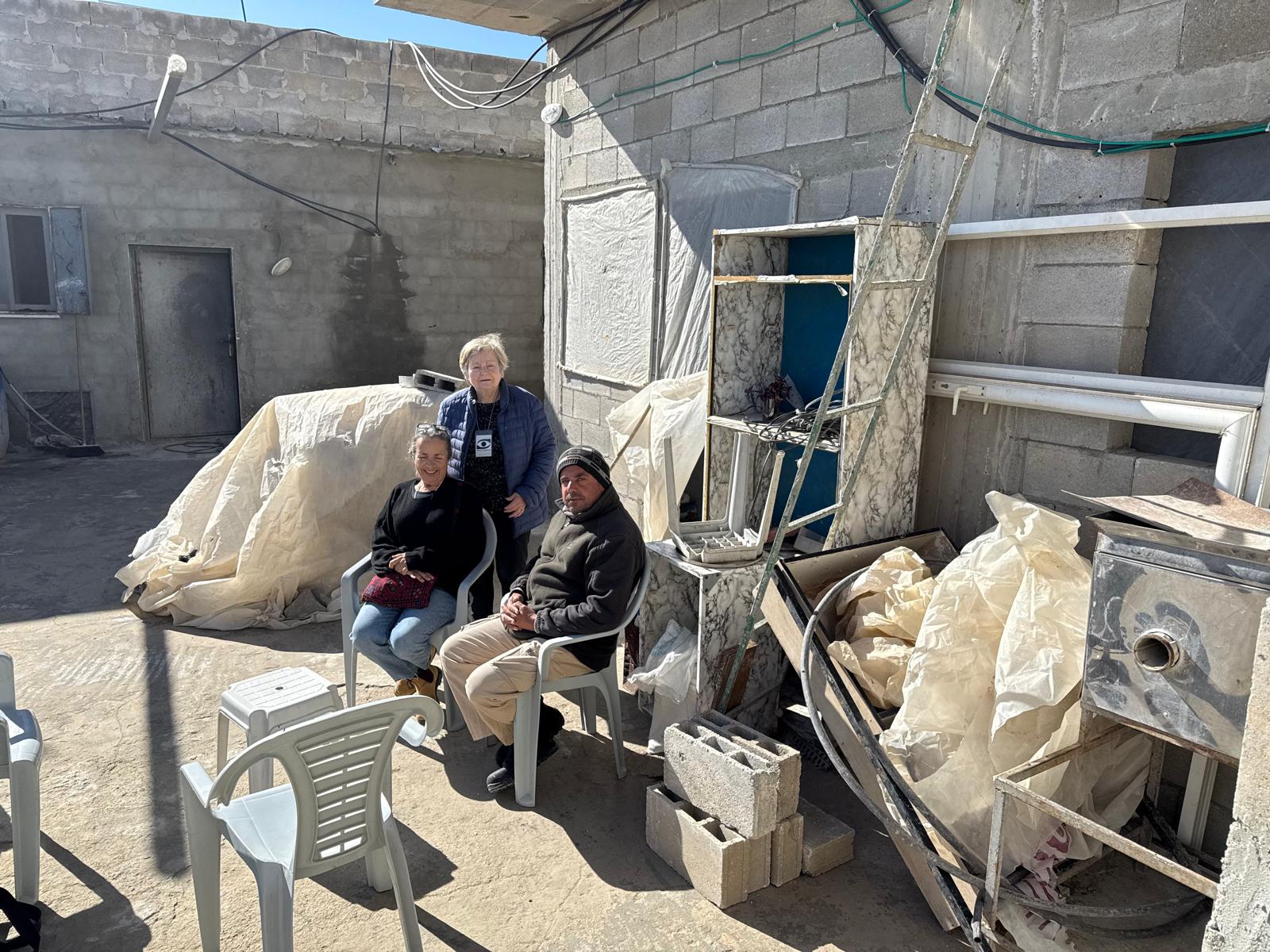 Muhammad D.Jan-4-2026At the Nassar family in Wadi Ras al-Jerfan
-
Meitar checkpoint / Sansana
See all reports for this place-
Meitar Checkpoint / Sansana The checkpoint is located on the Green Line and serves as a border crossing between Israel and the West Bank. It is managed by the Border Crossing Authority of the Defense Ministry. It is comprised of sections for the transfer of goods as well as a vehicle checkpoint (intended for holders of blue identity cards, foreign nationals or diplomats and international organizations). Passing of Palestinians is prohibited, except for those with entry permits to Israel. Palestinians are permitted to cross on foot only. The crossing has a DCO / DCL / DCL / DCL (District Coordination Office), a customs unit, supervision, and a police unit. In the last year, a breach has been opened in the fence, not far from the crossing. This breach is known to all, including the army. There does not appear to be any interest in blocking it, probably as it permits needed Palestinian workers without the bureaucratic permits to get to work in Israel. Food stalls and a parking area economy have been created, but incidents of violent abuse by border police have also been recorded. Updated April 2022
-