
A water container near the town of Tubas was demolished

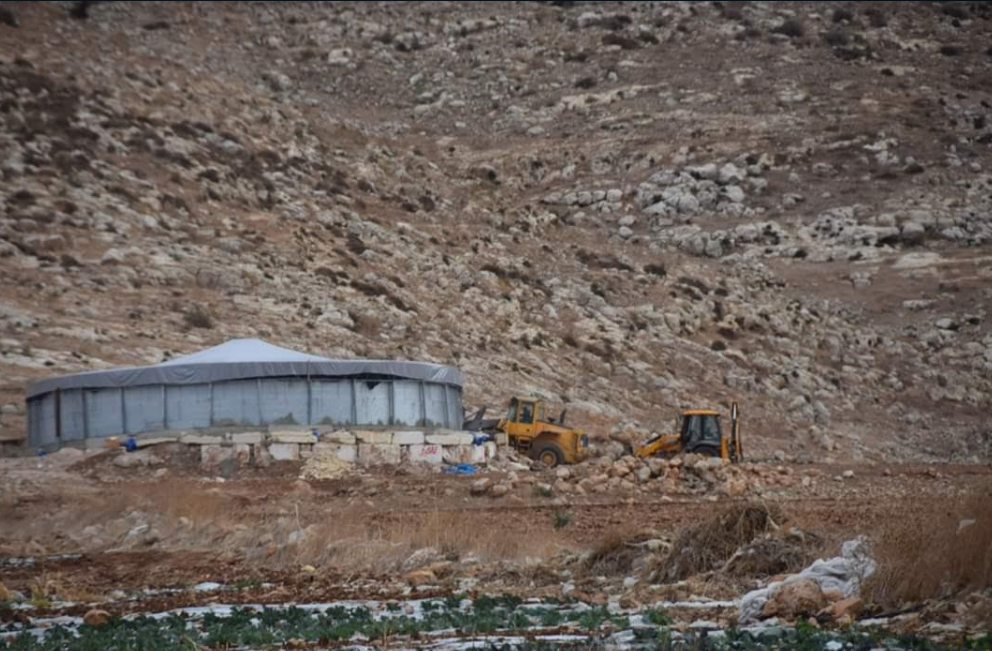
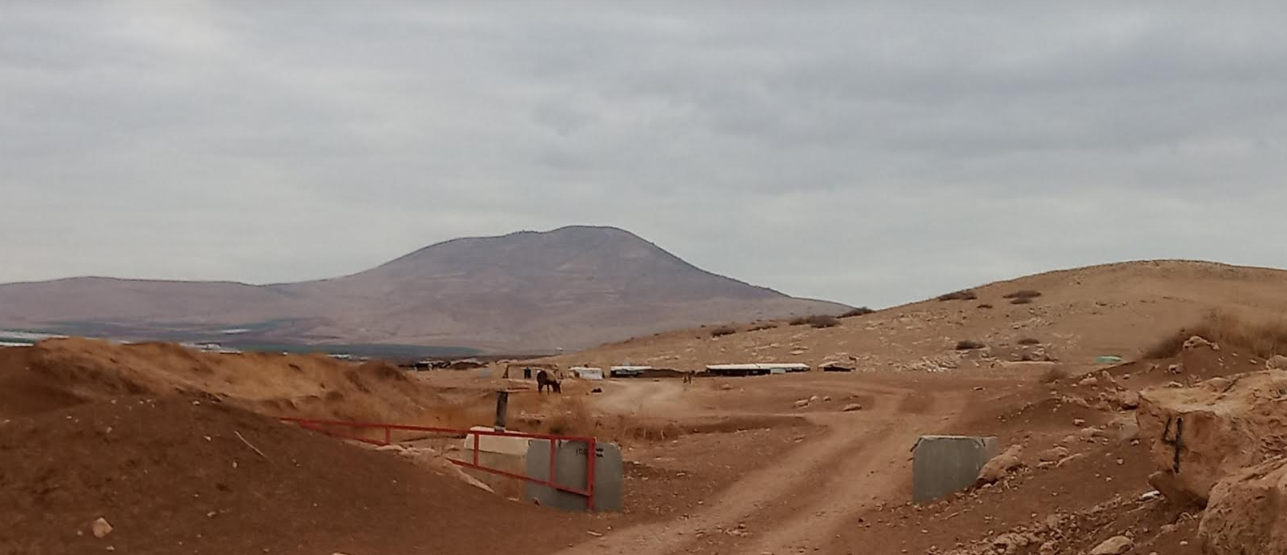
Today a water carrier near the town of Tubas was demolished. The structure was demolished under the pretext that it was built without a license.
Farmers who live in Tubas (located in Area A) who have land near the town (which is located in Area C) built a water carrier to transfer water from Area A to irrigate their fields. 20 days after the structure was completed bulldozers arrived from the civil administration and demolished it.
Area A includes only densely – built areas, and any pipeline leading to the agricultural fields that were designated as Area C requires a license from the civil authorities , which does not allow any connection to the pipelines if Palestinians request it. On the other hand, illegal settlers are constantly building illegal facilities, but never destroyed. They are apparently funded by some government source.
These fields, which are located in arid areas, are worthless if they are not irrigated. This is, of course also true in years when there is little rainfall.
A Colonel Deals with Traffic Violations
At 10:20 at the Zatra Junction we saw two large trucks parked on the side of the road and an Israeli car parked next to them. When we approached we saw a colonel, a soldier, and two Palestinian drivers. The officer explained to us that he had stopped the drivers because they were driving in an illegal manner that endangered passers-by. He called the police. The armed soldier who was evidently the colonel’s driver pushed the drivers and told them to wait in their vehicles. They tried to explain something in Arabic but no one (including me I’m ashamed to say) understood them or took notice. I don’t know how long they had been waiting there before we arrived. .Soon two policemen came and the colonel left, leaving the soldier as a witness. We left as well.
Guchia Gate has been open for two months. This gate separated between the Palestinian Jordan Valley and the rest of the West Bank. Two other checkpoints were also established for this purpose – one near Hamra and one near Tayasir. These gates once prevented Palestinians from crossing from the West Bank into the Jordan Valley except for workers who worked in the settlements. This appears to be the signs of a policy that expects annexation of the {Palestinian} Jordan Valley into Israel and as little contact and dependence of the valley to the rest of the West Bank.
Meanwhile most of these checkpoint have been eliminated and these were the last that have stopped being used, but they are occasionally operated. This afternoon Hamra Checkpoint was operating at 15:00 in the direction of the Jordan Valley. Guchia Gate is the last remnant of this policy and has been closed for the past 4-5 years. Before that it was open for an hour in the morning and an hour in the afternoon three days a week (how creative) and only people with a special license could cross. This was another means of embittering the lives of the residents. Now the gate is open, the sky hasn’t fallen, terrorist attacks have not occurred, and other catastrophes that the soldiers claim are being prevented by their work have not occurred.
We brought a wheelchair for a disabled woman in Hadidia that Rachel had obtained. There was no activity of the soldiers in any of the other checkpoints.
Hamra (Beqaot)
See all reports for this place-
One of the Jordan Rift Valley checkpoints that prevent direct transit between the West Bank and the Jordan Valley, in addition to Tayasir Checkpoint. Located next to Hamra settlement, on Route 57 and the Allon Road.
Read about the peple of the Jordan Valley and the quiet transfer happening there.
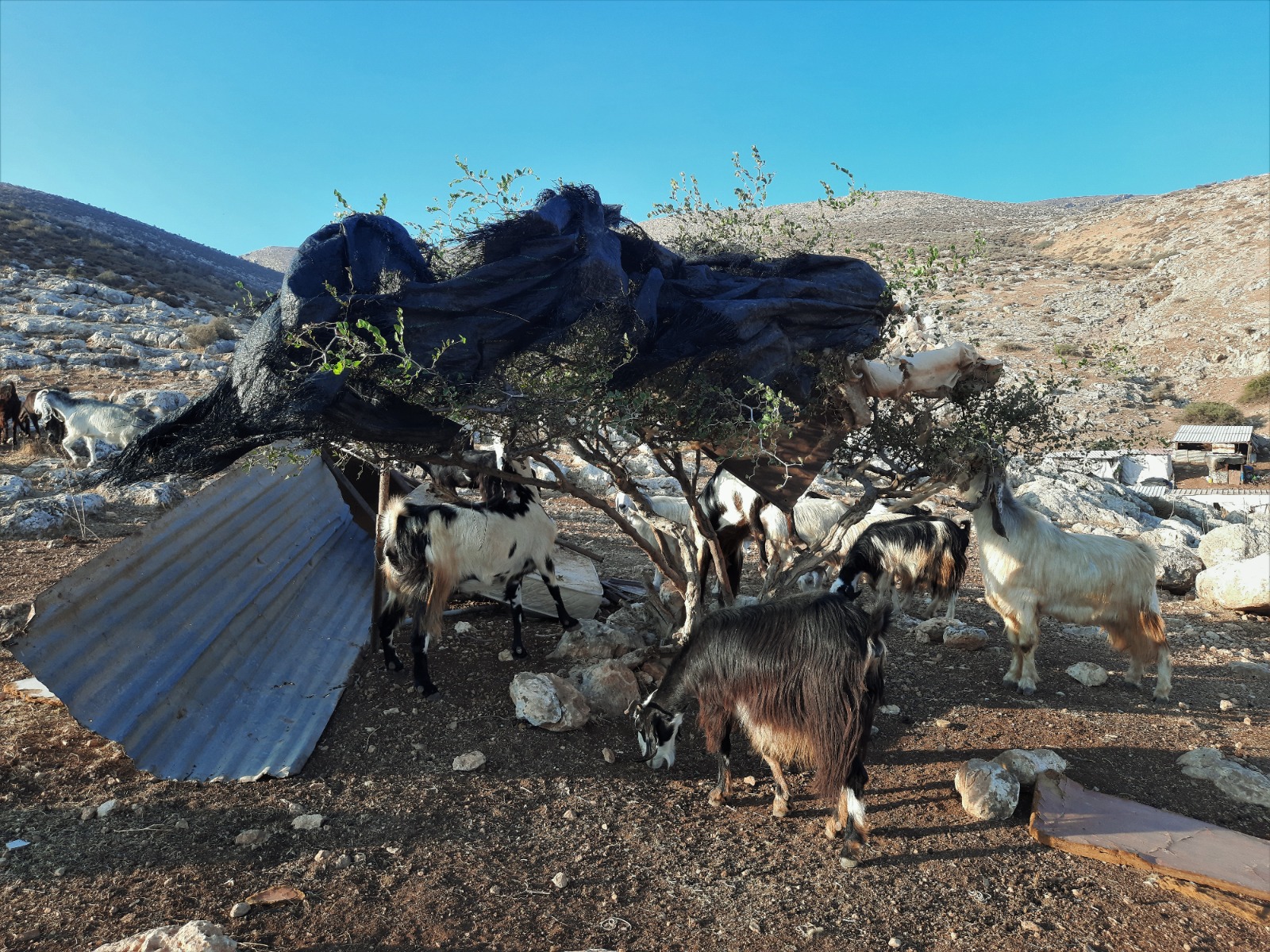 Shahar ShilohNov-3-2021Ein Shibli: grazing begins close to home
-
Jordan Valley
See all reports for this place-
Jordan Valley The Jordan Valley is the eastern strip of the West Bank. Its area consists of almost a third of the West Bank area. About 10,000 settlers live there, about 65,000 Palestinian residents in the villages and towns. In addition, about 15,000 are scattered in small shepherd communities. These communities are living in severe distress because of two types of harassment: the military declaring some of their living areas, as fire zones, evicting them for long hours from their residence to the scorching heat of the summer and the bitter cold of the winter. The other type is abuse by rioters who cling to the grazing areas of the shepherd communities, and the declared fire areas (without being deported). The many groundwaters in the Jordan Valley belong to Mekorot and are not available to Palestinians living in the Jordan Valley. The Palestinians bring water to their needs in high-cost followers.
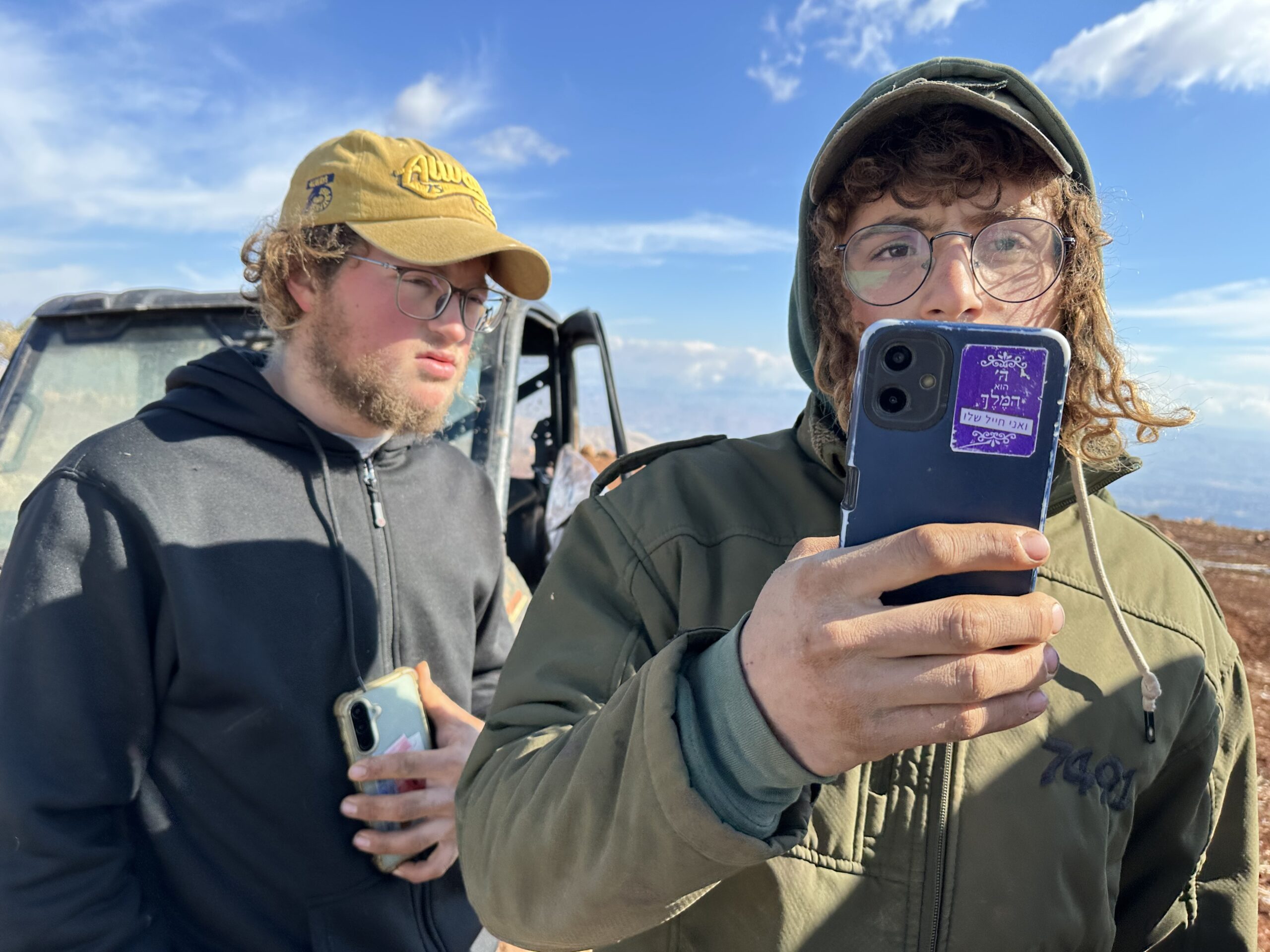 Nurit PopperDec-16-2027Nurit is threatened by settlers from close range.
-
Ma'ale Efrayim
See all reports for this place-
Ma'ale Efrayim On the road connecting Route 90 (the Jordan Valley road) to the Allon Road.
-
Za'tara (Tapuah)
See all reports for this place-
Za'tara (Tapuah) Za'tara is an internal checkpoint in the heart of the West Bank, at the intersection of Road 60 and Road 505 (Trans-Samaria), east of the Tapuah settlement. This checkpoint is the "border" marked by the IDF between the north and south of the West Bank, in accordance with the policy of separation between the two parts of the West Bank that has been in place since December 2005. At the Za'tara checkpoint, there are separate routes for Israelis and Palestinians. In the route for Israelis, there are no inspections and the route for Palestinians inspects. The queue lengthens and shortens suits. The checkpoint is open 24 hours a day. The checkpoint is partially staffed and the people who pass through it are checked at random.
 Shoshi AnbarSep-27-2023Za'atra (Tapuah Intersection). Signs
-