Back to reports search page

Abu Dis, Container (Wadi Nar), Ras Abu Sbitan (Olive Terminal), Sheikh Saed, Silwan, Tue 14.2.12, Morning

Observers: Idit S., Anat T. (reporting)
Feb-14-2012
| Morning


6:50  Sheikh Saed
 
Few crossing, and the soldiers work efficienetly.  A conversation with a pleasant Al-Quds University student who is researching the connection between Israeli and Arab stockmarkets. He travels by taxi to the university, and hopes to pursue a Ph.D. overseas next year.  Obviously those who can leave, do so.
 
7:30  Sawahara checkpoint
 
Crowded with vehicles beyond what we remember from previous occastion.  A group of girls studying in Jabal Mukhaber tell us they cross every morning and the checks cause delays, sometimes up to 30 mins.
 
We wish to enter the checkpoint, but the commander informs us, via the civilian security guard, that we may enter, but not exit from here.  We have no time to waste and give up the attempt to co-ordinate with the DCO.  But our questions are answered willingly: recently the list of those permitted to cross has increased from c. 200 to 800, and vehicles also cross (we saw), but not vehicles from Sheikh Saed.  Children up to the age o 15 cross without a permit, only a birth certificate and a permit from school.  The dealys are due to large numbers of pupils arriving at the same time, their bags checked, and a magnometer check as well.
 
8:15 Silwan
 
Signs of yesterday's riots are evident all along the road leading from the American Route to Ein Hilweh St. through the Bustan neighbourhood: stones, graffiti in Hebrew and Arabic: "We await"  "Silwan is ours"  "Death to the Jews".
 
Earthworks continue apace in the lower part of Ein Hilweh (Shiloah) and the top (entrance to City of David). There is no longer any pretence that this is for the benefit of the residents — it's all for the new tours and growing numbers of visitors to the City of David.  We stop by the kindergarden destroyed yesteday along with the Centre for Alternative Information.  In the Golani parking lot feverish archaeological salvage work continues — the Jerusalem Municipality has approved the construction of a large visitors centre, and not a moment is wasted.
 
At the exit in the direction of the walls, police and border police officers stand on the side of the road, but not stop the traffic.
 
8:30  Olive Terminal
 
Many vehicles wait in the parking lot for the few passengers to Jerusalem.  We continue in the direction of Al Ezariya, and see that the metal benches in the waiting shelter for the DCO (not operative for some 2 years now) have been pulled out.  People complain about the filth accumulating around the facilties next to the shelter, used by those working in Jerusalem.  (4000 cross during the early morning hours, by the estimate of the checkpoint people.)  For a long time the toilets were closed, but now they're open and properly equipped but the filth is shocking.  We complain at the checkpoint, then also by phone to the commander who says there are people who deliberately vandalise, but promises to take care of the problem.
 
Three passages are open, one to the DCO which opens at 8:30.  Signs in Arabic instruct that one must first arrive at the Palestinians DCO in Al Ezariya, and the hours are indicated (8-12, 15-17).
 
A man arrives with a form inviting him to the cardiac department at Mokasad today, and a request turned down two weeks ago.  On the refusal form it say, in Hebrew, that he was supposed to arrive last week with a detailed report from his family doctor.  The man, of course, failed to understand the inserted Hebrew. He does not understand what is missing, he has a form from the Palestinian DCO and the invitation from Mokasad.  Idit ways that nowadays they insist on the detailed letter from the family doctor, and even check that the visit has taken place.  There is no doubt that occupation bureaucracy increases with time.
 
9:20  Wadi Nar
 
The alternative route we suggested to Sawahara A-Sharkiya is not to be recommended, and we were also wrong about the prospect of improving the road.  The road is relatively wide but fearfully steep, much more thatn the road going up from the wadi straight to the checkpoint.
 
At Wadi Nar we are met again by 4 dogs, this time drowsy, but Idit does not dare to approach.  The soldiers explain that the dogs are a problem of the Civil Administration; and that in principle there is some pressure sometimes in the afternoons, or at times of alerts, but otherwise instruction are to let traffic flow without unnecessary delays.
 
A sensational discover: there is a new sign to the grocery shop in Wadi Nar, "Signora".  On the way back we also find out that the old lady's shop in Wadi Nar is one of a chain!  The main "Signora" is located near the first roundabout at the entrance to the community.


  • Abu Dis / Lazarus gate (formerly The Wicket)

    See all reports for this place
    •  

      Abu Dis / Lazarus Checkpoint/Gate (east of the former “wicket”)

      Construction of the wall in the Abu Dis area blocked all the gaps that allowed people to cross from al-Ezariya to the neighbourhoods of Abu Dis and Ras al 'Amud that are located within Jerusalem’s municipal boundary. The Lazarus checkpoint is a gate in the wall adjacent to the Lazarus Monastery. Until 2011 it had a door for pilgrims to al-Ezariya and for the monastery’s kindergarten pupils from al-Ezariya. The crossing is currently closed, but the site has infrastructure for conducting inspections.

  • Container (Wadi Nar)

    See all reports for this place
    •  Wadi Nar Checkpoint ("Container", "The Kiosk") - a barrier for vehicles in Area B that is regularly manned - east of Abu Dis between Sawahra A Sharqiya and Bethlehem and its daughters. Controls Palestinian movement between the north and south West-Bank. Includes driving routes, access roads, spikes, traffic lights and signs. There is no pedestrian crossing. Open 24 hours a day with random checks enhanced on security alerts. The checkpoint is in Palestinian territory, allowing for separation between the north and the south Palestinian areas when necessary.

      In 2015, the leading road from Azaria to Bethlehem was renovated, as well as the steep and narrow ascent to the Wadi Nar checkpoint, which was dangerously travelled in both directions! The temporary checkpoint was renovated and expanded, and pedestrian traffic was banned. From 2016, traffic travelling from the south bank to Azaria was directed to a one-way road near the Southern Keydar Jewish settlement.

      Machsomwatch shifts visit this far-fetched checkpoint only occasionally.

      (updated to July 2019)


  • Ras Abu Sbitan (Olive Terminal)

    See all reports for this place
    • A large checkpoint/crossing to the area of a-Tur, Abu Dis and the Old City; only for pedestrians. Located on Jerusalem’s municipal boundary.

      One of the major crossings in Jerusalem’s central sector. It is located on the separation fence between the northern portion of the al-Ezariya neighborhood and the neighborhood of a-Tur and the rest of East Jerusalem. It is manned by Border Police soldiers and private security companies and operates 24 hours a day. Palestinians are forbidden to go through, other than permanent residents of East Jerusalem (holders of blue ID cards) and holders of work and commercial permits who are allowed through only on foot.

  • Sheikh Sa'ed

    See all reports for this place
    • A checkpoint limited to pedestrians, located on Jerusalem’s municipal boundary.

      The checkpoint sits on the separation fence at the entrance to Sheikh Sa’ad, dividing it from its neighbourhood of Jabel Mukkabar. It’s manned by Border Police soldiers and private security companies and operates 24 hours a day. Palestinians are forbidden to go through, other than residents of Jabel Mukkabar or Sheikh Sa'ad who have permits. Both groups are permitted through only on foot. Residents of East Jerusalem who don’t live in Jabel Mukkabar are also allowed to cross to Sheikh Sa’ad, but not in the opposite direction; they must return through the Sawahira ash Sharqiya checkpoint.
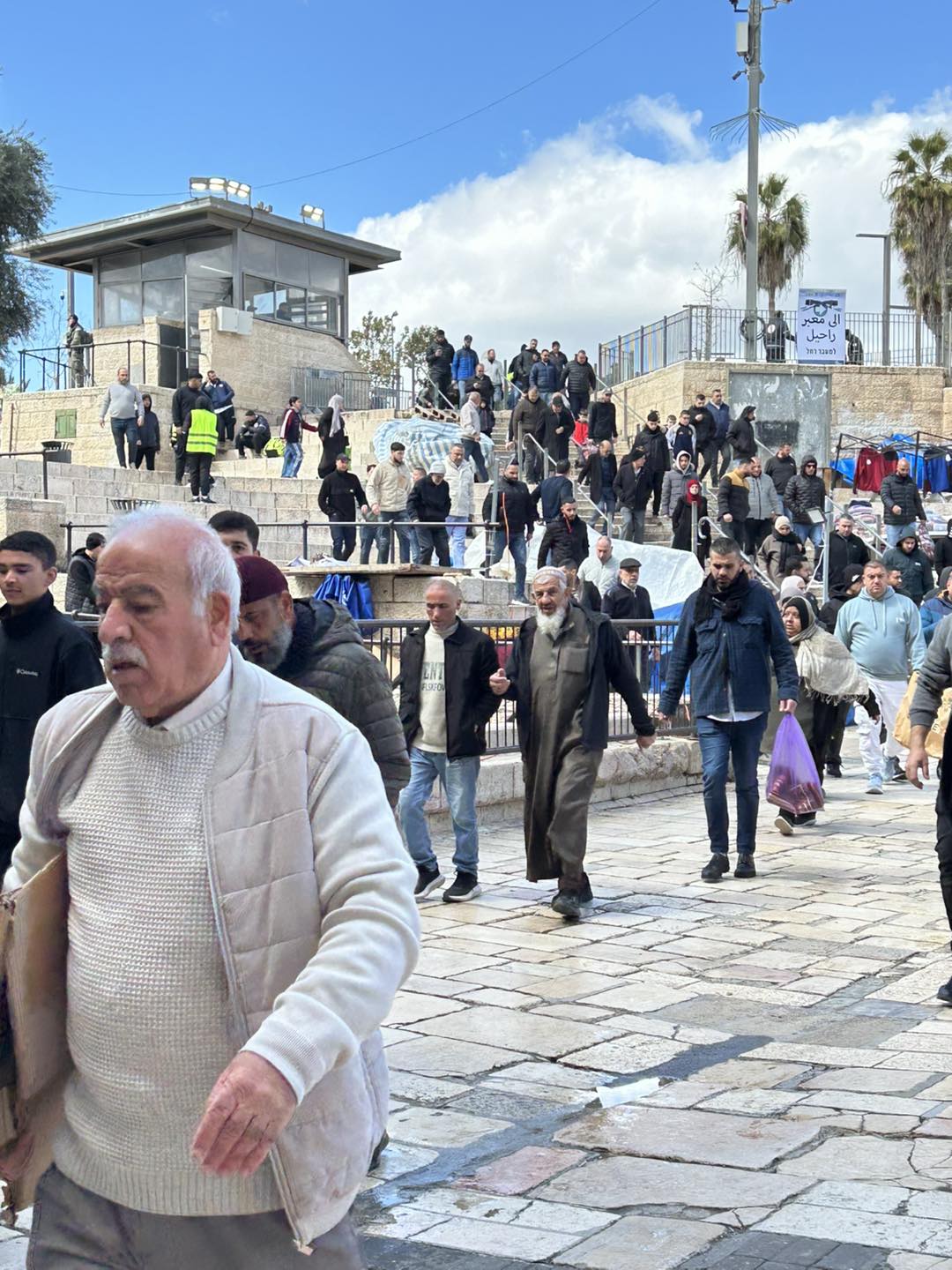
      ירושלים, שער שכם: קהל ממהר לתפילה
      Avital C
      Feb-27-2026
      Jerusalem, Damascus Gate: Crowd rushing to prayer
  • Silwan

    See all reports for this place
    • Silwan is south of the Old City of Jerusalem and has become one of the main confrontation areas with settlers.


Donate