
Abu Dis, Container (Wadi Nar), Ras Abu Sbitan (Olive Terminal), Sheikh Saed, Tue 8.1.08, Afternoon
En route to Sheikh Said, at the entry to Jebel Mukhaber, there were new signs for Nofi Zion, the new settlement being built ini Jebel Mukhaber. It is obviously expanding well beyond the original area.
Only two border police were evident at Sheikh Said. A few people crossed through in each direction. A Magen David Adom driver was waiting there to pick up some people. He spoke to us about the problems at the checkpoint. Everything, he said, depends upon those who man the checkpoint. If they are decent, it is possible to speak to them. If not, they are totally unyielding — even in conditions when individuals could suffer serious harm. He mentioned that the Supreme Court decision about Sheikh Said will take place on Wednesday morning, January 23rd at 11:00 and asked that as many of us as possible show up for the hearing.
As we drove along the road below Silwan en route to Abu Dis, we noticed new construction on the hillside below the Moskowitz settlement at Ras el Amud. Considerable expansion is taking place there as well.
We headed up to the Cliff Hotel and noticed a group of about 20 people — a few adults and many children who were getting a tour by a young man of British background. Unseen, we listened to his enthusiastic talk to the visitors (who were either new immigrants or tourists who might have been potential immigrants). He spoke about how they came by the land, the plans for the future, and how Jewish presence will considerably increase in this area (while bemoaning the overwhelming presence of Arabs in the area). When he saw us, he spoke about how great it would be to have Jews and Arabs living together. When I asked if that meant that we would soon be welcoming Arabs to Rehavia, he immediately changed his tune and said that we were different peoples with different needs and interests. What Arab would want to live in Rehavia? They want to be with their own people. So much for plualism.
Zeitun crossing was almost abandoned. Very few people in either direction.
There was a huge backup of traffic heading into Azariah. It might have been connected to Bush's upcoming visit. There was a border police unit checking traffic heading toward Azariah and Qedar. Why there? Who knows?
By the time we got to Wadi Naar, it was cold, getting dark, and rainy. The border police stationed there quite understandably did not want to be standing outside in such awful conditions. As a result, traffic moved unhampered very quickly in both directions. One bus was stopped and i.d.'s collected, but aside from that, all was quiet and
Abu Dis / Lazarus gate (formerly The Wicket)
See all reports for this place-
Abu Dis / Lazarus Checkpoint/Gate (east of the former “wicket”)
Construction of the wall in the Abu Dis area blocked all the gaps that allowed people to cross from al-Ezariya to the neighbourhoods of Abu Dis and Ras al 'Amud that are located within Jerusalem’s municipal boundary. The Lazarus checkpoint is a gate in the wall adjacent to the Lazarus Monastery. Until 2011 it had a door for pilgrims to al-Ezariya and for the monastery’s kindergarten pupils from al-Ezariya. The crossing is currently closed, but the site has infrastructure for conducting inspections.
-
Container (Wadi Nar)
See all reports for this place-
Wadi Nar Checkpoint ("Container", "The Kiosk") - a barrier for vehicles in Area B that is regularly manned - east of Abu Dis between Sawahra A Sharqiya and Bethlehem and its daughters. Controls Palestinian movement between the north and south West-Bank. Includes driving routes, access roads, spikes, traffic lights and signs. There is no pedestrian crossing. Open 24 hours a day with random checks enhanced on security alerts. The checkpoint is in Palestinian territory, allowing for separation between the north and the south Palestinian areas when necessary.
In 2015, the leading road from Azaria to Bethlehem was renovated, as well as the steep and narrow ascent to the Wadi Nar checkpoint, which was dangerously travelled in both directions! The temporary checkpoint was renovated and expanded, and pedestrian traffic was banned. From 2016, traffic travelling from the south bank to Azaria was directed to a one-way road near the Southern Keydar Jewish settlement.
Machsomwatch shifts visit this far-fetched checkpoint only occasionally.
(updated to July 2019)
-
Ras Abu Sbitan (Olive Terminal)
See all reports for this place-
A large checkpoint/crossing to the area of a-Tur, Abu Dis and the Old City; only for pedestrians. Located on Jerusalem’s municipal boundary.
One of the major crossings in Jerusalem’s central sector. It is located on the separation fence between the northern portion of the al-Ezariya neighborhood and the neighborhood of a-Tur and the rest of East Jerusalem. It is manned by Border Police soldiers and private security companies and operates 24 hours a day. Palestinians are forbidden to go through, other than permanent residents of East Jerusalem (holders of blue ID cards) and holders of work and commercial permits who are allowed through only on foot.
-
Sheikh Sa'ed
See all reports for this place-
A checkpoint limited to pedestrians, located on Jerusalem’s municipal boundary.
The checkpoint sits on the separation fence at the entrance to Sheikh Sa’ad, dividing it from its neighbourhood of Jabel Mukkabar. It’s manned by Border Police soldiers and private security companies and operates 24 hours a day. Palestinians are forbidden to go through, other than residents of Jabel Mukkabar or Sheikh Sa'ad who have permits. Both groups are permitted through only on foot. Residents of East Jerusalem who don’t live in Jabel Mukkabar are also allowed to cross to Sheikh Sa’ad, but not in the opposite direction; they must return through the Sawahira ash Sharqiya checkpoint.
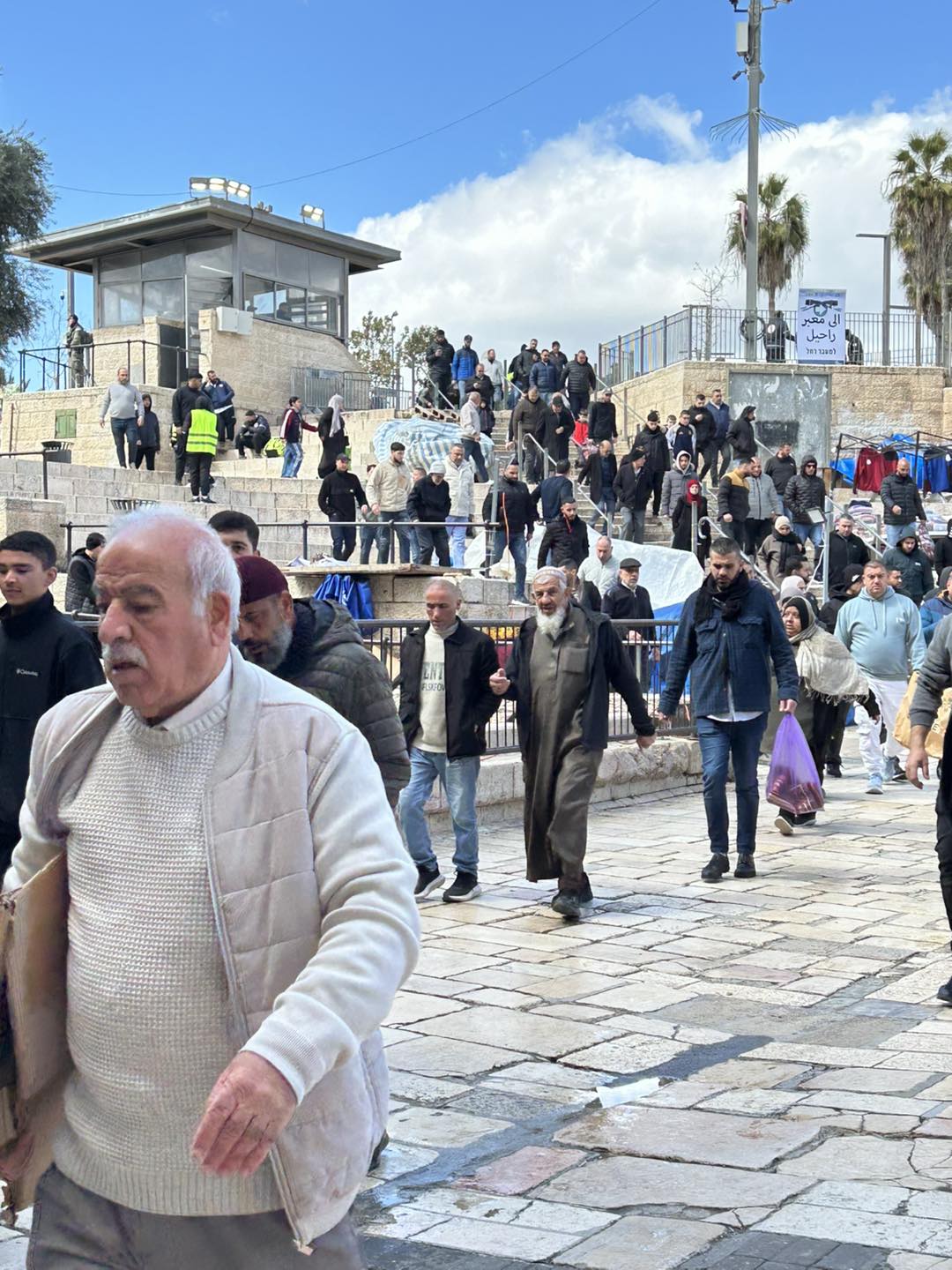 Avital CFeb-27-2026Jerusalem, Damascus Gate: Crowd rushing to prayer
-