6:50 Sheikh Saed
Pedantic registration of names today creates a lengthening line. 25, including children, were checked while we were here (more than 1 1/2 hrs.), a very slow pace for a small checkpoint through which a small number of familiar persons cross. Children too are checked. We notice a small boy, turning back with his schoolbag in the direction from which he came, and wiping tears. He's a 10 year old from Sheikh Saed with a printed permit from his school in Jabel Mukhaber, but had forgotten his "kushan" at home. With the assistance of the drivers, we ask he be left with us while we investigate what happened. Meanwhile another 3 children who were turned back arrive: a girl of 12 with a permit from school, and a "kushan" confirming her age, a boy of 13 (ditto), and his 12 year old friend whose parents live in Jerusalem (Armon Ha-Natziv) and who had spent the night with his grandmother in Sheikh Saed, and has only the school permit. All are prevented from reaching their school today. The decision seems to be deliberate. It appears that the soldiers at the checkpoint demand children under the age of 16 (even from the age of 5, we later learn) to carry a special permit from the Administration, in addition to the "kushan" and the official school permit. We find this incredulous, and begin a round of telephone inquiries to help these anxious children get to their school on time. We call the headquarters of the Jerusalem Envelope Civil Administration (02-9703762), and the Humanitarian Centre (responsible for the entire West Bank) — both are manned at this hour by soldiers not qualified make decisions and need time to check with their officers. The military police company commander of Sheikh Saed does not answer, and from Headquarters of the Jerusalem Envelope (police, border police and army) we are told after a short inquiry that they have spoken with the checkpoint and that crossing is according to regulations ("status"), and that all is in order. The most promising link is Headquarters of Jerusalem Envelope Administration where, after 40 minutes, an efficient officer called A. begins to deal with the issue. Idit also checks with headquarters at checkpooint 300 and is told that pupils up to the age of 16 do not require additional permits beyond the "kushan" and the permit from their school.
Time passes, the soldiers do not respond to our requests and those of the children running late, and in the meantime the headmaster of the school in Jabel Mukhaber arrives and rquests to take the child who slept at his grandmother's in Sheikh Saed. He is the boy's uncle, and confirms that the boy studies in the school in Jabel Mukhaber and that his parents live in Jerusalem. A fierce argument ensues, and the soldiers refuse: "How can we let the kid cross without papers, any one can come along and say they're his uncle, his grandfather …"
More than 1 1/2 hrs. went by. From Envelope headquarters they say a representative was sent to the checkpoint half an hour ago. We call the cell phone of the Jerusalem Envelope DCO commander who sounds shocked by our report, never in his years of service has he encountered such a problem at the Sheikh Saed checkpoint, and promises to deal with it. It begins to look as though the fuss we raised is beginning to filter through and, perhaps as a result, one border police commander arrives. He allows the headmaster to take the child to school ("for this final time"), and explains to us the history of the "status" orders in Sheikh Saed:
Until recently children up to the age of 16 were allowed to cross with a school permit and a "kushan" testifying to their age. But there had been too many forgeries (too many Palestinian children from Sheikh Saed wish to study in the nearby Jabel Mukhaber, although not eligible), and therefore they are now required to produce the extra permit which the administration provides to the school with regard to these pupils, and without it they are not allowed to cross. The order is in effect from the age of 5!
He also tells us that exercise of judgement permitted to soldiers at the checkpoint is limited to unusual humanitarian and medical issues, and tells us of the case of resuscitation by a paramedic at the checkpoint, and the exceptional opening of the gate (always locked) to let an ambulance through. All these cases are permitted for humanitarian reasons, but in other matters there is no permission to bend the rules.
At long last contact is made between the officer from the Envelope Admininstration and the checkpoint, and the border police officer is given permission to let the children cross. After a few minutes he explains to all that a name-check on the computer would show whether they are indeed bona fide pupils at the school. The soldiers at the checkpoint say this would be impossible for large numbers, but it's clear that a few could be checked and not turned back. All it takes is a bit of good will and common sense. We hope these can be found. As for the draconian measures regarding pupils from the age of 5, we feel this to be unacceptable, and requires renewed invetigation. The fact is no such regulations exist at other checkpoints.
Btw, the Jerusalem Envelope DCO commander at Olive Terminal, A., an efficient man willing to help at any time, has been moved to another task, and his replacement is T. So far we have not been able to get hold of his telephone number, but will continue to try.
9:10 The new checkpoint at Shuafat Refugee Camp
The checkpoint was opened yesterday. We arrived after the morning's activity was over to see its appearance, where and how one crosses now. Fortunately we met the checkpoint commander who was courteous, nice and forthcoming, and who took us inside to see the investigation rooms for pedestrians. There were almost no people crossing, and we did not see the representatives of the neighbourhood council who could have told us of what went on yesterday and today during crossing.
The good news: According to the commander, and judging by the
arrangements in situ: the buses collecting the thousands of pupils from Shuafat to schools in Jerusalem (financed by the community management of the Jerusalem Envelope and the Municipality, set up to care for all the tens of thousands of Jerusalem citizens left behind the wall) are supervised by a representative of the neighbourhood council in the large parking lot in front of the checkpoint; beyond that the soldiers only check that the passengers are all children. This reduces the pressure on pedestrians crossing in the morning and improves the security of children who used to cross a busy road between speeding cars. A fearful sight. The commander also said that other buses also cross in the same way, but this was not quite clear to us. Will all the buses now leaving the checkpoint to all destinations in Jerusalem leave in front of the checkpoint? Hard to believe.
The bad news: The pedestrian crossing abuts on the large crossing for
vehicles (5 crossing points, architecture like an airport), adding a long ditance to walk from beyond the exit from inspection to the not very large parking lot for vehicles and the road going to Jerusalem and Pisgat Ze'ev. Also, not clear what will become of the area between the new and the old checkpoint. Will it afford closer parking space for those returning to Shuafat? If so, the distance for those returning will be shorter, if not, it will remain a long walk from the roundabout to the neighbourhood.
The inspection area: The entrance to the hall ahead of the closed inspection
area (not large, a concrete grey) is through one turnstile only, as is the exit to Shuafat, raising fears of much pressure in the morning, similar to that at Checkpoint 300 in Bethlehem, and pressure on the return journey as well. Why?
The waiting hall is trapeze shaped, two turnstiles on both sides for crossing to two inspection areas on each side. At present only one side is open, with 4 inspection windows and one covered x-ray machine not operative. The commander says the residents have been promised for now that checks will continue as in the past, i.e. without x-rays and biometric machinery.
Vehicle crossing:
Spacious and seems intended for a great volume of traffic. This is the enormous part of the checkpoint compared to which the pedestrian crossing is tiny. The comander says that for the present only residents of
Shuafat and Anata cross. Others from different part of the West Bank are not allowed to cross. Will this regulation remain in the future?
Operational conclusion: A visit must certainly be paid, around 7:00, to check what happens, also in the afternoons to see how the return is managed. We recommend the Wednesday and Thursday shifts, as well as others, to come regularly for the present. We suggest to enter with the car into the inside of the checkpoint (as in Qalandiya) and then continue with the pedestrians to the inspection, after which to return, pick up the car, and return in it.

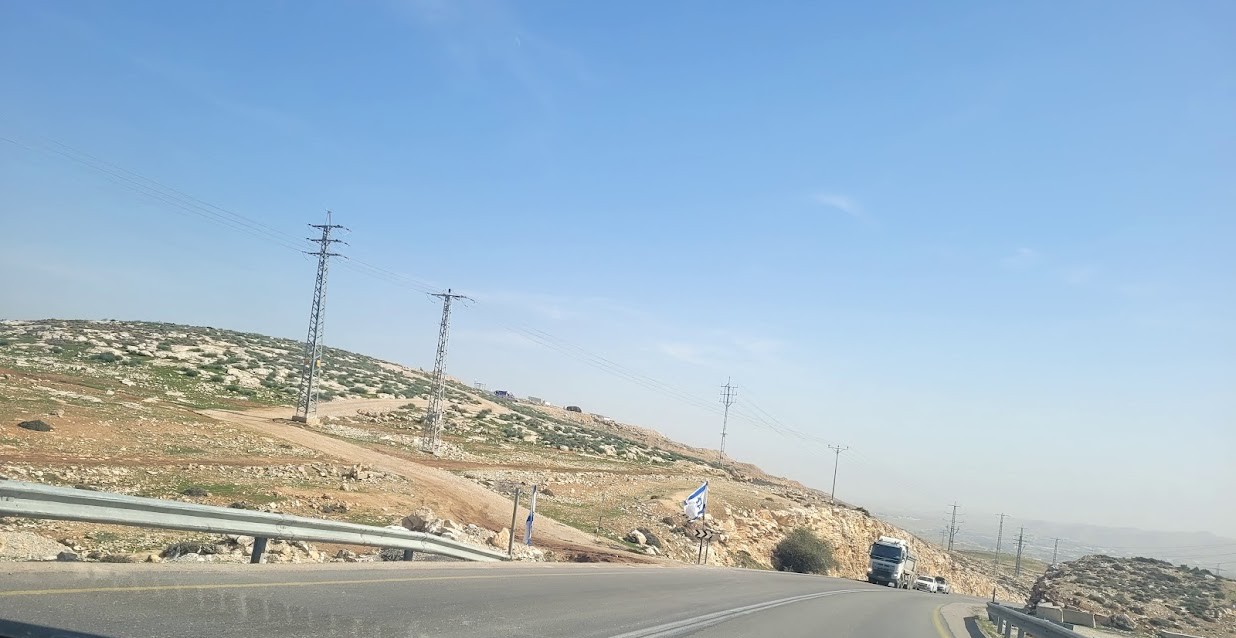 Anat TuegJan-25-2026Anata: A new outpost has been built south of the junction
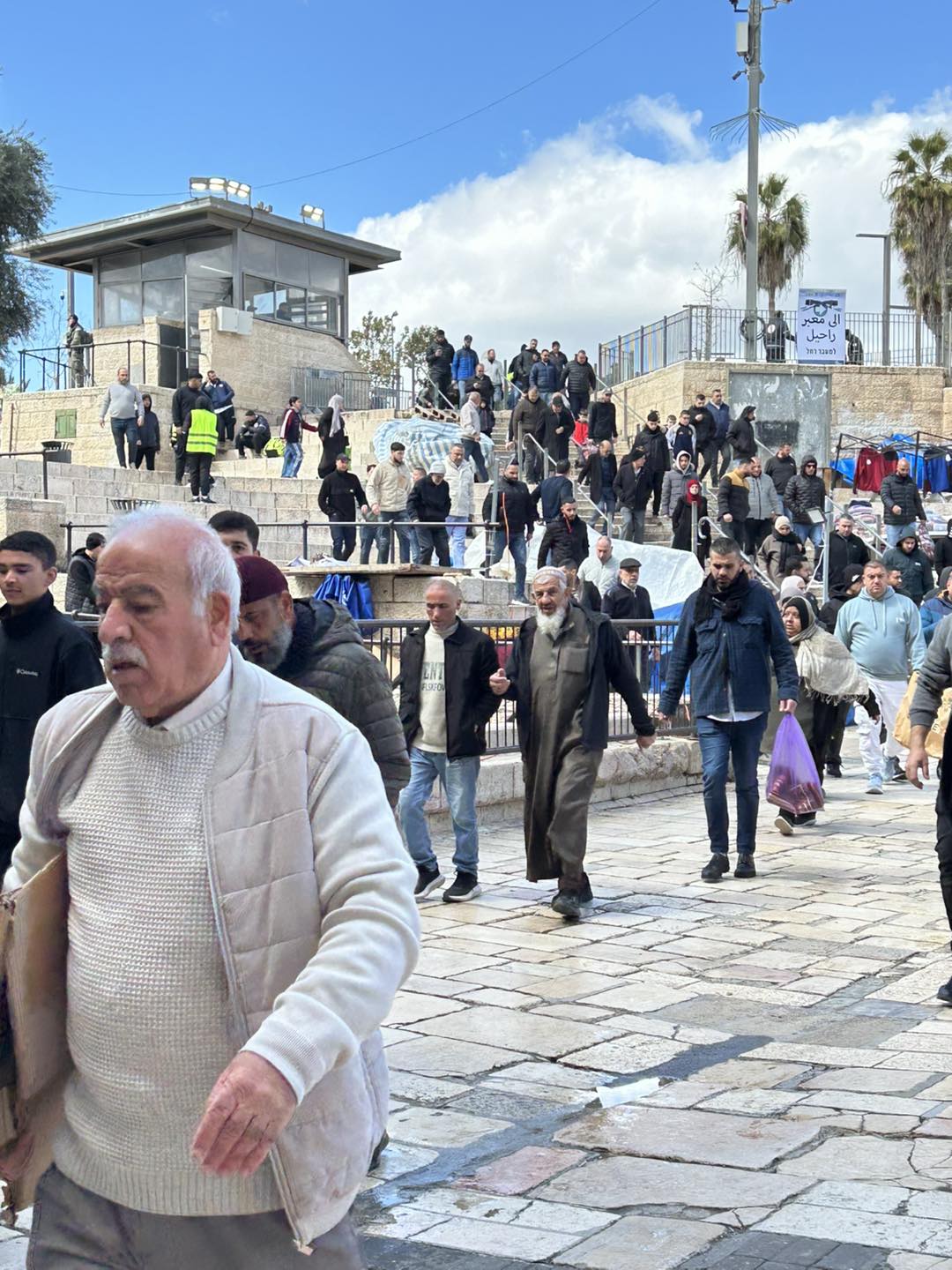 Avital CFeb-27-2026Jerusalem, Damascus Gate: Crowd rushing to prayer