
Al-Farisiya – settlers cut up water pipes and disconnected the community from the water supply
As usual, we arrived for protective presence and shepherd accompaniment.
Saturday – a usually peaceful day in the morning, but things and tensions carry on underground.
We accompanied Sh. of the Al-Farisiya Ahmeir community. With him we crossed Road 578 from west to east meaning to reach his leased field with the corn stubble. Sh. remained on the eastern side of the field near the road. He pointed to the hill and showed us settler Gil’ad’s flock from afar coming nearer to this field. He was afraid, he said, of confronting the settler and preferred to stay on the side of the field with meager grass and calories: he had paid a lot for leasing the field and still gave his sheep meager food.
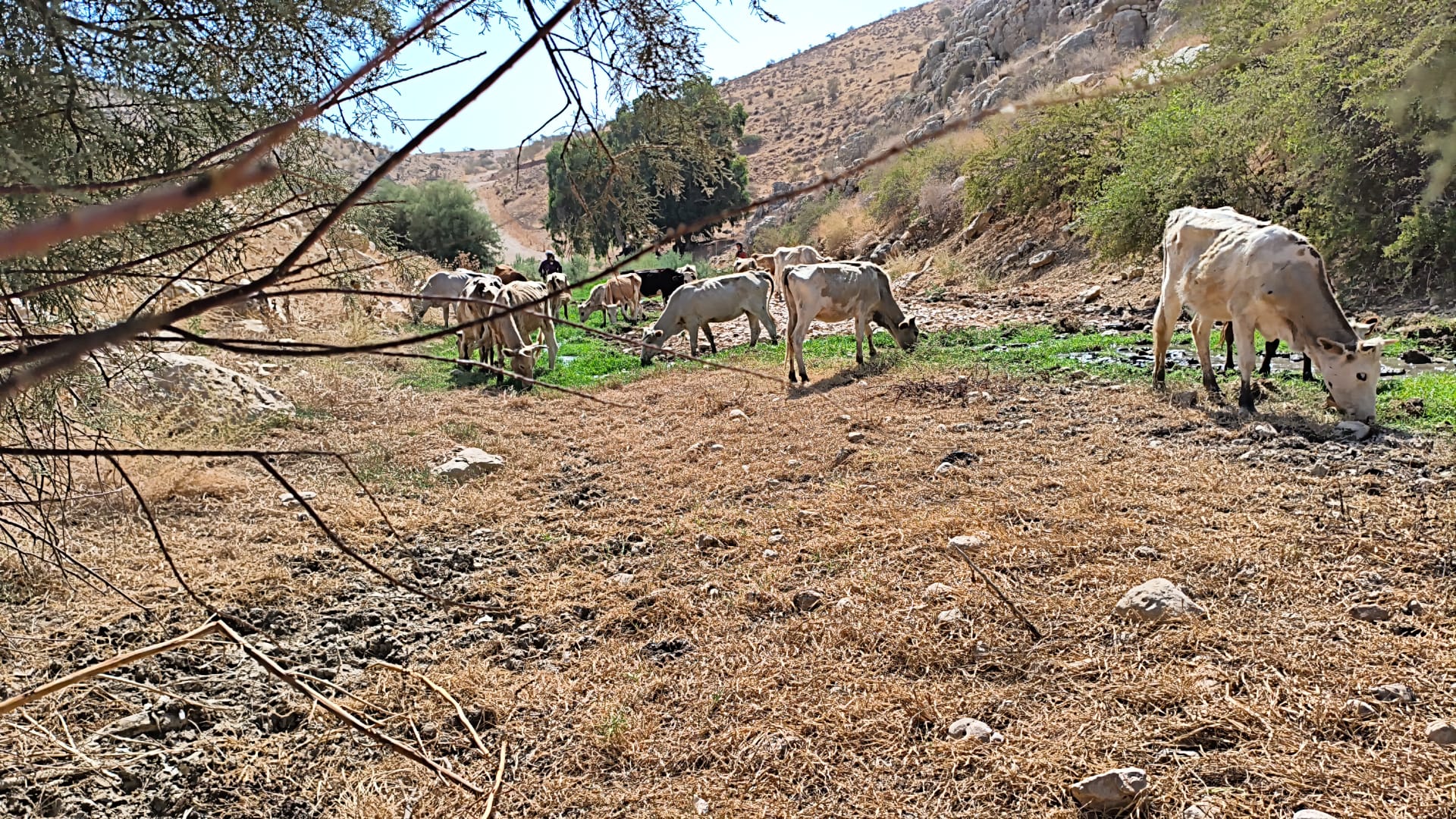
After 2.5 hours he decided to cross the road back home for the sheep were thirsty. The settlers had cut the pipes from which he had watered his flock several weeks earlier so there was no water in the eastern fields. Sh. went on to ask us to remain in the western part of the road near his home, for fear that the settler would come over and harass him. He told us that two days earlier settlers came to his community at night and pepper-sprayed his eldest son who confronted them. We remained for another half hour, but had to go on to the next shepherd, P., at Ein al-Hilwe. There we accompanied him and went down with him to the spring and the field with the green grass that grew on its outskirts. Here too, I asked P. how he suddenly discovered this green treasure and he answered: “The Maskiyot security official used to come here in the past”. Lately he was seen harassing the Palestinian inhabitants less, and P. has taken advantage of this so that his cattle get a bit fatter on nice, green feed.
Other accompaniers went with a Bardala farmer he who needs accompaniers while opening the faucets of his crop grounds. The accompaniers helped him picking his Chile peppers. The villagers are afraid of the settlers who have settled in the violent outpost erected about half a year ago nearby. The accompaniers came back to Al-Farisiya with a bag filled with Chile peppers, the smaller part of the Ashkenazis among us and a part for Al-Farisiya inhabitants who like spicy food.
At Ein a-sakut, grazing went peacefully on the new road that A. had created to reach the stubble fields without crossing Road 90. The sheep were watered with a water tank – and there was no invisible threat that day.
The team that accompanied P. finished the grazing and the Bardala team finished accompanied M., the farmer – all accompaniers came to sit under the single large tree at Al-Farisiya where a slightly cooler breeze blows. We made small talk at the height of the day’s heat, with glasses of hot tea and coffee given by inhabitants from time to time.
But the settlers do not rest except for morning Sabbath rest and also work their ways visibly.
At 2 p.m. we were called by Sh. to hurry over to Al-Farisiya Ahmeir – settlers were walking around his house! We drove to him quickly. We saw 7 youths and young men, among them settler Gil’ad from Tene Yarok who led them. When we came, they left his home stretch. Sh. said they had walked around the yard, came into the encampment, spent time near the sheep pen and were photographing the whole time. Was this in preparation for stealing sheep?
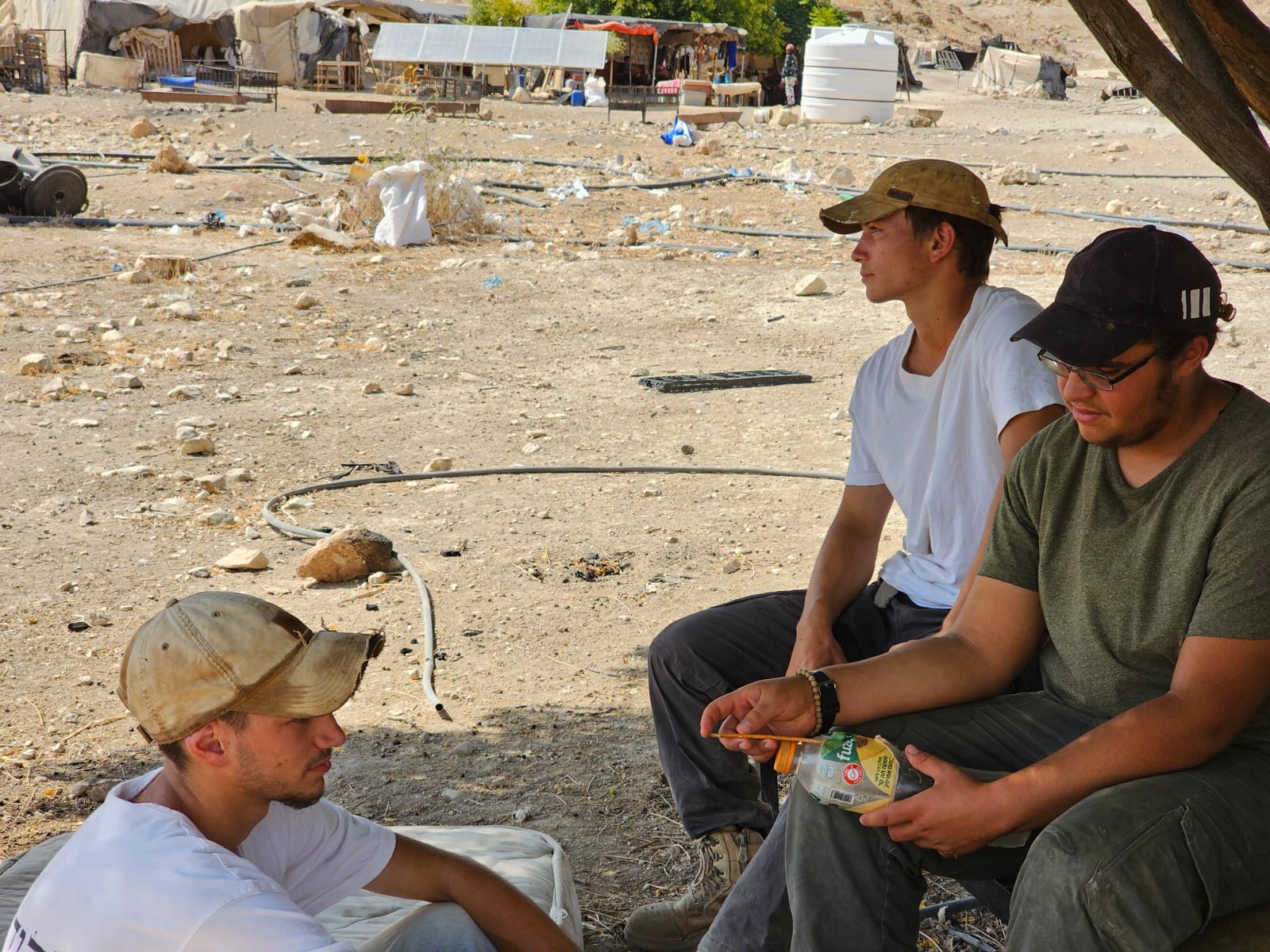
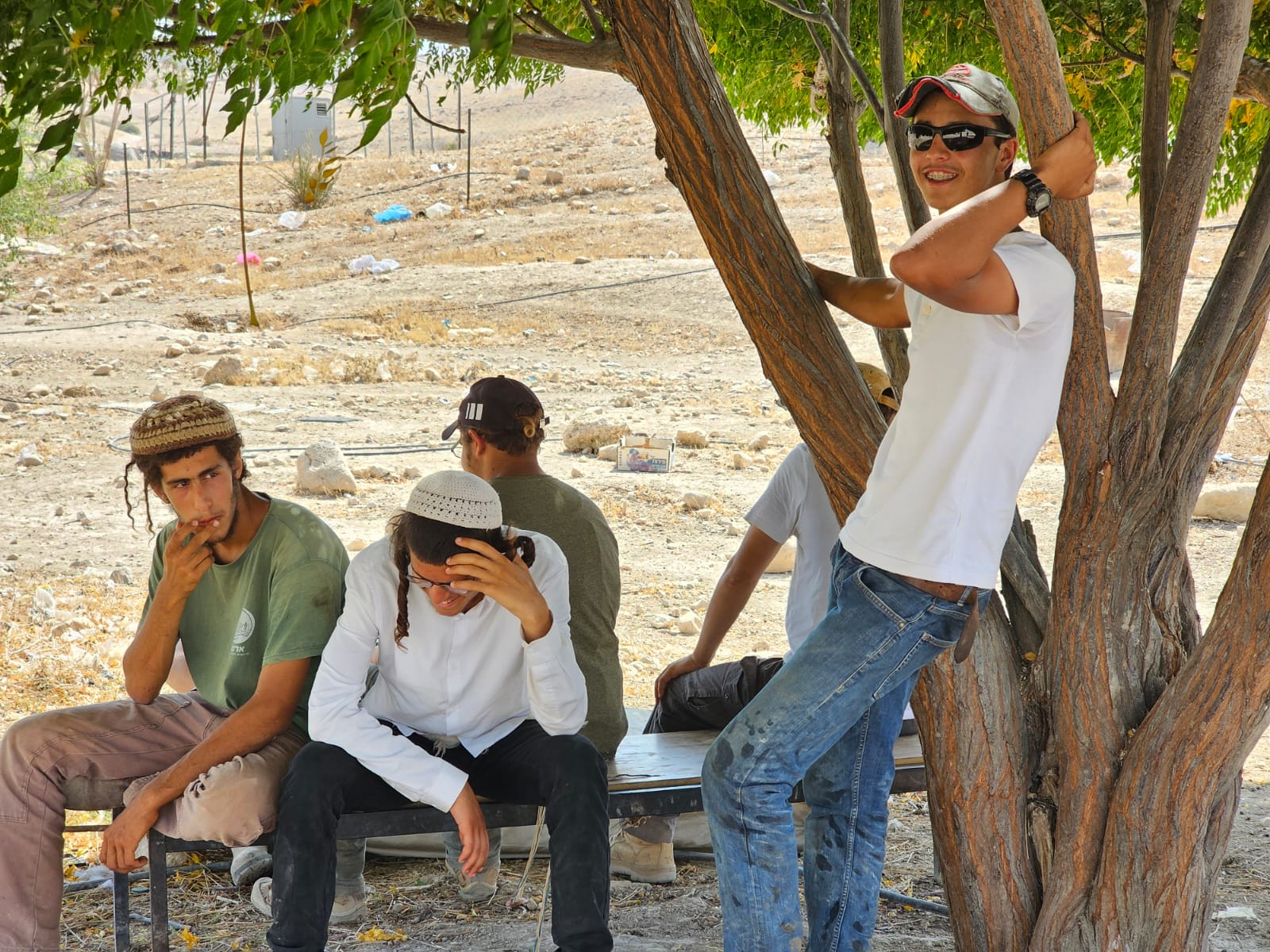
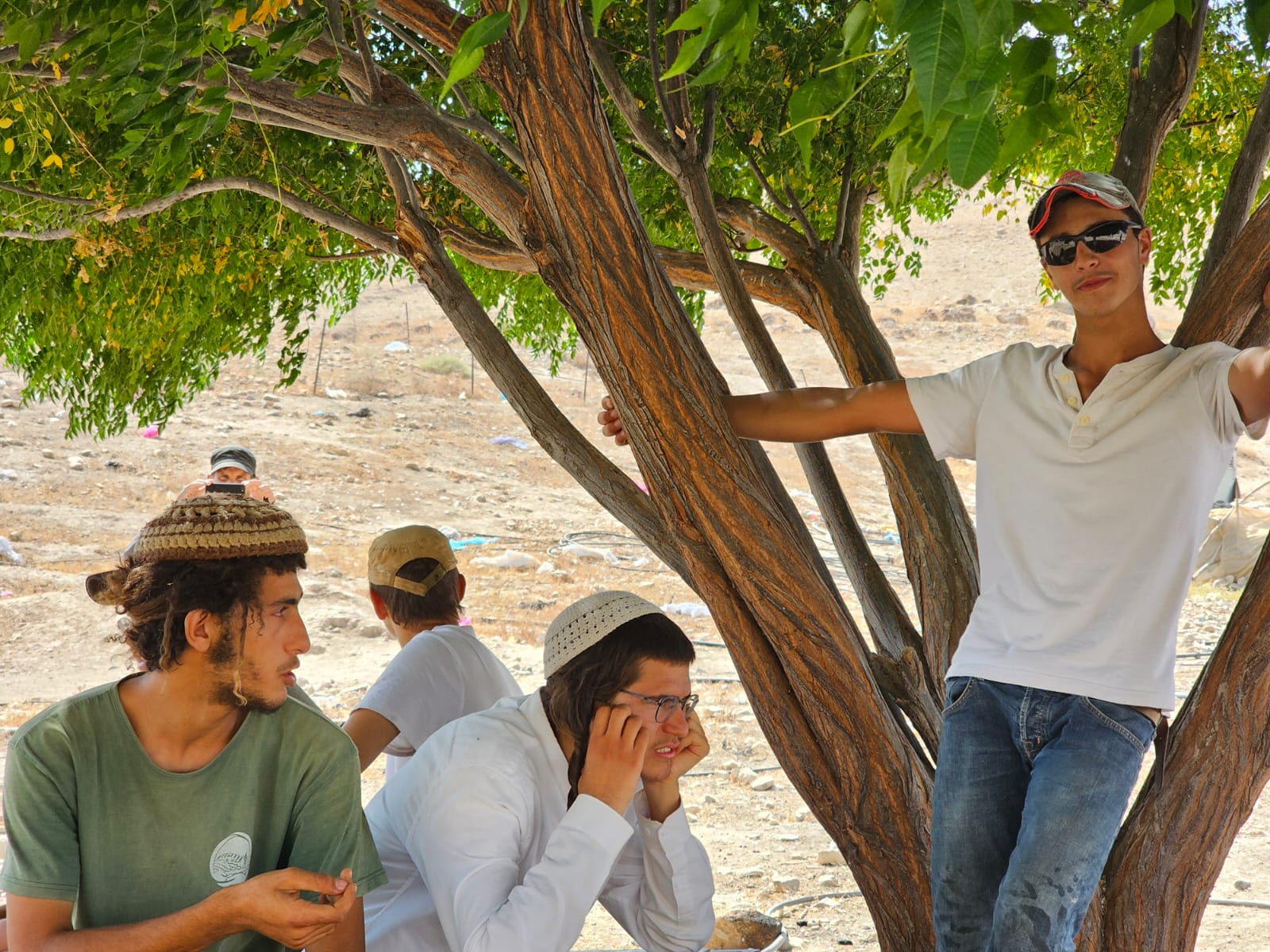
From there the settlers went over to the other inhabitant’s home – M. and sat there under the luscious tree for about half an hour, while we were watching them not to approach M.’s home. After half an hour the settlers walked over to the road. We thought they were intending to harass shepherds at Ein a-sakut and drove there, but they had not arrived. They had had enough for one day!
The same time, two accompaniers who came for the afternoon shift joined P. again for watering the cattle from the stream and all went nearly well. Suddenly, settler Bentzi – armed with a rifle – showed up at the spring with his pals. For a moment, when the accompaniers took their eyes of the shepherds, Bentzi came and beat P. in the head with his rifle butt. The pain was sharp but was over within 10 minutes. Not a dull moment…
When afternoon shift was over, the accompaniers drove home, while the night shift people arrived. The night passed peacefully at Ein al-Hilwe, Ein a-sakut and Al-Farisiya.
However, when the accompaniers spending the night at Al-Farisiya woke up they discovered that in the night, settlers had visited and silently cut the water pipes near L.’s home and the community was disconnected from water for an entire day.
It was then decided that protective presence would take part in local guard shifts along with the accompaniers.
No dull moment all night and day.
Location Description
'Ein al-Hilwe
See all reports for this place-
Ein al-Hilwe is a natural spring and a Palestinian grazing area in the Jordan Valley that was used by the Palestinian shepherd communities for watering their flocks and for daily use. As of 2021, settlers from the Maskyot settlement took control of the spring: they fenced it off, built a wading pool and a mikveh, and installed flags and recreational facilities.
Palestinians are effectively denied access to the spring, and are forced to make do with running water in a remote wadi or, when the road is blocked, buy water from vendors at high prices.
The spring is located in the heart of an area where illegal outposts are being established, as part of a broader trend of pushing Palestinian communities away by denying them access to essential resources. Neighboring communities such as Umm Jamal and Khirbet Samra have already left due to the pressure.
Over the years, MachsomWatch members have reported arrests on false claims by settlers, harassment and violence, including damage to herds, intrusion into homes, and the intimidation of children. MachsomWatch volunteers participate in a protective presence in areas around the spring to prevent harassment of shepherds due to the presence of settlers.
-
Al-Farisiya / 'Ein a-sakut
See all reports for this place-
Al-Farisiya / 'Ein a-sakutA community of shepherds in the Jordan Valley opposite the settlement of "Rotem". Making a living from grazing sheep, the residents are exposed to harassment, abuse and theft from settlers who come to them from outposts and settlements in the area, and their grazing area is shrinking due to settler takeovers, fire zones and declared nature reserves.Machsom Watch companies participate in shepherd escort activities and provide a 24/7 protective presence, and there is continuous and warm contact with the community.
-