
‘Anabta, ‘Azzun, Deir Sharaf, Irtah (Sha’ar Efrayim), Jubara (Kafriat), Qalqiliya, Ras ‘Atiya, Shave Shomron, Sun 25.10.09, Afte
Summary
Today's newspaper reported that Netanyahu, in a Washington Post interview, did not reject establishment of a commission of inquiry into alleged war crimes during Operation Cast Lead, while a "clarification" by his office indicated that the PM is not considering such a commission. Why bother with this? Only one reason. Facts on the ground never match announced declarations. During July 2009, Israeli authorities eased up at West Bank checkpoints (only one, Beit Iba, was completely dismantled). This easing signified the so called "economic peace" of which Netanyahu loves to boast, while the media could report an "improved quality of life." Why in the summer of 2009? Barack Obama was putting pressure on Israel. Now, several months later, Obama has other concerns, and — in the West Bank — it's back to the good old 42 years of occupation, complete with checkpoints seemingly reappearing at a moment's notice.
11:50 Gate 1392 Habla
Winter hours in force, since the gate is now open from 6:30-8:00; 11:00-12:15 and 16:45-18:00. At this hour, some men are already returning from work in the plant nurseries, tractors or horse or donkey carts carry produce or plants across the Security Barrier, but each person's ID and permit are checked, and means of transport examined. Little traffic from the eastern side of the barrier.
12:20 Ras Atiya
On the way, we note that the huge road works going on now for several months near Alfe Menashe turn out to be a new wall, or should it be a new "Wall." At the Seam Line checkpoint, nothing going on, but a bunch of bored soldiers on a 12 hour shift, preferring to be at home asleep, telling us that the busiest time is 6:30 in the morning when the checkpoint opens (and people want to get to work), and that the new "Wall" clearly visible from the Separation Barrier west of it here is, indeed, the ongoing Separation Barrier. The present checkpoint, we hear, will be replaced by something near the Wall, by something "better for them(!)" The soldiers continue to make conversation, asking from whence we and our visitors come. We learn that that they are from Ashdod, Rishon LeZion and Jersualem (sic), but later, the sergeant (from Jerusalem) tells us he's actually from Pisgat Zeev. No amount of convincing him that this too, is "Palestine." To which he replies, with a phrase that we can't believe our ears, "a people needs to expand."
12:45 Qalqiliya
More disbelief, but this time in terms of what we see, not hear. The checkpoint that had been dismantled at the entrance to Qalqilya is alive and well, functioning to such an extent that there is a line of maybe 30 vehicles. There are five soldiers here, two sergeants, a lieutenant and a private. Each vehicle is greeted by the latter with, "Hey, what's going on?" in a relaxed, seemingly friendly fashion. But to us, not a word. We are given the cold shoulder. Trucks are examined carefully, a bus is entered, as in the past, by two soldiers, guns at the ready; taxis bearing young Palestinians (male) have their IDs checked, other cars are waved on. Two soldiers wander down to the parking area, tell a private car to move off to the side and bother the taxi driver parked next to it. On their way back to the checkpoint proper, we ask, naively, why this checkpoint has been manned again. We are greeted with stony silence, the soldiers move on as if we don't exist.
Route 55
Road works here continue, but the worst, for drivers, is over: just white lines being painted on the roadway.
13:05 Azzun
Believe it or not, the huge earth mound surrounding the town is no more. "4 or 5 days ago it was removed" a smiling young man tells us. Yes, but for how long? This time, the army has done a good job of suppressing just what went on here. This time, not a concrete boulder in sight, the dirt has been completely flattened, spread over the surrounding messy areas surrounding the entrance to Azzun. Until the next time!
14:00 Deir Sharaf
The soldiers are well out of sight of all vehicles, resting on the side, unconcerned about traffic passing to and from across the checkpoint. But at the junction with 55, there is a huge traffic jam: the stoppage is caused by road works, repaving of the already well asphalted "apartheid" roads in the OPT. It's roads behind the Green Line that are in urgent need of repaving, not the kilometers and kilometers of roads in the OPT. However, it's clear, if we didn't already know it, what the government priority is.
We learn here that Beit Iba was alive and well, as a checkpoint, just last week. Stay tuned for the continuing saga of checkpoints and the occupation.
14:30 Shavei Shomron
A bus is stopped at the side of the road, presumably awaiting checking on its way to Jenin. The soldiers confront us and are curious as to how we got here. "By just driving up the road, down which we're now going to go." One of the Huwwash brothers, from the carpentry workshop, near the old checkpoint at Beit Iba, is in a car on its way northwards and waves to us as we turn to go back down to the main road, and he waits to be checked by the soldiers at the checkpoint.
14:40 Anabta
One giant mess, caused less by the checkpoint itself but by the huge asphalt laying equipment that is all over the road, making most of the way up the hill on the apartheid road a one way thoroughfare.
14:45 Jubara
Little traffic, some question about MachsomWatch and where we're going.
14:50 Irtah/Shaar Efraim
Already at this hour, a host of returning workers, but there seems to be no hold up, and a steady flow of mainly men negotiate the last two turnstiles by the Separation Barrier to go back into the OPT. There is new construction going on outside the terminal: a new parking lot alongside the terminal? In any case, it's expansion, not contraction.
'Anabta CP
See all reports for this place-
'Anabta CP
The checkpoint is located south of the village of 'Anabta, at the intersection of Road 60 (leading to Nablus at the entrance to Area A), with Road (57, 557, 5576) facing west towards the Einav settlement and the checkpoint at the exit from the West Bank - Figs checkpoint. Until 2010 we used to watch the intersection and report the long columns created due to a slow inspection of the vehicles in both directions.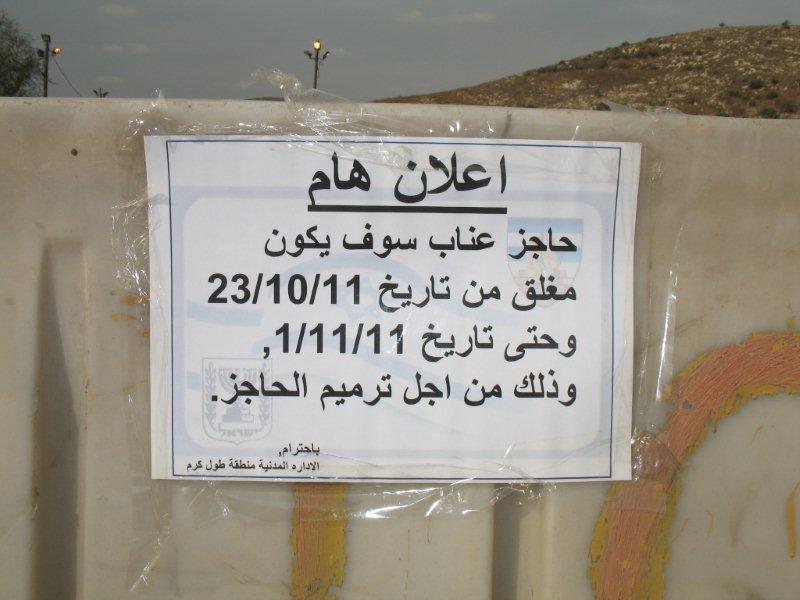 Oct-28-2011Anabta checkpoint 24.10.11
-
'Azzun
See all reports for this place-
Azoun (updated February 2019)
A Palestinian town situated in Area B (under civil Palestinian control and Israeli security control),
on road 5 between Nablus and Qalqiliya, east of Nabi Elias village. The inhabitants are allowed to construct and improve infrastructures. The Separation Fence has confiscated lands belonging to the town's people. In 2018 olive tree groves owned by one of its inhabitants were confiscated for the sake of paving a road to bypass Nabi Elias. Azoun population numbers 13,000, its economic state dire. Its infrastructures are poor, neglect and poverty rampant. In the meantime, the town council has completed paving an internal road for the inhabitants' welfare.
Because of its proximity to the Jewish settler-colony of Karnei Shomron and its outposts, the town suffers the intense presence of the Israeli army, especially at nighttime: soldiers enter homes, arrest suspects, trash the house and sometimes ruin it, as they do in numerous places in the West Bank. At times a checkpoint closes the entrance to the town, so no one can come in or get out.
-
Deir Sharaf checkpoint
See all reports for this place-
Deir Sharaf checkpoint is located west of Nablus and south of the settlement of Shavei Shomron, at the entrance to the village of Deir Sharaf on the road leading to Nablus. The checkpoint was activated in early March 2009 after the Beit Iba checkpoint was closed. Palestinians are allowed through the checkpoint , but not for Israelis. Unlike the checkpoints leading to Qalqilya and Tulkarm, crossing of Israeli Palestinians is only allowed on Saturdays.
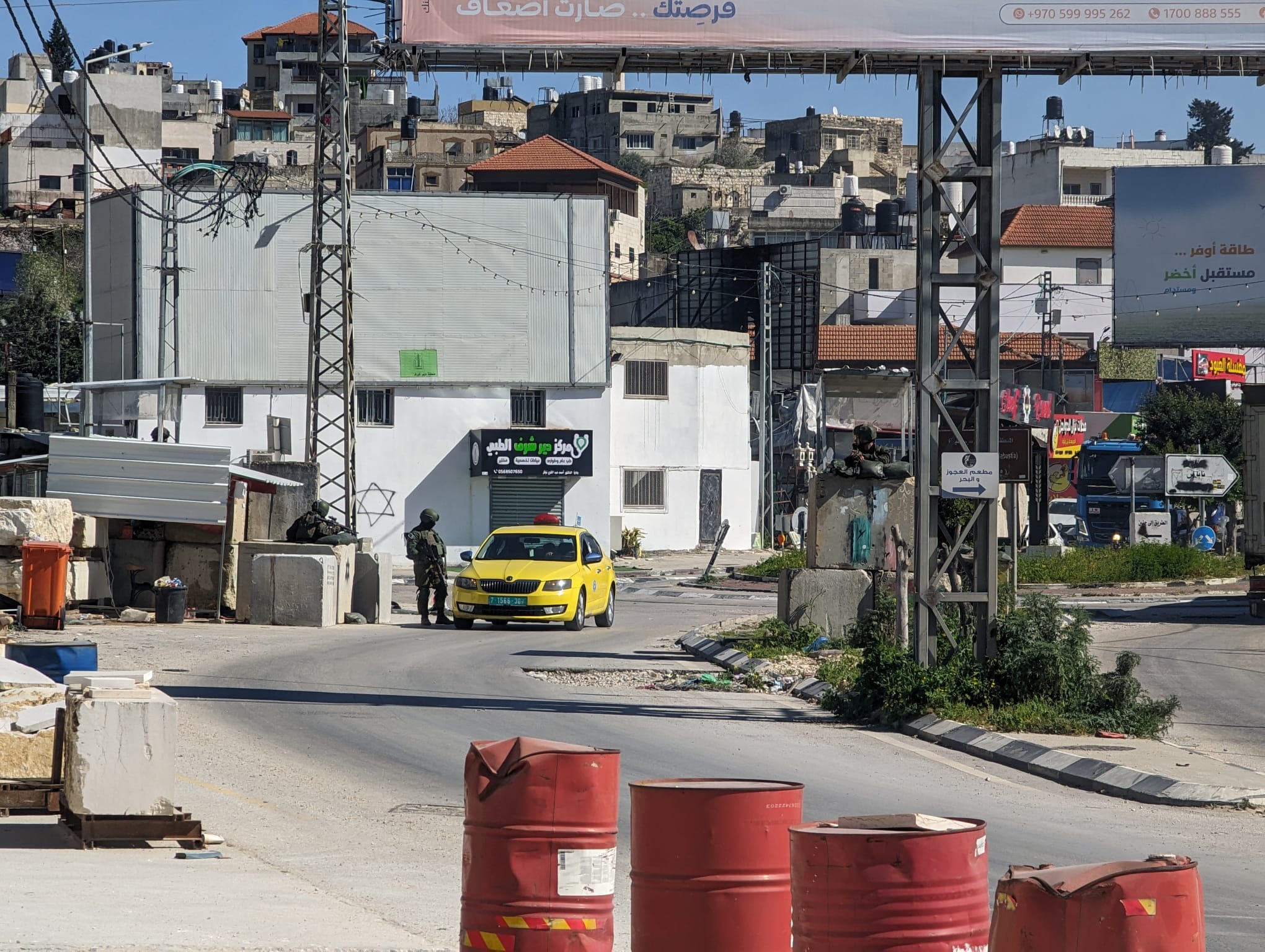 Nina SebaFeb-28-2024Deir Sharaf - the entrance to the village
-
Irtah (Sha'ar Efrayim)
See all reports for this place-
The checkpoint is for Palestinians only. It is the main barrier to the passage of workers from the northern West Bank to Israel. Workers with a permit to work in Israel and also for trade (with appropriate permissions), medicine, and visiting prisoners. One can cross the checkpoint only on foot. The checkpoint is located north of Road 557 and south of Tulkarm. Operated by a civil security company, opening hours: between 4:00 and 19:00 on weekdays. As members of Machsom Watch, we began our shifts to this location in 2007. We arrived before it opened at 4 in the morning and report since, on the harsh conditions and the long and crowded queues of workers. The workers who pass by continue their journey by transportation to work throughout Israel. In the first period of its activity, about 3,000 and then 5,000 people passed through this checkpoint every day. Due to the small number of checking points and arbitrary delays for long periods of time in the "rooms", workers feared losing their transportation. Hence workers leave their homes at 2:30 at night to be among the first. Today, 15,000 pass and the transition is faster. Workers are still leaving their homes very early to get past the checkpoint at 7 p.m. In an adjacent compound, there is a terminal for the transfer of goods on a commercial scale, using the back-to-back method.
-
Jubara (Kafriat)
See all reports for this place-
The Jabra checkpoint was on Road 557, south of Tulkarm, on the side of the Figs Pass, which is located within the Palestinian Authority (a few kilometers east of the Green Line), and serves as an entry barrier from the territories to Israel. The checkpoint to the village of Jubara, which until 2013 was in the seam area, blocked and surrounded by a fence, was intended for the passage of the family members of the house next to the checkpoint, and also for the MachsomWatch volunteers (with special permission only), on their way to checkpoint 753. on the other side of the village. The soldiers supervising the "fig crossing" also supervised the crossing at this checkpoint, in our shifts we often waited a long time until the key was found and the gate opened. The checkpoint was abolished and became part of the separation fence that was moved west following the High Court.
-
Qalqiliya checkpoint
See all reports for this place-
Qalqilya is surrounded on all sides by the separation barrier. The only exit from the city is in the east of the city on the road that leaves the city in an easterly direction. This is where the checkpoint was located. When the checkpoint was active until 2009 our shifts watched long queues of cars being inspected at the only exit from the city to the West Bank. The checkpoint was canceled, but there is a military presence at the entrance to the city.
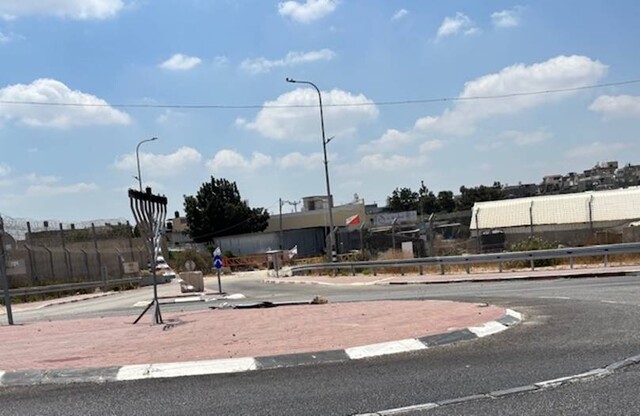 Nina SebaAug-18-2025Azzun: Enclosed by a high fence and the gate to the village is closed
-
Ras 'Atiya
See all reports for this place-
The checkpoint is presently on the Separation Barrier roadway, manned and open 12 hours a day, from 6:30 to 18:30. West of it is the large Seam Line village whose school is attended by children from the nearby villages east of the Barrier and many of whose inhabitants have permits to work in Israel. How long this checkpoint will remain in place is unknown, since construction of the Separation Wall, just by the settlement of Alfe Menashe, east of the present Separation Barrier, is endless, as is the creation of a new road and, obviously, a new checkpoint.
-
Shave Shomron Checkpoint
See all reports for this place-
The checkpoint is on Route 60 (the main road to the northern West Bank), opposite settlement. Has been blocked to Palestinians since disengagement from Gaza and northern Samaria.
-