
Ar-Ram, Jaba (Lil), Qalandiya
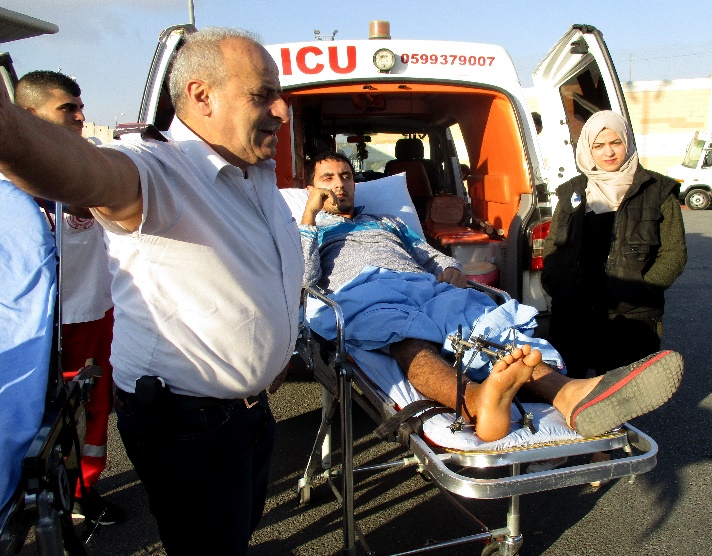
An ambulance was delayed for half an hour inside the Qalandiya Checkpoint on the pretext of “no coordination”. However, Toni, of the medical staff, with the experience of many years and the patience of an elephant, did not give up. He insisted, until it was ascertained that there was no fault with the coordination and the fellow whose leg was botched up in a surgical intervention at Rafidiya Hospital (Nablus) was transferred to East Jerusalem to undergo further surgery at Maqasad Hospital.
Vehicles flowed through the gate separating the twon of A-Ram from Dahiyat Al Barid neighborhood. Flowed in. Only in.
Only in the afternoon was the gate opened, for only four hours.
Entering Palestine is easy. No inspections, no selection. Exiting is much more difficult.
Exiting Palestine involves both inspections and selection.
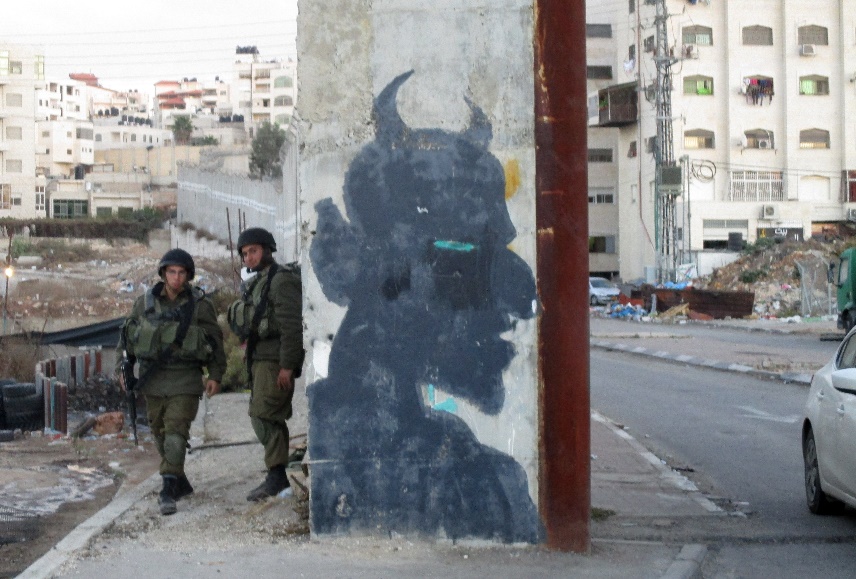
Armed soldiers stood by the devil’s gate and made sure no one dared exit.
“You are not allowed to be here” they told us when we came from inside, not from the outside. “Here it is red, Area A” they said.
“No, it’s not. If it were, you – the army – would not be allowed to be here.”
How quickly he gets back from work – it only takes 5 minutes. And how much previous time is wasted in the morning, on his way to work: “I wait for two hours every day at Qalandiya Checkpoint” said the man who stopped to chat, and added that the best of times were before the wall was erected around A-Ram turning it into a prison, that life was easier back then and travel was shorter.
About 40 minutes later we found out that the soldiers who were concerned for our safety at A-Ram passed our license plate number on to the brigade HQ and reported ,
Why distress? Because A-Ram, like Qalandiya refugee camp, is considered by the army to be an especially hostile and dangerous place. Consequently forces were summoned, hunting us on the road by the army post above the village of Jab’a. Many troops from numerous units were summoned on our account. And we didn’t even know we were like that.

There was army and Border Police as well as civilian police. At some point I counted 14 armed figures surrounding us. They checked our IDs and vehicle license and our trunk and interrogated us as to where we had been and what we were doing.
We were detained by the roadside. The police checked with their police computer and ruled that there was no reason to hold us in custody. But we remained detained.
For the sovereign is the army here and only it is authorized to release us.
The officer running this event admitted we violated no law, “but if anything were to happen to you it would be on my own conscience”, and continued to deny us our freedom – from the moment an ‘event’ is noted in the brigade log, they cannot let us go without the brigade’s consent. We waited in the dark and cold until – an hour and some after our detention began – the brigade communicated confirmation of our release.
A-Ram
See all reports for this place-
two kilometers south of Qalandiya and 300 metres north of Neve Yaacov Junction, in Dahiyat el-Barid Quarter. Checkpoint has operated since 1991, in a Palestinian area annexed to Jerusalem in 1967. The checkpoint has been inactive since the middle of 2009.
The wall was built on the road that led to Jerusalem. Since then the situation in the town has deteriorated. Houses are abandoned and half finished, most of the businesses have closed. Severe neglect around the fence and on the streets. Those who could left. Updated January 2024
-
Jaba' (Lil)
See all reports for this place-
Jaba' (Lil) In fact, the Jaba checkpoint is east of the Qalandiya checkpoint. Its declared purpose is the prevention of Israeli citizens from entering Area A. A road checkpoint for vehicles, located on Road 65, borders the southern fence of Kfar Jaba, about three kilometers east of the Qalandiya checkpoint, on the road leading to the settlement of Adam on Road 60. Archaeological excavations within the village found the remains of a cloth house from the First Temple period. The events that led to the construction of the checkpoint are precisely here: on the day of the abduction of Gilad Shalit and before the outbreak of the Second Lebanon War, a 17-year-old man from one of the settlements was abducted by a Palestinian cell. His body was found several days later at the entrances to Ramallah. A military investigation revealed that his abductors had taken him along this route. The checkpoint was set up to prevent future kidnappings and to warn settlers from traveling to Ramallah and entering Area A (which is forbidden for Israelis). The checkpoint that operates around the clock. Usually only vehicles traveling in the direction of Ramallah are inspected. (November 2016): Every morning, when the settlers en masse travel to Jerusalem on Route 60 and every afternoon they return from Jerusalem on Route 60, the army initiates a traffic jam at the entrance to the Jaba checkpoint and stops the movement of Palestinians traveling toward Route 60. (February 2020): In the last two years the checkpoint has not always been manned. Sometimes the soldiers come and just stand, sometimes they come and stop and check those who enter the village, sometimes they patrol the alleys of the village, sometimes they fire stun grenades and gas and sometimes they invade houses and stop young people, say those passing through the Hazma checkpoint. (Updated February 2020)
-
Qalandiya Checkpoint / Atarot Pass (Jerusalem)
See all reports for this place-
Click here to watch a video from Qalandiya checkpoint up to mid 2019 Three kilometers south of Ramallah, in the heart of Palestinian population. Integrates into "Jerusalem Envelope" as part of Wall that separates between northern suburbs that were annexed to Jerusalem in 1967: Kafr Aqab, Semiramis and Qalandiya, and the villages of Ar-Ram and Bir Nabala, also north of Jerusalem, and the city itself. Some residents of Kafr Aqab, Semiramis and Qalandiya have Jerusalem ID cards. A terminal operated by Israel Police has functioned since early 2006. As of August 2006, northbound pedestrians are not checked. Southbound Palestinians must carry Jerusalem IDs; holders of Palestinian Authority IDs cannot pass without special permits. Vehicular traffic from Ramallah to other West Bank areas runs to the north of Qalandiya. In February 2019, the new facility of the checkpoint was inaugurated aiming to make it like a "border crossing". The bars and barbed wire fences were replaced with walls of perforated metal panels. The check is now performed at multiple stations for face recognition and the transfer of an e-card. The rate of passage has improved and its density has generally decreased, but lack of manpower and malfunctions cause periods of stress. The development and paving of the roads has not yet been completed, the traffic of cars and pedestrians is dangerous, and t the entire vicinity of the checkpoint is filthy. In 2020 a huge pedestrian bridge was built over the vehicle crossing with severe mobility restrictions (steep stairs, long and winding route). The pedestrian access from public transport to the checkpoint from the north (Ramallah direction) is unclear, and there have been cases of people, especially people with disabilities, who accidentally reached the vehicle crossing and were shot by the soldiers at the checkpoint. In the summer of 2021, work began on a new, sunken entrance road from Qalandiya that will lead directly to Road 443 towards Jerusalem and Tel Aviv. At the same time, the runways of the old Atarot airport were demolished and infrastructure was prepared for a large bus terminal. (updated October 2021)
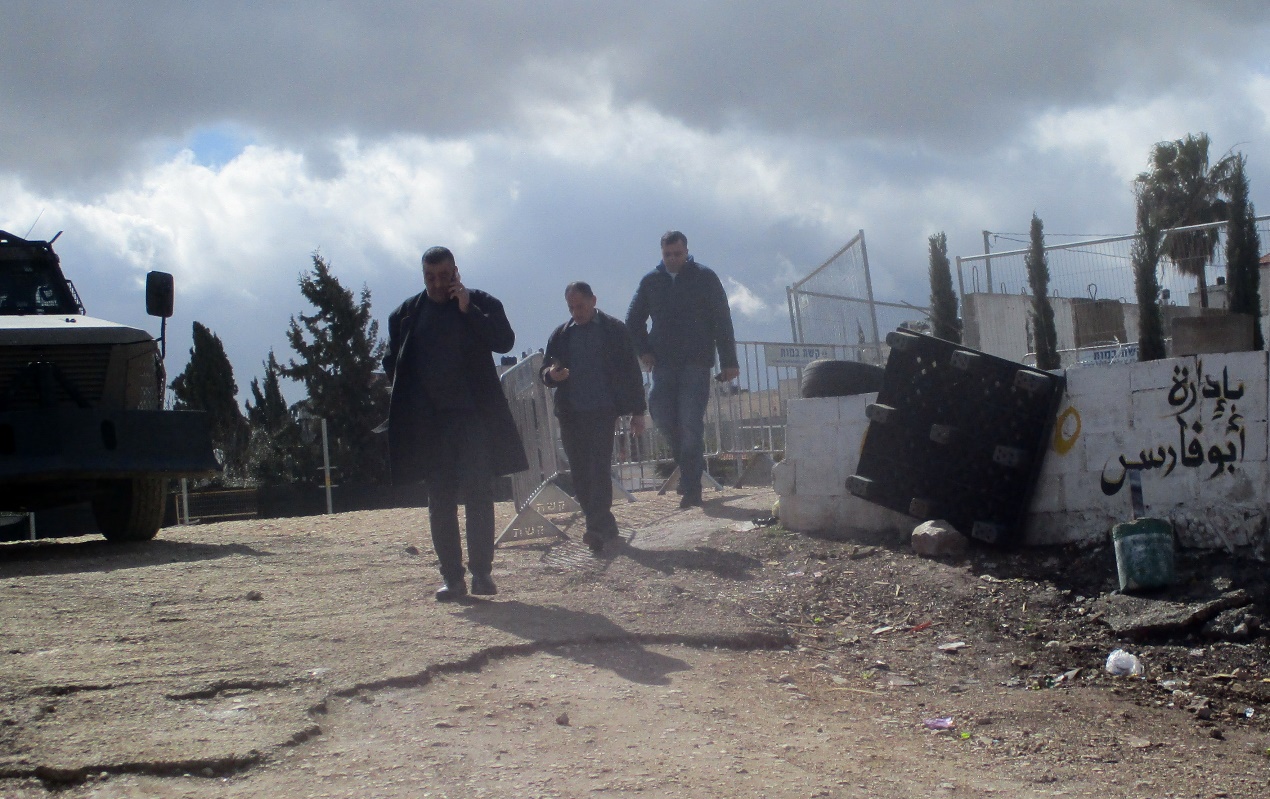 Tamar FleishmanFeb-27-2026Qalandiya: On the way to prayer
-