
Atarot Industrial Zone: A group of Palestinian looking for work were detained by police
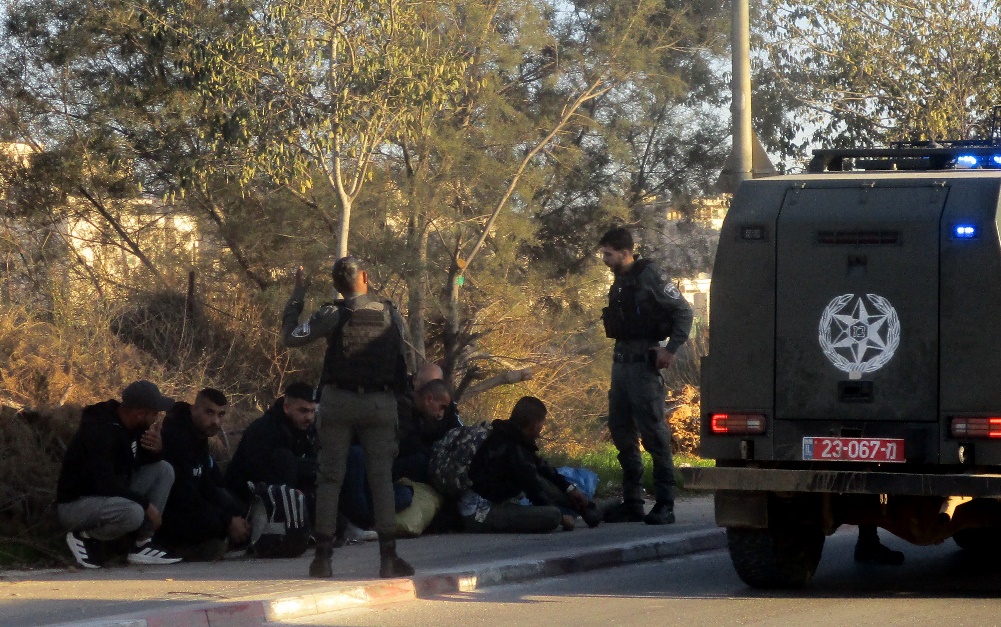
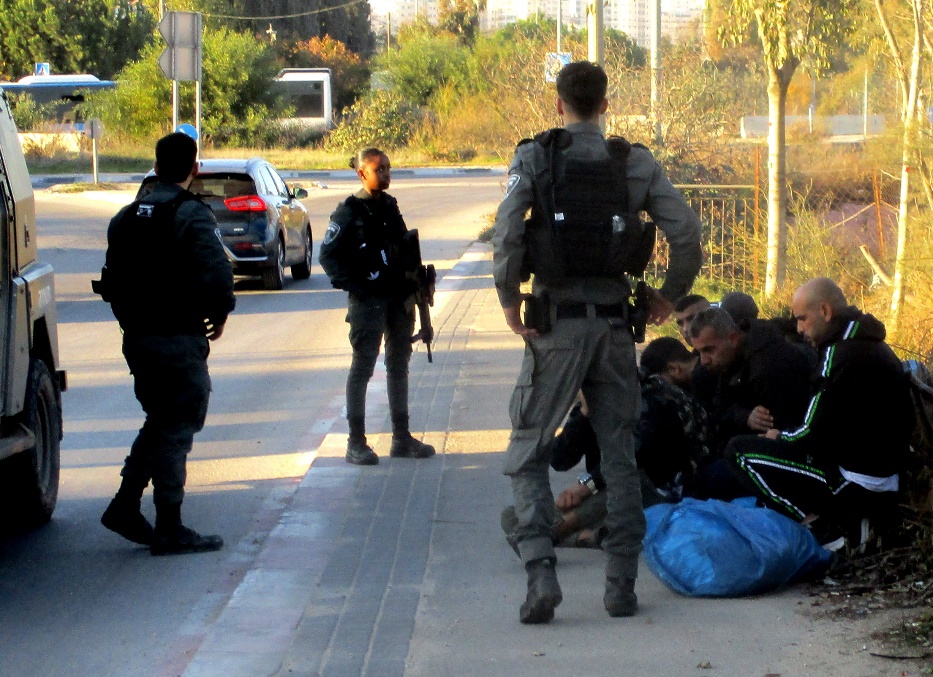
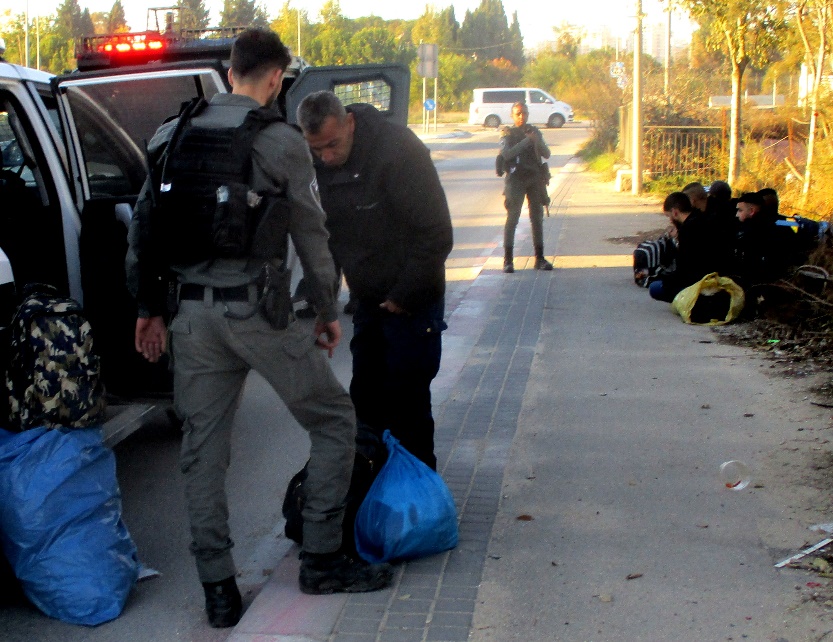
A group of Palestinians sat by the roadside. Their private space was blocked by three uniformed people, two men and a woman.
I saw them on one of the streets of Atarot Industrial Zone. I stopped my car and walked toward them.
They looked extinguished, their heads hanging, their bags at their sides.
“Don’t come close, it’s dangerous for you. I haven’t written all of them off yet”, the Border Policeman yelled at me.
And then “writing them off” began: one by one they approached the writer-off, to show their IDs and open their bag. Only when it was obvious that the guy and/or his bag are not a security threat, was he and his bag loaded onto one of the police vans that were summoned to the site.
Doubtlessly the guys planned to spend several days in Israel, and they undoubtedly arrived in order to feed their family. “They are from Ramallah and Jenin”, one of the Border Policemen said.
After many minutes, the vans and their human cargo left for somewhere.
Later, in Qalandiya, an acquaintance spoke with me about the guys trying – in spite of the danger – to reach places where they could get paid for their work, and he told me about guys crossing the wall and getting shot, about poverty in the West Bank, the shortage of food. “Until the war began, I worked as a cashier at Rami Levy (Israeli discount supermarket chain), bringing home 8,000 NIS monthly, and had a life. Now, with no work, what?” said the man who hardly ekes out a living from random little jobs.
In between I heard details about the 3-year-old child from Modi’in Ilit found alone in the bus terminal, the bus drivers said that at 3 a.m. they saw a frozen toddler walking around alone. They said for his name but he doesn’t understand either Arabic or Hebrew, only Yiddish. The drivers summoned the police who took the child into its care. It appears the child was from Modi’in Ilit whose family was at a Bnei Brak event, and back with a very late transport. When they got to Modi’in Ilit, his parents got off the bus and when to sleep without noticing the absence of the toddler who fell asleep in the transport. When the bus came to the Qalandiya terminal and parked, the driver opened the door and came out, followed by the child who had woken up and began walking around by himself.
Drivers also said that a day earlier, one of the drivers usually driving the way from Jerusalem to Ramallah, noticed – after passing Qalandiya and drove inside the Palestinian Authority area – an armed soldier sleeping on one of the seats. The horrified driver, afraid what might happen to the guy if Palestinian youth find out about the soldier in their midst, stopped, got all the passengers off his bus and sped off to Qalandiya Checkpoint, depositing the soldier with the army.
On my way back, before facing the darkness, I was stopped for a friendly talk with the checkpoint security guards.
They all refused to accept the definition of the West Bank as occupied territory, that Palestinians have the right to live and make their living, believing that the “green line” has been recognized by God and that terrorists deserve capital punishment, as Ben Gvir said.
Location Description
Qalandiya Checkpoint / Atarot Pass (Jerusalem)
See all reports for this place-
Click here to watch a video from Qalandiya checkpoint up to mid 2019 Three kilometers south of Ramallah, in the heart of Palestinian population. Integrates into "Jerusalem Envelope" as part of Wall that separates between northern suburbs that were annexed to Jerusalem in 1967: Kafr Aqab, Semiramis and Qalandiya, and the villages of Ar-Ram and Bir Nabala, also north of Jerusalem, and the city itself. Some residents of Kafr Aqab, Semiramis and Qalandiya have Jerusalem ID cards. A terminal operated by Israel Police has functioned since early 2006. As of August 2006, northbound pedestrians are not checked. Southbound Palestinians must carry Jerusalem IDs; holders of Palestinian Authority IDs cannot pass without special permits. Vehicular traffic from Ramallah to other West Bank areas runs to the north of Qalandiya. In February 2019, the new facility of the checkpoint was inaugurated aiming to make it like a "border crossing". The bars and barbed wire fences were replaced with walls of perforated metal panels. The check is now performed at multiple stations for face recognition and the transfer of an e-card. The rate of passage has improved and its density has generally decreased, but lack of manpower and malfunctions cause periods of stress. The development and paving of the roads has not yet been completed, the traffic of cars and pedestrians is dangerous, and t the entire vicinity of the checkpoint is filthy. In 2020 a huge pedestrian bridge was built over the vehicle crossing with severe mobility restrictions (steep stairs, long and winding route). The pedestrian access from public transport to the checkpoint from the north (Ramallah direction) is unclear, and there have been cases of people, especially people with disabilities, who accidentally reached the vehicle crossing and were shot by the soldiers at the checkpoint. In the summer of 2021, work began on a new, sunken entrance road from Qalandiya that will lead directly to Road 443 towards Jerusalem and Tel Aviv. At the same time, the runways of the old Atarot airport were demolished and infrastructure was prepared for a large bus terminal. (updated October 2021)
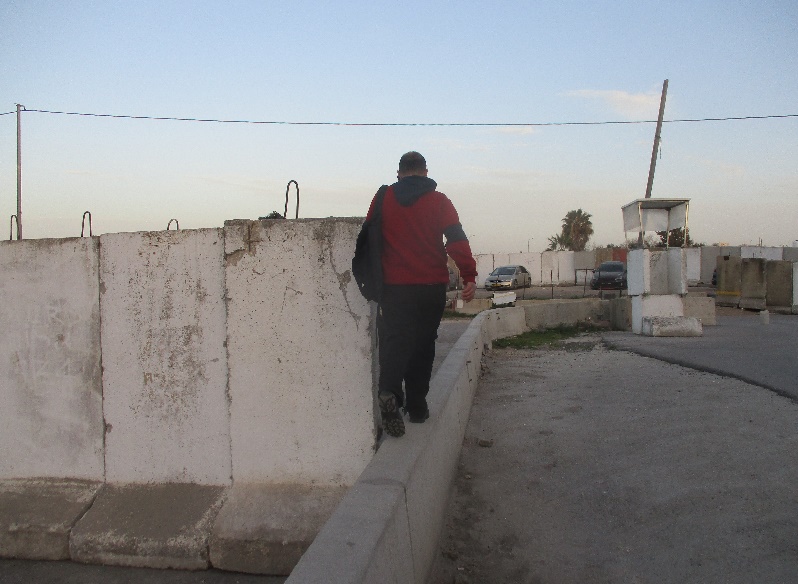 Tamar FleishmanFeb-16-2026Qalandiya CP: shortcut
-