
‘Awarta, Beit Furik, Huwwara, Tue 9.12.08, Afternoon
Natanya translating.
We heard of the wonderful new innovations at Nablus and were not able to control us and drove there to see for ourselves. A holiday. The holiday of the sacrifice. Cold and rainy.
The new checkpoint is working. The paucity of people passing is noticeable maybe because of the holiday and the rain. The parking lot is almost empty. In spite of the fact that the best of the engineering brains of the army built the new developed checkpoint there is still a large puddle waiting inside the checkpoint for those coming out.
Three checking areas are working. Two for the young men and the third for the rest. The young men in the line are activated from afar by a woman soldier sitting safe and warm inside an armoured area behind armoured glass and she communicates with them through the intercom. First she shouts at them not to come near the turnstile and they have to stay a safe distance behind an imaginary line. When they are given the order to come near they have to take off their coats and shoes, belts and goods which they have to put through the x-ray device hoping it will not squeak. Then they come to the checking area and through the intercom the soldier tells them to put their ID in the hold. Which she then sends back to them after checking it and they are free to go on their way. The wonders of technology.
The commander is not happy at our presence and tells us to go back and not to photograph. When this does not help im he pulls out the best of his weapons…the cell phone. First he calls the police and when they are not interested he photographs us again and again. As we said the wonders of technology.We noticed that though they had not yet managed to remove all the nylon from the new checkpoint the glass windows of the checking areas look as if they have been violently abuse.
Awarta. 16.40
This checkpoint is also undergoing changes. The part of the road between the circle of Huwwara and the entrance to Awarta is no longer an apartheid road and Palestinians cars can travel on it. The checkpoint is not next to the parking lot which was once the "back to back." The goods which have to be passed over are now close to the apartheid road opposite the entrance to the village of Awarta. There is already one car which is detained. It is the car of a medical company. The driver has a permit for a humanitarian passage during closure which should allow him to go through this checkpoint but the soldier who is checking insists that he cannot do so and he must go back to Nablus and go out through Huwwara. The man says he goes through this checkpoint each day. As we saw at Huwwara there is a long line awaits him and he insists that he be allowed through. The soldier says that only doctors, business men and VIPs can do so. Not anyone who brings through medicines or anyone else. In the end the driver despairs and want to go back but now the soldier says that he is detained because he argued with him. We protest and within a minute a sergeant arrives, evidently the commander of the checkpoint and tells the soldier to free the man.
16.50 Beit Furik.
The checkpoint is really not working and the iron bar stands in its place, open. There is no longer a taxi stand and no coffee vendor but what there are are detainees in the cell of the checkpoint. Six of them, families from Nablus who are wearing their holiday best who had come to visit family in Beit Furik. This is the first time in 7 years that they can go through to visit people of Beit Furik. Of course they do not know about the changes on the roads and the laws and by mistake had kept on going in the direction of Yitamar instead of turning into Beit Furik. They did not see the sign saying that Palestinians are not allowed on this road…EVIDENTLY BECAUSE THERE IS NO SUCH SIGN. The wide awake soldiers in the pillbox above the deserted checkpoint caught them and now they are being punished for their mistake. "One soldier says. "There is no checkpoint here but they must not think that they can do whatever they want.' They will be kept for three hours and not a minute less. It does not matter that it is already dark, raining and freezing cold nor that it is a holiday. It does not help that there was no sign that told him that it was forbidden and they do not know the road. Nothing helps . They have to take their punishment. The two soldiers guarding them try to stop us talking to them. But when we insist they give in. We speak to the humanitarian centre and the DCO who know about this case and say that they are dealing with the case but we see no progress.
About 15 minutes after we arrive they free 3 out of the 6 as their time of detention is up. Some minutes later sergeant I. appears and says that he is the commander. He does not care that it is forbidden to detain people as punishment or education. "This is the only way they will learn." He says this about 3 men whose ages go between the age of his father and the age of his grandfather. We ask him how they were supposed to know that they are not allowed on the road if there is no sigh. "They know" he says again and again as a mantra. "They know and they do it on purpose." As if "they" are small children and only corporal punishment will put the lesson into their heads. Nothing would help. They would have to finish their punishment. Because if they free them after 2 hours and 40 minutes they will not have learned anything.
'Awarta
See all reports for this place-
Awarta, an internal checkpoint in the heart of the West Bank, is located east of the Hawara checkpoint, at the junction of Roads 555 (which was forbidden for Palestinian traffic in this area) and the entrance road to Nablus. It was one of the four checkpoints that surrounded Nablus until 2009. We used to watch it at Huwwara shifts because it was the only one where goods could be transferred to and from Nablus, using the back-to-back method. It was operated by the army, from 06:00 to 20:00. Until 2009.
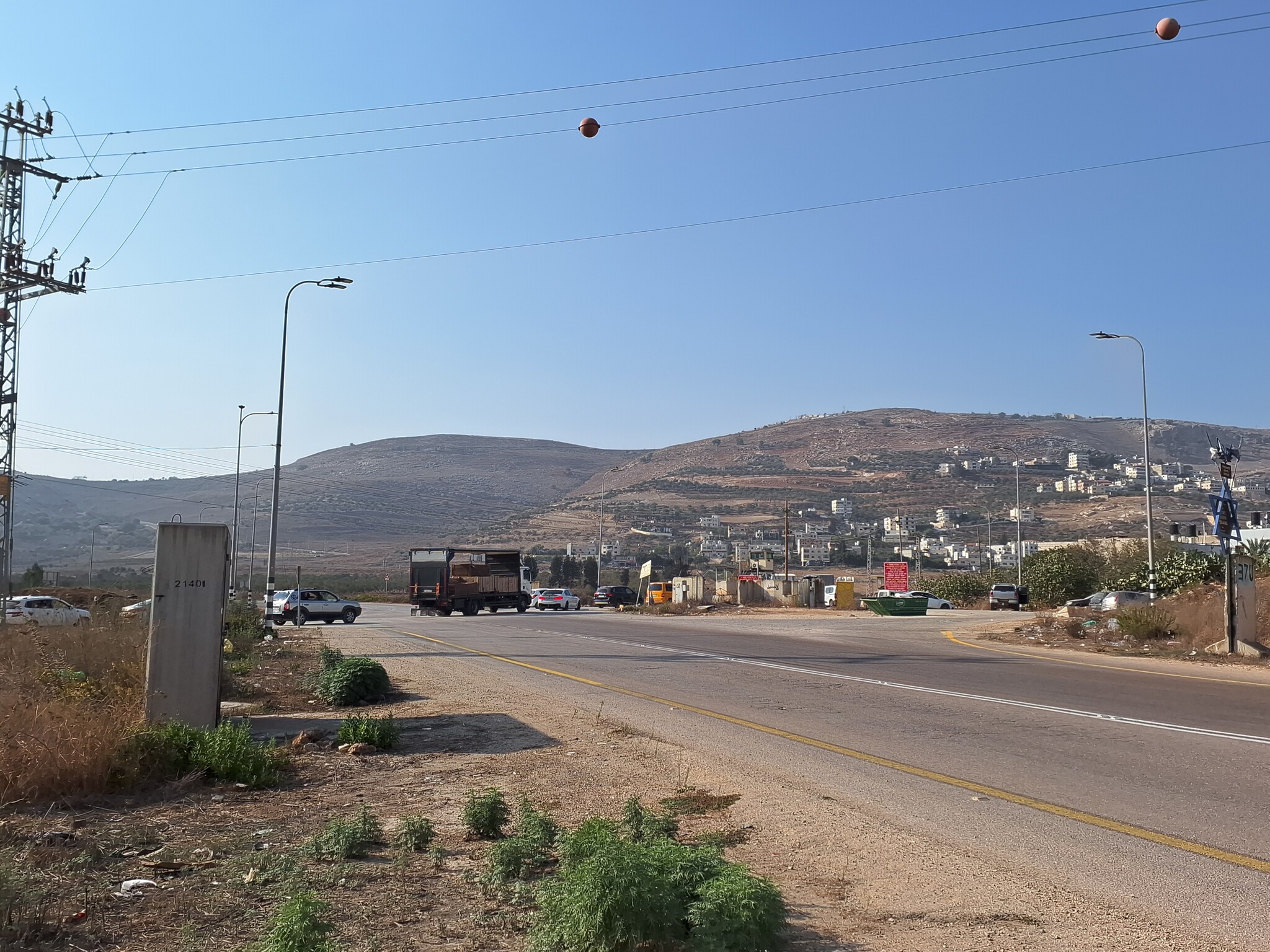 Ronit Dahan-RamatiNov-6-2025Awarta. Crossing the road towards the checkpoint
-
Beit Furik checkpoint
See all reports for this place-
One of the three internal checkpoints that closed on the city of Nablus - Beit Furik to the east, Hawara to the south, Beit Iba to the west. The checkpoint is located at the junction of Roads 557 (an apartheid road that was forbidden for Palestinians), leading to the Itamar and Alon Morea settlements and Road 5487. The checkpoint was established in 2001 for pedestrians and vehicles; The opening hours were short and the transition was slow and very problematic.Allegedly, the checkpoint is intended to monitor the movement to and from Nablus of the residents of Beit Furik and Beit Dajan, being the only opening outside their villages. Since May 2009 the checkpoint is open 24 hours a day, the military presence is limited, vehicles can pass through it without inspections, except for random inspections. (Updated April 2010)
-
Huwwara
See all reports for this place-
The Huwwara checkpoint is an internal checkpoint south of the city of Nablus, at the intersection of Roads 60 and 5077 (between the settlements of Bracha and Itamar). This checkpoint was one of the four permanent checkpoints that closed on Nablus (Beit Furik and Awarta checkpoints to the east and the Beit Iba checkpoint to the west). It was a pedestrian-only barrier. As MachsomWatch volunteers, we watched therre since 2001 two shifts a day - morning and noon, the thousands of Palestinians leaving Nablus and waiting for hours in queues to reach anywhere else in the West Bank, from the other side of the checkpoint the destination could only be reached by public transport. In early June 2009, as part of the easing of Palestinian traffic in the West Bank, the checkpoint was opened to vehicular traffic. The passage was free, with occasional military presence in the guard tower. Also, there were vehicle inspections from time to time. Since the massacre on 7.10.2023, the checkpoint has been closed to Palestinians.
On February 26, 2023, about 400 settlers attacked the town's residents for 5 hours and set fire to property, such as houses and cars. Disturbances occurred in response to a shooting of two Jewish residents of Har Bracha by a Palestinian Terrorist. The soldiers stationed in the town did not prevent the arson and rescued Palestinian families from their homes only after they were set on fire. No one was punished and Finance Minister Smotrich stated that "the State of Israel should wipe out Hawara." Left and center organizations organized solidarity demonstrations and support actions for the residents of Hawara.Hawara continued to be in the headlines in all the months that followed: more pogroms by the settlers, attacks by Palestinians and a massive presence of the army in the town. It amounted to a de facto curfew of commerce and life in the center of the city. On October 5, 2023, MK Zvi established a Sukkah in the center of Hawara and hundreds of settlers backed the army blocked the main road and held prayers in the heart of the town all night and the next day. On Saturday, October 7, 23 The "Swords of Iron" war began with an attack by Hamas on settlements surrounding Gaza in the face of a poor presence of the IDF. Much criticism has been made of the withdrawal of military forces from the area surrounding Gaza and their placement in the West Bank, and in the Hawara and Samaria region in particular, as a shield for the settlers who were taking over and rioting.
On November 12, 2023, the first section of the Hawara bypass road intended for Israeli traffic only was opened. In this way, the settlers can bypass the road that goes through the center of Hawara, which is the main artery for traffic from the Nablus area to Ramallah and the south of the West Bank. For the construction of the road, the Civil Administration expropriated 406 dunams of private land belonging to Palestinians from the nearby villages. The settlers are not satisfied with this at the moment, and demand to also travel through Hawara itself in order to demonstrate presence and control.(updated November 2023)
. Shoshi AnbarMay-18-2025Huwara: The old houses in Area C
-